
Cactus Around Las Vegas, Vegetation Around Las Vegas
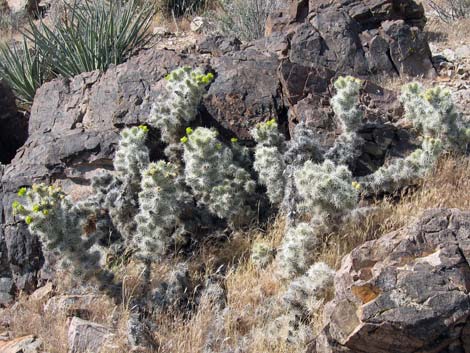 |
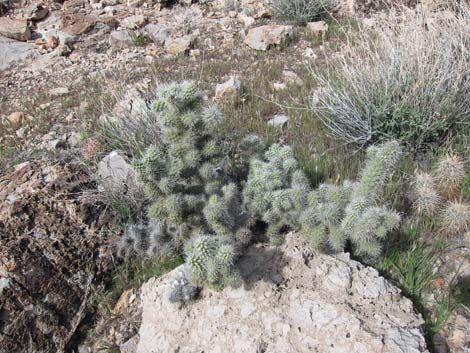
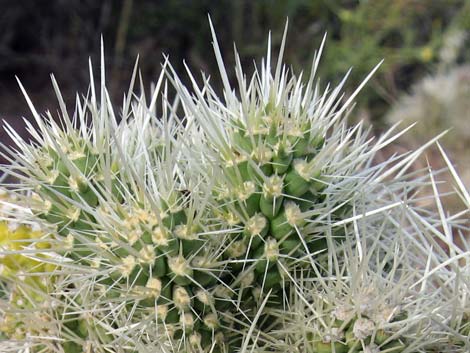
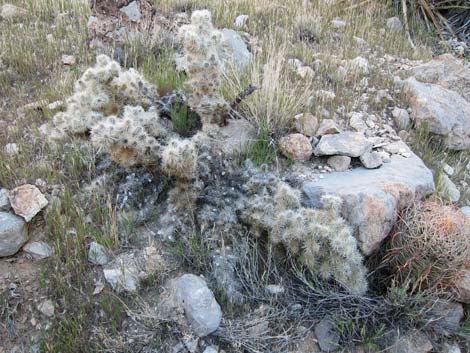
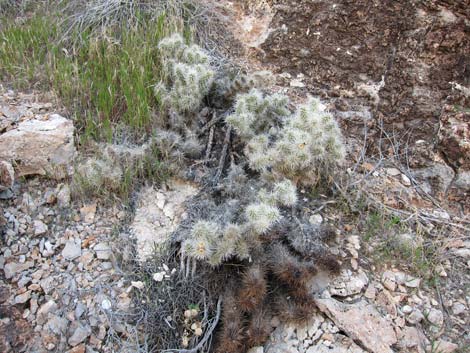
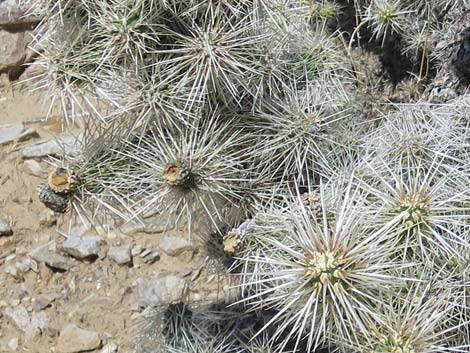
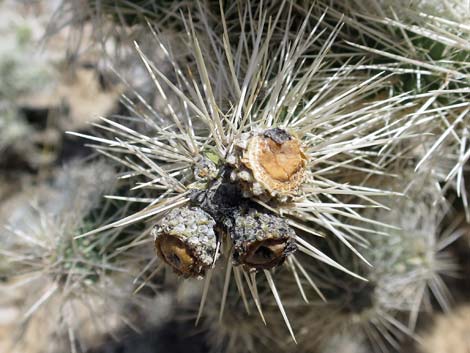
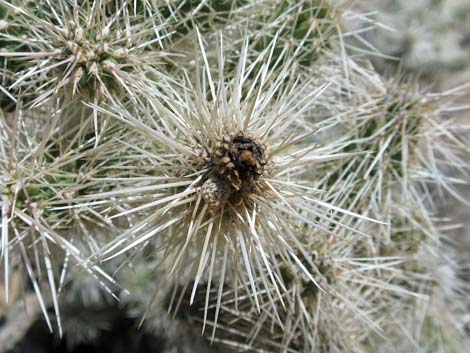
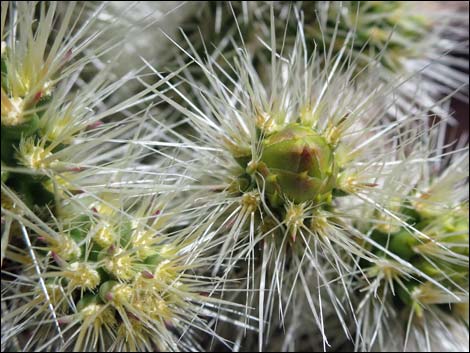
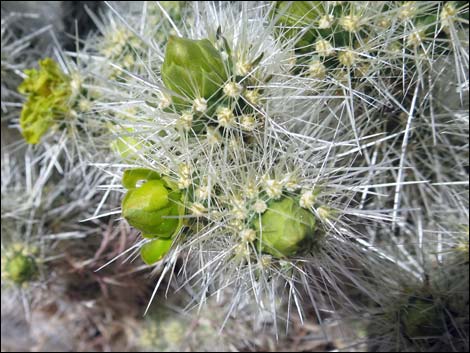
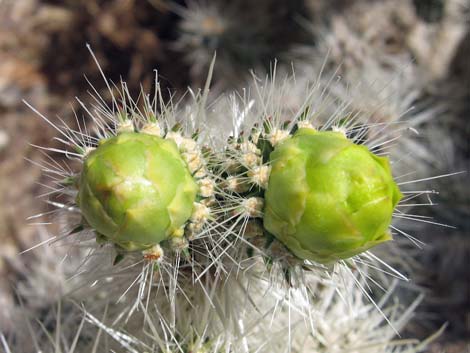
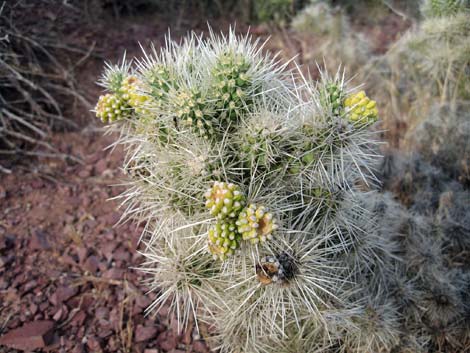
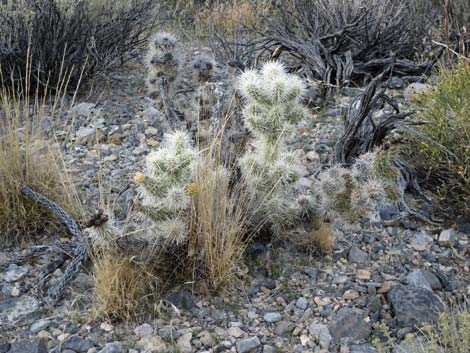
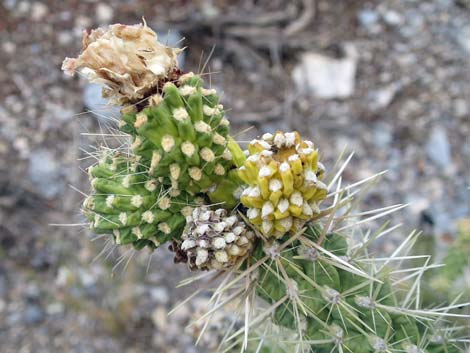
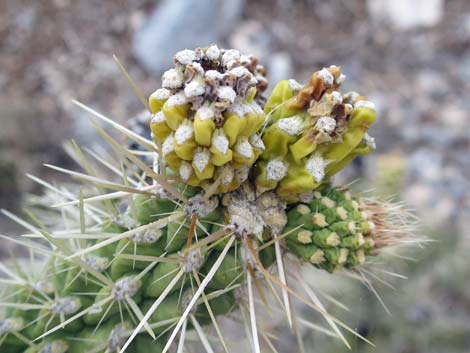
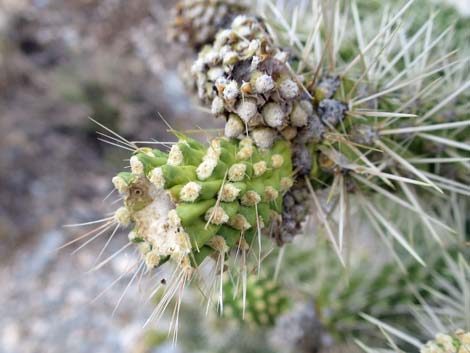
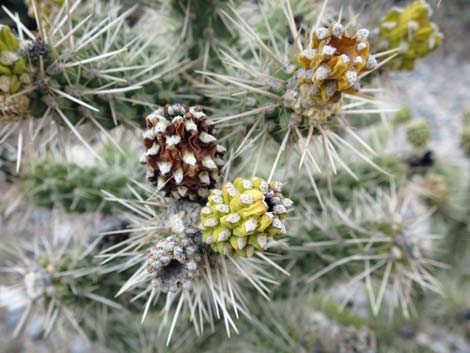
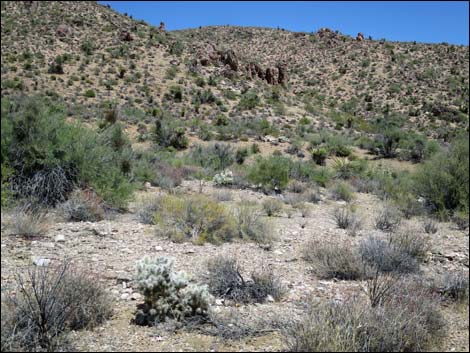
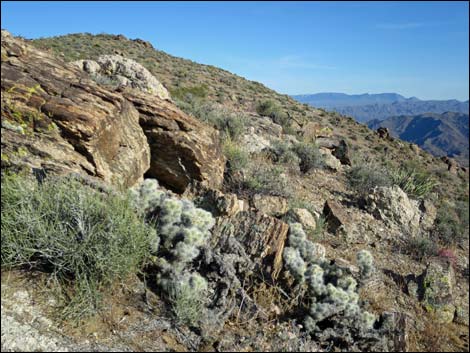
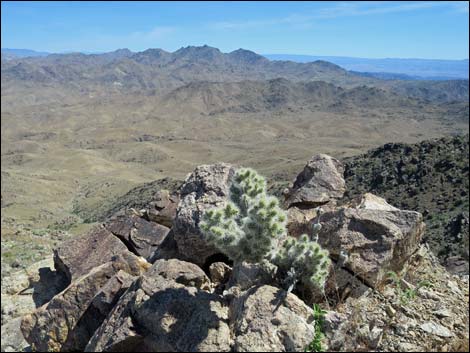
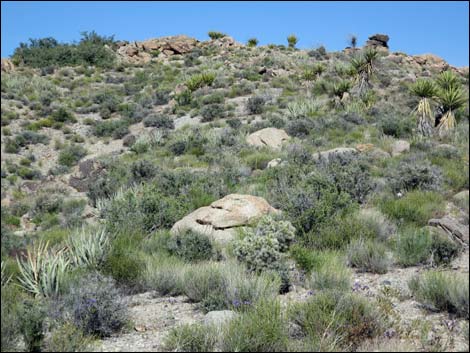
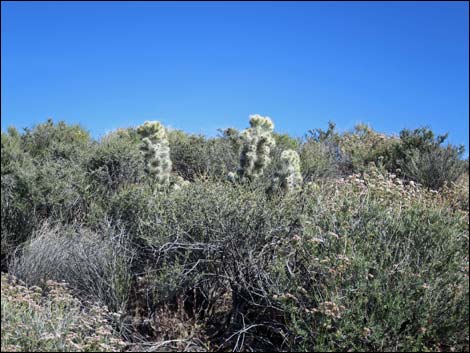
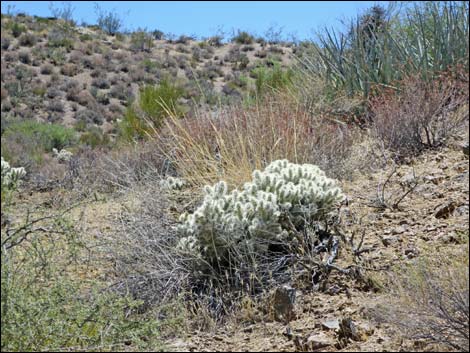
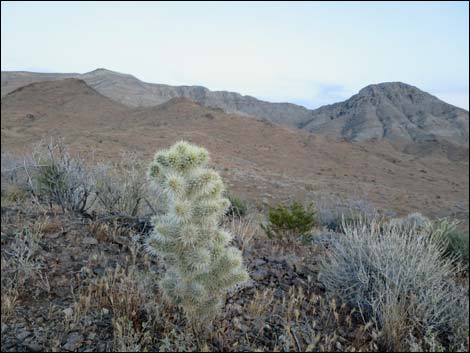
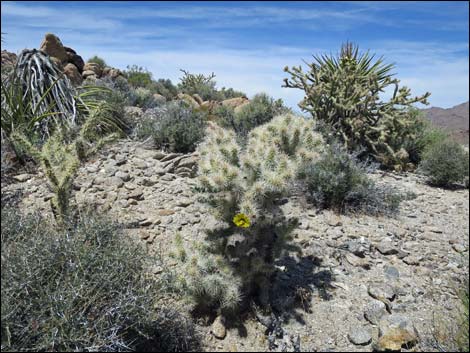
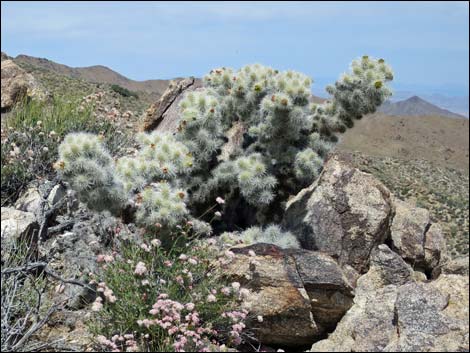
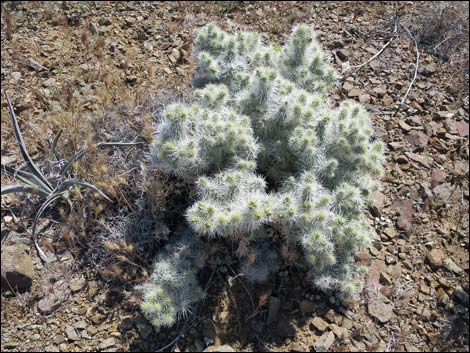
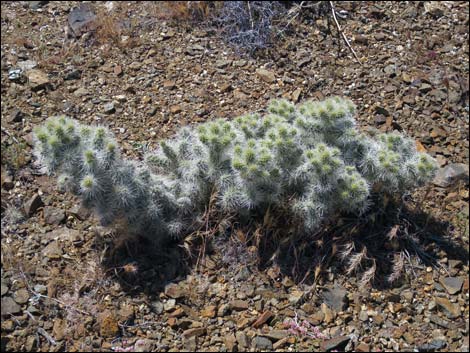
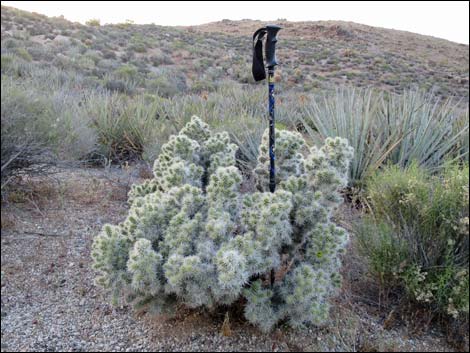
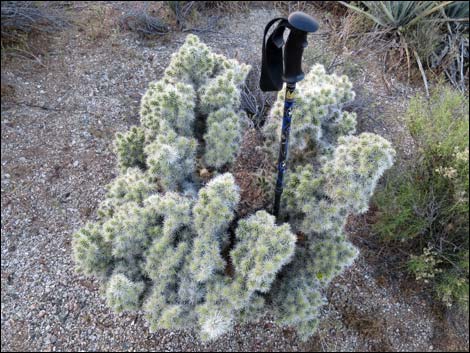
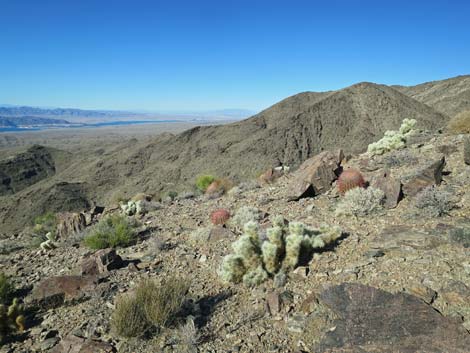
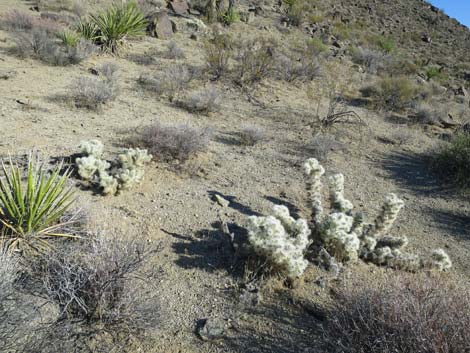
General: Blue Diamond Cholla (Cylindropuntia multigeniculata) is a low-growing, shrubby, densely branched cactus with one to several upright stems and many, short side branches that grow so compactly that the little stems seem to interlock. The spines are fairly short and narrow, white, and dense enough to obscure the green of the stem. The fruits are yellow, persistent, and spineless (eastern populations have spiny fruits). This plant sometimes grows on the ground as a mat. Blue Diamond Cholla is a rare, but locally common (rare, but where they grow, there can be many individuals in a small area) component of vegetation communities on well-drained gravelly and rocky limestone ridges on upper bajadas and steep slopes into the lower mountains in the Upper Sonoran (Mojave Desert Scrub) life zone. This rare species occurs in Red Rocks NCA, in the La Madre Mountain Range, in the Gold Butte region of Lake Mead, and on the Desert National Wildlife Range, and at Delamar Ghost Town (Lincoln County, NV), but it can not be easily seen anywhere. Long hikes, long drives on rough dirt roads, or trespass onto private property are required to see it. |
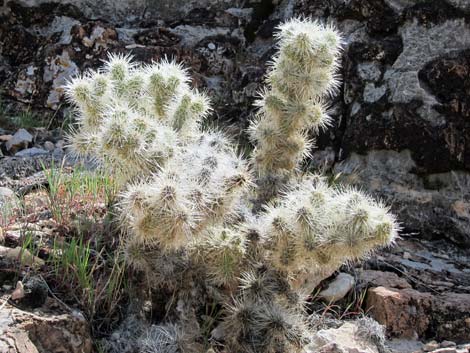 |
Family: Cactus (Cactaceae). Other Names: Clokey Cholla, Opuntia multigeniculata, Opuntia whipplei var. multigeniculata, Cylindropuntia whipplei var. multigeniculata. Plant Form: Compact, upright, or mat forming cactus. Densely branched. Height: Upright form to about 3 feet, mat form remains close to the ground. Trunk: None per se, but one to several stems. Stems: Divided into segments; cylindrical. Mature stem segments 1 to 2-inches long. New segments produced at right angles to older stem segment. Stem Surface: Tubercled. Tubercles prominent (they stick way out), laterally flattened, about 1/4-inch long. |
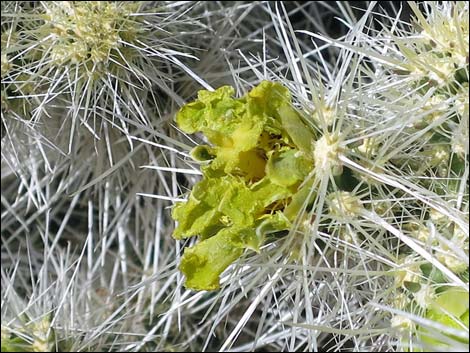
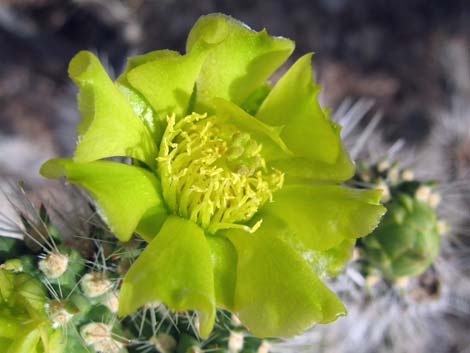
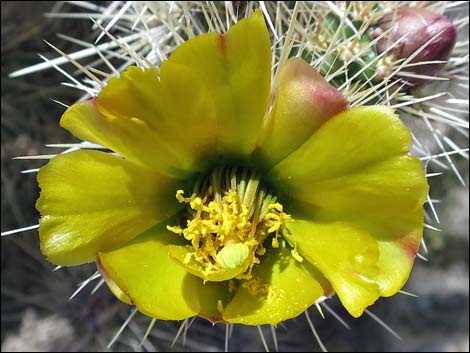 Flower (about 1-inch diameter) |
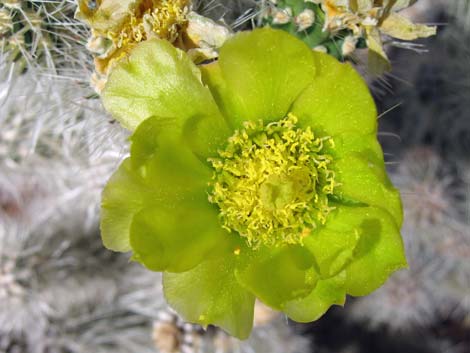
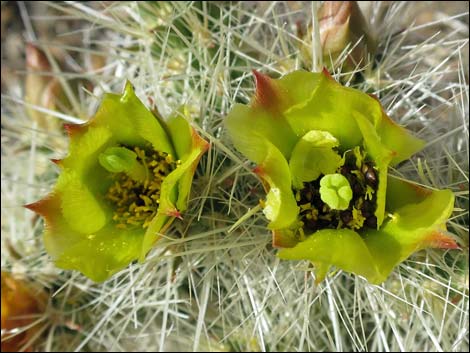
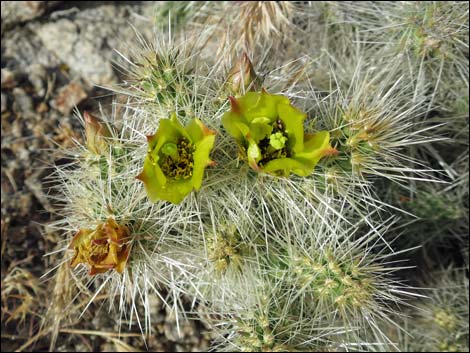
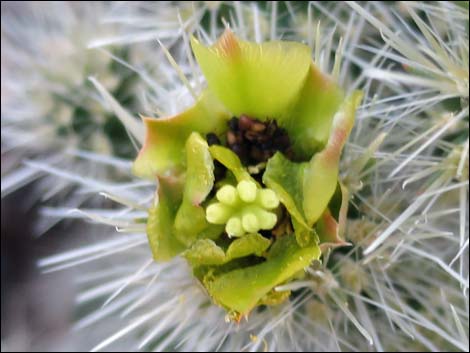
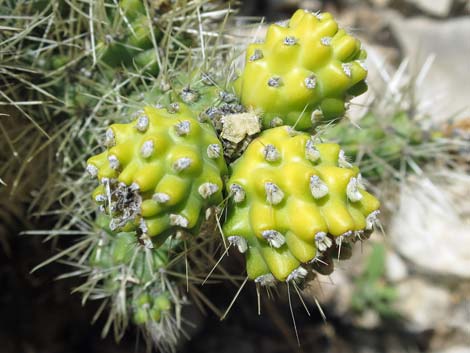
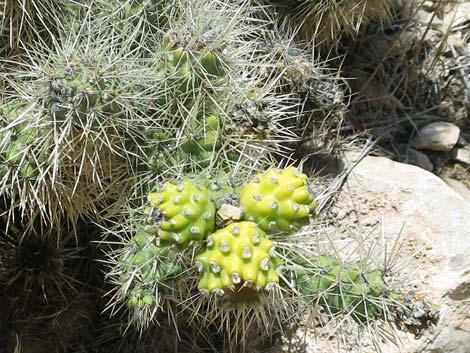
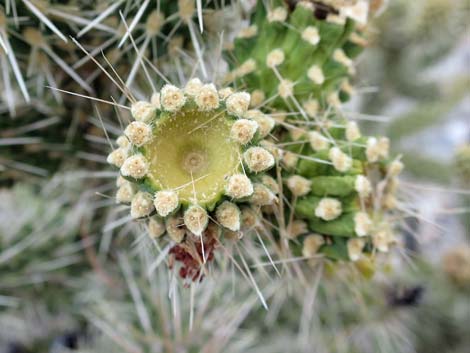
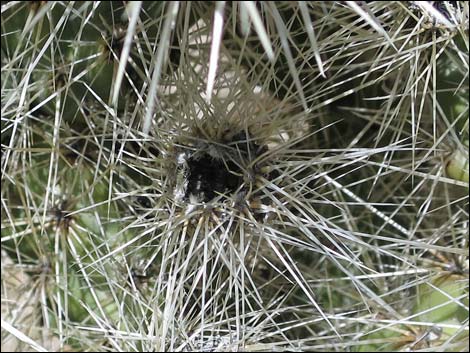
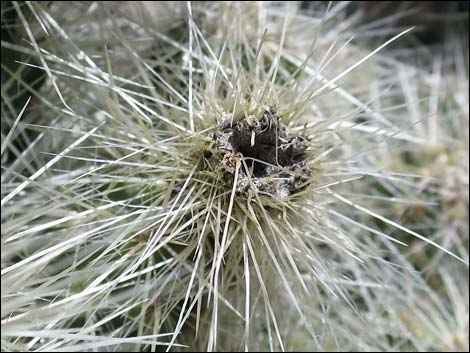
Spines: dense (10 to 12 per tubercle) and relatively short (3/4 to 1-inch long). Glochids: Present. Flowers: Blooms in early summer. Inflorescence: flowers solitary at the ends of stem segments. Flower yellow to chartreuse, to about 1-inch diameter. Fruit: Typical form is yellow, spineless, persistent, and about 3/4-inch long. Populations east of Las Vegas, such as those in Gold Butte National Monument, have spiny fruit. |
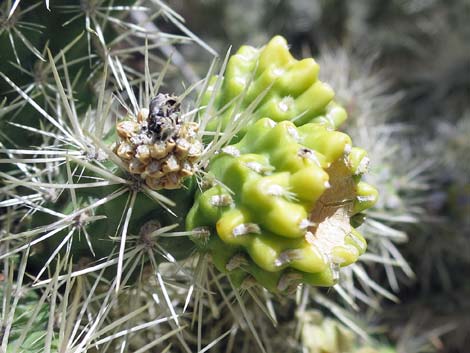 Spineless fruits in western populations |
Seeds: Few per fruit. Habitat: Dry, well-drained gravelly and rocky slopes on upper bajadas and moderate slopes in the lower mountains. Distribution: This species is found only in Clark, Nye, and Lincoln Counties, Nevada, plus Mohave County, Arizona. The spineless form is found in the Las Vegas Range, La Madre Range, Blue Diamond Hill, Delamar Mountains, and the North McCullough Mountains. The spined form is found in Gold Butte. Elevation: About 3,500 to 5,800 feet. Comments: Apparently, the defining characteristic of spineless fruits is a variable character. On the west edge of the range, the fruits are spineless, but in the east, they are quite spiny. This appears to be a clinal character where the fruits get more and more spines from west to east. |
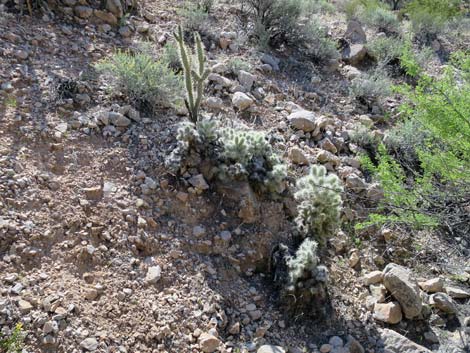
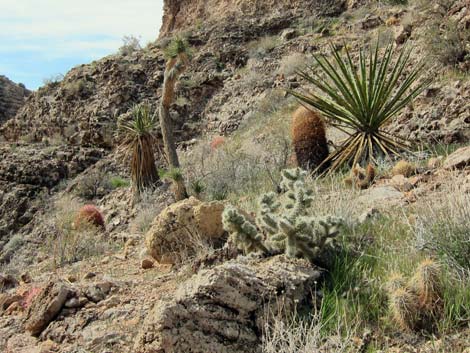
Blue Diamond Cholla on the south end of Blue Diamond Hill
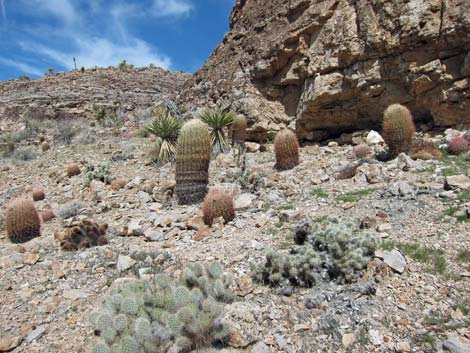 Type location: Blue Diamond Hill |
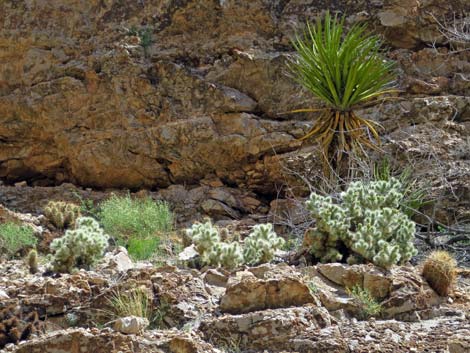 Blue Diamond Cholla on Blue Diamond Ridge |
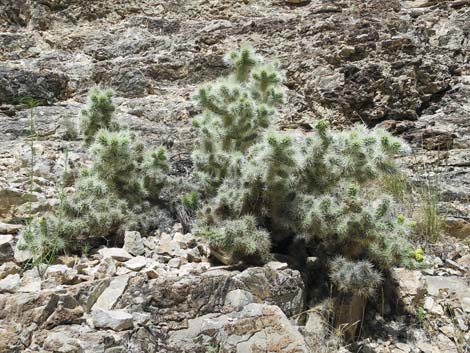 |
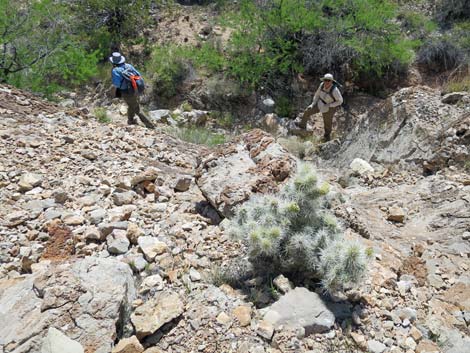 |
 |
 |
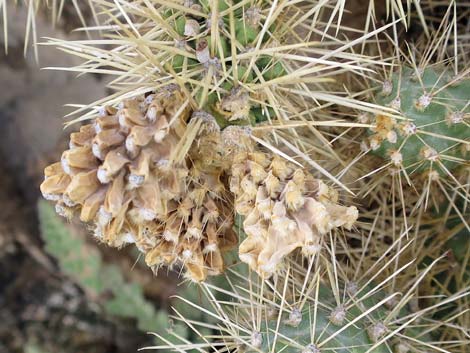 Naked fruit on Blue Diamond Hill |
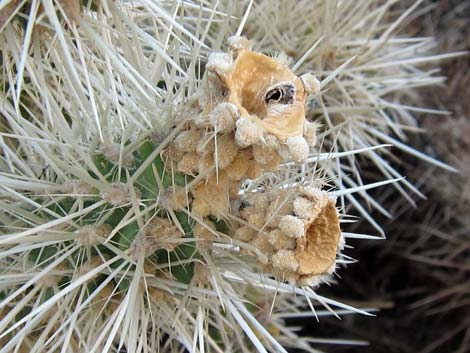 Dried, spineless fruits |
 |
 |
 |
 |
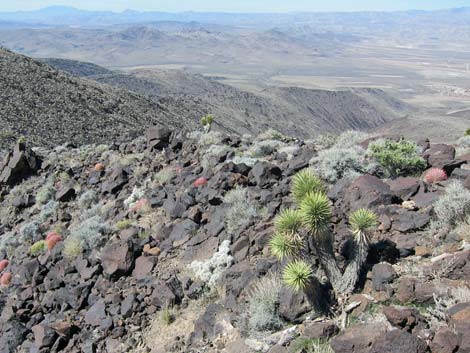
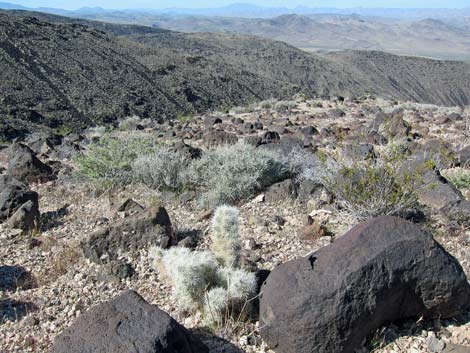
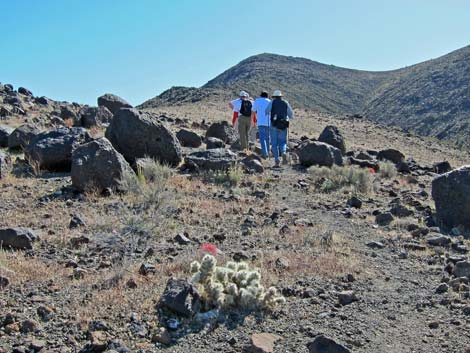
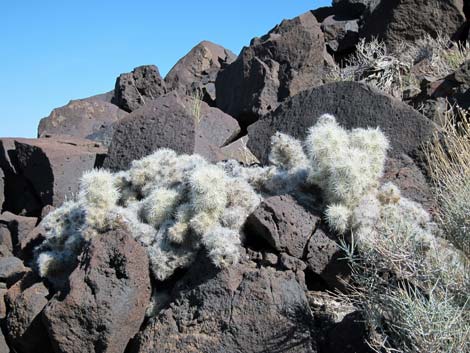
Blue Diamond Cholla in the North McCullough Wilderness Area, Fracture Ridge
 |
 |
 |
 |
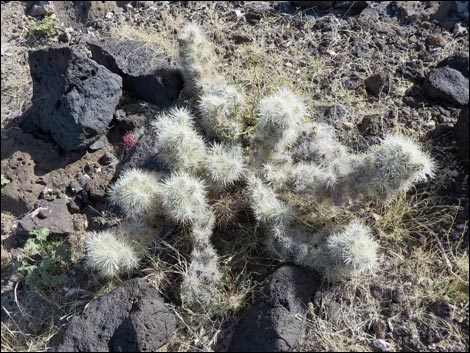 |
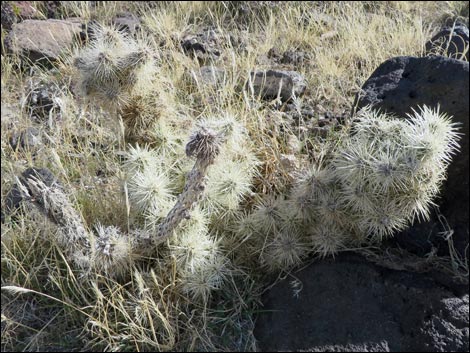 |
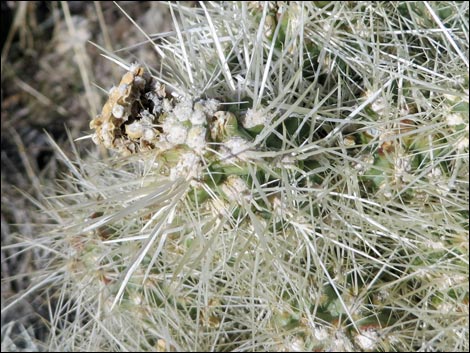 Naked fruit |
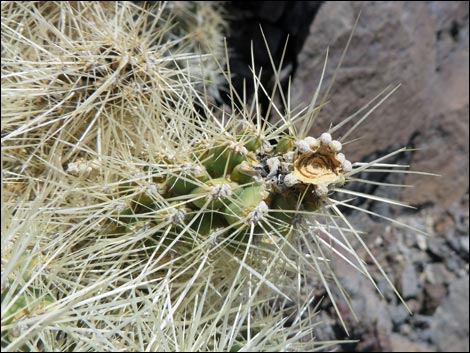 Naked fruit |
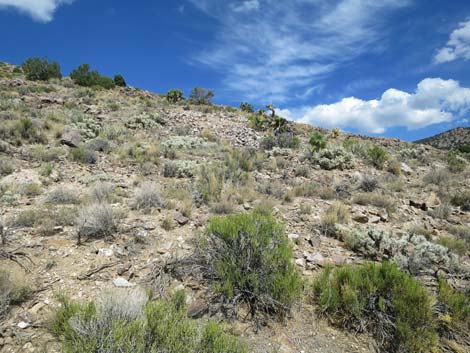
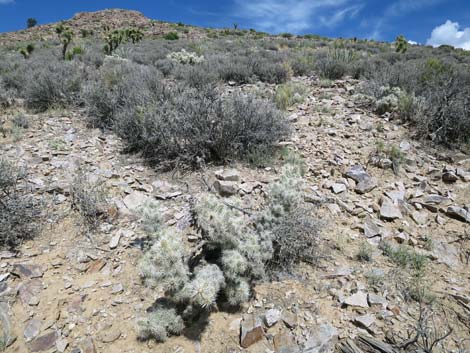
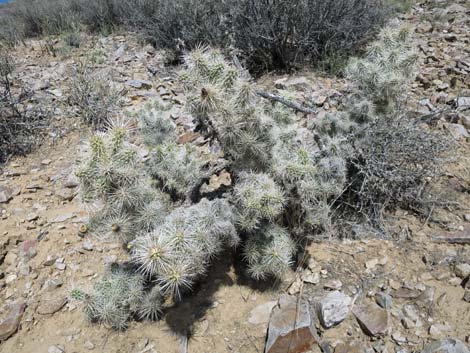
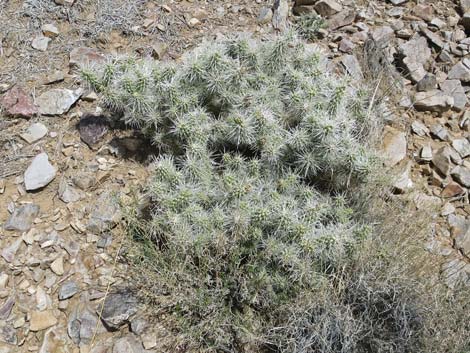
Blue Diamond Cholla at Delamar Ghost Town, Lincoln County, NV
 |
 |
 |
 |
 |
 |
 |
 |
Blue Diamond Cholla on Desert National Wildlife Refuge, Gass Peak Area
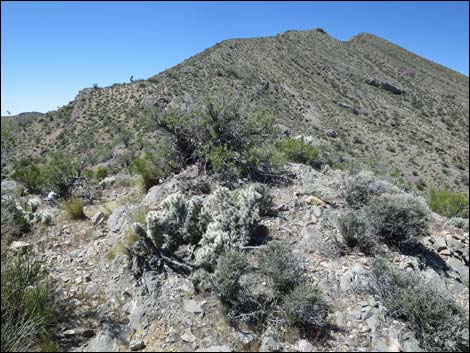
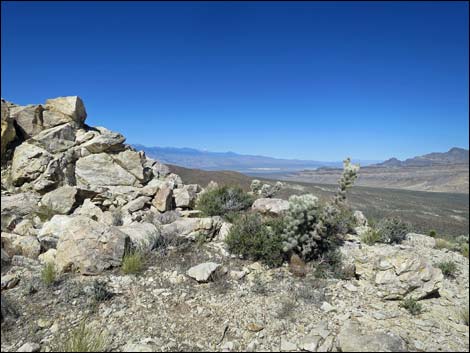 Low on Gass Peak ridge |
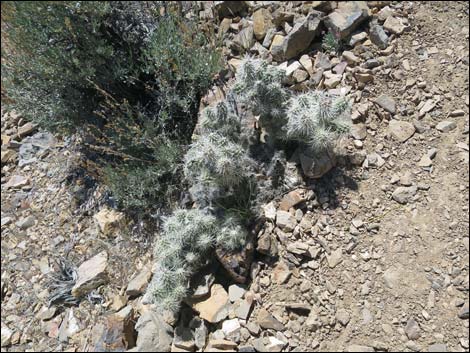
 High on Gass Peak summit ridge |
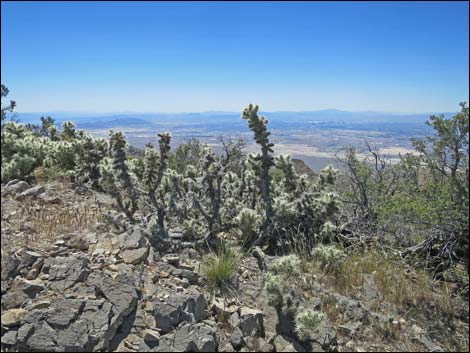
 Gass Peak summit |
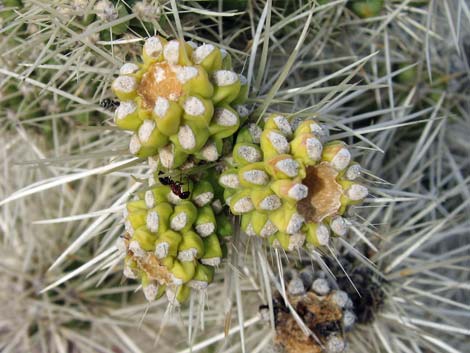 Spineless fruits |
 |
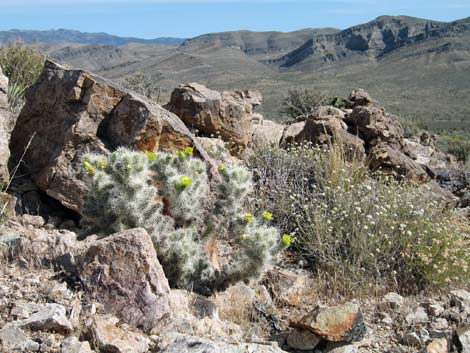 |
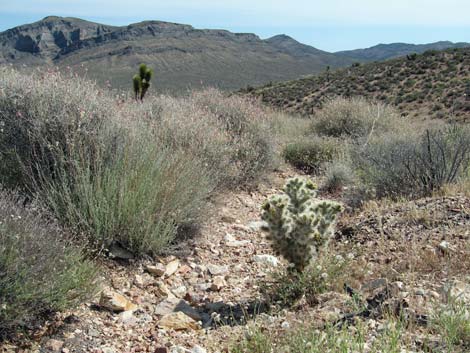 Blue Diamond Cholla |
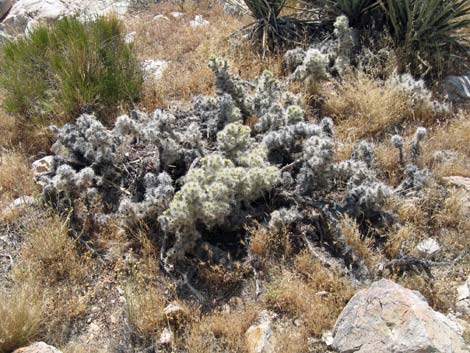 Mat growth form |
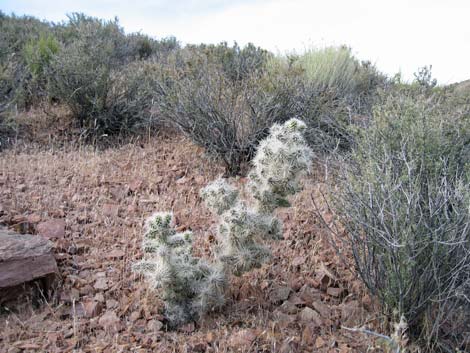 Upright growth form |
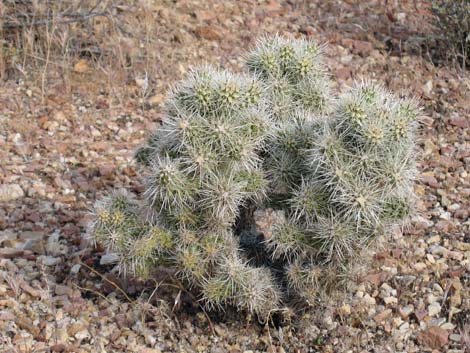 Compact growth form |
 |
 |
 |
 |
 |
 |
 |
 |
 |
 |
|
 |
 |
 |
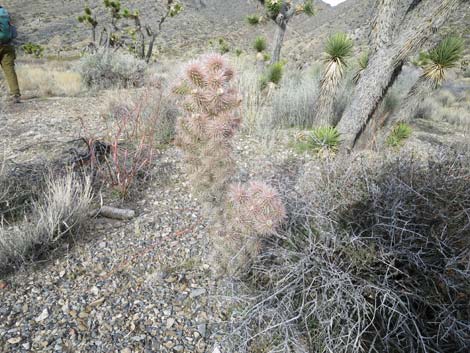 Blue Diamond Cholla with the look of a "golden" silver cholla |
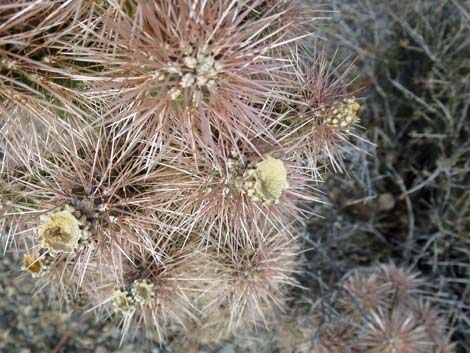 Blue Diamond Cholla with the look of a "golden" silver cholla |
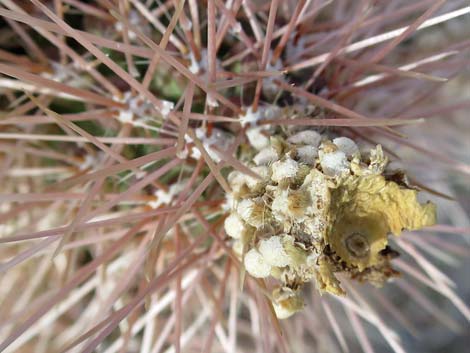 Naked fruit on Blue Diamond Cholla with the look of "golden" silver cholla |
More to come ... |
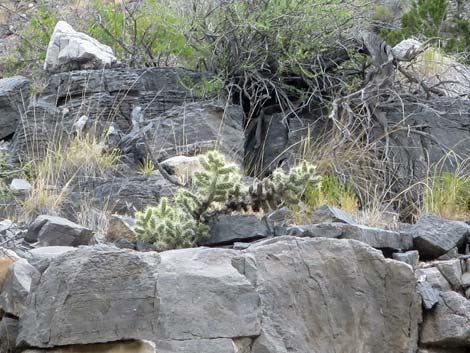
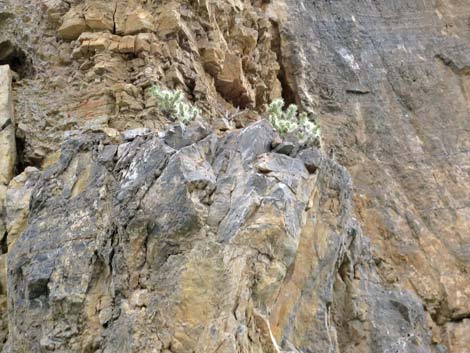
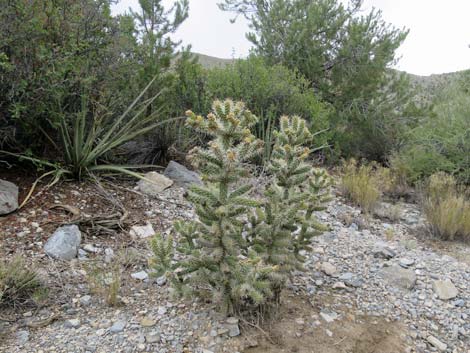
Blue Diamond Cholla on Desert National Wildlife Refuge, Mormon Well Road at Sawmill Canyon
 |
 |
 |
 |
 |
 |
 |
 |
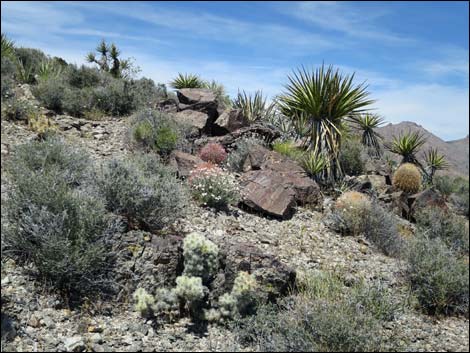
Blue Diamond Cholla in Gold Butte National Monument, Bonelli Peak Area
 |
 |
 |
 |
 |
 |
 |
 |
 |
 |
 |
 |
 |
 |
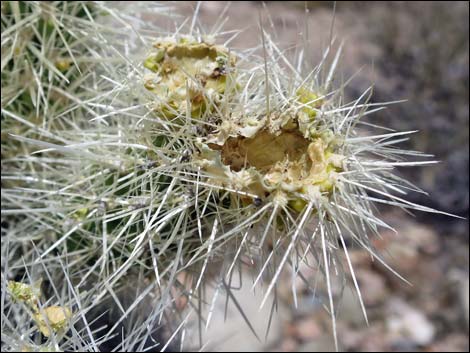 Spiny fruit |
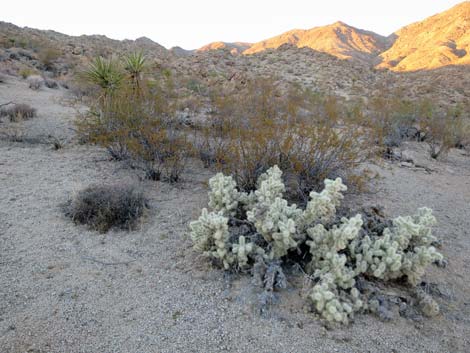 Blue Diamond Cholla in the Gold Butte region of Lake Mead NRA |
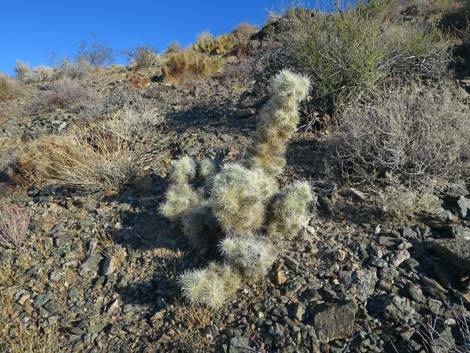 Blue Diamond Cholla in southwestern Gold Butte National Monument |
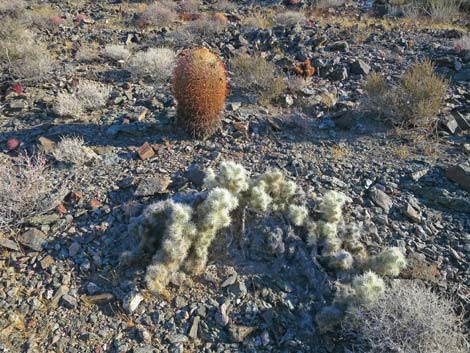 Blue Diamond Cholla in southwestern Gold Butte National Monument |
 |
 |
 |
 |
 |
|
Note: All distances, elevations, and other facts are approximate. Names generally follow the
USDA database.
 ; Last updated 200504
| All Cactus | Plant Species Index | Glossary | Copyright, Conditions, Disclaimer | Home |