
Perennial Forbs Around Las Vegas, Vegetation Around Las Vegas
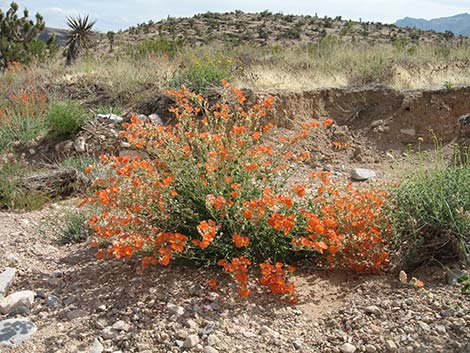 |
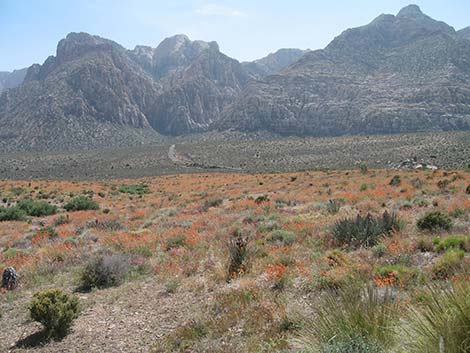
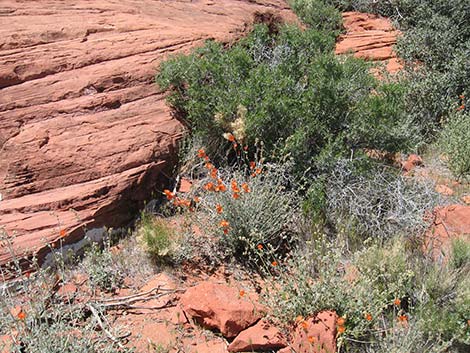
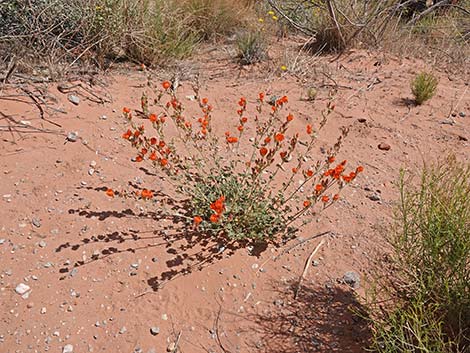
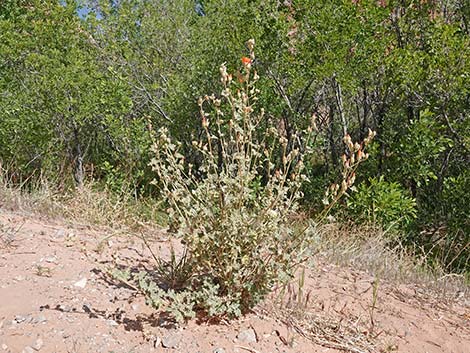
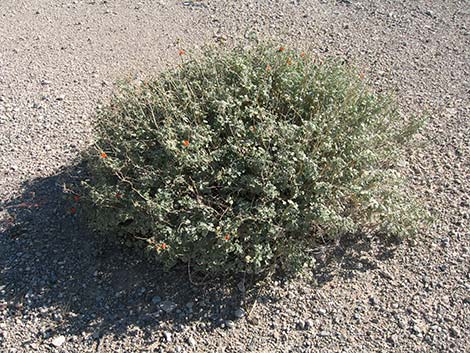
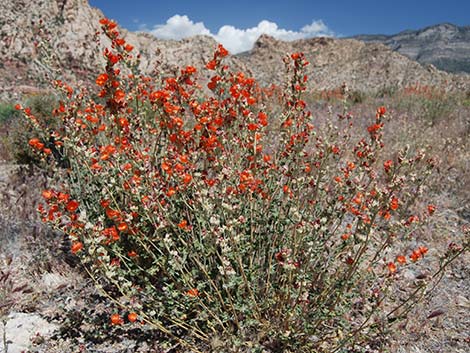
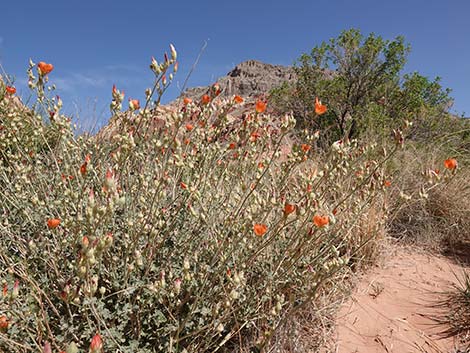
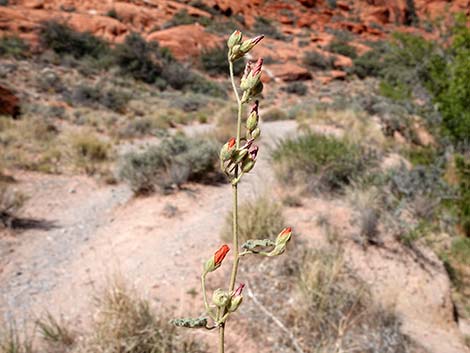
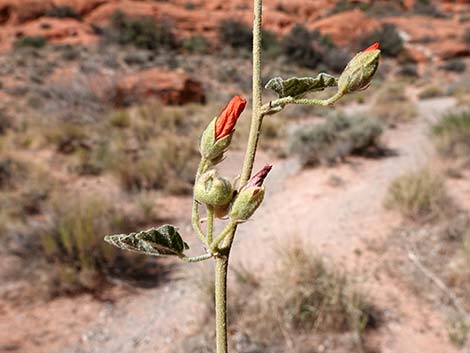
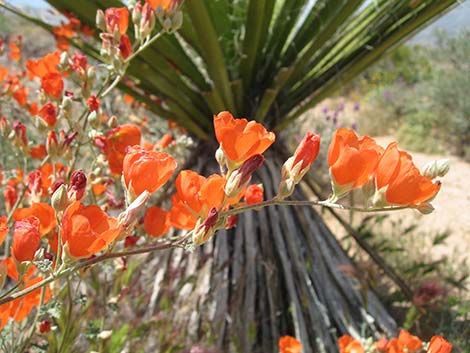
General: Desert Globemallow (Sphaeralcea ambigua) is an upright subshrub (doesn't really produce woody tissue) with many upright stems arising from the base. The leaves are pale greenish, 3-lobed (not deeply divided), crinkled, and covered with dense, fine gray, stellate (star-shaped) hairs. In spring, many orange, globe-shaped flowers are produced. Desert Globemallow is a common component of desert scrub communities on flats and bajadas in the Lower Sonoran (Creosote-Bursage Flats) and Upper Sonoran (Mojave Desert Scrub) life zones. At higher elevations, it is less common. Around Las Vegas, look for Desert Globemallow at Red Rock Canyon, Lake Mead National Recreation Area, Mojave National Preserve, and on the Desert National Wildlife Range. Family: Mallow (Malvaceae). Other Names: Apricot Mallow. |
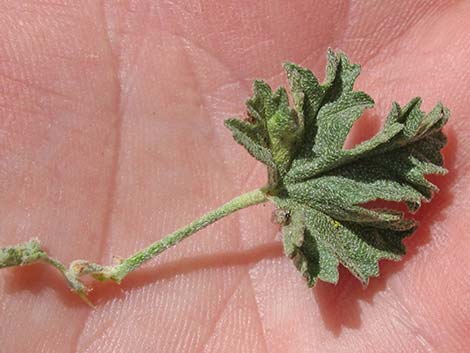 |
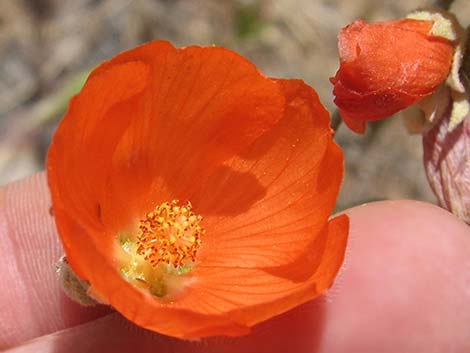
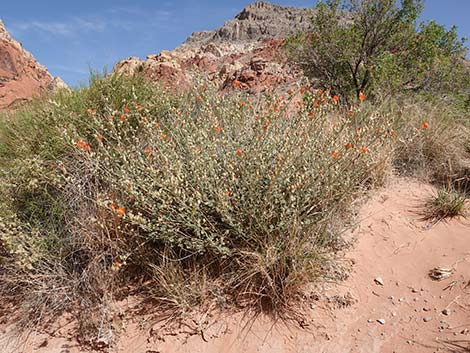
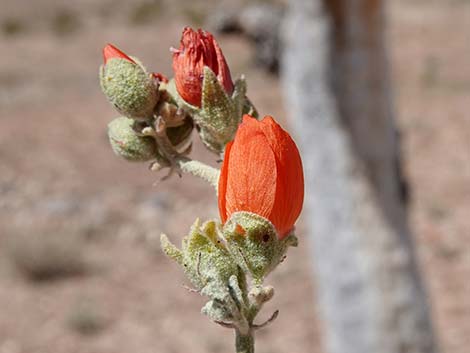
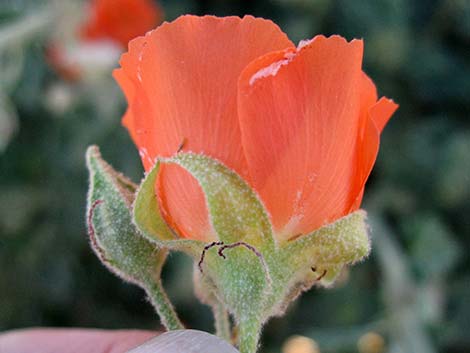
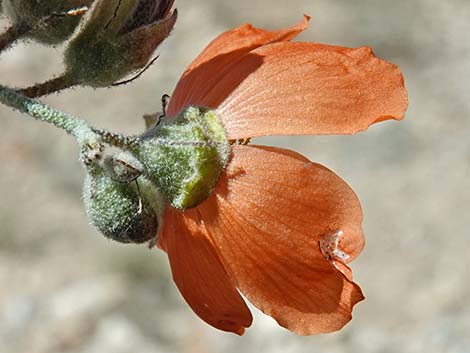
Plant Form: Many upright branches from the base. Height: To 3-4 feet. Stems: Upright, many stems from base. Stems covered with dense, fine gray hairs (canescent). Leaves: About 1-2 inches long, triangular, 3-lobed (not deeply divided), wavy. Leaves covered with dense, fine gray hairs (canescent). Flowers: Blooms in the spring, and then again as late as late November if conditions permit. Inflorescence: flowers arise along upper stems. Flower orange (apricot), radial; petals 5; stamens many, pistil 1. Petals overlap to form a globe-shaped flower. |
 |
Seeds: Fruit segmented, two seeds per segment. Habitat: Desert scrub. Elevation: About 500 to 8,000 feet. Distribution: Southwestern U.S. including California, Nevada, Utah, and Arizona. Comments: Inconspicuous most of the year, desert globemallow covers the desert with orange flowers during the spring bloom. |
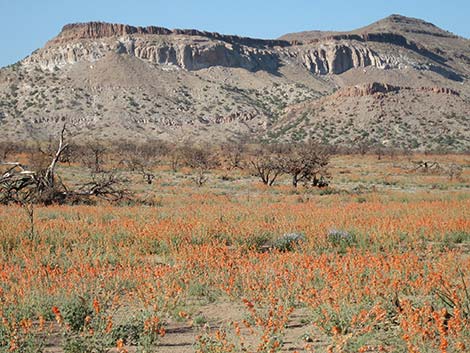 After a desert wildfire, Desert Globemallow can be spectacular |
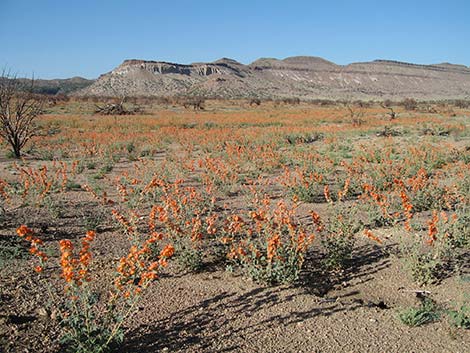 After a desert wildfire, Desert Globemallow can be spectacular |
 |
 |
 |
 |
 |
 |
Top of leaf: leaf covered with dense, fine gray hairs |
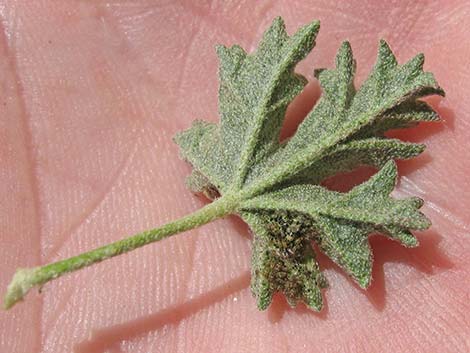 Bottom of leaf: note aphids hiding under the leaf |
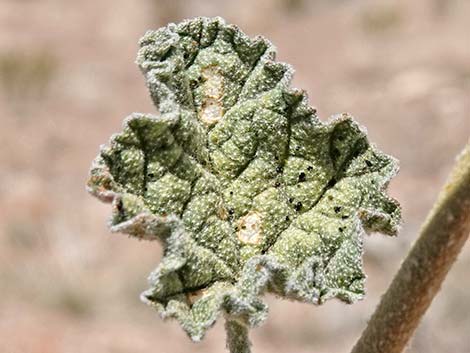 Top of leaf: leaf covered with dense, fine gray hairs |
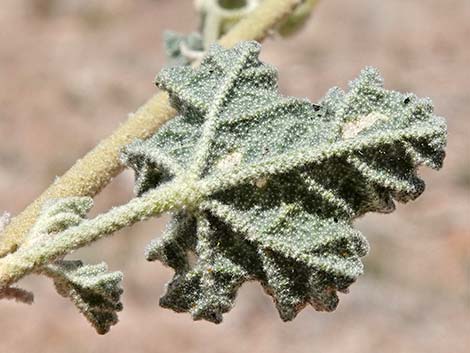 Bottom of leaf |
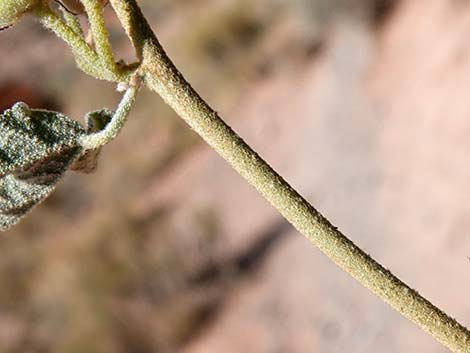 Stem covered with dense, fine gray hairs |
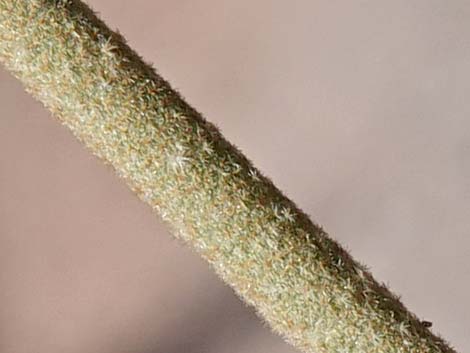 Stem details: stellate (star-shaped) hairs |
 |
 |
 |
 |
 |
 |
 |
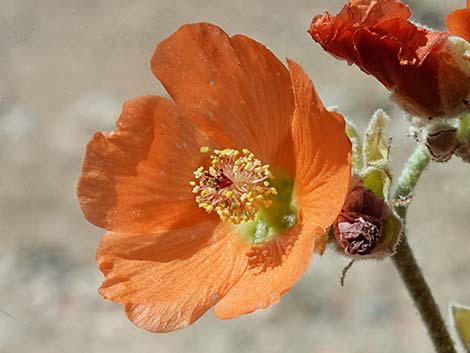 |
Flowers are orange and radial, with a clump of stamens in the center |
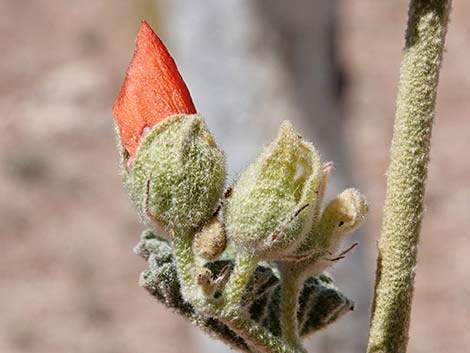
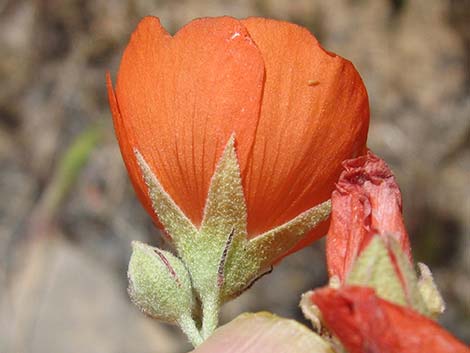 Sepals, like the rest of the plant, covered with dense, fine hairs |
 |
 |
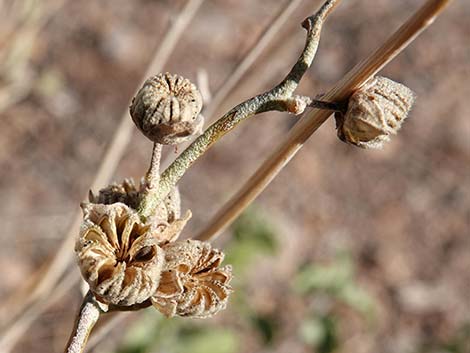 Dried flowerheads (loculicidal fruit capsules) |
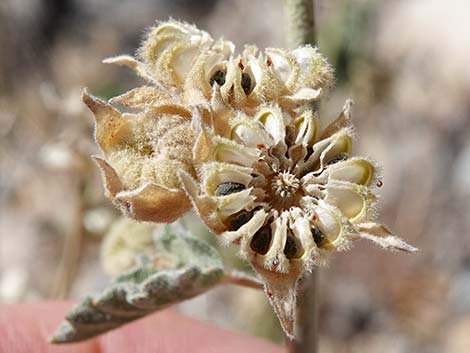 Fruit capsules with black seeds |
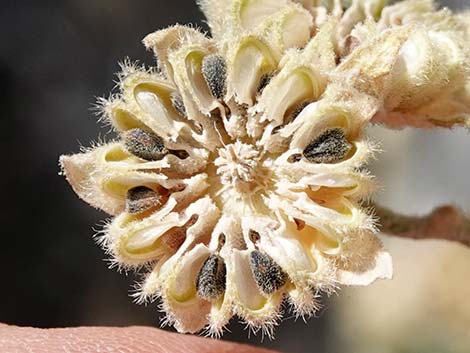 Fruit capsule with black seeds |
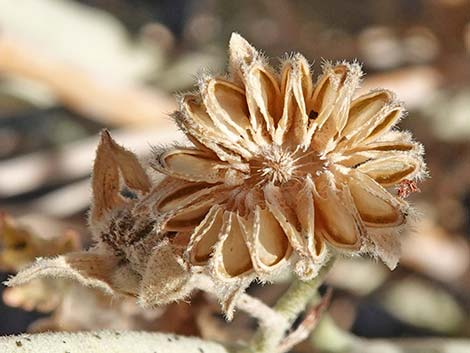 Empty fruit capsule (seeds have scattered) |
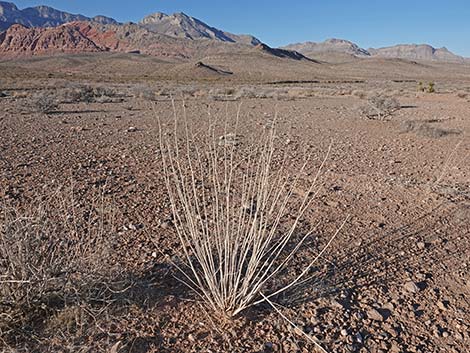 Desert Globemallow on a winter landscape |
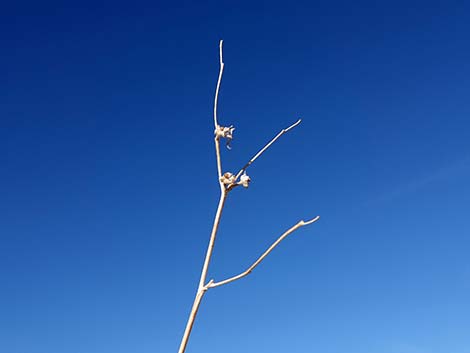 Desert Globemallow stems with dried flowers during winter |
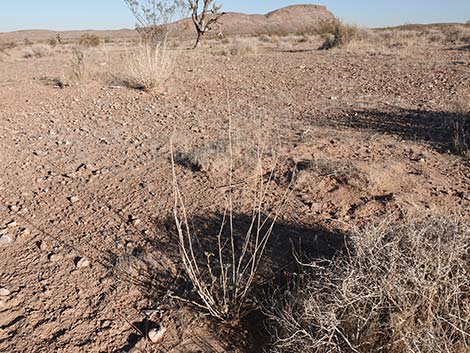 Desert Globemallow during late winter: leaves beginning to sprout |
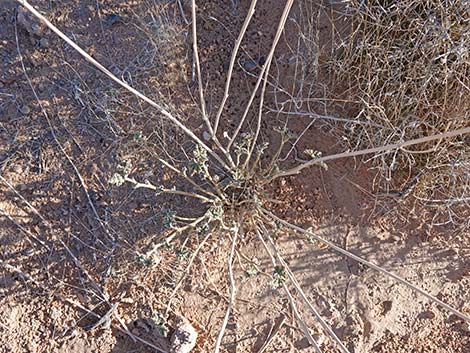 Desert Globemallow during late winter: leaves beginning to sprout |
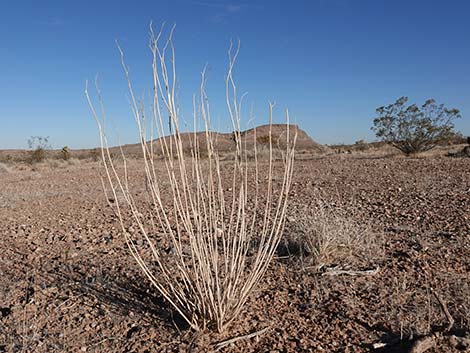 Desert Globemallow during late winter: leaves beginning to sprout |
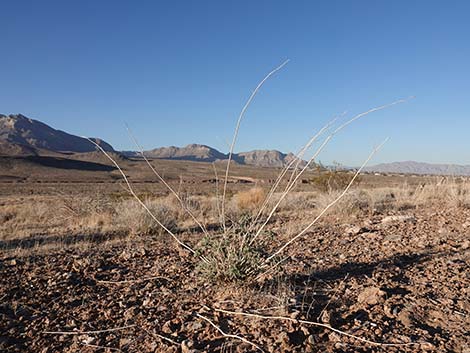 Desert Globemallow during late winter: leaves beginning to sprout |
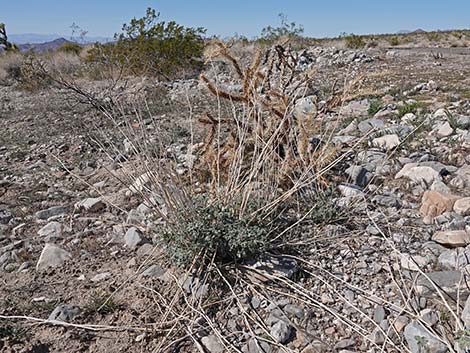 During late winter, leaves sprout from the base |
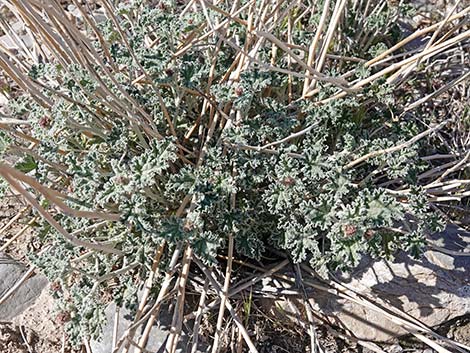 During late winter, leaves sprout from the base |
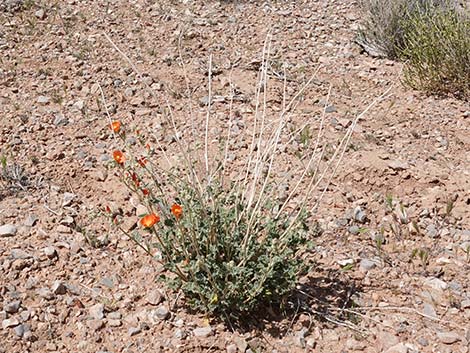 During early spring, flower emerge alongside old stems |
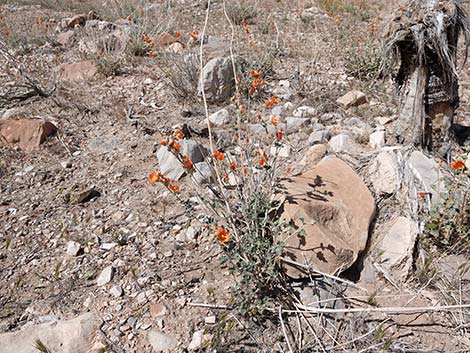 During early spring, flower emerge alongside old stems |
Note: All distances, elevations, and other facts are approximate. Names generally follow the USDA database.
 ; Last updated 240629
| All Shrubs | Plant Species Index | Glossary | Copyright, Conditions, Disclaimer | Home |