
Lizards Around Las Vegas, Wildlife Around Las Vegas
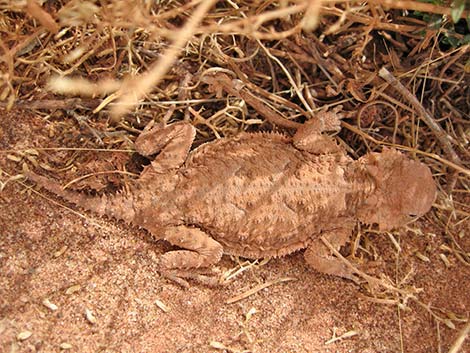 Adult Greater Short-horned Lizard |
General Description: Greater Short-horned Lizards (Phrynosoma hernandesi) are small to medium-sized (2 to 4 in.) lizards with broad, flattened bodies and a row of very short horns on the back of the head. With a toad-like body form, these lizards are often called "horny toads." This species of Horned Lizard does not occur in southern Nevada. Look for them at the Grand Canyon, Zion, and places farther east and north. Taxonomy: Phrynosomatid Lizard Family (Phrynosomatidae). Formerly Phrynosoma douglassii, a name now used for the more northern Pygmy Short-Horned Lizard. Technical Description: Body length to 4 in.; tail about 1 in. Body flat. Edge of sides with one row of small, fringed scales. Head fringed with row of very short horns. Some dorsal scales sharp-pointed. Throat scales all small. Dorsum blotched with pattern and color resembling the background; base color beige, tan, or reddish; sides of neck with dark blotches. Ventral color cream; often tinge of light yellow on base of throat and chest. Snout blunt. |
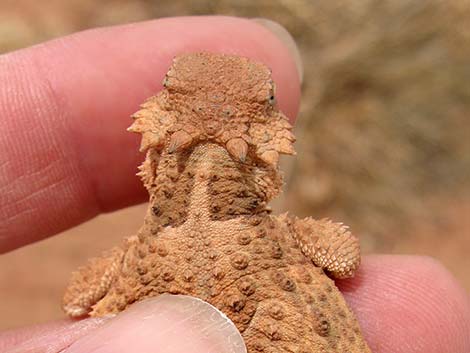 Adult Greater Short-horned Lizard: horns very short |
Diet: These lizards eat ants; occasionally eating other slow-moving insects, beetles, and spiders. Often found near anthills where they sit and wait for passing ants. Habitat: These lizards occur in mid- to higher-elevation habitats, including desert grasslands, Pinyon-Juniper Woodland, yellow pine forests, and pine-fir forests. This species is more cold-tolerant than other species of horned lizards. Range: The species occurs from southern Canada to central Mexico, from eastern Oregon east to the Dakotas and south into Arizona and New Mexico; usually at higher elevations. Breeding: Give birth to 5-36 live young during summer. |
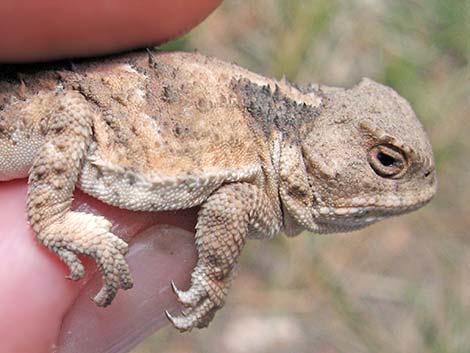 Juvenile showing single row of fringe scales |
Similar Species: These are the only horned lizards with very short horns and a single row of fringe scales on the sides of the body. Comments: Although Horned Lizards are gentle, they can hiss, threaten to bite, and puff up with air to look bigger and fiercer. In areas with soft sand, they will shake themselves vigorously, throwing sand over their backs and leaving only their head exposed so they can hide from predators while waiting for passing ants. Often called "horny toads," these lizards are favored as pets. However, they rarely survive in captivity because of difficulties in adequately providing their specialized diet of ants. |
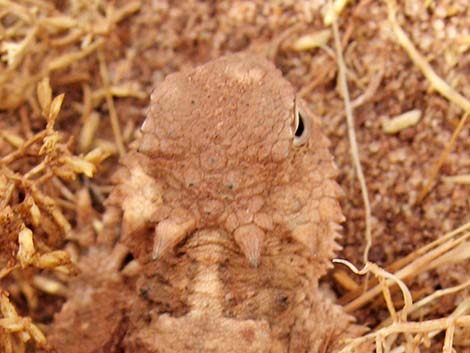 Adult Greater Short-horned Lizard: horns very short |
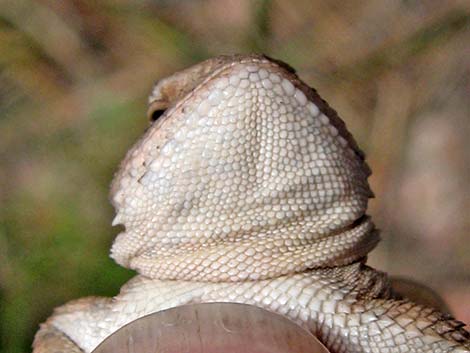 Adult Greater Short-horned Lizard: all chin scales small |
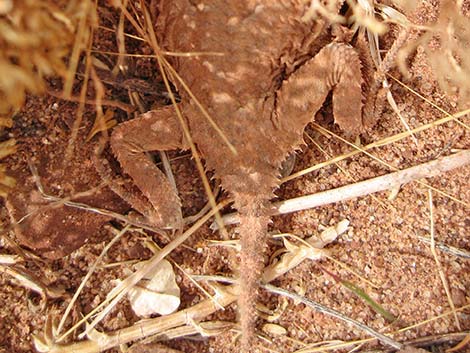 Adult Greater Short-horned Lizard: spiny tail |
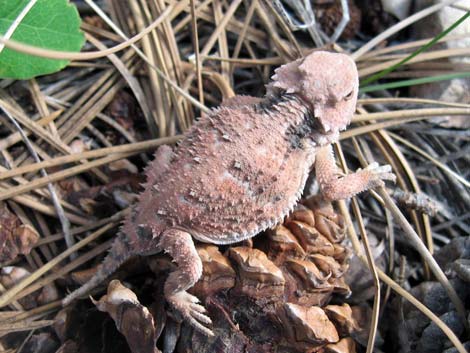 Subadult Greater Short-horned Lizard: horns tiny |
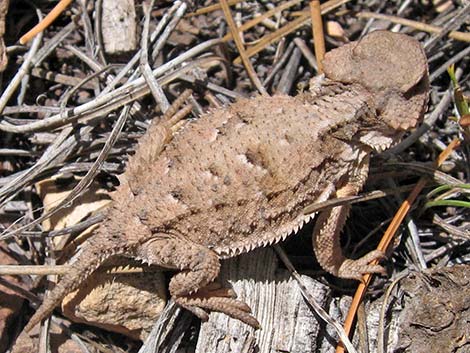 Juvenile Greater Short-horned Lizard: horns are just nubs |
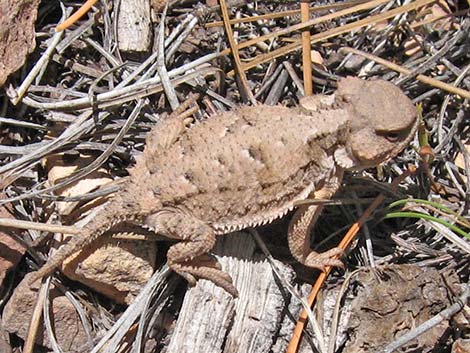 Juvenile Greater Short-horned Lizard: horns are just nubs |
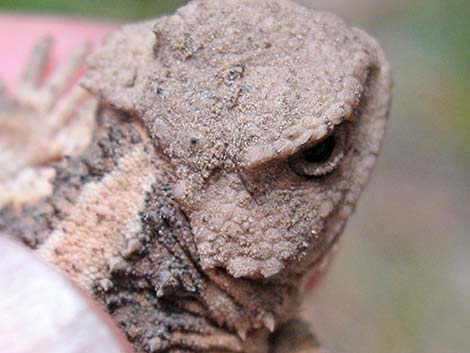 Juvenile Greater Short-horned Lizard: horns are just nubs |
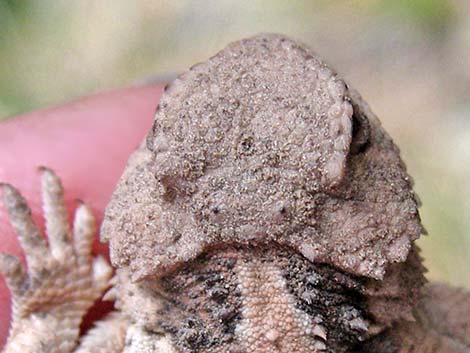 Juvenile Greater Short-horned Lizard: horns are just nubs |
Note: All distances, elevations, and other facts are approximate.
 ; Last updated 240309
| Lizards Around Las Vegas | Wildlife Around Las Vegas | Glossary | Copyright, Conditions, Disclaimer | Home |