
Perennial Forbs Around Las Vegas, Vegetation Around Las Vegas
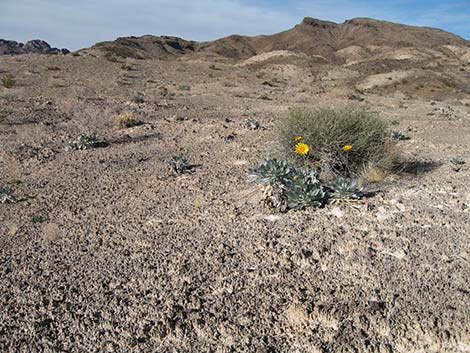 |
General: Silverleaf Sunray (Enceliopsis argophylla) is a perennial forb that grows only in gypsum-rich soils. The silvery-gray leaves grow in a clump at the base of the plant, although as the plant ages, new leaves grow atop old dead leaves, forming a "stalk" of live and dead leaves. The large, yellow, and daisy-like flowers grow atop long leafless stalks. Silverleaf Sunray occurs in eroded, gypsum-rich soils near Lake Mead, which is in the Upper Sonoran (Mojave Desert Scrub) life zone. These plants can most easily be seen along Northshore Road (Lake Mead NRA). They also occur in the Gold Butte region and along the south side of Lake Mead near Bonelli Landing (towards Temple Bar). Family: Sunflower (Asteraceae). Other Names: |
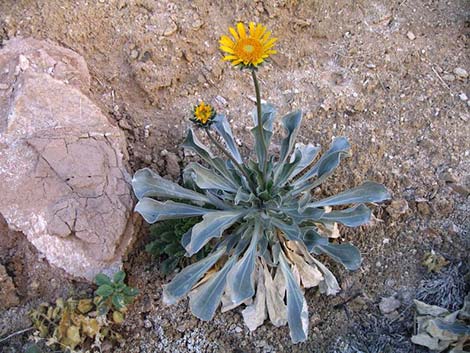 |
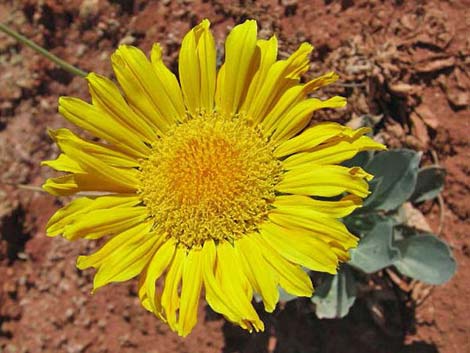
Plant Form: Basal clump of leaves with flowers on long stalks. The basal clump of leaves sometimes forms a "stalk" of live and old dead leaves. Height: Leaf clump to about 6 inches (12-inch "stalk"); flower stalk to about 18 inches Stems: None (not counting the flower stalk). Leaves: Grayish, long (to 6 inches) and narrow (to 0.5 inches). Thick and smooth, densely covered with short fine hairs (pressed against the leaves) that create a silvery appearance. Petioles with wings. Flowers: Large, yellow daisy-like flowers, 3 to 4 (6) inches across. These large flowers develop slowly, so it is not uncommon to find fresh, rayless flowers. Seeds: |
 |
Habitat: Restricted to eroded, gypsum-rich soils. Occurs in Clark and Nye counties, and can be seen most easily near Lake Mead. Elevation: About 3,500 feet. Distribution: This species is endemic to the Lake Mead region in southeastern Clark County, Nevada and Mohave County in northwestern Arizona. It can be found near Lake Mead in gypsum-rich soils. Comments: This unusual plant is often found in association with other gypsum-soil plants including California (Las Vegas) Bearpoppy (Arctomecon californica), Palmer's Phacelia (Phacelia palmeri), and Parry’s Sandpaper Bush (Petalonyx parryi). This species has been considered for protection under the Endangered Species Act. |
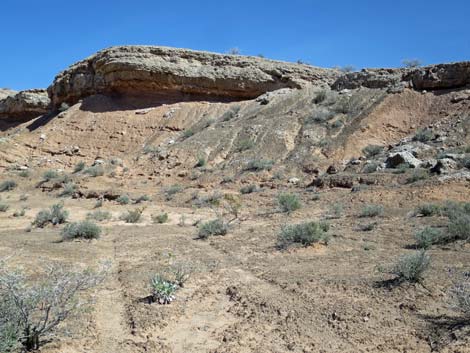 Silverleaf Sunray in Gold Butte National Monument |
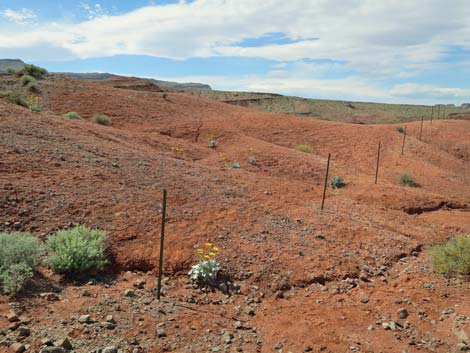 Silverleaf Sunrays near Little Finland, Gold Butte National Monument |
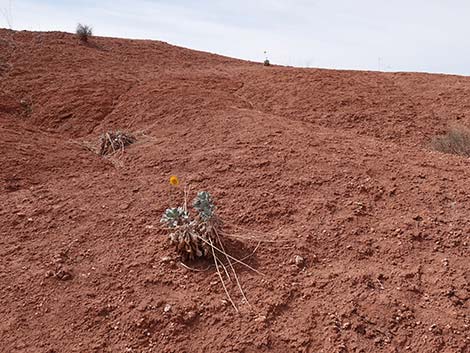 Silverleaf Sunray in mud-hills habitat |
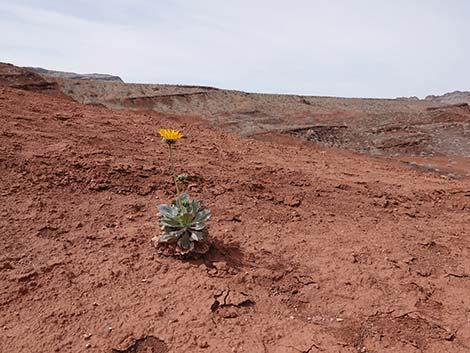 Silverleaf Sunray in mud-hills habitat |
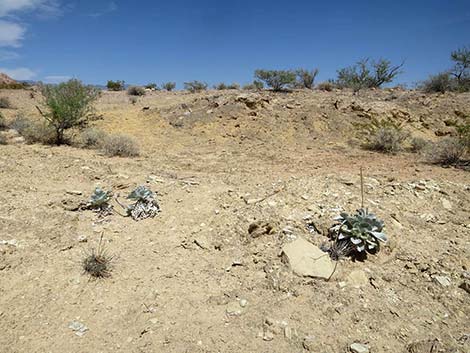 Silverleaf Sunray in mud-hills habitat |
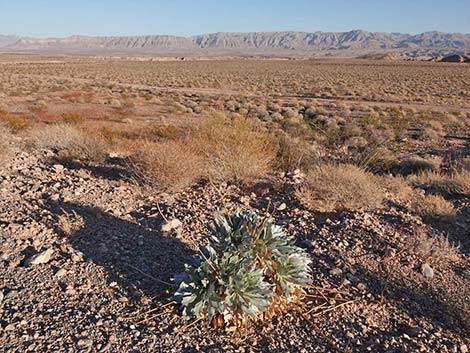 Silverleaf Sunray seem to like disturbed habitats with gypsum soils |
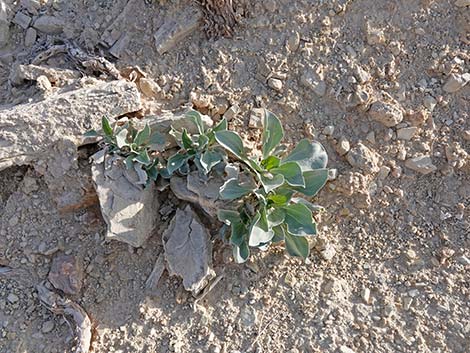 Young Silverleaf Sunray plant |
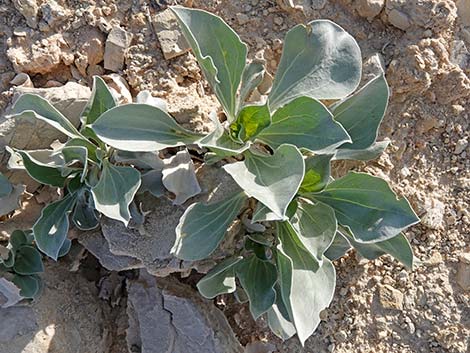 Young Silverleaf Sunray plant |
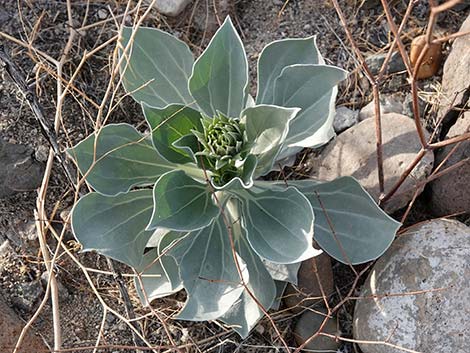 Young Silverleaf Sunray plant |
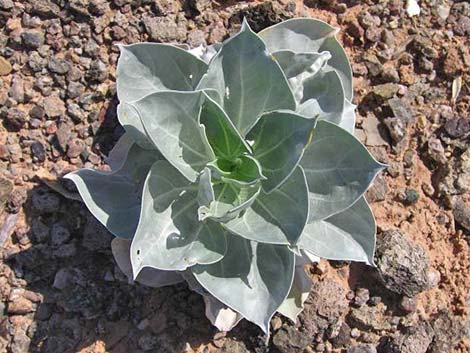 Leaf on young Silverleaf Sunray plant |
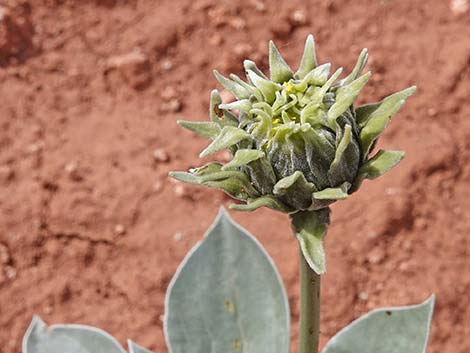 Silverleaf Sunray flower bud ready to open |
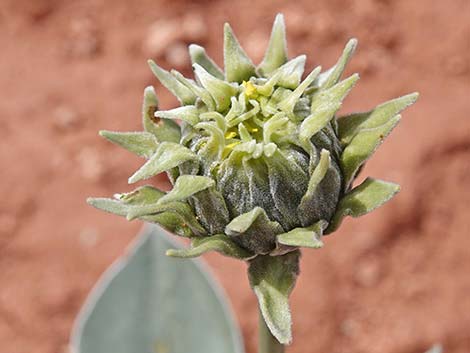 Silverleaf Sunray flower bud ready to open |
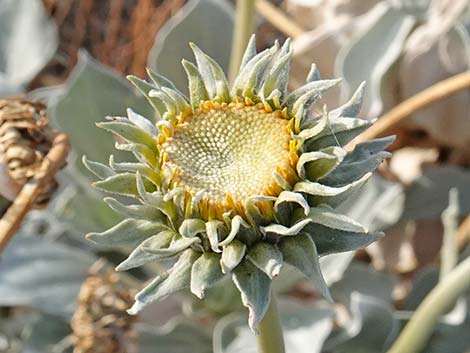 Silverleaf Sunray flower bud opening |
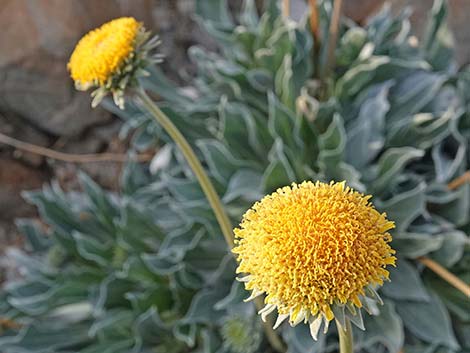 Newly opened Silverleaf Sunray flower (note lack of ray-flowers [petals]) |
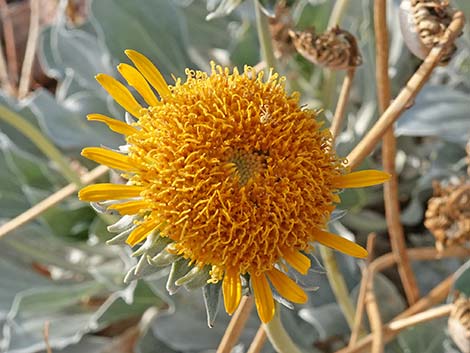 Newly opened Silverleaf Sunray flower (note ray-flowers emerging) |
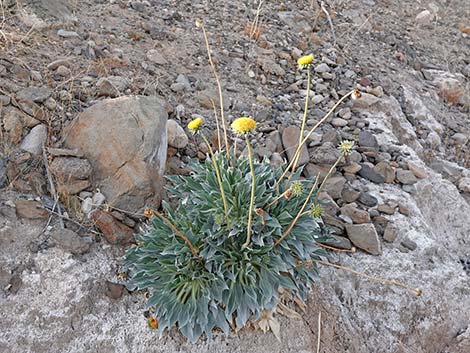 Silverleaf Sunray with newly opened flowers |
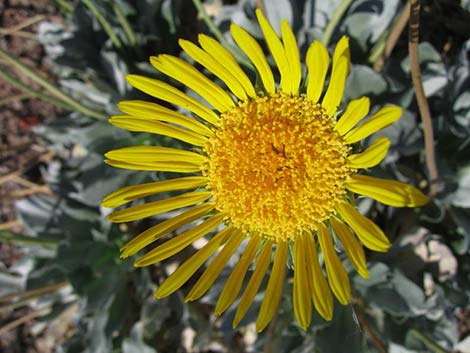 Newly opened Silverleaf Sunray flower (note ray-flowers almost full) |
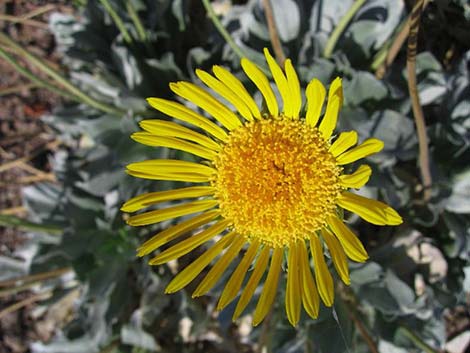 Newly opened Silverleaf Sunray flower (note ray-flowers almost full) |
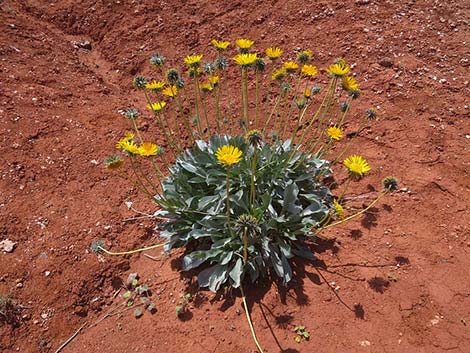 Silverleaf Sunray with numerous, fully developed flowers |
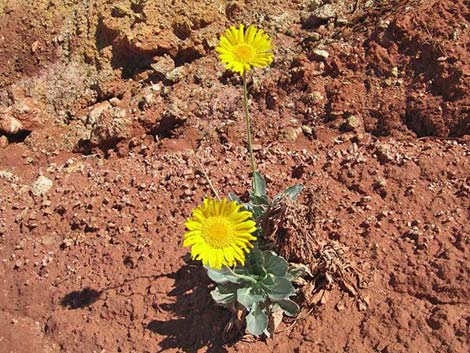 Silverleaf Sunray with fully developed flowers |
Small Silverleaf Sunray tend to have few flowers |
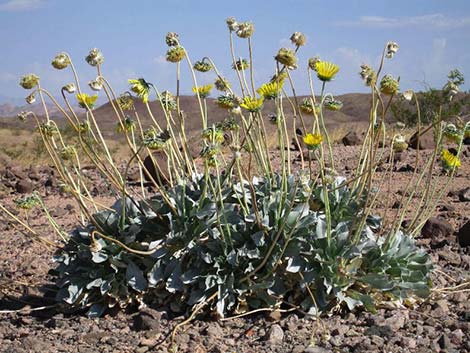 Large Silverleaf Sunray tend to have many flowers |
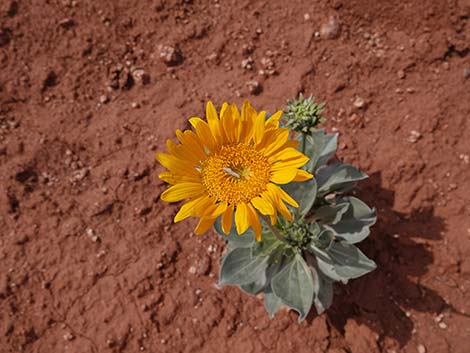 Silverleaf Sunray flower |
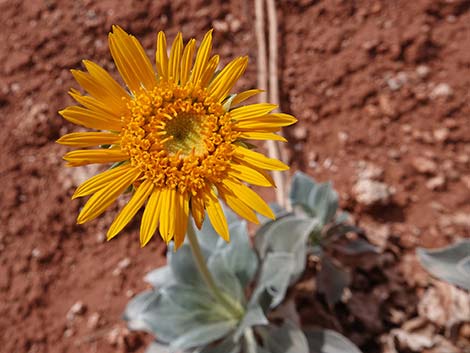 Silverleaf Sunray flower |
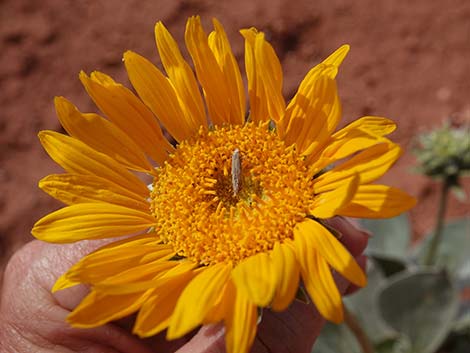 Silverleaf Sunray flower with a moth pollinator |
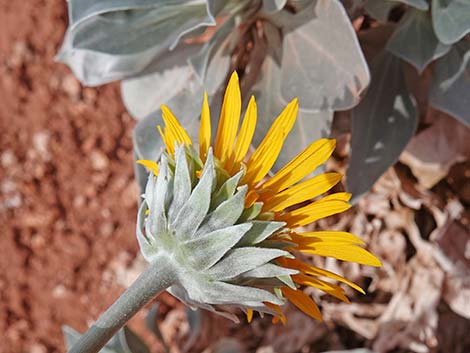
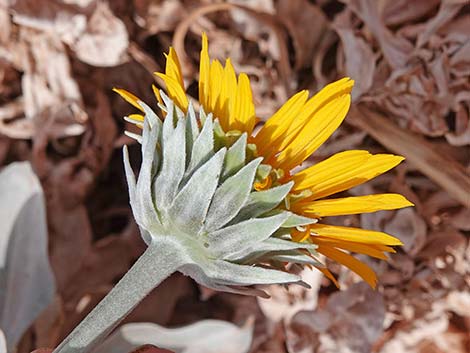
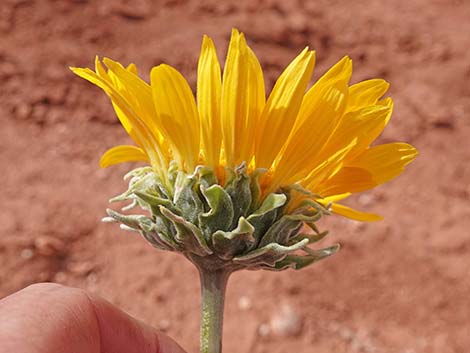 Silverleaf Sunray flower (from the side) |
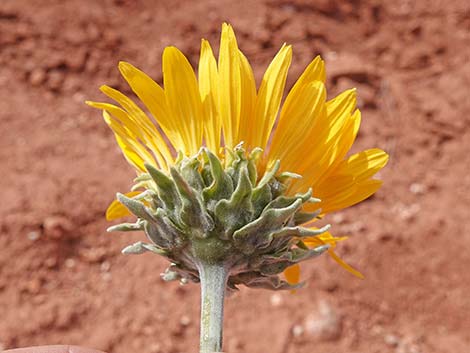 Silverleaf Sunray flower (from the side) |
 |
 |
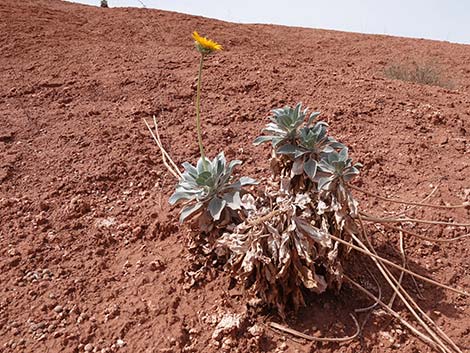 Older Silverleaf Sunray plants tend to develop a stalk |
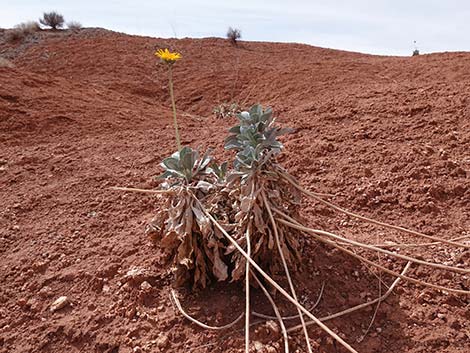 Older Silverleaf Sunray plants tend to develop a stalk |
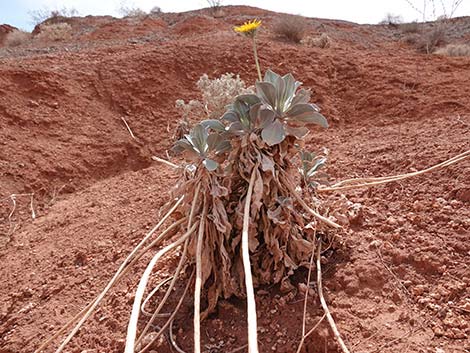 Older Silverleaf Sunray plants tend to develop a stalk |
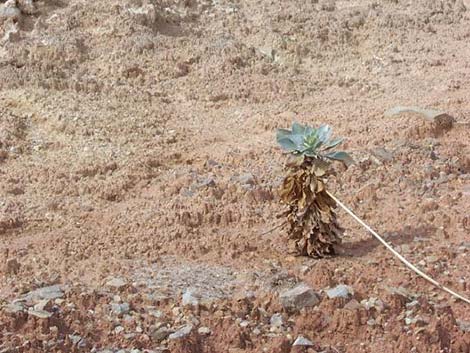 Not-so-old Silverleaf Sunray growing on a stalk |
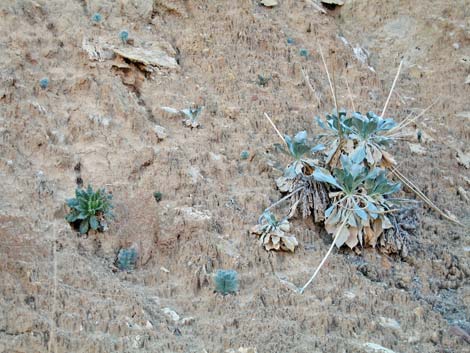 Silverleaf Sunray during winter |
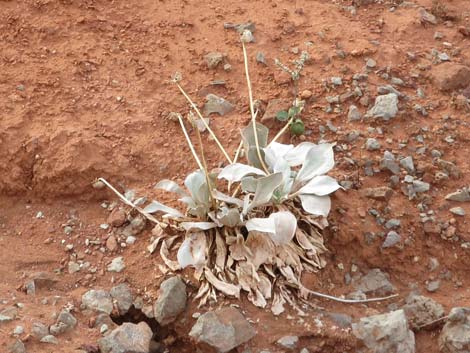 Silverleaf Sunray on red mud soils during winter |
Note: All distances, elevations, and other facts are approximate. Names generally follow the USDA database.
 ; Last updated 220619
| All Perennial Forbs | Plant Species Index | Glossary | Copyright, Conditions, Disclaimer | Home |