
Shrubs Around Las Vegas, Vegetation Around Las Vegas
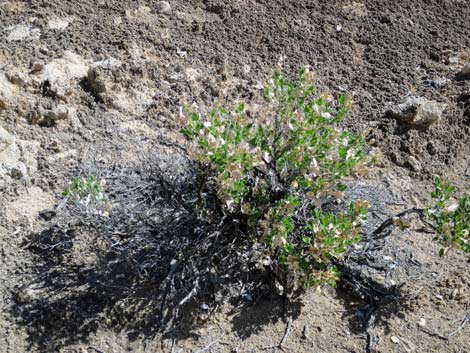 |
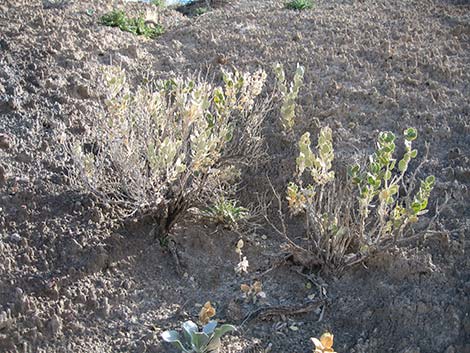
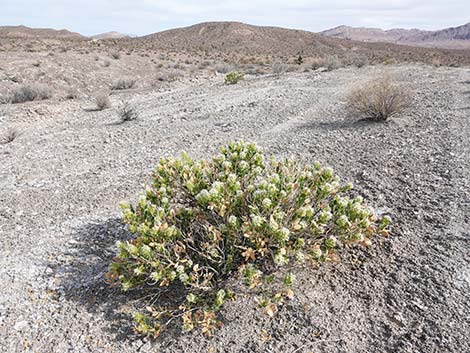
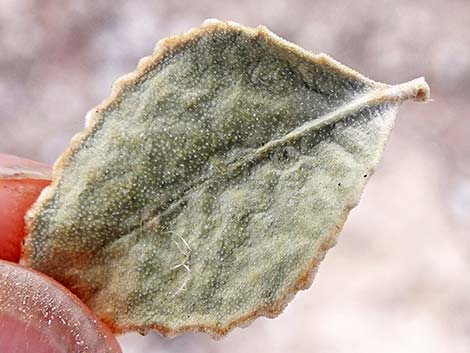
General: Parry's Sandpaper Plant (Petalonyx parryi) is a rare plant found only on gypsum-rich soils, although on these soils, it can be locally common. The plant is an upright shrub growing to about 3-feet tall with stiff stems and stiff, thick, oval leaves with rough surfaces (somewhat like sandpaper). The leaves are coarsely notched, and they feel like they have a thick layer of gypsum crusted on the surface. Parry's Sandpaper Plant is an uncommon component of vegetation communities on gypsum-rich soils in the Upper Sonoran (Mojave Desert Scrub) life zone. Gypsum-rich soils are rare in the Mojave Desert, and therefore this plant is considered rare. Around Las Vegas, look for this species at Lake Mead National Recreation Area and in Gold Butte National Monument. Family: Loasa (Loasaceae). Other Names: |
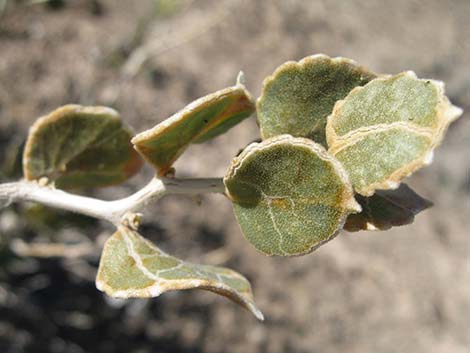 |
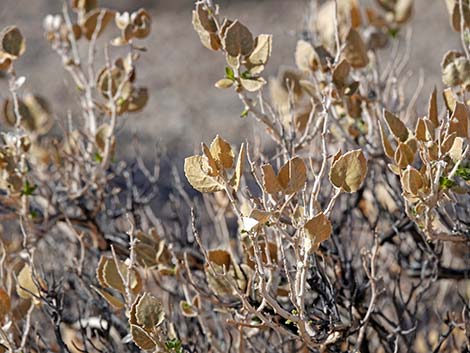
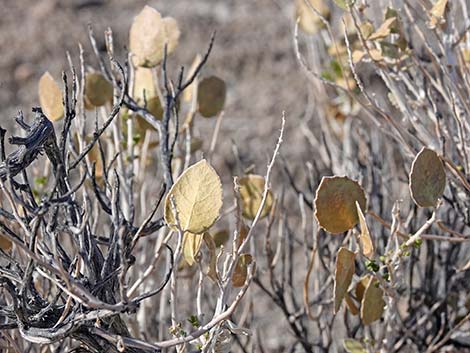
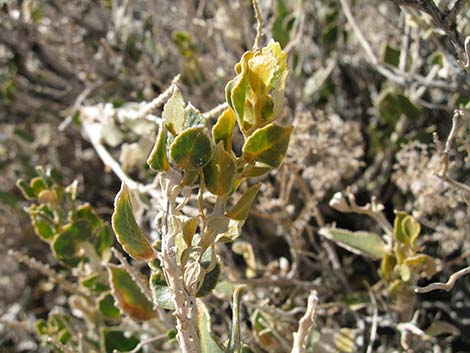
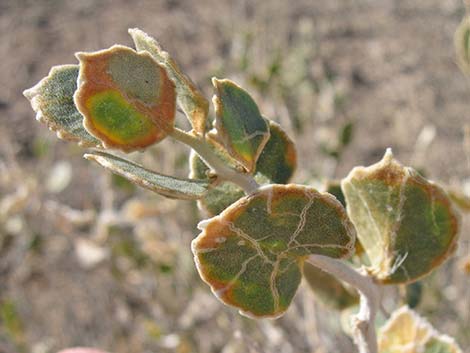
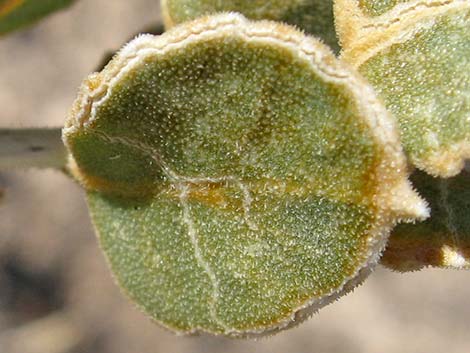
Plant Form: Upright shrub. Height: To about 5 feet. Bark: White. Stems: Upright, stiff. Leaves: Oval (about 1/2 to 1-1/2 inches long, 1/2 to 1 inches across) coarsely toothed. Leaf surface rough; feels like it is encased in a layer of gypsum. |
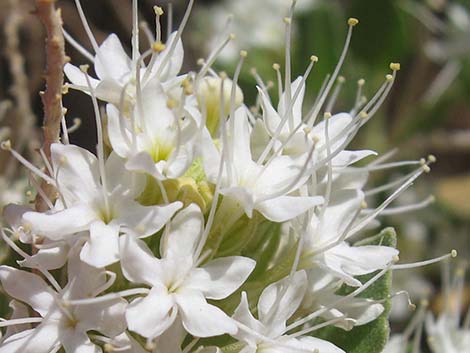 |
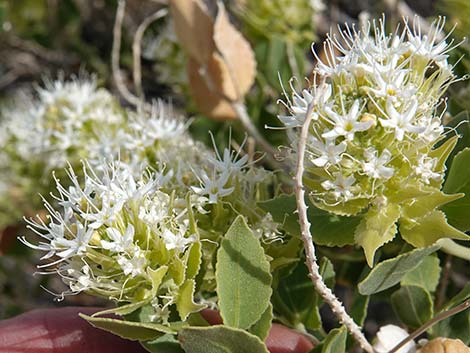
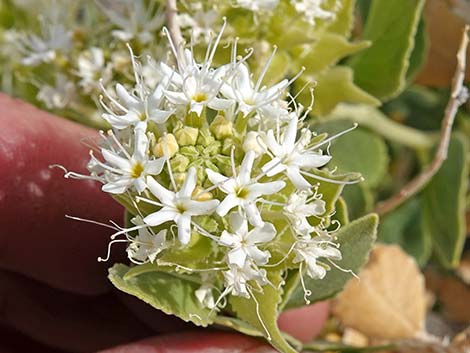
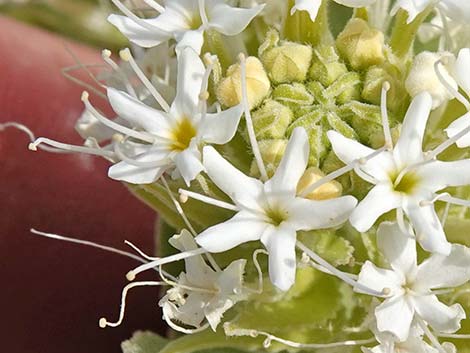
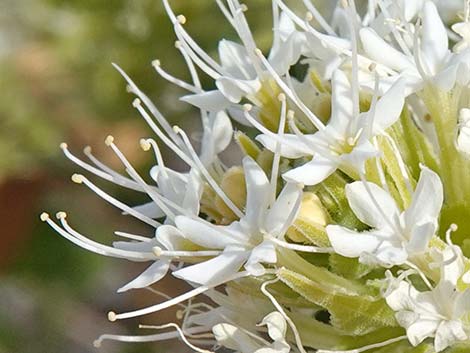
Flowers: Inflorescence: spike with up to 65 flowers towards the tip. Flowers: cream; petals about 1/2 inch long; stamens extent beyond petals. Seeds: Fruit: tiny capsule. Habitat: Restricted to gypsum-rich soils. Elevation: About 2,000 to 4,000 feet Distribution: Southern California to southwestern Utah and northwestern Arizona. Comments: This unusual plant is often found in association with other gypsum-soil plants including California (Las Vegas) Bearpoppy, Silverleaf Sunray, and Palmer's Phacelia. |
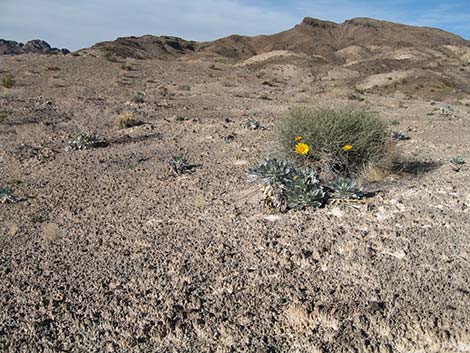 Typical habitat |
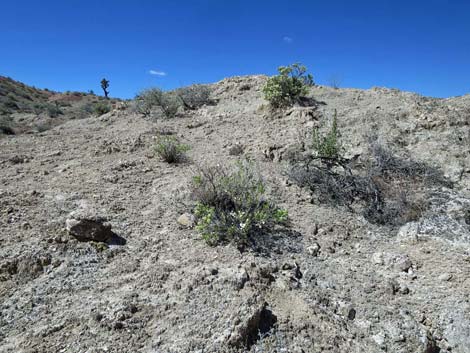 Typical habitat |
 |
 |
 |
 |
 |
 |
 |
 |
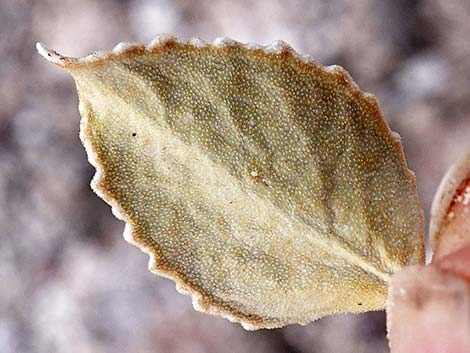 Stiff, thick, oval leaves with rough surface |
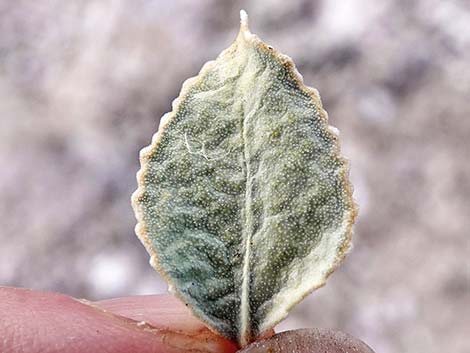 Stiff, thick, oval leaves with rough surface |
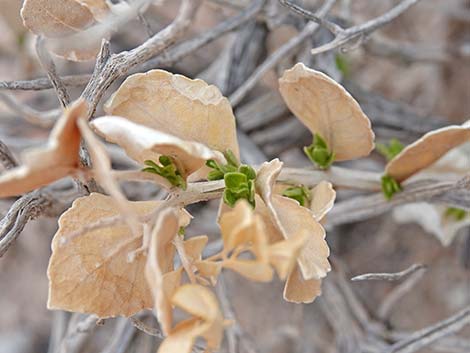 New leaves sprouting in the spring |
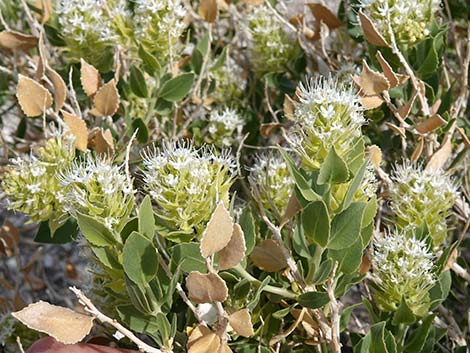 Fresh green leaves and flowers |
 |
 |
 |
 |
Note: All distances, elevations, and other facts are approximate. Names generally follow the USDA database.
 ; Last updated 220627
| All Shrubs | Plant Species Index | Glossary | Copyright, Conditions, Disclaimer | Home |