
Trees Around Las Vegas, Vegetation Around Las Vegas
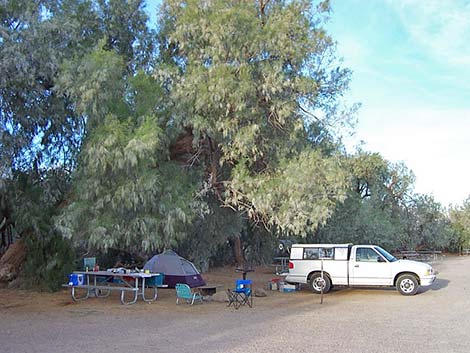 Athel Tamarisk provide campground shade at Death Valley National Park |
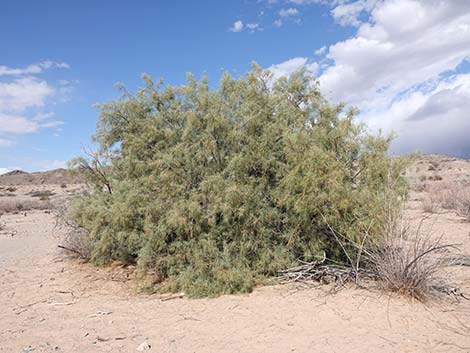
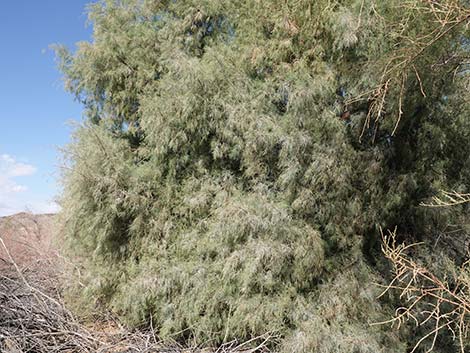
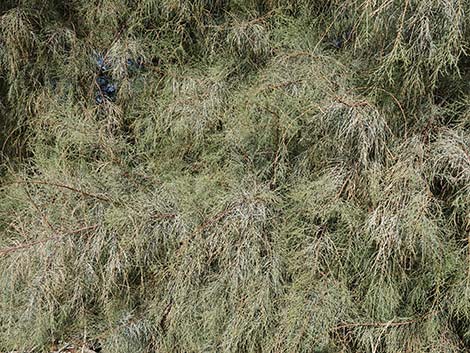
General: Athel Tamarisk (Tamarix aphylla) are tall, spindly trees with many drooping branches. Athel closely resemble Saltcedar, but Athel trees are tall compared to shrubby Saltcedars. Both were introduced into North America, but Athel Tamarisk is less invasive than Saltcedar. In Athel Tamarisk, the stems appear jointed (if tiny cylindrical segments attached end to end). The joints are the leaves, which wrap around the stem, and the leaves are "mucronate," which means they end with a tiny point (if you look very closely). Athel Tamarisk have been planted in the Lower Sonoran (Creosote-Bursage Flats) and Upper Sonoran (Mojave Desert Scrub) life zones. Athel is an invasive weed. Around Las Vegas, this species is uncommon -- let's all work to make sure it stays that way. Keep an eye out for this species. Land managers are actively working to eradicate Athel, so hopefully you won't see it in too many places. Athel is on the Lake Mead NRA "Top 10 Invasive Species" list and on the Nevada State list of noxious weeds. Family: Tamarisk (Tamaricaceae). |
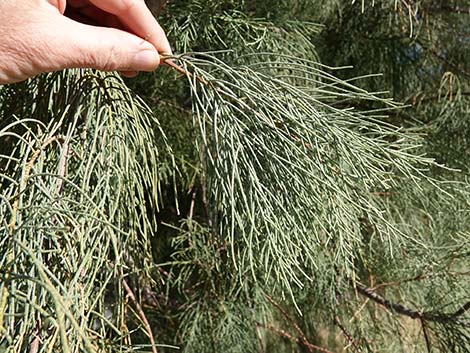 Branch tips |
Other Names: Athel tree Plant Form: Evergreen tree with a rounded or irregular, spreading crown of many heavy, stout branches and long, drooping twigs. Height: 30-60 feet. Trunk: To 2.5 feet in diameter. Bark is thick and deeply furrowed into long ridges. The twigs are wiry, slender, drooping, and appear jointed. Leaves: Tiny scales 0.06 inch long that conspicuously sheath (wrap around) the stems; not scale-like, but with a tiny point (mucronate leaves). Leaves not deciduous. Flowers: Tiny white to pink flowers. |
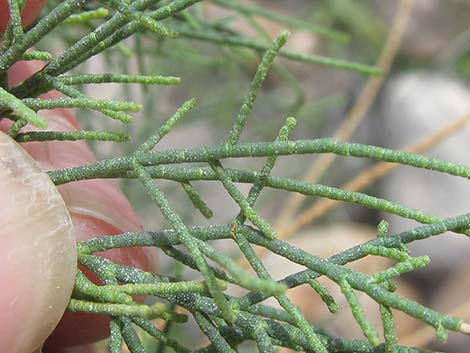 Stems and leaves |
Seeds: Many, tiny, windblown seeds. Habitat: Desert areas, usually planted along roadways, for shade, or windbreaks. Distribution: Desert areas from south Texas to southern California. Elevation: Below sea level to 5,000 feet. Comments: Athel Tamarisk is an introduced species native to Africa and the Middle East that was planted in desert areas as a fast-growing tree for windbreaks, shade, and as an ornamental. It has escaped cultivation, but has not naturalized as much as Saltcedar, although recently it is becoming a problem in some places. Athel produces diffuse shade, but little that benefits the habitat or wildlife. |
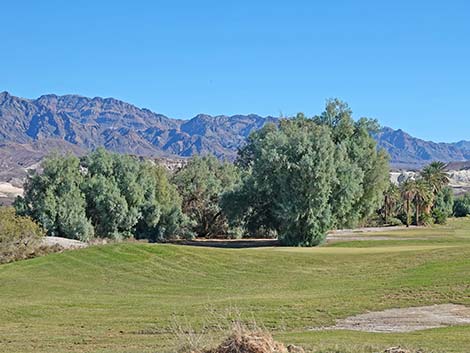 Typical habitat: old golf course |
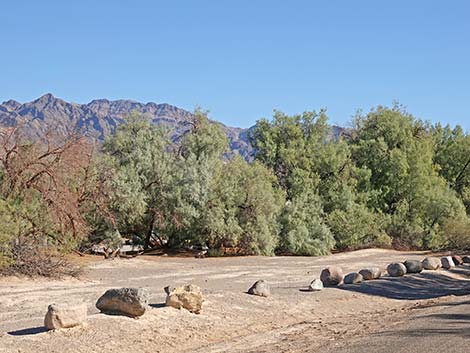 Typical habitat: shade trees for campground |
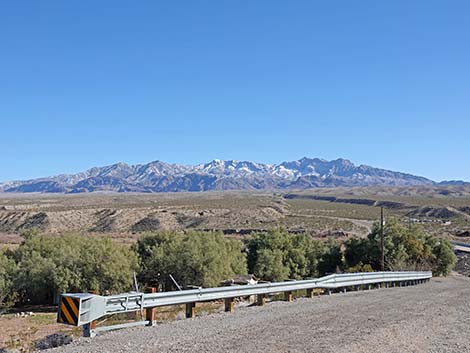 Athel Tamarisk plants for shade in the 1950s |
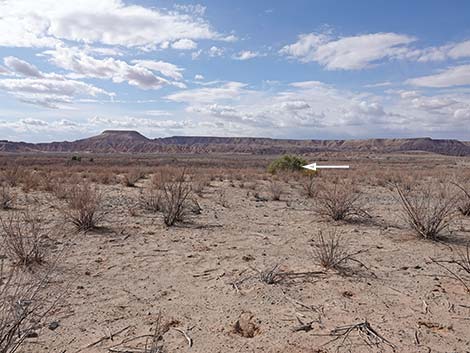 Athel Tamarisk in an area where saltcedar was killed by beetles |
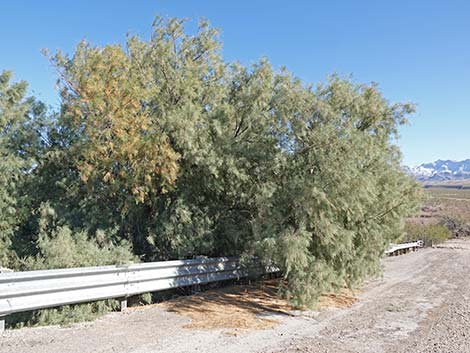 |
 |
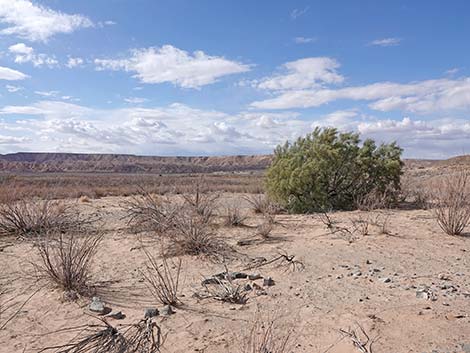 Athel Tamarisk in an area where saltcedar was killed by beetles |
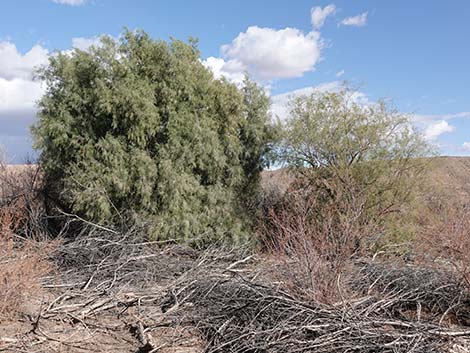 Athel (left) and Saltcedar (right; most saltcedar killed by beetles) |
 |
 |
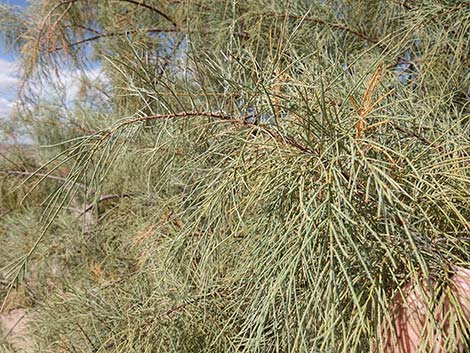 Athel Tamarisk stems |
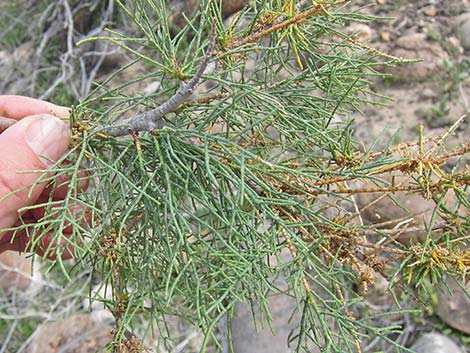 Athel Tamarisk stems |
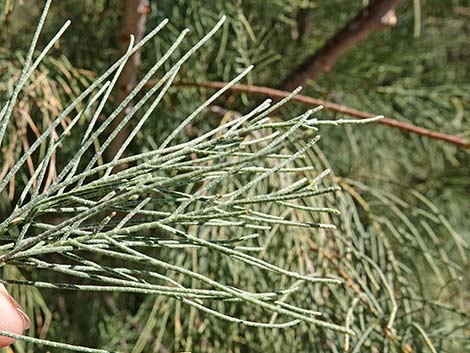 Athel Tamarisk stems |
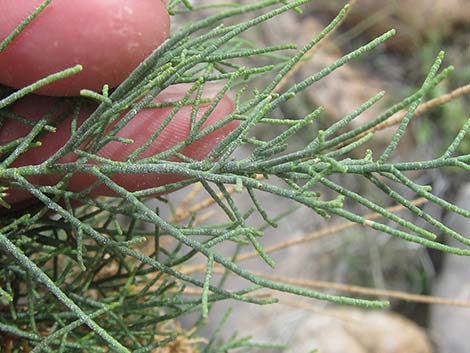 Athel Tamarisk stems |
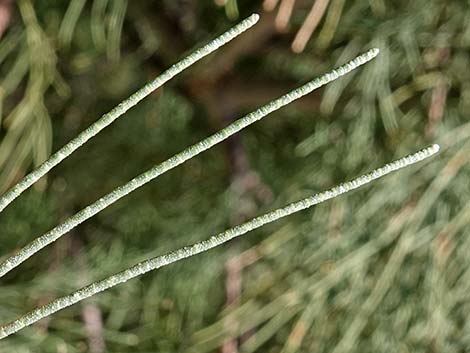 Athel Tamarisk stems |
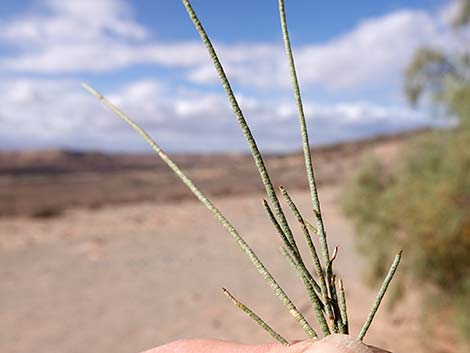 Athel Tamarisk stems |
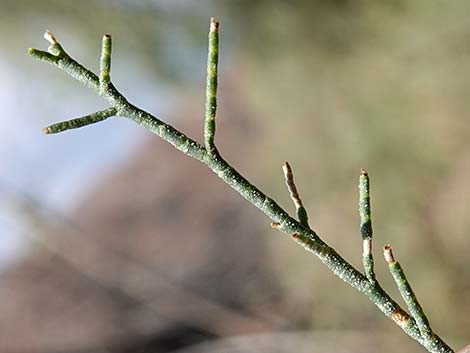 Athel Tamarisk stems |
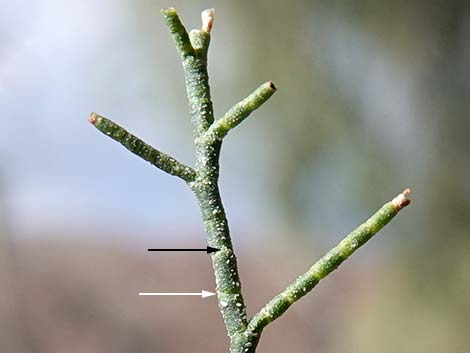 Athel Tamarisk stem with mucronate leaves (arrows to leaf points) |
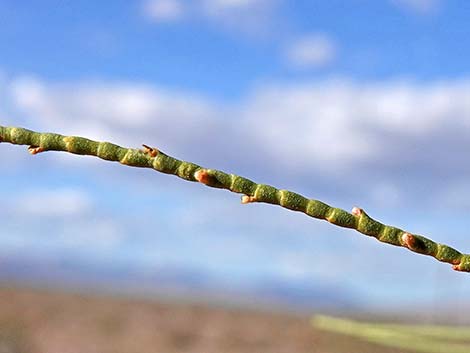 Athel Tamarisk "segmented" stem |
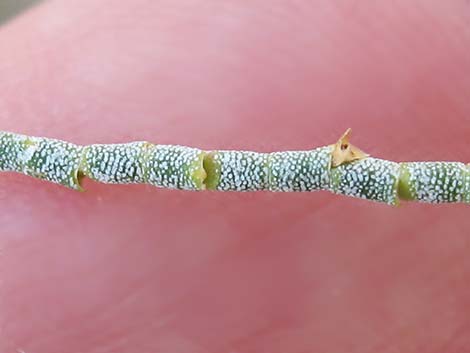 Athel Tamarisk stem with mucronate leaves |
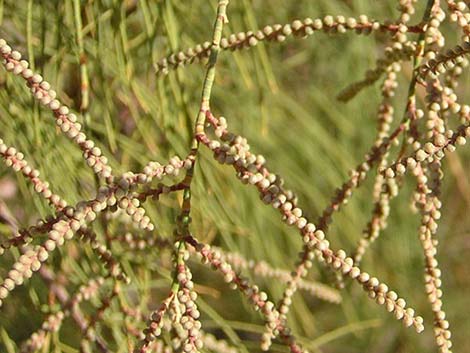 Flowers and fruits |
Note: All distances, elevations, and other facts are approximate. Names generally follow the USDA database.
 ; Last updated 240910
| All Deciduous Trees | Plant Species Index | Glossary | Copyright, Conditions, Disclaimer | Home |