
Shrubs Around Las Vegas, Vegetation Around Las Vegas
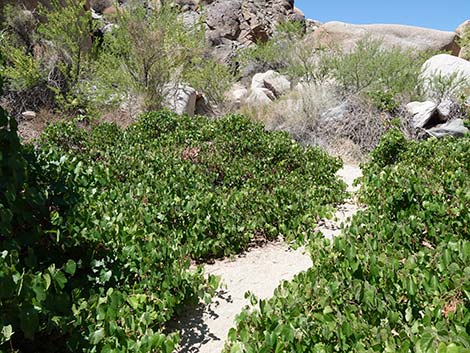 Typical habitat (Grapevine Canyon, Lake Mead NRA) |
General: Canyon Grape (Vitis arizonica) is a woody vine that often grows densely on shrubs and trees in canyons with permanent water (at least subsurface water). The leaves are heart shaped and 3-6 inches long; and true to the name, the vine produces grapes during summer. Canyon Grape is an uncommon component of vegetation communities on wet or damp, well-drained sandy, gravelly, and rocky soils along streams and canyons into the lower mountains in the Upper Sonoran (Mojave Desert Scrub) life zone. Around Las Vegas, Canyon Grape can be most easily seen at Willow Springs in Red Rock Canyon NCA and at Grapevine Canyon in Lake Mead NRA. Family: Grape (Vitaceae). Other Names: Wild Grape, Arizona Grape. |
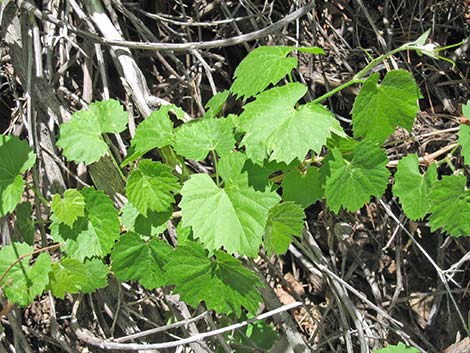 Coarsely toothed, heart-shaped leaves |
Plant Form: Woody vine with broad leaves. Height: The plant itself has little height, but it can grow to cover entire trees. Bark: Reddish brown; peeling with age. Stems: Woody vine with tendrils. Leaves: Heart shaped, usually coarsely toothed, dark green, to 6-inches long and 5-inches wide. Flowers: Blooms: spring to summer. Inflorescence: panicle (cluster of grapes). Flowers small, greenish white. Male and female flowers on separate plants. |
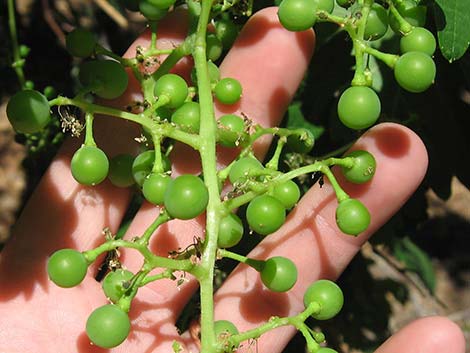 Young fruits |
Seeds: Fruit: clusters of grapes. Grapes to 3/4-inch diameter, juicy, purple-black. Seeds: 1-4 per grape. Habitat: Wet or damp, well-drained sandy, gravelly, and rocky soils along streams and canyons into the lower mountains. Elevation: 2,000 to 7,500 feet. Distribution: Southern Nevada, southern Utah, and Arizona. Comments: This is an important source of food for birds and other wildlife. |
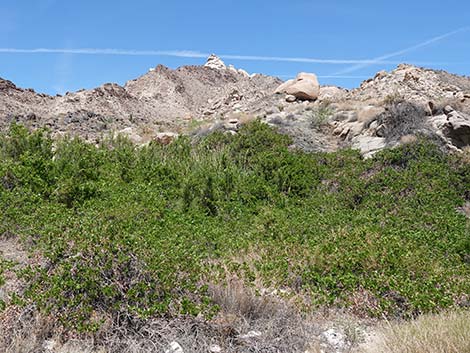 Grape can cover shrubs, trees, and the rest of the landscape |
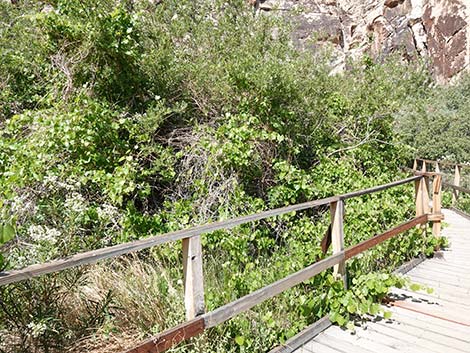 Grape can cover shrubs, trees, and the rest of the landscape |
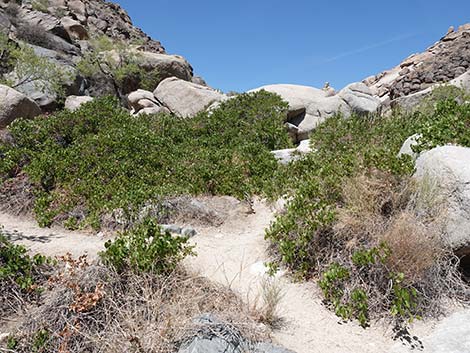 Typical habitat (Grapevine Canyon, Lake Mead NRA) |
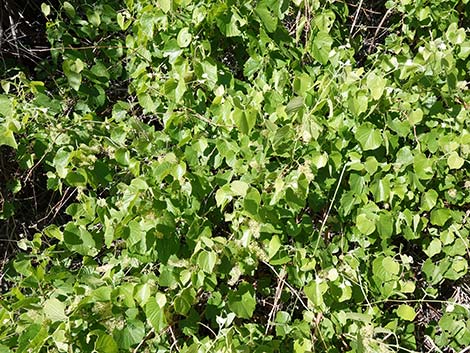 Thicket of leaves covering whatever is underneath |
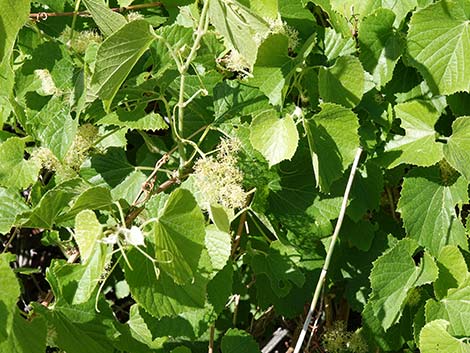 Thicket of leaves covering whatever is underneath |
Coarsely toothed, heart-shaped leaves |
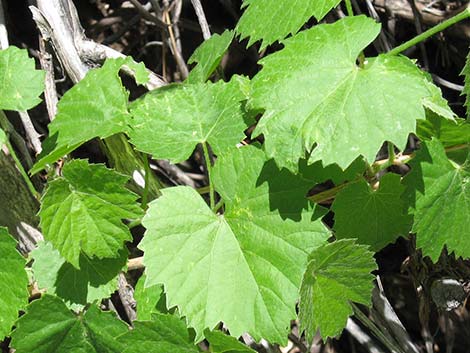 Coarsely toothed, heart-shaped leaves |
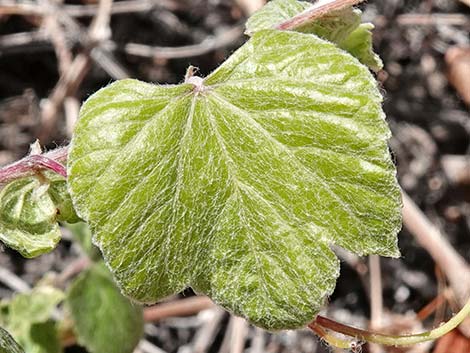 Fresh leaves seem to be more hairy |
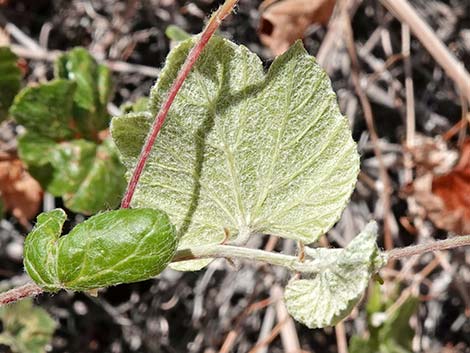 Fresh leaves seem to be more hairy |
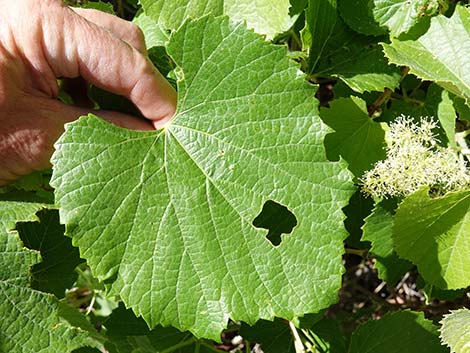 Older leaves are hairless and shiny |
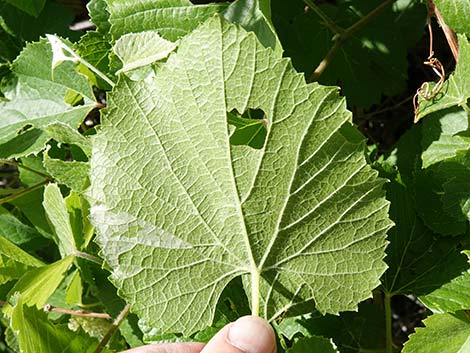 Older leaves are hairless and shiny |
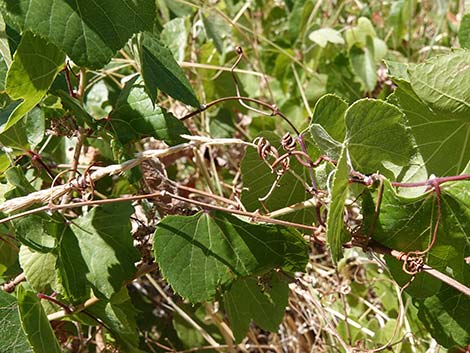 Woody vine with tendrils |
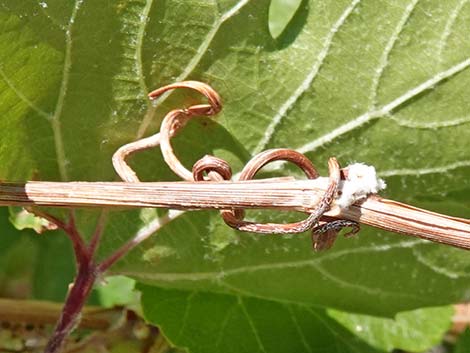 Woody vine with tendrils |
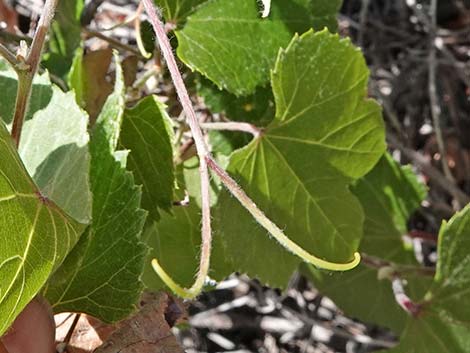 Fresh tendrils |
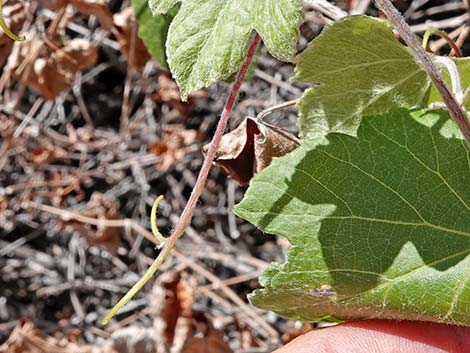 Fresh tendrils |
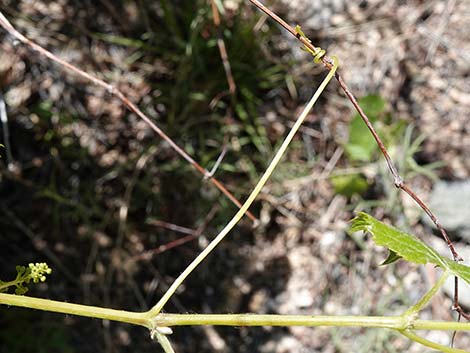 Tendril making a long reach |
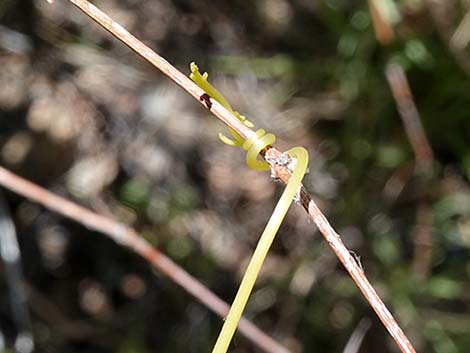 Tendril wrapping around a stem |
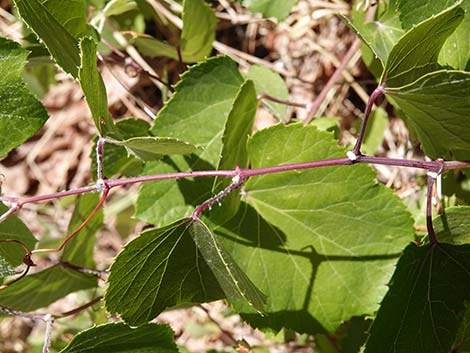 Stems are red |
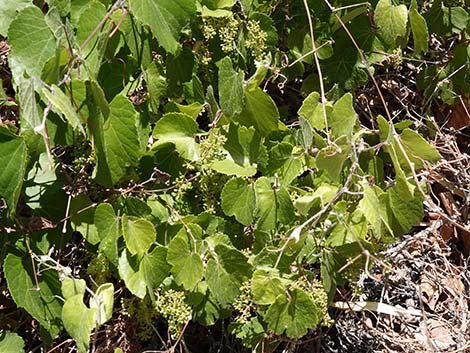 Plant with developing grapes |
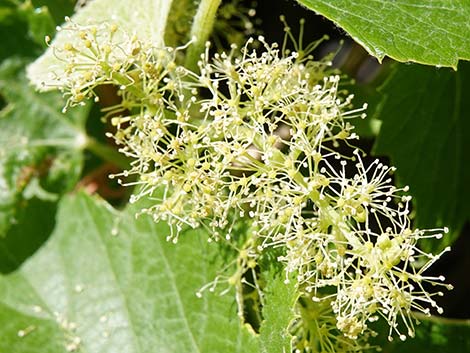 Grape flowers |
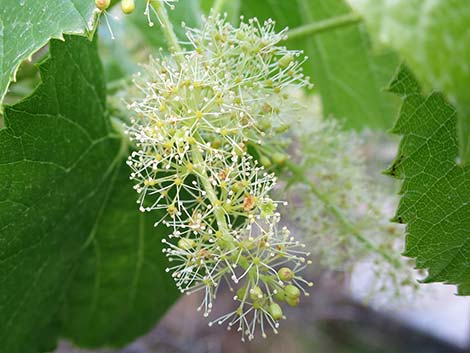 Grape flowers |
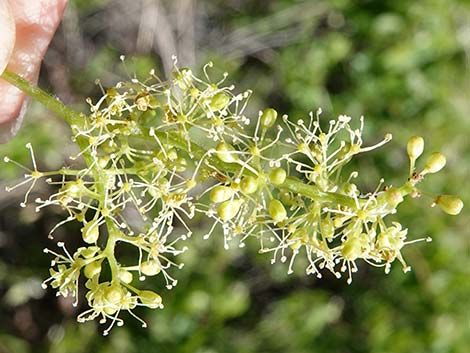 Grape flowers and developing fruits |
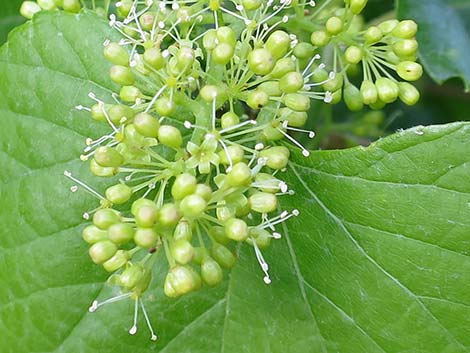 Grape flowers and developing fruits |
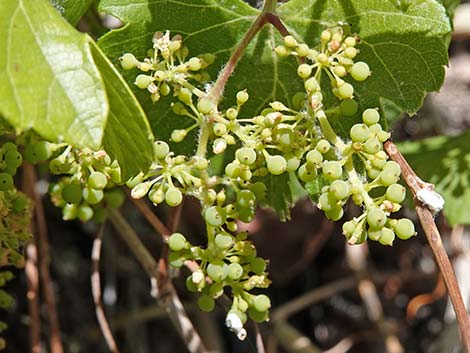 Canyon Grape developing fruits |
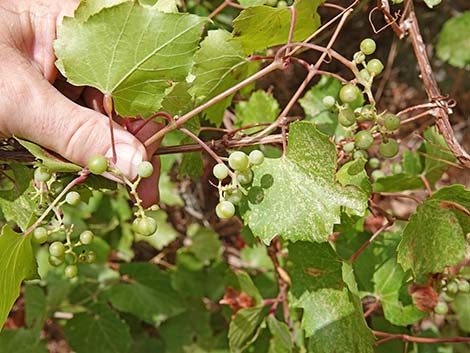 Canyon Grape developing fruits |
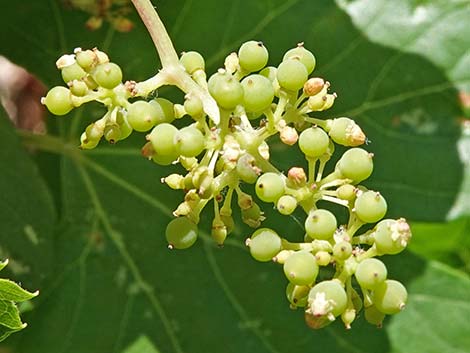 Canyon Grape developing fruits |
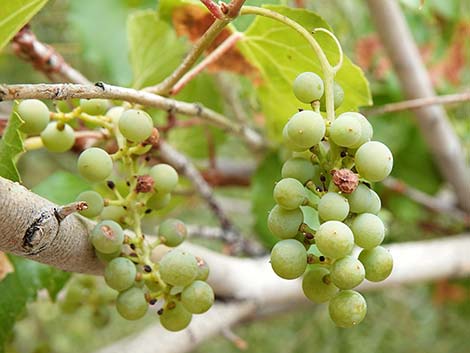 Canyon Grape developing fruits |
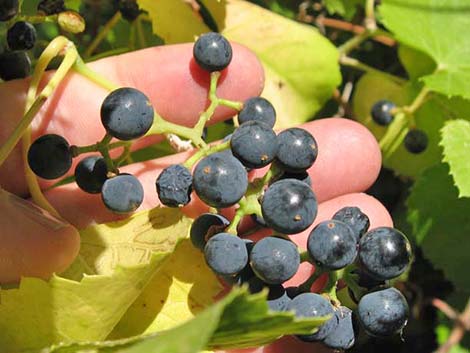 Canyon Grape ripe fruits |
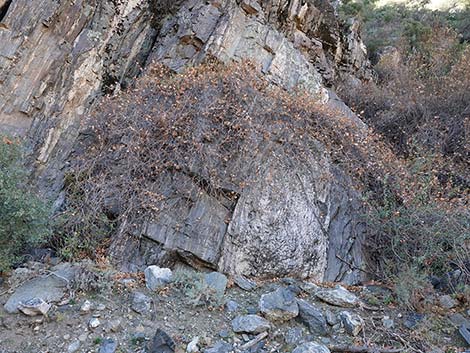 Canyon Grape during winter |
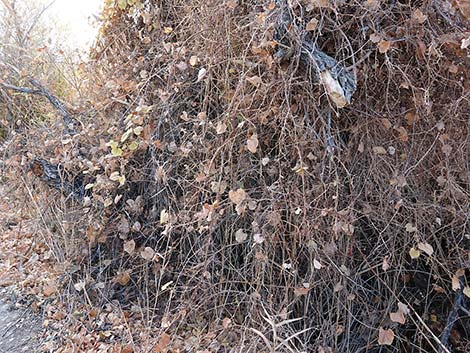 Canyon Grape during winter |
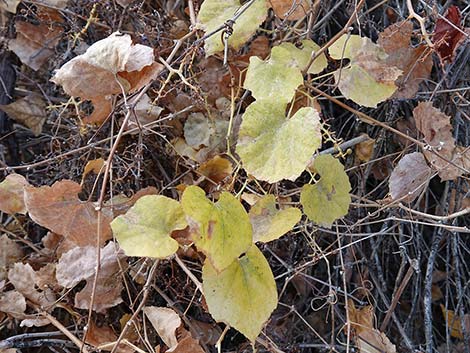 Canyon Grape during winter |
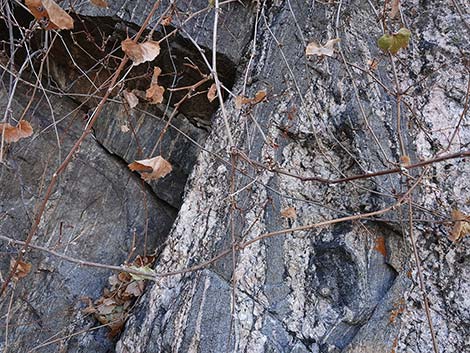 Canyon Grape during winter |
Note: All distances, elevations, and other facts are approximate. Names generally follow the USDA database.
 ; Last updated 220815
| All Shrubs | Plant Species Index | Glossary | Copyright, Conditions, Disclaimer | Home |