
Shrubs Around Las Vegas, Vegetation Around Las Vegas
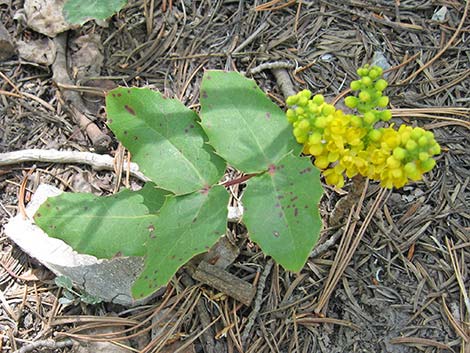 |
General: Creeping Barberry (Mahonia repens), or Oregon Grape, is a creeping perennial shrub with stiff, pointy leaves similar to holly leaves. Creeping Barberry usually is an uncommon component of vegetation communities on rocky mountain slopes in the Transition (Yellow Pine Forest), Canadian (Pine-Fir Forest), and Hudsonian (Bristlecone Forest) life zones. Although uncommon overall, this species can be locally abundant. Creeping Barberry can be found along the Harris Saddle Trail and the lower parts of the Cathedral Rock Trail. Family: Barberry (Berberidaceae). Other Names: Oregon Grape (Berberis aquifolium var. repens) |
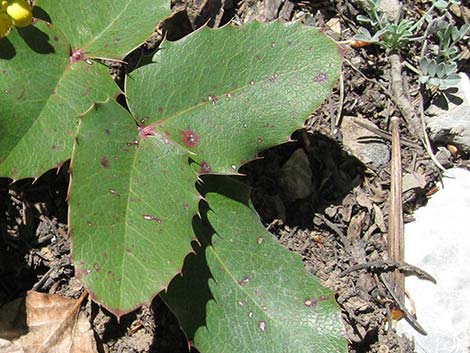 |
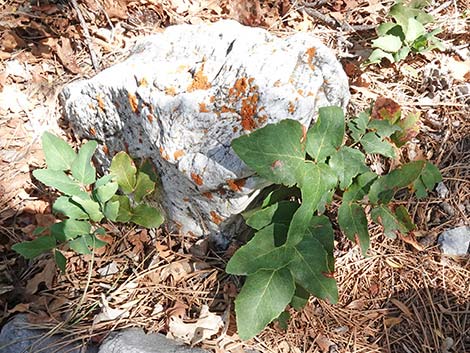
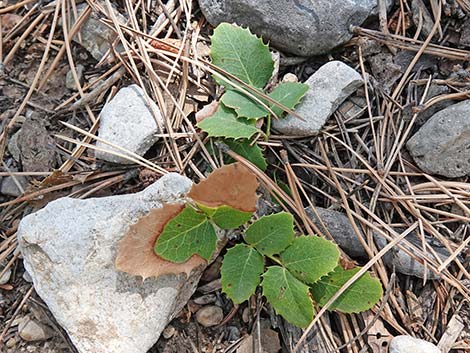
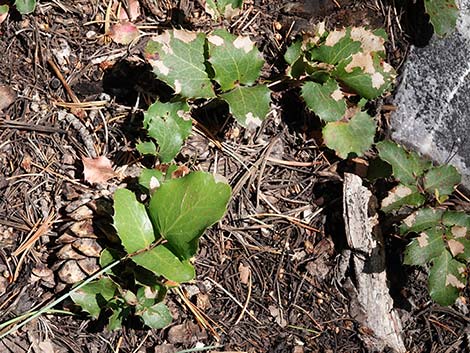
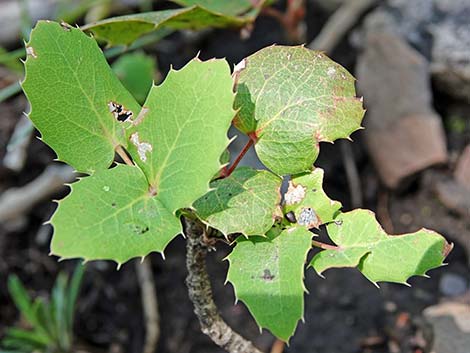
Plant Form: Usually sparse, creeping perennial shrub. Height: Usually ankle- to shin-high; to 2 feet. Bark: Stems: spreading, somewhat stiff. Leaves: Pinnately compound, entire leaf 3 to 7-inches long, petiole 1/2 to 2-inches long; leaflets 5 to 7, 1 to 3 inches long, generally oval; edges slight lobed, each lobe tipped with a short spine. |
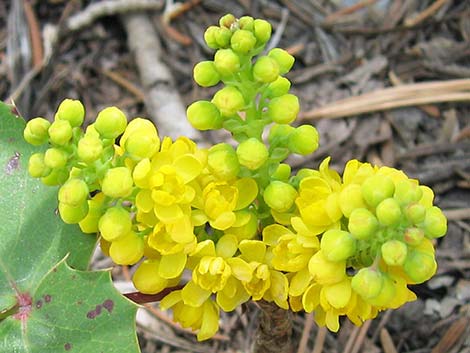 |
Flowers: Blooms spring and early summer. Inflorescence: raceme, 1 to 2-1/2 inches long. Flowers: Petals 6 in 2 whorls of 3. Seeds: Fruit: berry, blue. Habitat: Dry, well-drained sandy, gravelly, and rocky soils on upper bajadas and moderate slopes in the lower mountains. Elevation: Around Las Vegas, about 8,000 to 9,500 feet; lower elsewhere. Distribution: California to British Columbia and east to the Great Plains. Comments: |
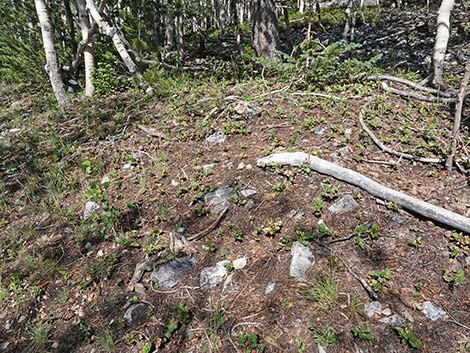
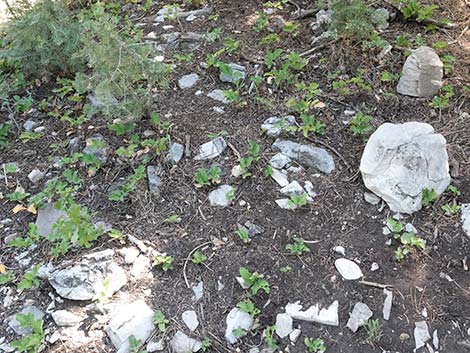
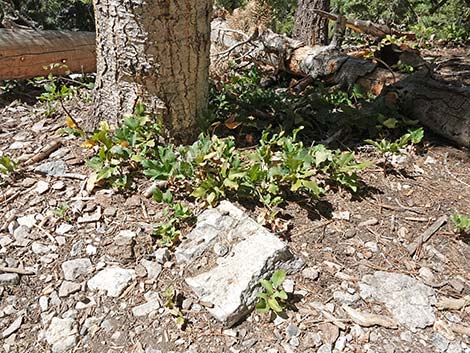
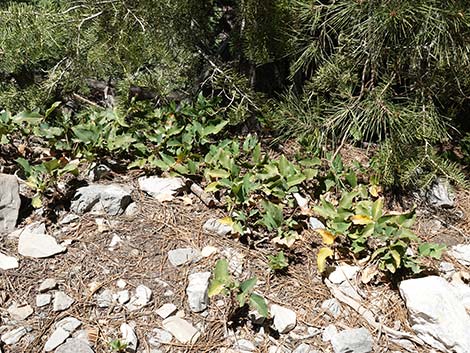
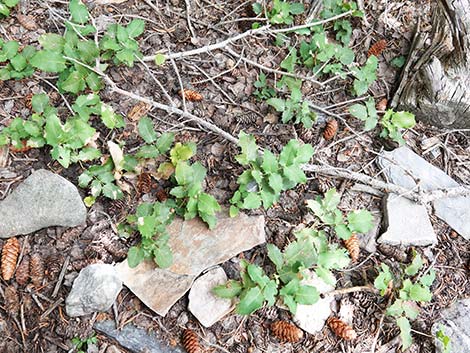
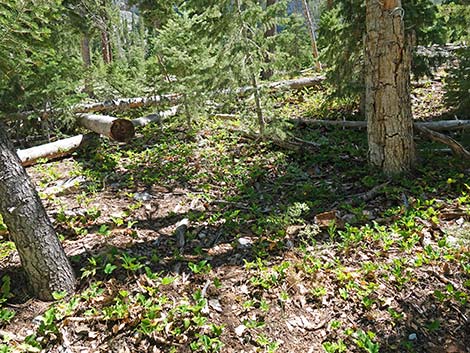 Creeping Barberry sometimes grows as a ground cover |
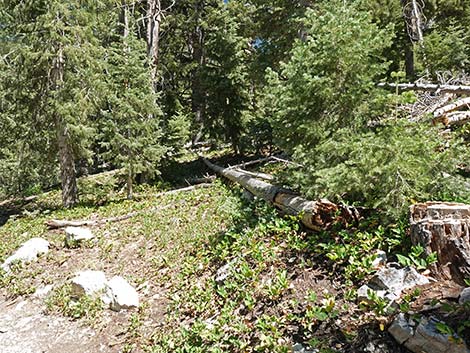 Creeping Barberry sometimes grows as a ground cover |
 |
 |
 |
 |
 |
 |
 |
 |
 |
 |
 |
|
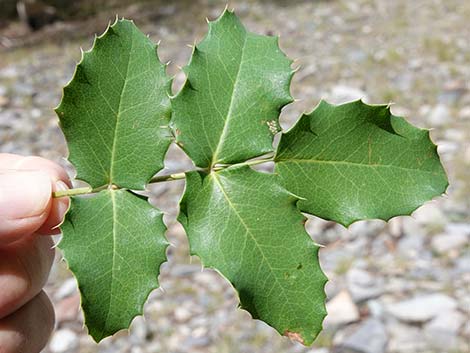 Creeping Barberry: one leaf (dorsal surface) |
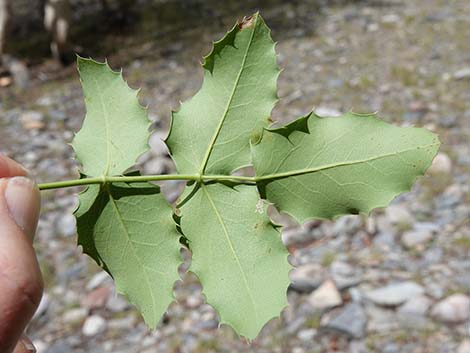 Creeping Barberry: one leaf (ventral surface) |
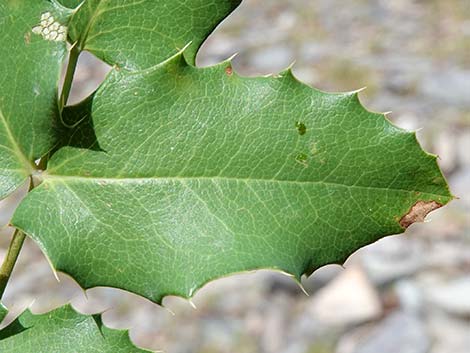 Creeping Barberry: one leaflet (dorsal surface) |
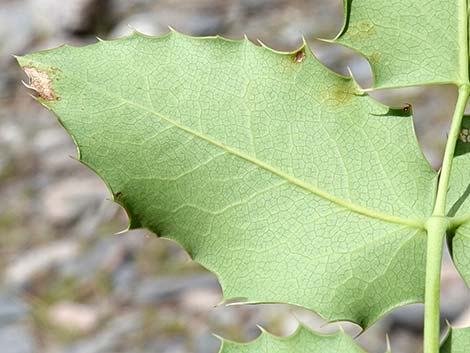 Creeping Barberry: one leaflet (ventral surface) |
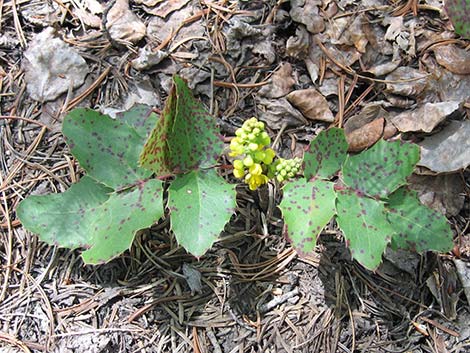 Creeping Barberry blooming |
Creeping Barberry flowers |
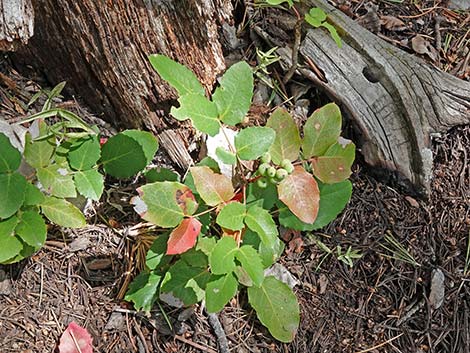 Creeping Barberry with developing berries |
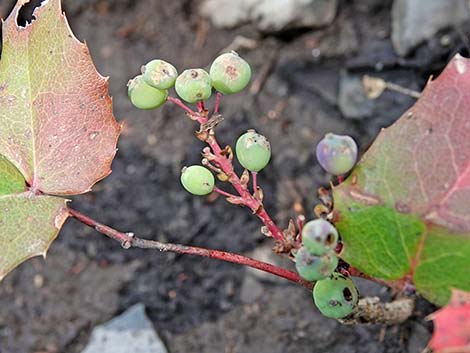 Creeping Barberry with developing berries |
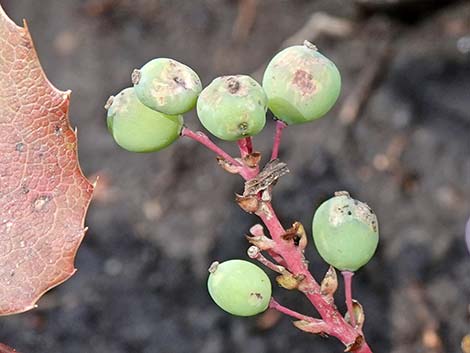 Creeping Barberry berries |
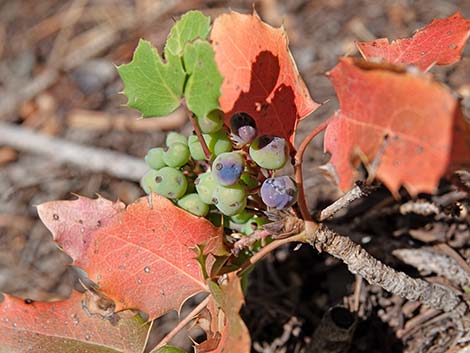 Creeping Barberry with developing and ripening berries |
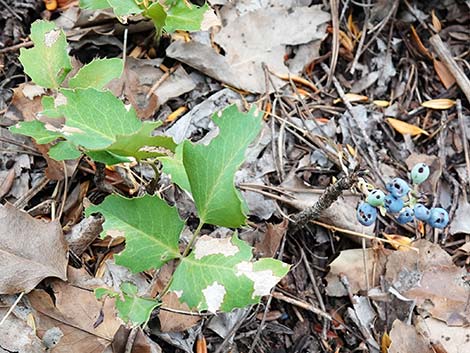 Creeping Barberry with ripe berries |
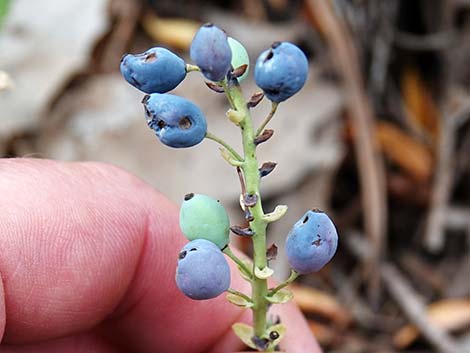 Creeping Barberry ripe berries |
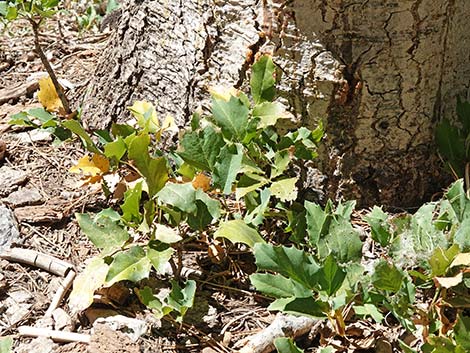
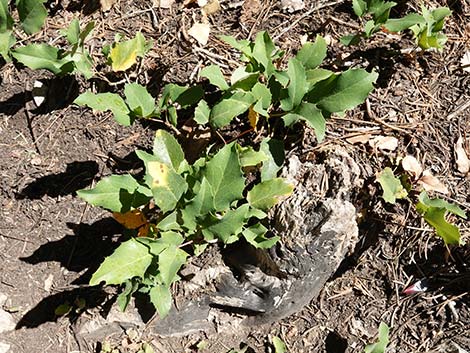
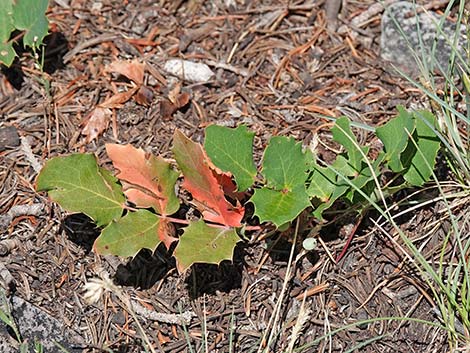 Winter color starts early |
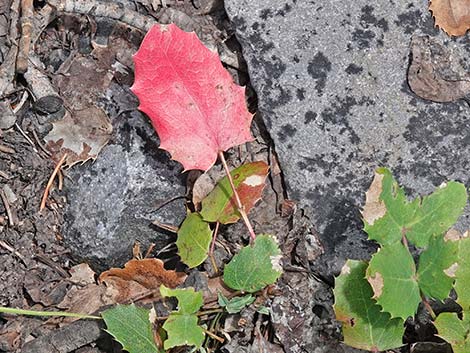 Anticipating winter |
Note: All distances, elevations, and other facts are approximate. Names generally follow the USDA database.
 ; Last updated 220815
| All Shrubs | Plant Species Index | Glossary | Copyright, Conditions, Disclaimer | Home |