
Birding Around Las Vegas, Urban Las Vegas Valley
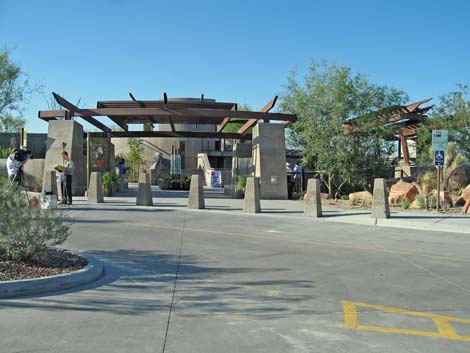 Las Vegas Springs Preserve entrance pavilion |
Description Note: Access to outdoor areas is free. The Las Vegas Springs Preserve is an urban "visitor attraction" set up by the Las Vegas Valley Water District. The purpose of the Springs Preserve is two fold: first, it provides the public with opportunities to learn about the human and natural history of the Las Vegas Valley (these springs are where Las Vegas started); and second, it teaches people about reducing water use to levels where the existing water supply would be sufficient to maintain a suburban lifestyle in the desert. The Preserve provides access to birding areas, but it is not yet ready for prime time. Out-of-town visitors with limited time to bird might do better at the Henderson Bird Viewing Preserve, the Duck Creek area of the Wetlands Park, or Floyd Lamb State Park, but the Spring Preserve has a fair diversity of birds and promises great things to come. Link to Area Map or Trails Map. |
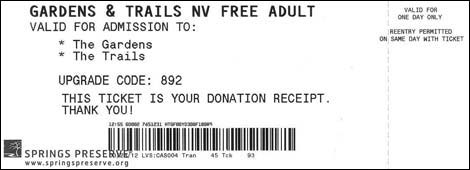 Be sure to ask for a free ticket to the outdoor areas, but then, of course, don't try to sneak into the buildings! |
The Springs Preserve was developed around the original Las Vegas springs site where people and wildlife have gathered for thousands of years. Outdoor and indoor exhibits describe and re-enact human history and interpret the natural history. Trails provide access to desert and riparian areas where exhibits describe the lives of people who made the springs home. Even if the birding isn't great, the history of the area is interesting and worth the visit. |
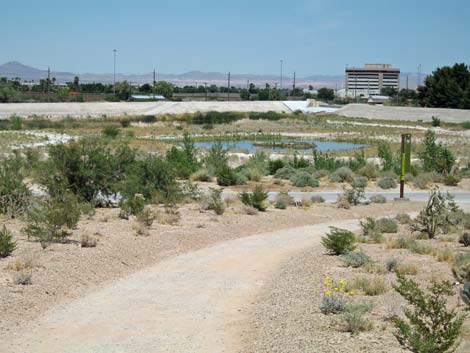 Pond in cienega (birders cannot approach pond) |
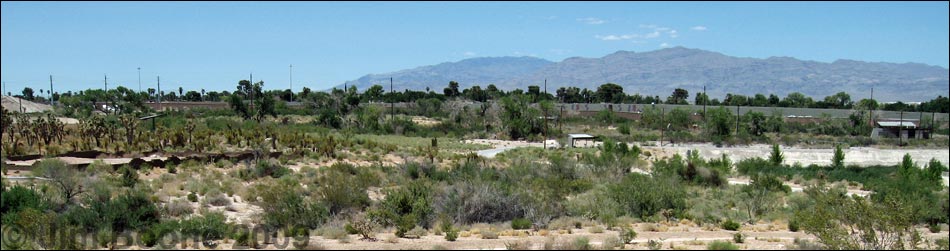
For birding, the Springs Preserve offers trails that wind through a well-done Mojave Desert Scrub "botanical garden," a re-established cienega area, and riparian areas with wetland plants, cottonwood trees, and open meadows that are being maintained, but which have always existed around the springs. The birding disappoints because the areas haven't exactly "developed" yet and visitors can't get into the heart of the old-growth riparian areas, but it makes for a fun day out in the sun without leaving town. The Demonstration Gardens area is well done and is becoming a good area to bird now that the vegetation has become established. This is a nice area to escape the urban environment to bird the botanical gardens and the trails. This can also be a good place for watching dragonflies and damselflies. |
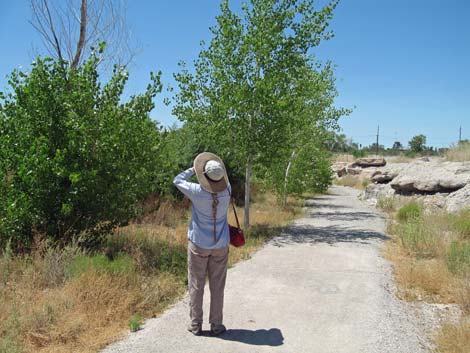 Birding the Cienega Trail |
The trails are accessed by walking through the middle of the building complex (follow sign to "Trails"). From the ticket booth, follow the "creek" downhill to the outdoor amphitheater. Walk around the amphitheater (on the left) and past the kid's play area (on the right) to a gate that opens onto a service road and provides access to the trails. Just across the service road, a trail map is posted on a sign. From this first vantage point, a "spring mound" is to the right, the cienega is straight ahead, the Cottonwood Tree riparian areas are ahead in the distance and off to the left, and the Mojave Desert Scrub botanical garden is off to the left. Visitors can make a loop down through the cienega, up along the riparian area, and back through the Mojave Desert Scrub. For local homeowners, the Desert Demonstration Garden is an interesting place to learn about water-smart landscaping, using plants to cool our houses and block the wind, "green" construction, and gardening tips. Preserve personnel wander the gardens answering questions and explaining how things work. Area residents can take classes on gardening, landscape design, and other yard and water-use topics. The names of many plants are posted. Verdin, Northern Mockingbird, and House Finch are common in this area. |
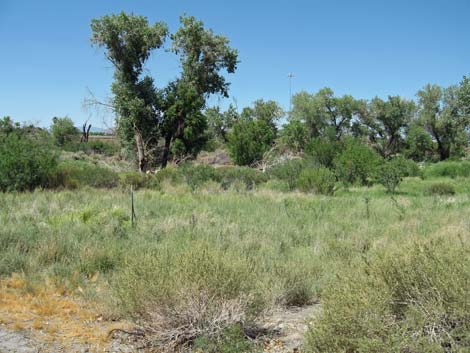 Cottonwood trees and meadow |
Location The Las Vegas Springs Preserve is located in central Las Vegas, just northwest of downtown at the intersection of Valley View Blvd and Meadows Lane. From downtown Las Vegas, drive west on Highway 95 North for about 2 miles to Valley View. Exit Highway 95, turn left onto Valley View, and drive south for about 1/4-miles to Meadows Lane (Table 1, Site 1). Turn left onto Meadows Lane and drive east through the main gate and into the Las Vegas Springs Preserve. Parking lots are located on the west side of the preserve. The entrance pavilion (Table 1, Site 2) is located adjacent to the parking lots. |
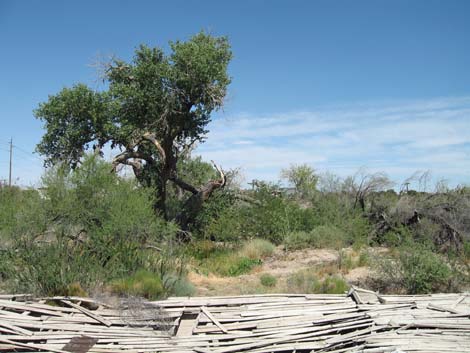 Cottonwood tree near original Las Vegas Spring |
Hours During summer, 10 AM to 6 PM, expect for early closures due to special events. During winter, 10 AM to 6 PM. Trails close at dusk. Birding the Spring Preserve probably is best during spring and fall migrations. During summer, bird early in the morning or late in the afternoon, bring a sun hat, and keep an eye out for water fountains. Covered shelters provide relief from the direct sun. |
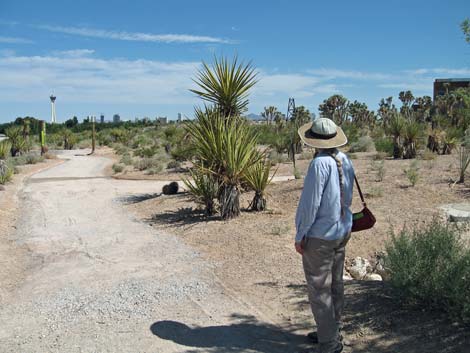 Trail through restored Mojave Desert Scrub |
Fees Entrance to the outdoor portions of the Las Vegas Springs Preserve is free, although visitors are required to get a pass at the ticket booth. The free pass provides access to the trail system, the botanical gardens, and the gift shop, cafe, and other common areas. Entrance to the museums and other indoor portions of the Las Vegas Springs Preserve is expensive, about $10 for Nevada residents and $19 for visitors. Annual family passes are available for $60, but the Preserve maximizes the difficulty of using annual passes by requiring photo ID cards for every member of the family. If you want a family pass, don't leave the kids with a baby-sitter when you go to get it. Prices for seniors and children are lower. Google the Spring Preserve Ticking page for current prices and details. |
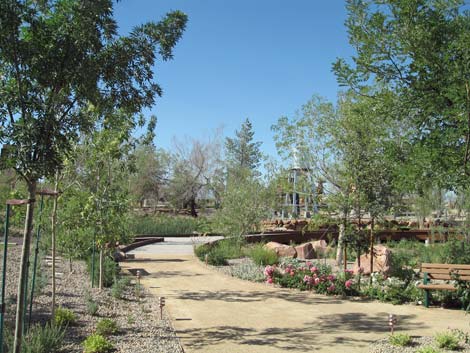 Desert Demonstration Garden |
Specialties The Las Vegas Springs Preserve opened in June 2007, so the habitat is still developing. In time, the area should be good for riparian-area birds and migrants, but it isn't ready yet. On June 8, 2007 (opening day), we saw Verdin, American Coot, Abert's Towhee, Gambel's Quail, Black-chinned Hummingbird, Northern Mockingbird, Great-tailed Grackle, Crissal Thrasher, Lesser Goldfinch, Northern Rough-winged Swallow, Pied-billed Grebe, Mourning Dove, Killdeer, Say's Phoebe, House Finch, and Western Kingbird. The only mammal we saw was a White-tailed Antelope Squirrel, and we saw no lizards or other reptiles. There are mosquito fish in the water. For More Information Visit the official website or give them a call at (702) 822-8344. |
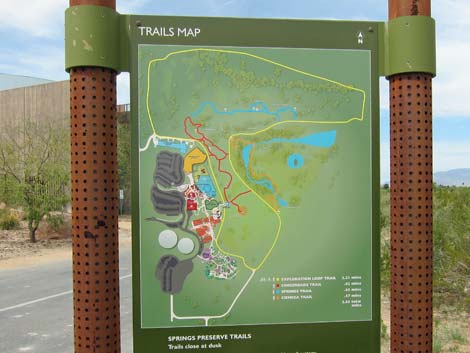 Map at entrance to Trails area |
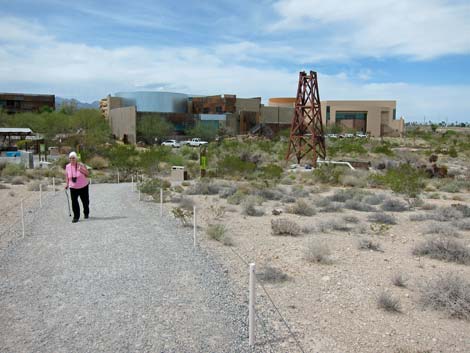 Walking on trail to Spring Mound (museum in background) |
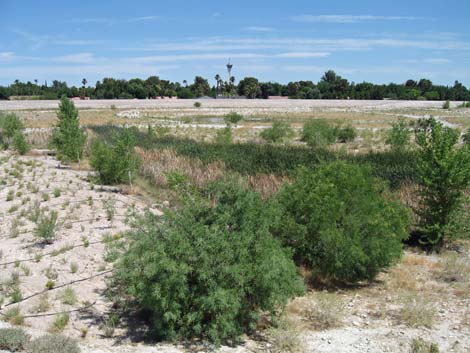 Wetlands in the cienega |
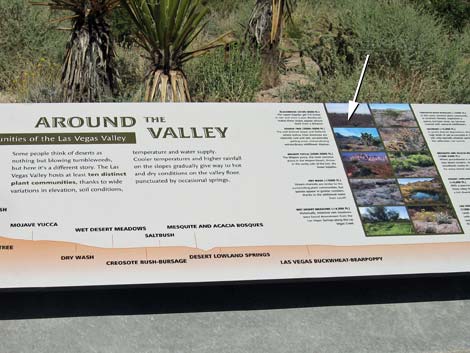 Don't miss my photo! |
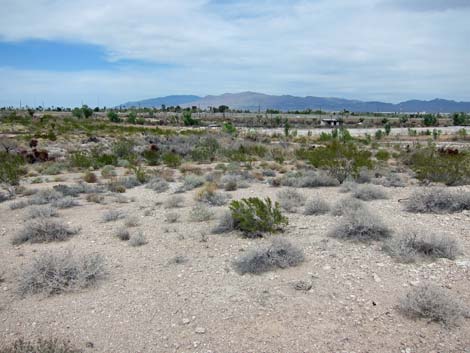 View out over the restored desert from Spring Mound |
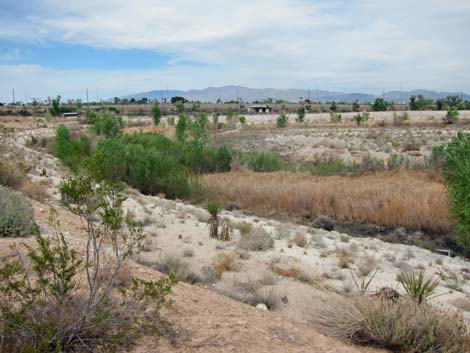 Overlook of cienega area during early spring (view NW) |
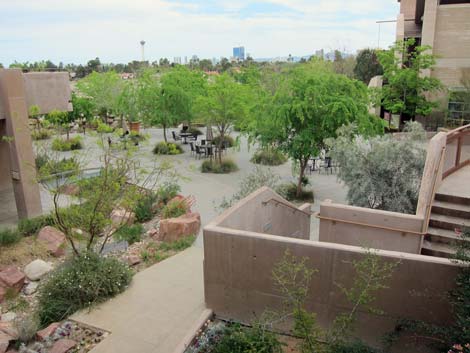 Overview of Gardens Area |
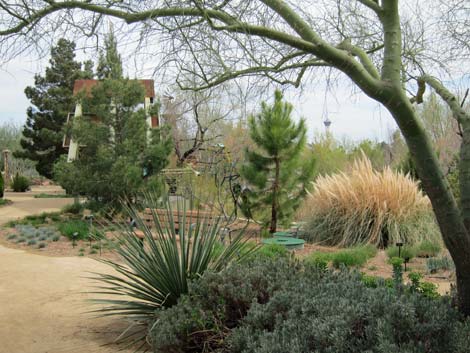 Gardens area during late spring |
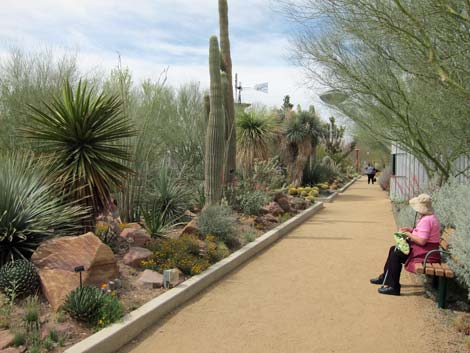 Gardens area during late spring |
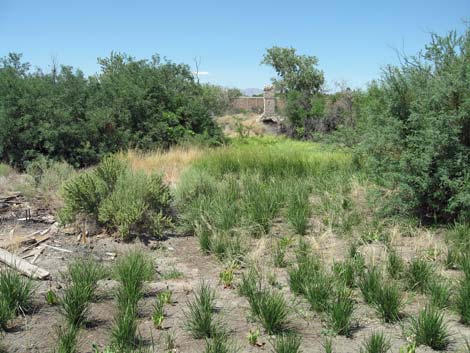 Meadow restoration at old homesite |
Table 1. Highway Coordinates (NAD27; UTM Zone 11S). Download Highway GPS Waypoints (*.gpx) file.
| Site # | Location | Latitude (°N) | Longitude (°W) | UTM Easting | UTM Northing | Elevation (feet) | Verified |
|---|---|---|---|---|---|---|---|
| 1042 | Valley View at Meadows Lane | 36.17012 | 115.19158 | 662650 | 4004132 | 2160 | GPS |
| 1043 | Las Vegas Springs Preserve Main Entrance | 36.17105 | 115.18996 | 662794 | 4004238 | 2160 | GPS |
Happy birding! All distances, elevations, and other facts are approximate.
 ; Last updated 240323
| Birding Around Las Vegas | Southern Nevada Birds | Guide Service | Copyright, Conditions, Disclaimer | Home |