
Birding Around Las Vegas, Lake Mead Area, Outside the Las Vegas Valley
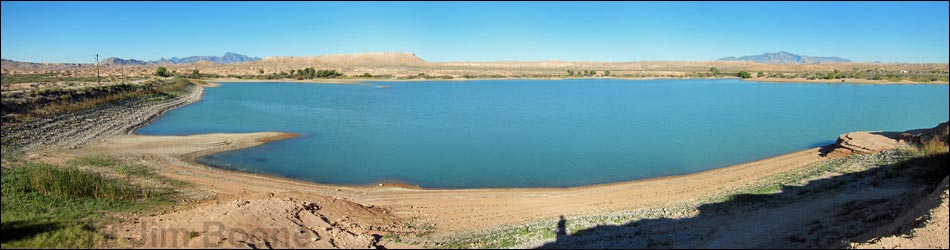
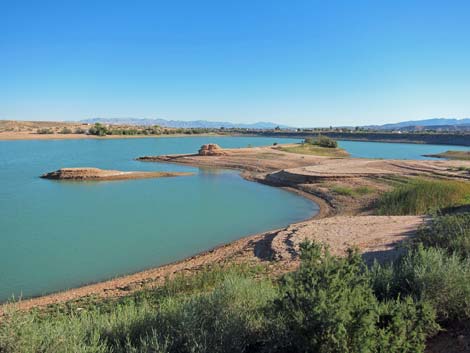 Shrubs and trees above the reservoir (view N) |
Description Bowman Reservoir captures some of the water that flows down the Muddy River. The area is not scenic, but it does provide desert birders with another place to look for waterfowl and other water species. The area is heavily used by fishermen and off-road vehicles, so it might not be peaceful. This is not a destination, but rather a place to stop for a few minutes while on the way to somewhere else or while making a birding run along the north side of Lake Mead. The reservoir has saltcedar, willow, and mesquite thickets, a few big cottonwood trees, and a few shrubs around the high-water mark. When the water is low, mudflats are exposed. The surrounding area is sparsely vegetated with creosote bush and saltbush. There are no marshes in the reservoir, but the canal leading into the reservoir (adjacent to the access road) is bordered with marsh vegetation. |
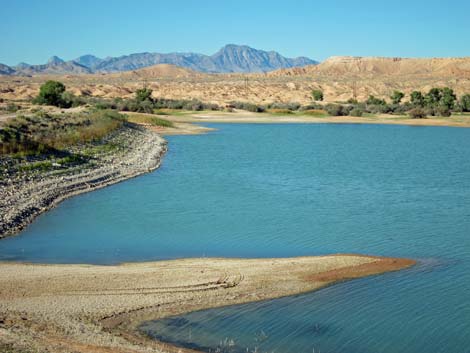 Cottonwoods across the reservoir (view N) |
Location Bowman Reservoir is located about 1 hour northeast of Las Vegas. The easiest way to get there from town is to drive north on Highway I-15 to the Logandale exit (Exit #93). Turn right onto Highway 169 and drive south for 3.6 miles to Bowman Road (Table 1, Site 0664). Turn left onto Bowman Road and drive east, past a few houses, and up onto the dam (Site 0596). After about 0.25 miles, you will see the water, and a good spotting-scope place is the bluff just past where you first see the water. The paved road is gated to prevent vehicles from crossing the dam. Hours The reservoir appears to always be open. |
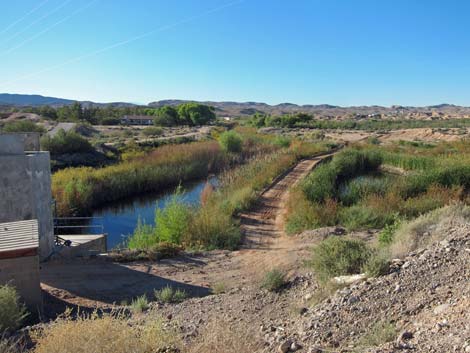 Marshy vegetation along canal leading into the reservoir (view W) |
Fees None. Specialties In season, look for ducks, geese, and other waterbirds (e.g., Mallard, Canada Goose, American Wigeon, Clark's Grebe, Common Loon, Double-crested Cormorant, American White Pelican, Ring-billed Gull, and Herring Gull); hawks, eagles, and similar species (e.g., Northern Harrier, American Kestrel, Merlin, and probably Bald Eagle), resident and migrant passerines (e.g., Red-winged Blackbird, House Sparrow, Black Phoebe, American Pipit), and other species such as Greater Roadrunner. Keep an eye out for dragonflies too. |
Bowman Reservoir (view SE) |
Bowman Reservoir (view N) |
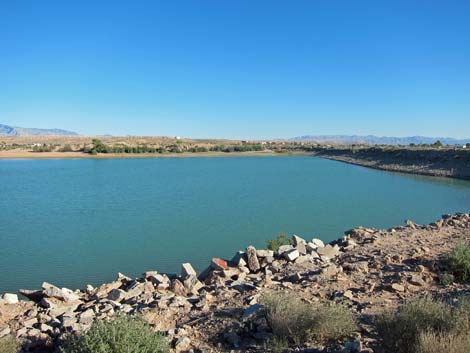 Bowman Reservoir (view SE) |
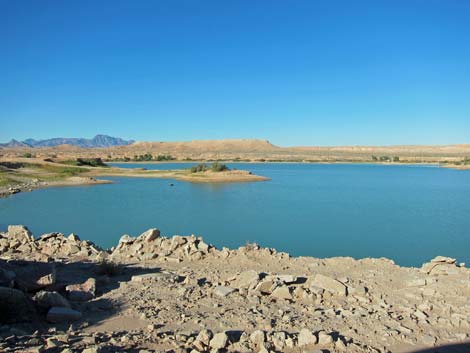 Bowman Reservoir (view NE) |
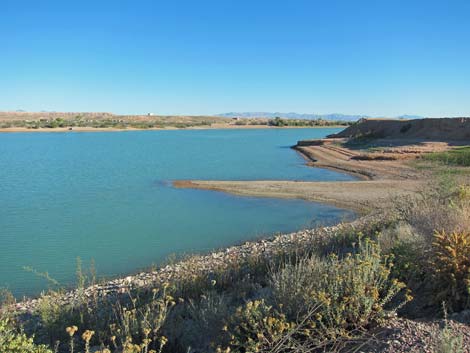 Bowman Reservoir (view E) |
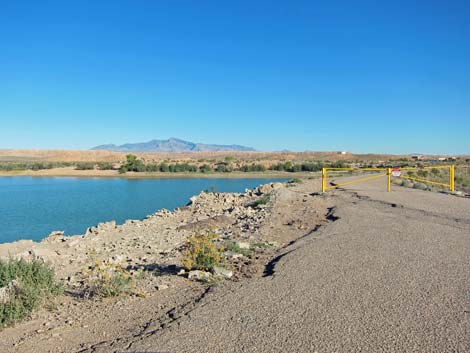 Closed gate on south side of reservoir (view E) |
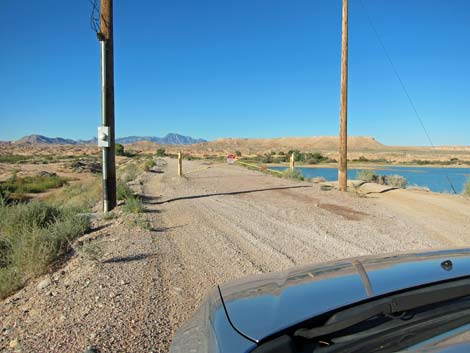 Closed gate on west side of reservoir |
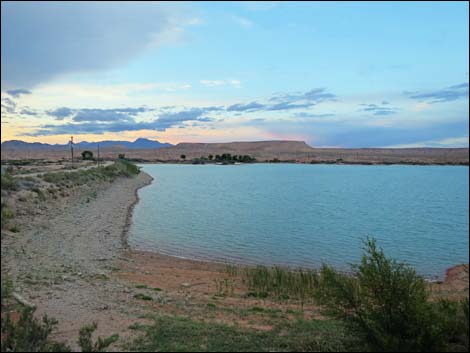 Evening at Bowman Reservoir |
Table 1. GPS Coordinates for Highway Locations (NAD27; UTM Zone 11S). Download Highway GPS Waypoints (*.gpx) file.
| Site # | Location | Latitude (°N) | Longitude (°W) | UTM Easting | UTM Northing | Elevation (feet) | Verified |
|---|---|---|---|---|---|---|---|
| 0596 | Bowman Reservoir Dam | 36.6216 | 114.4798 | 725370 | 4055650 | 1,449 | Yes |
| 0664 | Highway 169 at Bowman Reservoir Road | 36.6267 | 114.4862 | 724780 | 4056201 | 1,414 | Yes |
Happy birding! All distances, elevations, and other facts are approximate.
 ; Last updated 240322
| Birding Around Las Vegas | Southern Nevada Birds | Guide Service | Copyright, Conditions, Disclaimer | Home |