
(Urosaurus graciosus graciosus)
aka Long-tailed Brush Lizard (Urosaurus graciosus)
Lizards Around Las Vegas, Wildlife Around Las Vegas
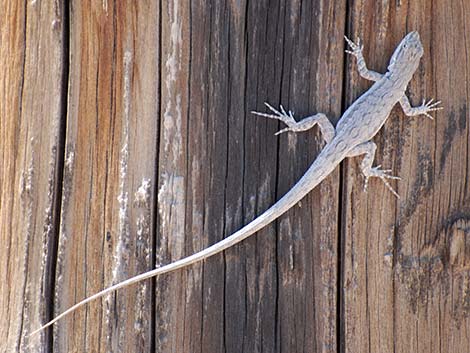 |
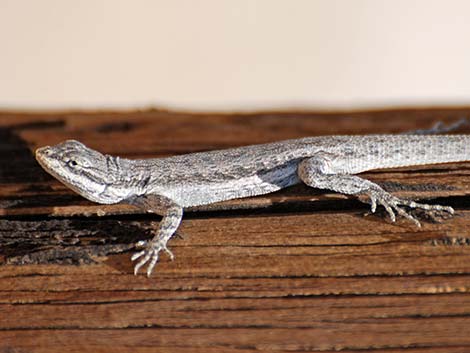
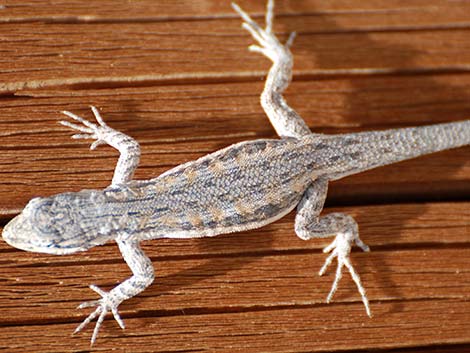
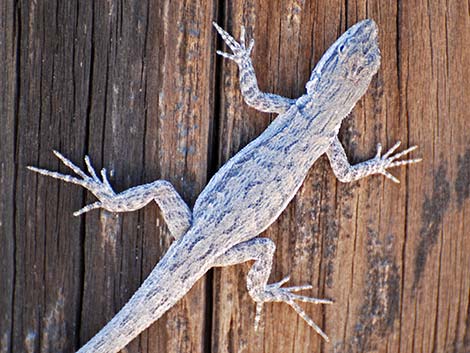
General Description: Western Long-tailed Brush Lizards (Urosaurus graciosus graciosus) are small lizards with a very long tail. The body color is gray with dark crossbars, similar to the color of the branches in the creosote bushes where they live. They also have a brown line down the side that helps them blend into the branches. When hiding, these lizards align their thin body with a branch, and will skitter around to the backside of the branch. Taxonomy: Phrynosomatid Lizard Family (Phrynosomatidae). Diet: Insects and spiders, occasionally plant material. Technical Description: Body size small (to 2.25 in.); tail proportionally very long (to 4.5 in.). Dorsum gray with dark crossbars. When captured, may change to pale beige in 5 minutes. A pale lateral stripe extends from the jaw, down the neck, and onto the body. Dorsum with a broad band of enlarged scales down the center of the back. Gular fold well developed. Throat red, orange, or yellow. Males with pale blue or green patches flecked with white on the sides of the belly. |
 |
Habitat: Low desert Creosote-Bursage Flats with sandy areas. Climbs into the branches of Creosote Bush; uses creosote branches and exposed roots for shelter. Also uses wooden telephone poles. Range: This species occurs in the southern tip of Nevada, southeastern California, western Arizona, and south into northern Mexico. This subspecies occurs in the western half of the range, including California, Nevada, and western-most Arizona. Breeding: One or two clutches of 2 to 10 eggs laid during early summer. Similar Species: This species resembles a Tree Lizard, but no other small, dark lizard in our area has such a long tail. Comments: These lizards hide in their creosote bushes by turning head-down and aligning their body with the branch they are on. Remaining still, they blend in with the branches, making it very difficult to see them. |
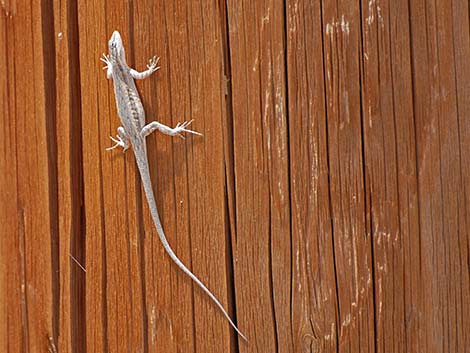 Long-tailed Brush Lizard on a telephone pole |
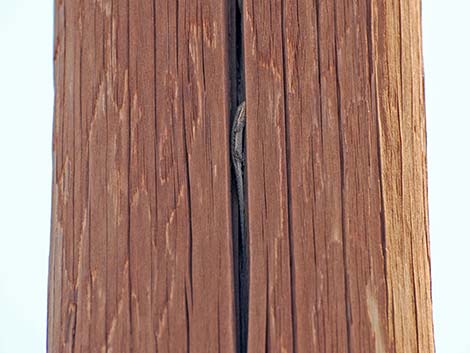 Long-tailed Brush Lizard with a great place to hide |
 |
 |
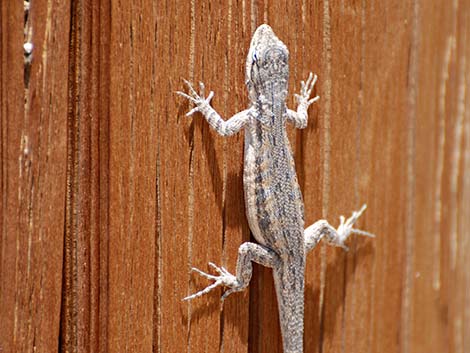 Running up a telephone pole |
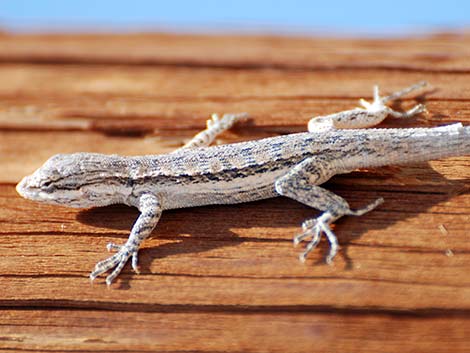 On a telephone pole |
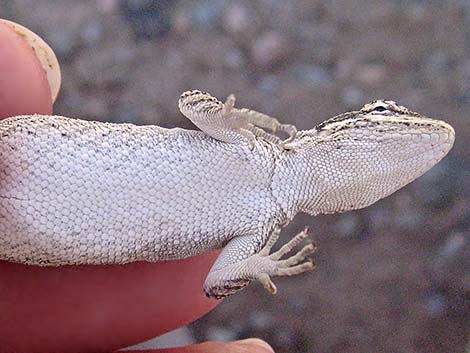 Notice white belly; small, granular scales; and gular fold |
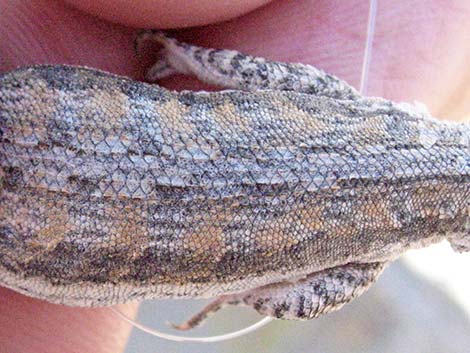 Notice the enlarged scales down the center of the back |
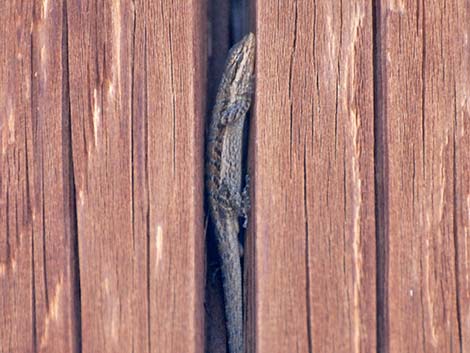 Long-tailed Brush Lizard hiding in a crack in a telephone pole |
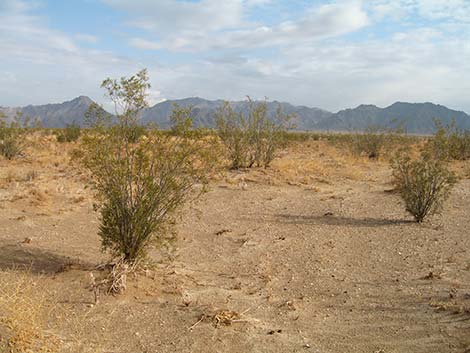 Typical habitat: open desert with sandy and scattered Creosote Bush |
Note: All distances, elevations, and other facts are approximate.
 ; Last updated 230913
| Lizards Around Las Vegas | Wildlife Around Las Vegas | Glossary | Copyright, Conditions, Disclaimer | Home |