
Trees Around Las Vegas, Vegetation Around Las Vegas
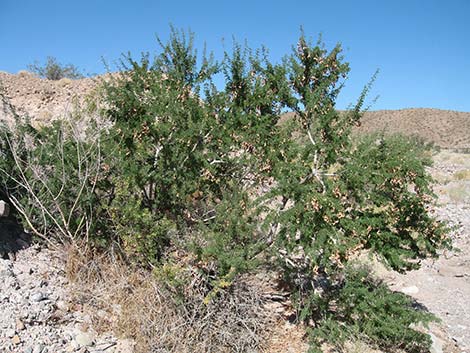 |
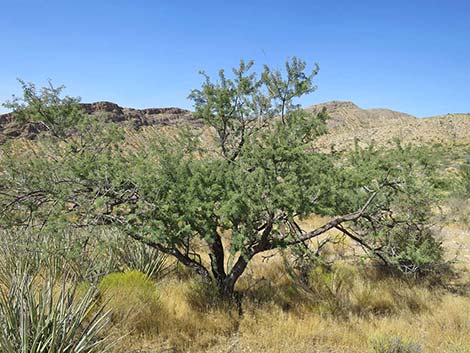
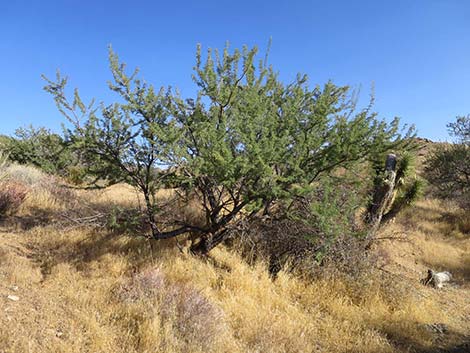
General: Catclaw Acacia (Senegalia greggii) usually are short, spindly, many branched trees (or large shrubs) with cat-claw-shaped spines on the younger stems. The name comes from the spines that catch, hold, and tear the flesh and clothing of people who brush up against them. Occasionally, catclaws grow to the height of "real" trees. The leaves are compound with tiny leaflets, spikes of yellow flowers, and seedpods that are twisted and contorted. Catclaw Acacia is a common components of wash communities in the Lower Sonoran (Creosote-Bursage Flats) and Upper Sonoran (Mojave Desert Scrub) life zones. They are also found out on bajadas. Catclaw often are parasitized by Mesquite Mistletoe, which appears as clumps of stems with white or red berries. Phainopepla depend on these berries for food, but they are toxic to humans. Family: Pea (Fabaceae). Formerly Acacia greggii. |
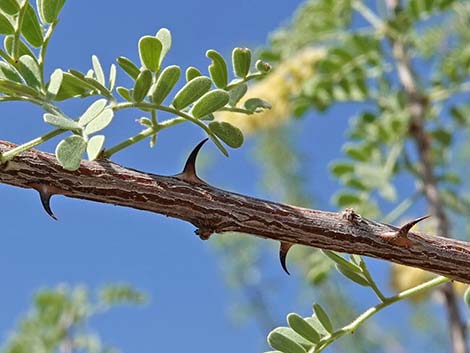 |
Other Names: Acacia greggii, Wait-a-Minute Bush (because if you get tangled up in this tree, you have to Wait-a-Minute to get untangled). Plant Form: short, spindly, many branching tree or large shrub. Sometimes forming thickets along the edges of washes. Height: Usually 6-10 ft, to about 20 ft. Trunk: Usually a single trunk, but many branches beginning near the ground. Bark is gray. Leaves: Gray-green, compound (2-pinnate), leaflets small, oblong. Each leaf has a petiole, then the leaf splits into two parts. Each part has leaflets off each side. |
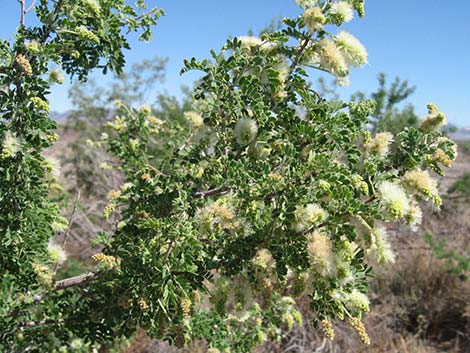 |
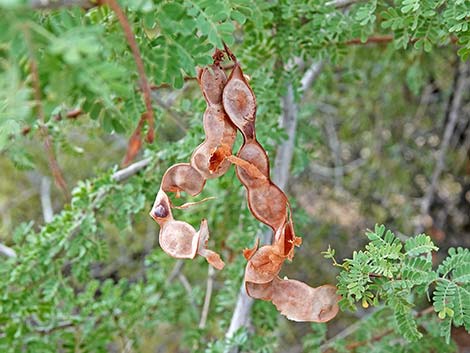
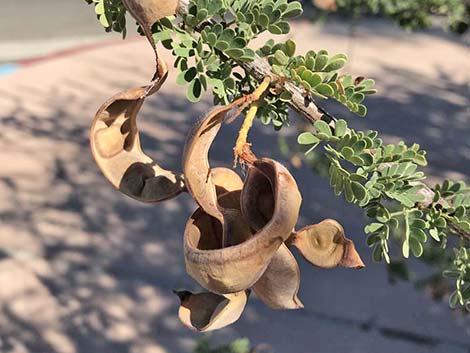
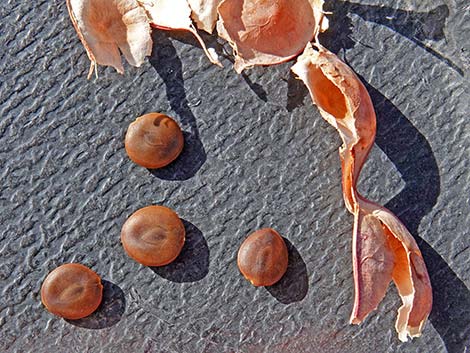
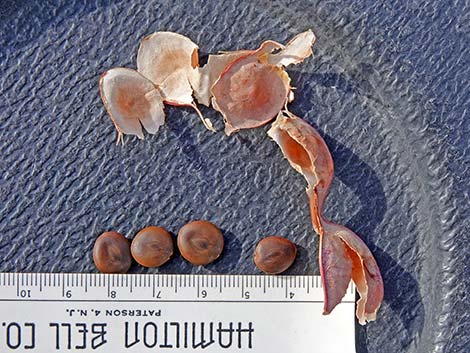
Flowers: Blooms late spring to early summer, also sporadically throughout the summer and fall in response to rain. Bottlebrush-shaped catkins on stalks (spikes). Individual flowers are small, pale yellow, and tubular; stamens many and conspicuous. Seeds: The plant produces broadly flattened, 2 to 6-inch-long stringbean-type beanpods that twist and contort with age. The seedpods start out green, but age to brown when ripe. The seeds are fairly large, round, and flattened. Habitat: Dry, well-drained sandy, gravelly, and rocky soils along washes; less commonly found on open bajadas. Distribution: Southern California to Texas and south into Mexico where winters are mild. Elevation: Near sea level to 4,500 feet. |
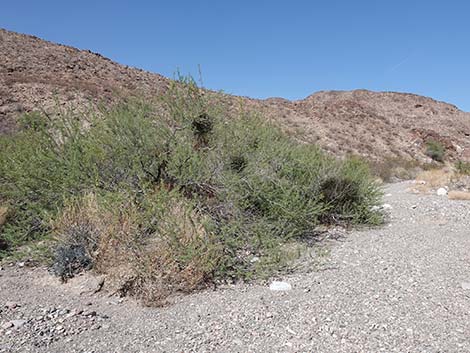 Catclaw trees along a dry wash |
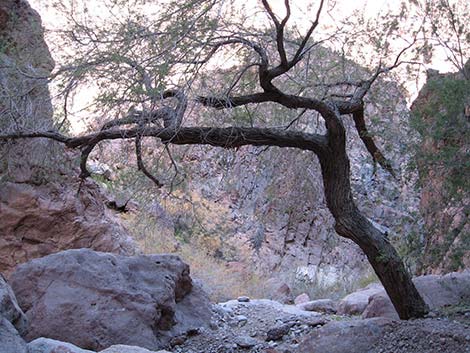 Tree-sized catclaw |
 |
 |
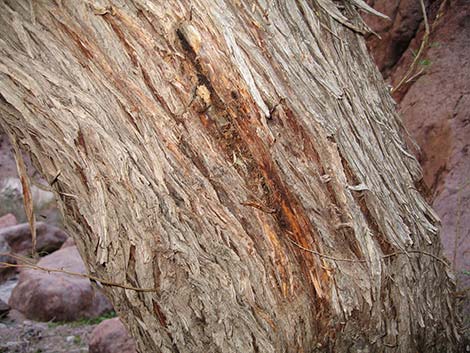 Shaggy bark on tree-sized catclaw |
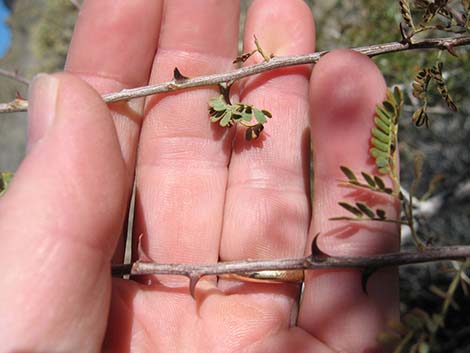 Catclaw Acacia has recurved thorns like claws on a cat |
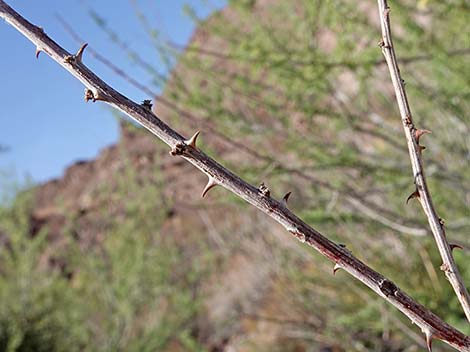 Catclaw Acacia has recurved thorns like claws on a cat |
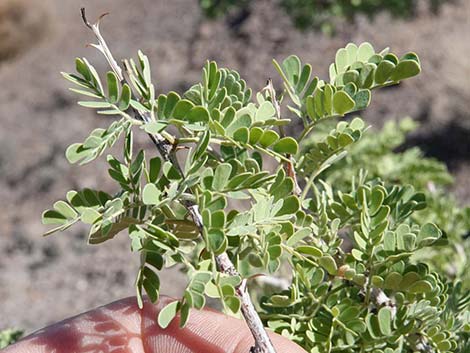 Catclaw Acacia leaves (note: each is 2-pinnate compound) |
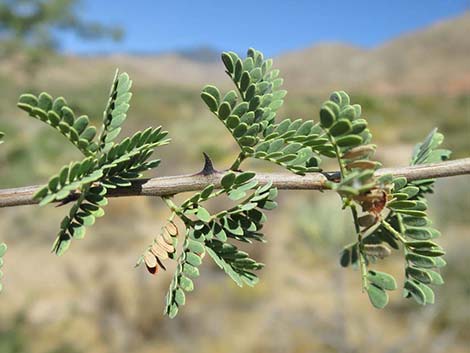 Five Catclaw Acacia leaves (note: each is 2-pinnate compound) |
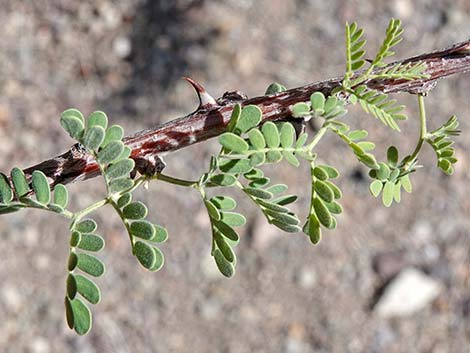 Catclaw Acacia leaves are compound (2-pinnate) |
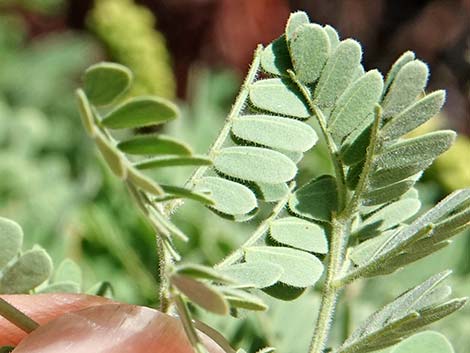 Catclaw Acacia leaves are compound (2-pinnate) |
 A single, entire Catclaw Acacia leaf (dorsal surface) |
 A single, entire Catclaw Acacia leaf (ventral surface) |
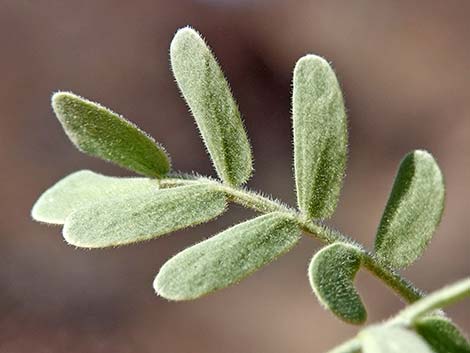 Catclaw Acacia leaflets (leaves are 2-pinnate compound) |
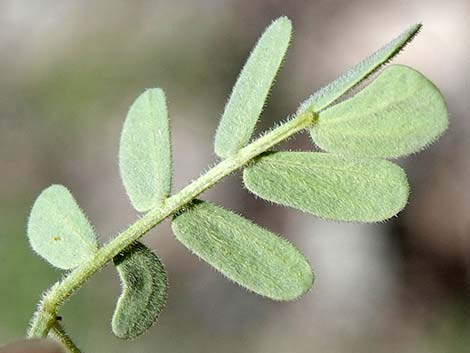 Catclaw Acacia leaflets (leaves are 2-pinnate compound) |
Pale yellow flowers on tree |
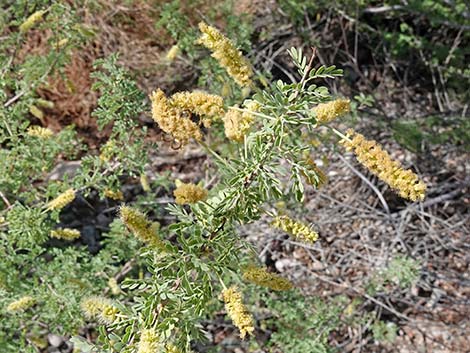 Catclaw Acacia flower buds and first opening flowers |
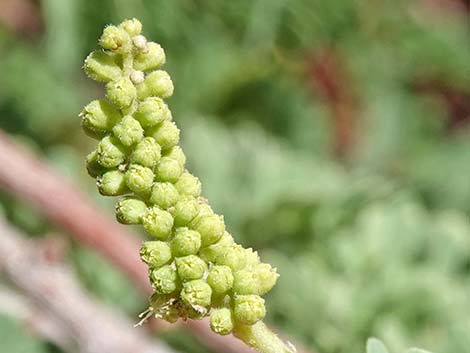 Catclaw Acacia flower buds |
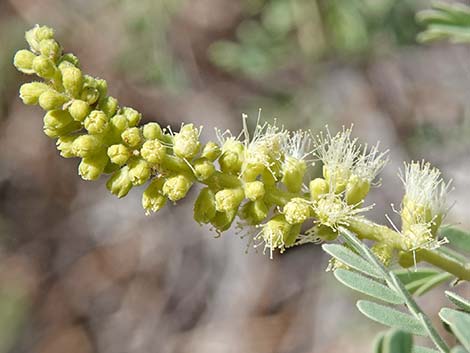 Catclaw Acacia flower buds and first opening flowers |
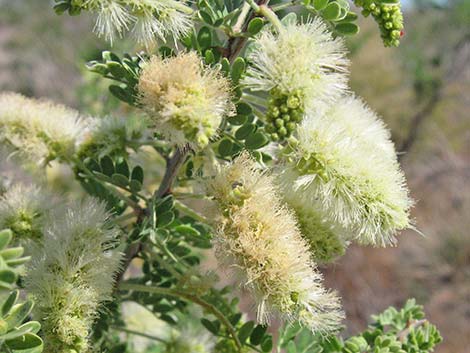 Catclaw Acacia flowers |
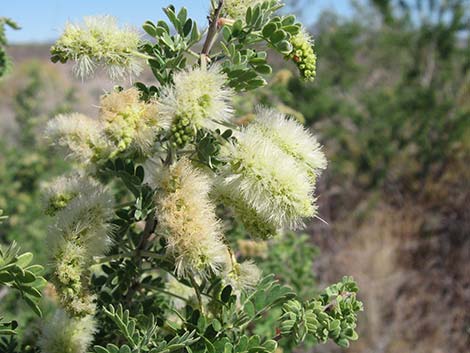 Catclaw Acacia flowers |
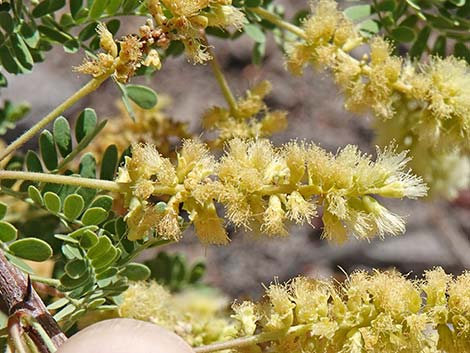 Catclaw Acacia flower clusters |
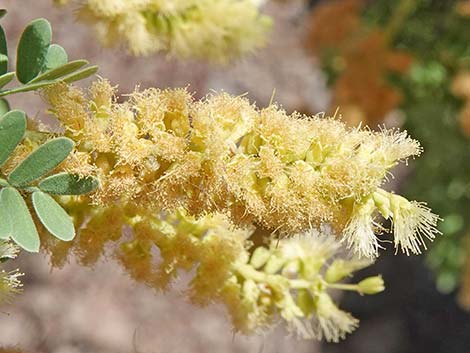 Catclaw Acacia flower clusters |
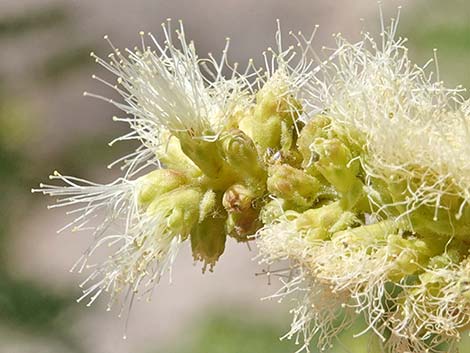 Catclaw Acacia individual flowers |
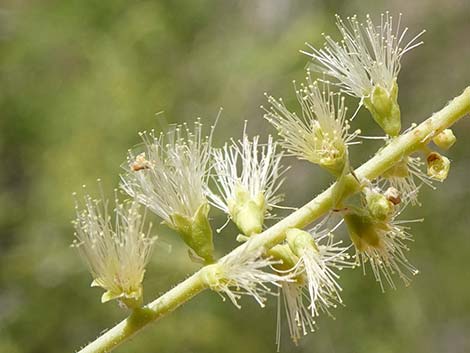 Catclaw Acacia individual flowers |
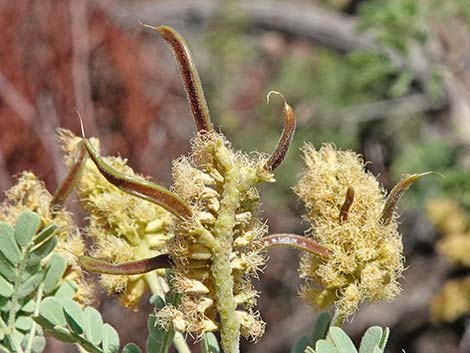 Catclaw Acacia seedpods beginning to grow |
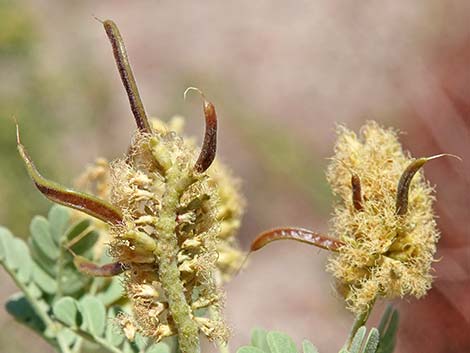 Catclaw Acacia seedpods beginning to grow |
 Catclaw Acacia tree with developing green seedpods |
 Developing Catclaw Acacia seedpods |
 Developing Catclaw Acacia seedpods |
 Developing Catclaw Acacia seedpods |
 Catclaw Acacia seedpods |
 Catclaw Acacia seedpods |
Dried seedpods on the tree |
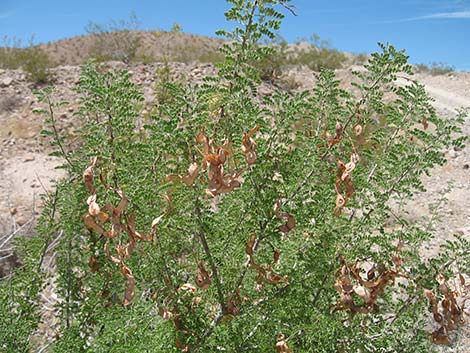 Dried seedpods on the tree |
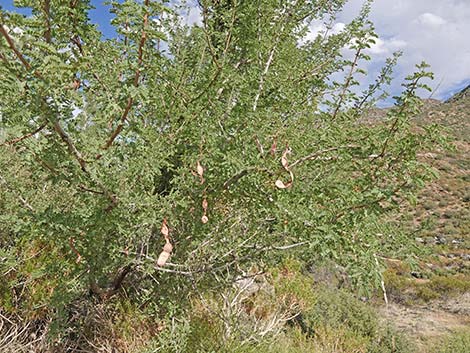 Dried seedpods on the tree |
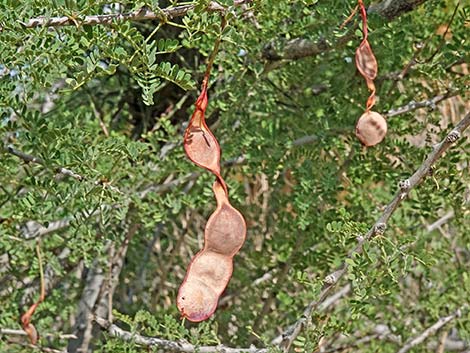 Dried seedpods on the tree |
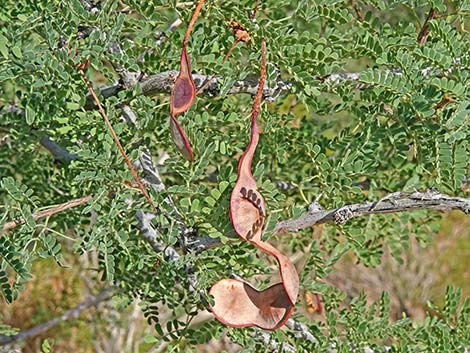 Dried seedpods on the tree |
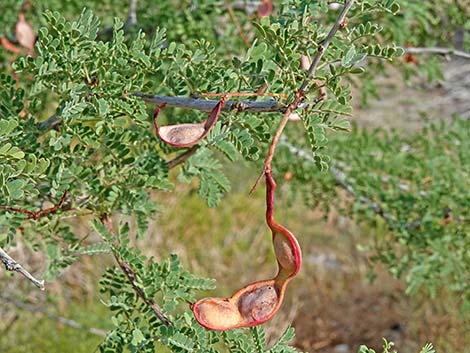 Dried seedpods on the tree |
 |
 |
 |
 |
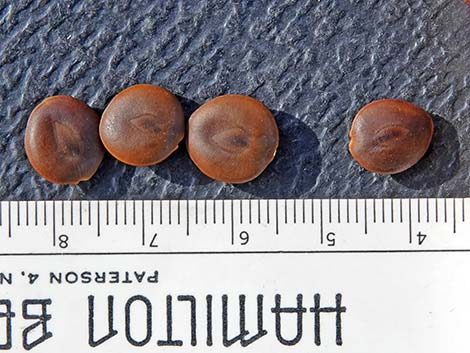 |
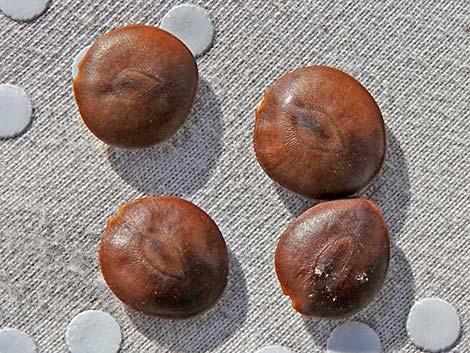 |
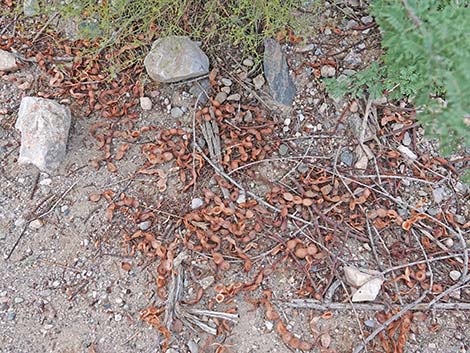 Big crop of dried seedpods on the ground |
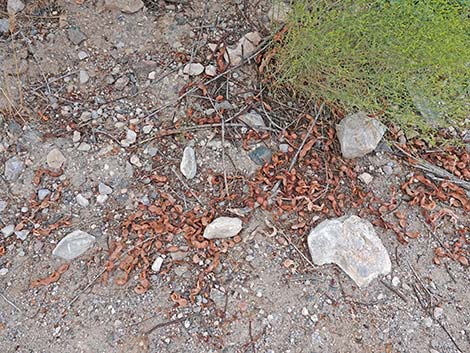 Big crop of dried seedpods on the ground |
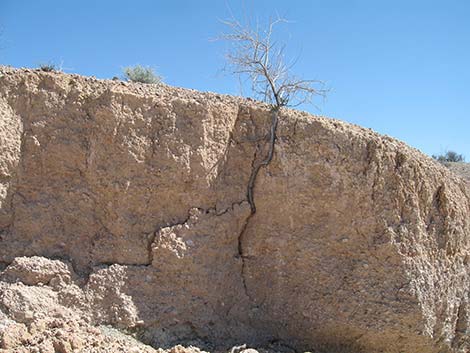 Long roots seek water far beneath the surface |
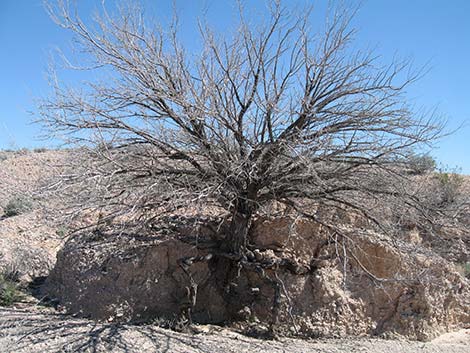 Deep roots seek water in all directions |
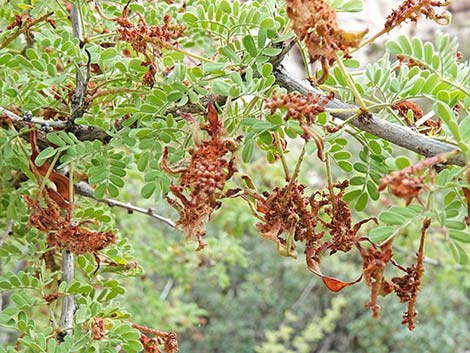 Catclaw Acacia with failed fruits during mega-drought |
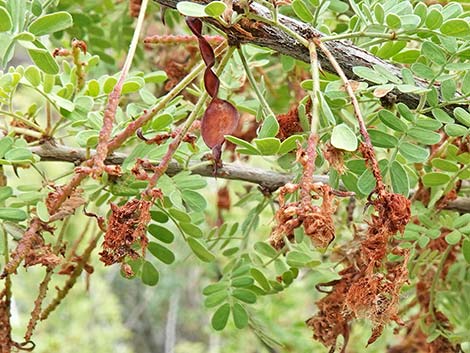 Catclaw Acacia with failed fruits during mega-drought |
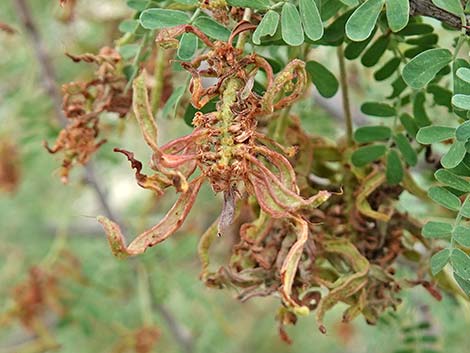 Catclaw Acacia with failed fruits during mega-drought |
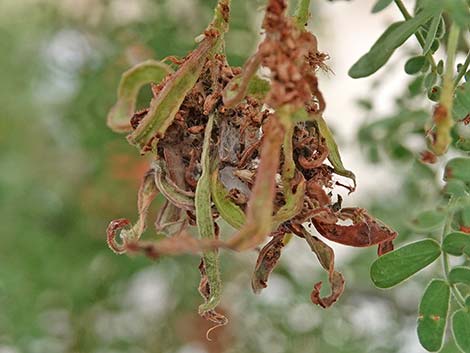 Catclaw Acacia with failed fruits during mega-drought |
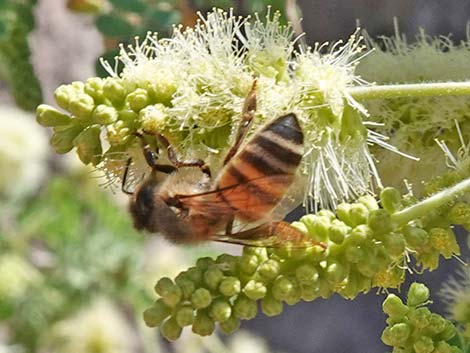 Honey Bee providing pollination services |
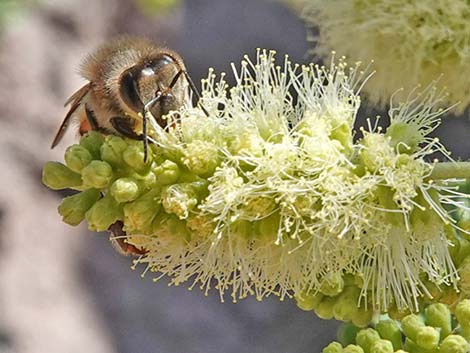 Honey Bee providing pollination services |
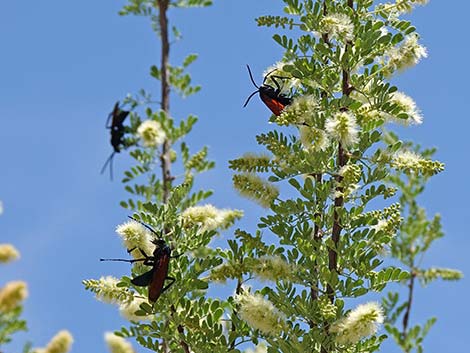 Three of many Tarantula Hawks providing pollination services |
 More to come ... |
Note: All distances, elevations, and other facts are approximate. Names generally follow the USDA database.
 ; Last updated 250429
| All Deciduous Trees | Plant Species Index | Glossary | Copyright, Conditions, Disclaimer | Home |