
Evergreen Trees (Conifers), Vegetation Around Las Vegas
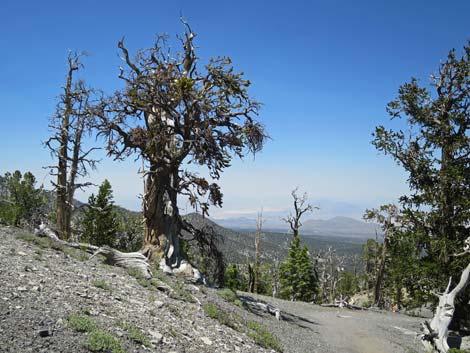 |
General: Great Basin Bristlecone Pines (Pinus longaeva) are coniferous (cone-bearing) trees with short, dark green, roundish needles set in bundles of five. The needle-bundles are crowded onto the ends of twigs, and the bundles radiate in all directions from the twigs, giving the branch a "bottle-brush" appearance. Cones are sappy, prickly, cylindrical, and about 4-inches long. Great Basin Bristlecone Pines are closely related to Foxtail Pines. In Nevada, Great Basin Bristlecone Pine is the dominant component of the montane vegetation in the Spring and Sheep mountains in the Hudsonian (Bristlecone Forest) life zone. On Mt. Charleston, a popular 3-mile hike runs out to the Raintree, a 3000-year-old Bristlecone Pine. For many more photos of bristlecone pine, see the North Loop Trail (Mt. Charleston) webpage. Family: Pine (Pinaceae). Other Names: Western Bristlecone Pine, Pinus aristata. |
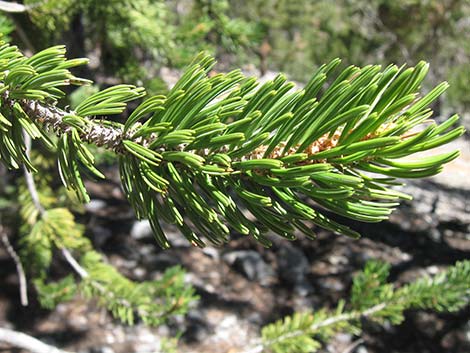 |
Plant Form: Tall straight tree in sheltered areas; short, twisted, and gnarled in more exposed locations. Height: To 40 ft tall; strongly tapered upward. Trunk: To 2.5 ft diameter. Bark: Young trees: smooth and whitish. Mature trees: dark brown with a reddish tint, scaly, fissured (somewhat blocky). Branches: Gracefully spreading or twisted and gnarled, depending on location. Some branches droop down. Needles: Dark green, curved, 1/2 to 1-1/2 inch long; bundles of 5; crowded, forming bottlebrush-like branch ends. |
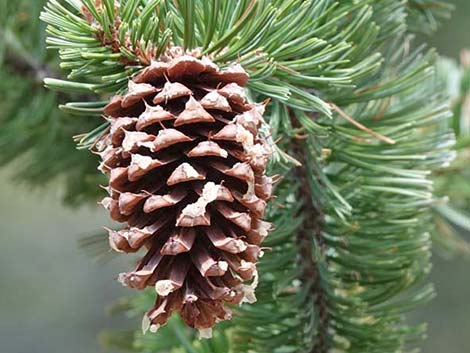 |
Cones: Oblong, 2- to 5.5-inches long. Dark purple brown when young, aging to brown, hanging, each scale tipped with a stiff, 1/4-inch long, incurved spine. Seeds: Habitat: Higher elevations in desert mountains. Elevation: 7,200 to 11,500 feet. Distribution: California to eastern Utah. Comments: This is the common tree at high elevations in the Spring and Sheep Mountains. |
 Grand old trees (living and dead) |
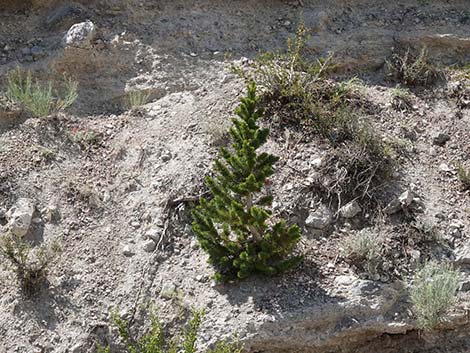 Young bristlecone pine |
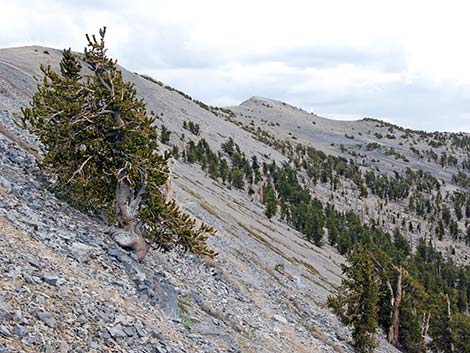 Storm-beaten bristlecone pines at timberline on Mt. Charleston |
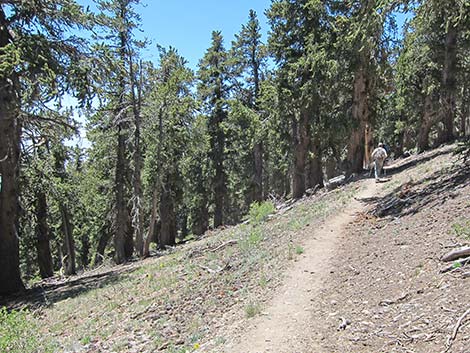 When sheltered from the wind, Bristlecones grow tall and straight |
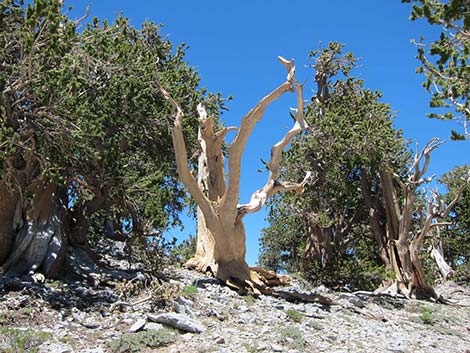
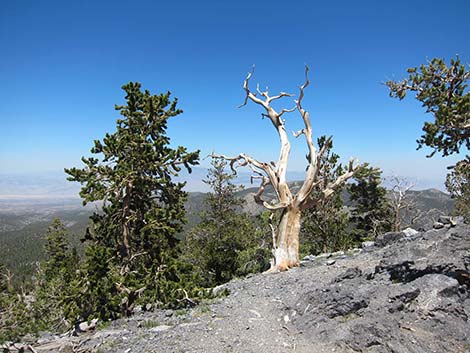 Gnarled living and dead Bristlecones high on a windy ridge |
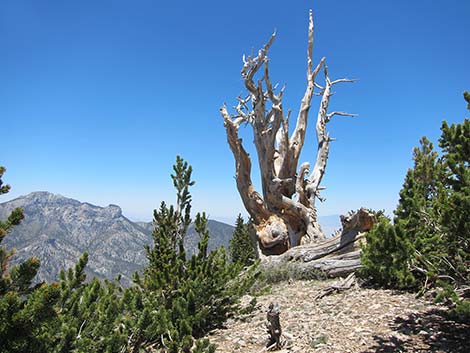 Gnarled dead tree on an exposed ridgeline |
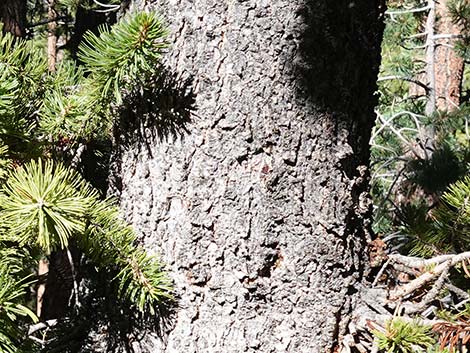 Young bark is gray and furrowed |
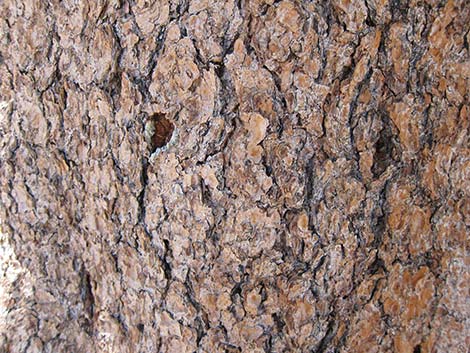 Old bark is more reddish and scaly |
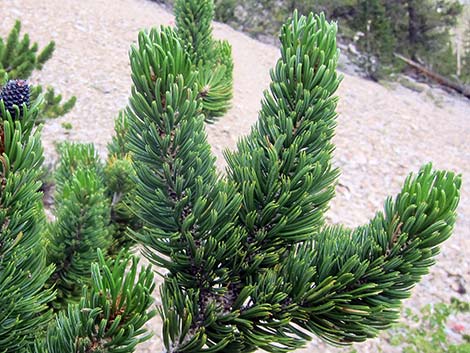 Dense needles radiate in all directions from the stem |
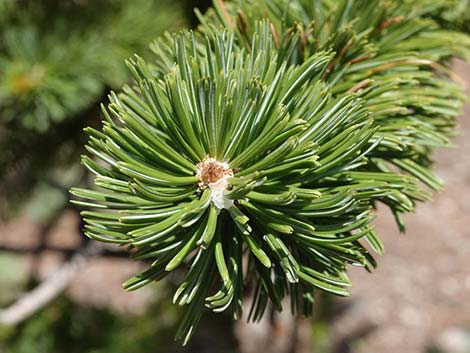 Dense needles radiate in all directions from the stem |
Bundles of needles crowed onto twig tips |
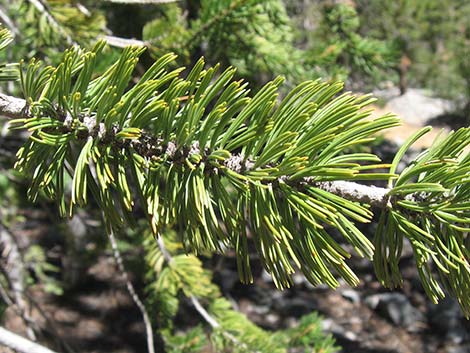 Bundles of needles crowed onto twig tips |
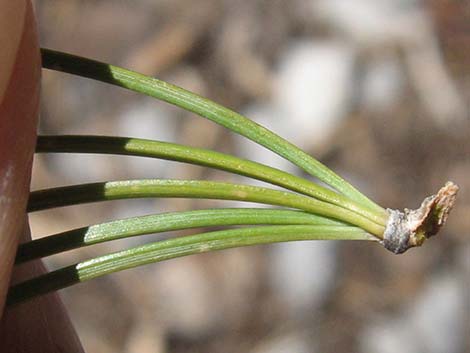 Needles in bundles of five |
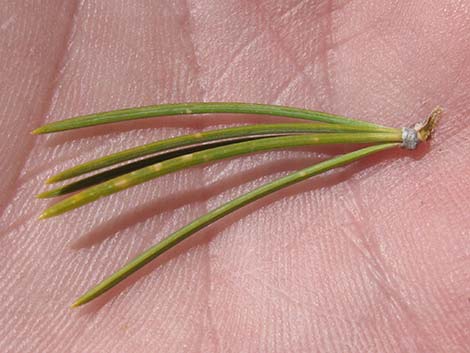 Needles in bundles of five |
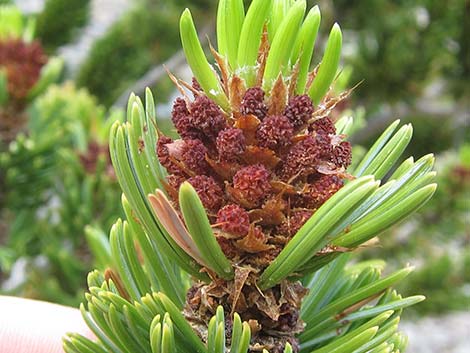 Male cones |
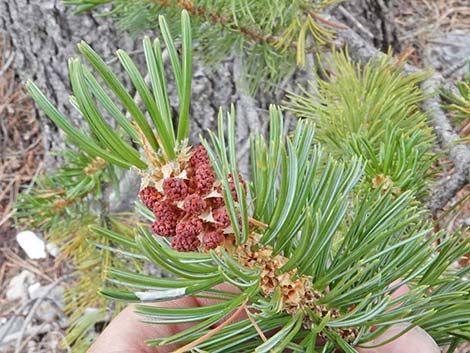 Male cones |
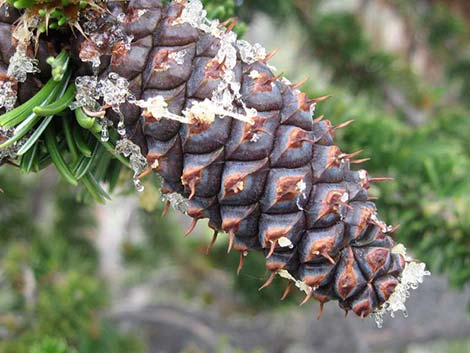 Young cone with spines |
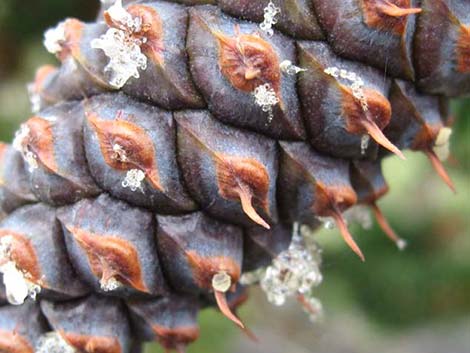 Young cone with spines |
Old cones |
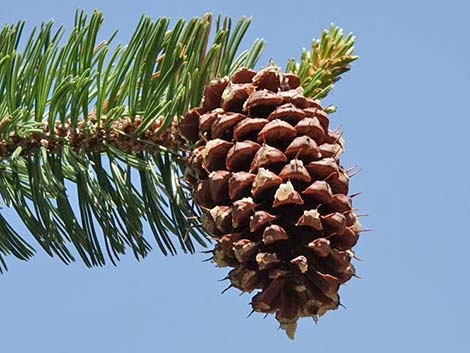 Old cones |
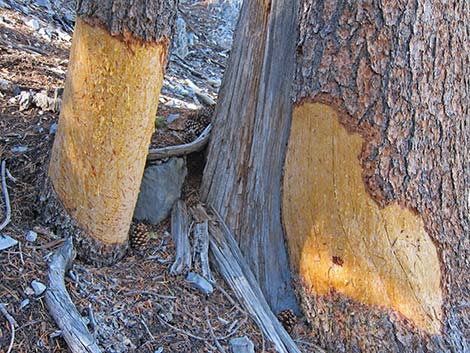 Porcupines chew bark off of trees on Mt. Charleston |
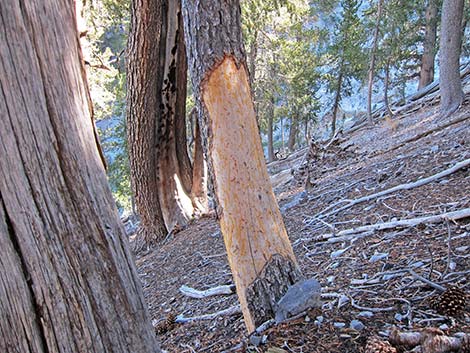 Porcupines chew bark off of trees on Mt. Charleston |
Note: All distances, elevations, and other facts are approximate.
 ; Last updated 230811
| All Conifers | Plant Species Index | Glossary | Copyright, Conditions, Disclaimer | Home |