
Birding Around Las Vegas, Ash Meadows National Wildlife Refuge
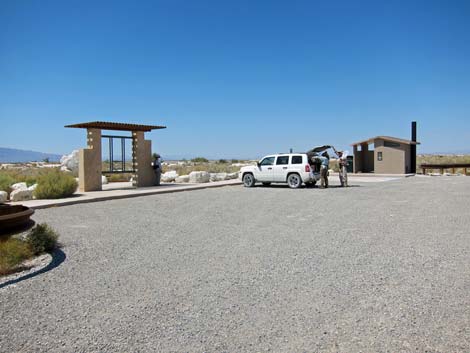 From the parking area, you wouldn't think that there was a spring down there (view NW from road) |
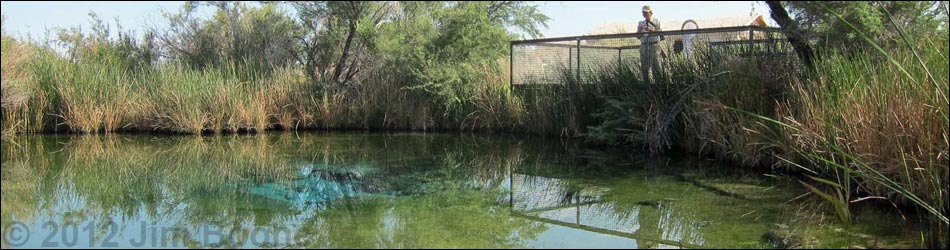
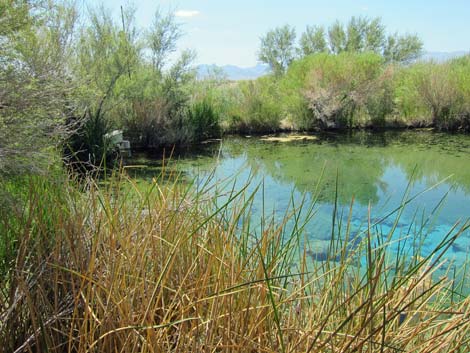
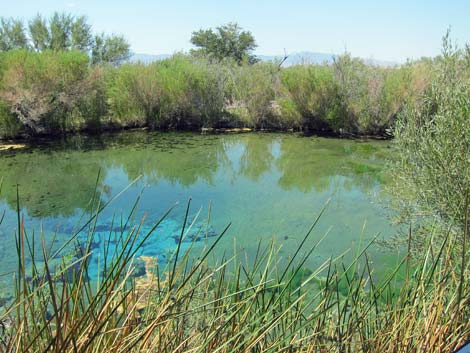
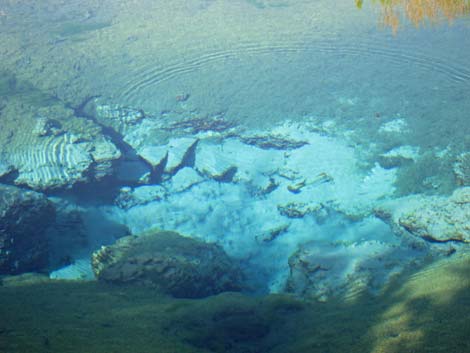
Description Longstreet Spring emerges into a deep, clear, 40-foot-diameter spring pool that is surrounded by mesquite and ash trees, plus lots of shrubs, sedges, and forbs. Away from the edge of the spring, the vegetation quickly changes to mesquite thickets with saltgrass, and then dry desert saltbush and old farm fields. A strong outflow stream flows west along a cattail-filled ditch, the noise of which makes it hard to hear the birds. A boardwalk leads from the parking area (with restroom) to the reconstruction of the Longstreet Cabin and then to the springpool. Jack Longstreet, a gunslinger, miner, farmer, and saloon owner made his home at Ash Meadows from 1895 to 1899. He built his cabin into the side of a spring mound, which is a dirt hill that forms over time as moist soils trap windblown dust. Being semi-subterranean, the spring mound helped cool his cabin during summer, and he even had running water inside the cabin -- something unheard of in the late 1800s in this part of Nevada. USFWS via Facebook 2022. |
 |
Location Longstreet Spring is located on the Ash Meadows National Wildlife, about 2 hours northwest of Las Vegas and about 3.25 air-miles north of the Visitor Center. To visit Longstreet Spring from the Ash Meadows Visitor Center, drive west on Spring Meadows Road for 0.3 miles to Longstreet Road. Angle right onto Longstreet Road and drive north (actually northwest here) on the well-graded road for about 3.4 miles to the Longstreet Spring parking area (Site 0697). Watch for a large parking area on the west (left) side of the road with a restroom and information sign. From the parking area, walk west on the boardwalk for about 150 yards to Longstreet Spring (Site 0590). |
 |
Hours The refuge is day-use only: open sunrise to sunset. Fees None. |
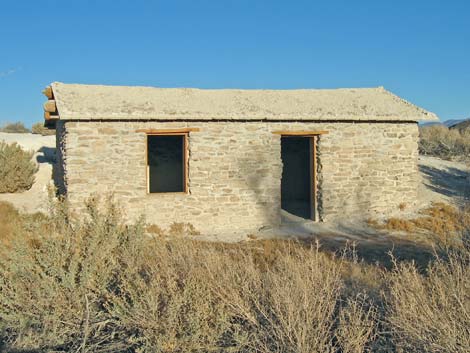 Reconstruction of Longstreet cabin |
Specialties Longstreet Spring is a good place to see desert species when they come in for water. Check the trees and shrubs for finches, sparrows, warblers, Gambel's Quail, Mourning Doves, and similar species. Keep an eye out for dragonflies too. Longstreet Spring is also good for finding migrants, but the species mix depends on the season, and during migration it depends on just who is moving through at the time. Review the refuge bird list for some ideas on what to expect during the time of year when you will be visiting. |
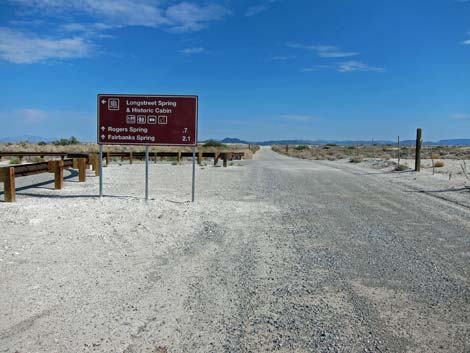 Sign along Longstreet Road (view N) |
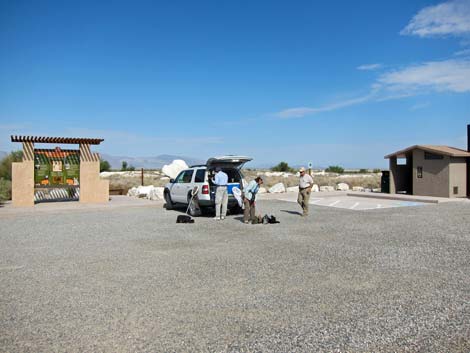 Parking area with info sign and restroom (view NW) |
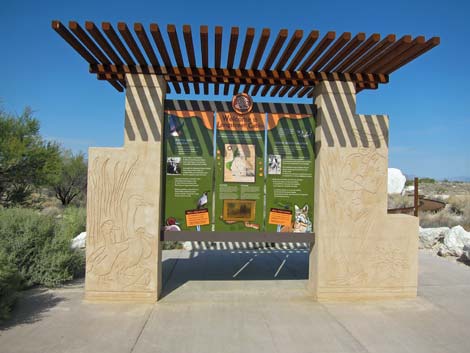 Info sign (view W) |
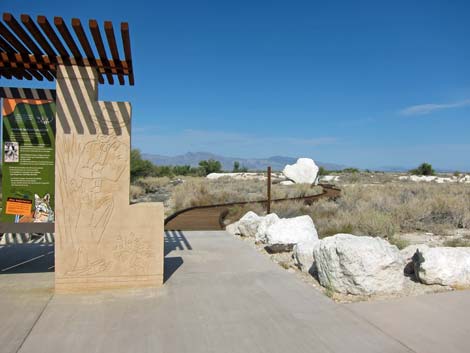 Info sign and start of the trail (view W) |
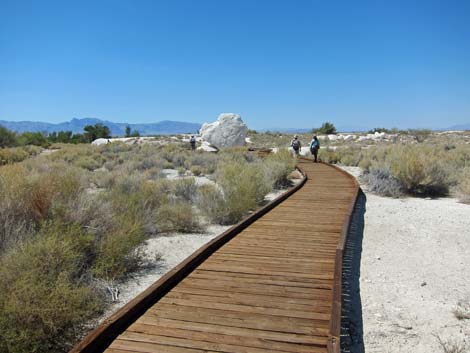 Boardwalk to the spring and building |
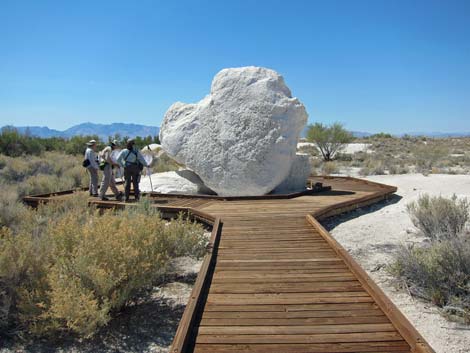 Art along the Boardwalk? |
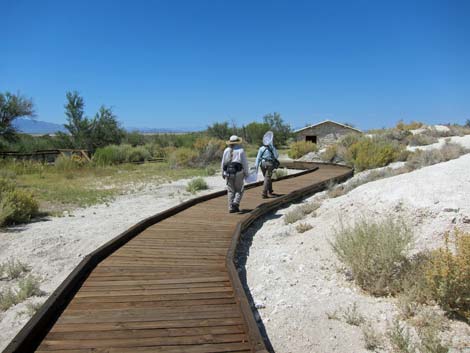 Boardwalk |
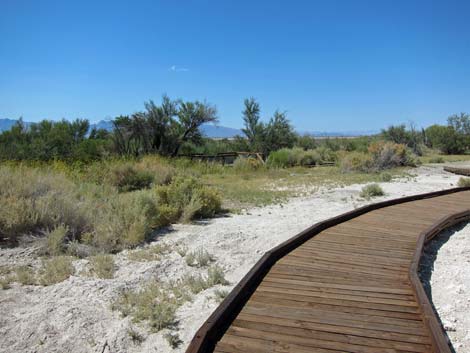 Boardwalk |
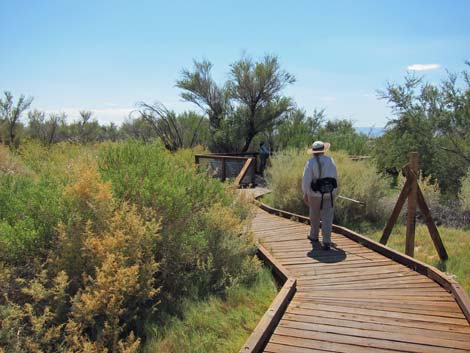 Boardwalk approaching springpool overlook |
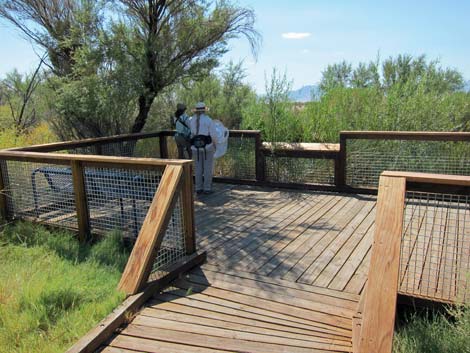 Springpool overlook |
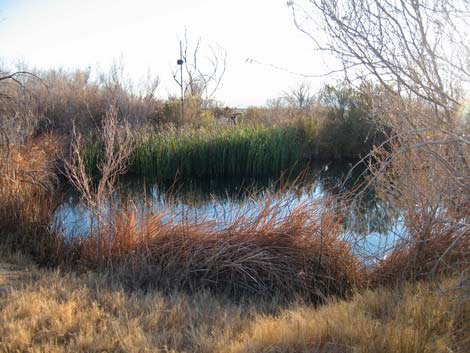 Springpool |
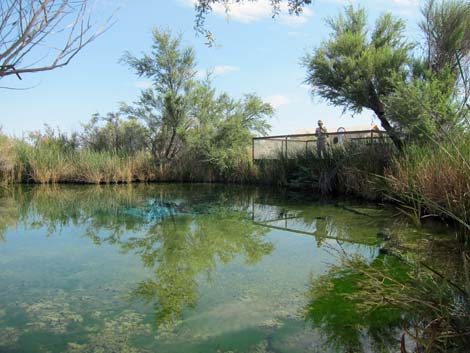 Springpool |
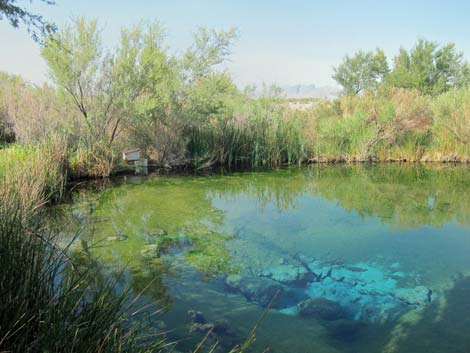 Springpool panorama left |
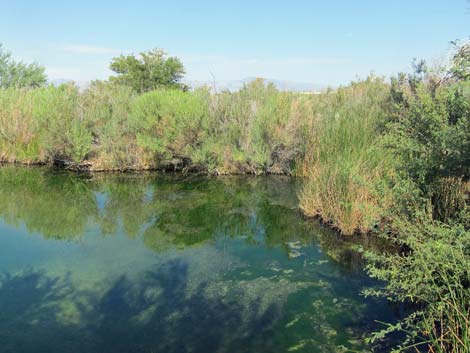 Springpool panorama right |
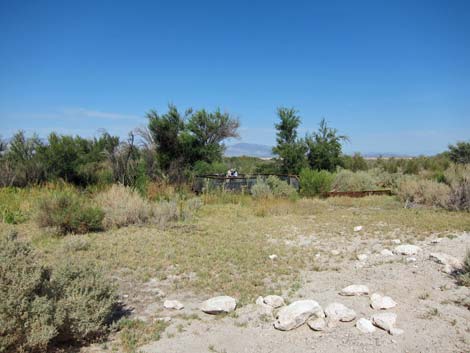 |
 |
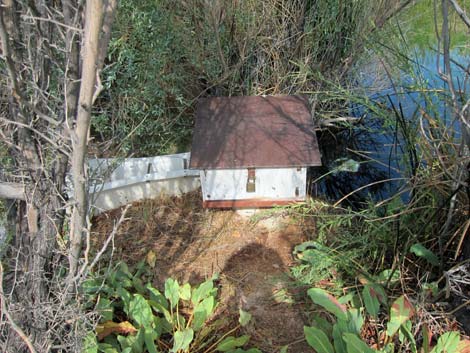 Water gauge at outflow |
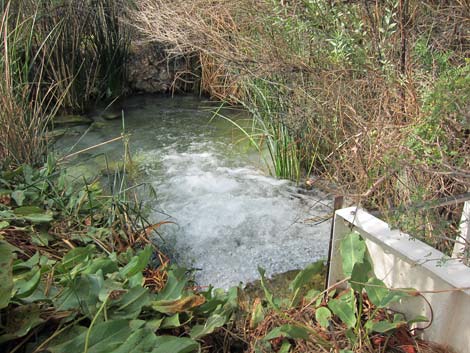 Outflow stream |
Springpool (view N from outflow) |
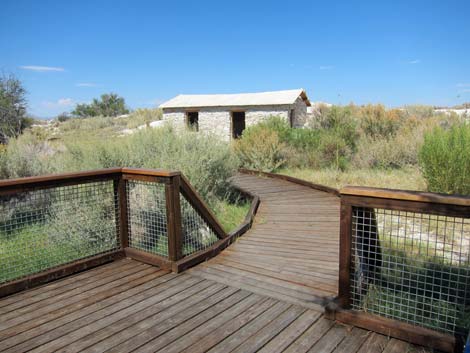 Departing springpool overlook |
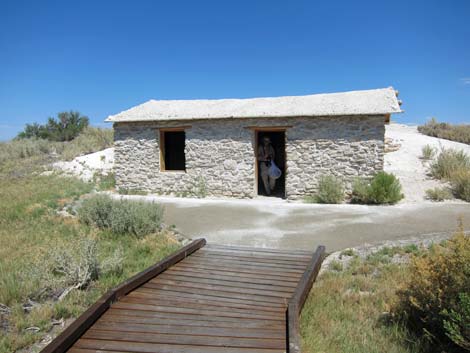 Approaching Longstreet Cabin |
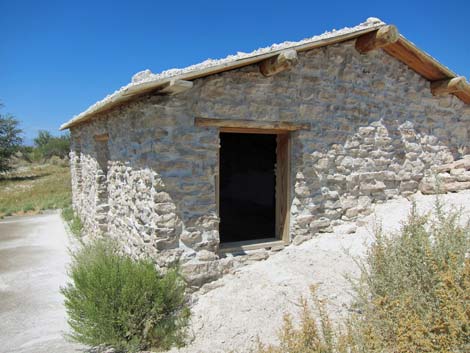 Longstreet Cabin (exterior) |
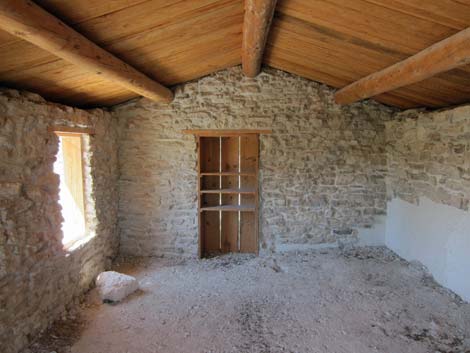 Longstreet Cabin (interior) |
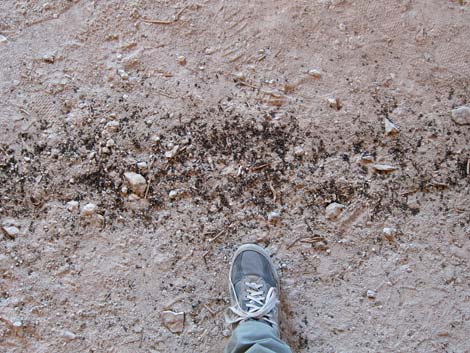 Bat guano on the floor of the cabin |
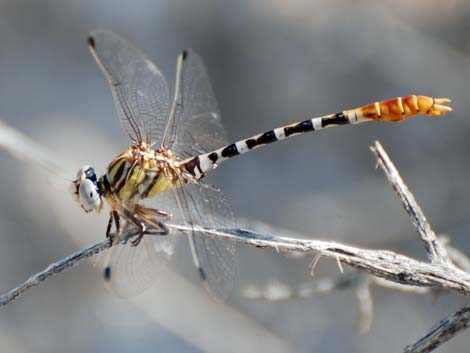 White-belted Ringtail (Erpetogomphus compositus) along boardwalk |
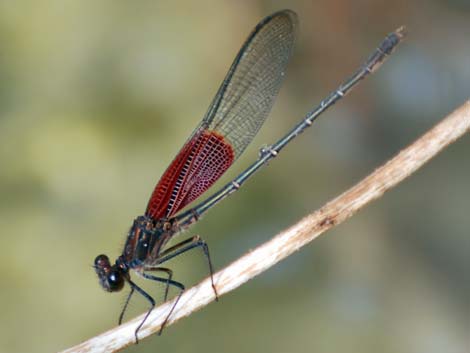 American Rubyspot (Hetaerina americana) over outflow stream |
Table 1. GPS Coordinates for Highway Locations (NAD27; UTM Zone 11S). Download Highway GPS Waypoints (*.gpx) file.
| Site # | Location | Latitude (°N) | Longitude (°W) | UTM Easting | UTM Northing | Elevation (feet) | Verified |
|---|---|---|---|---|---|---|---|
| 590 | Longstreet Spring | 36.4675 | 116.3255 | 560428 | 4035810 | 2,311 | Yes |
| 697 | Longstreet Spring parking | 36.4676 | 116.3238 | 560588 | 4035826 | 2,300 | Yes |
| 1588 | Ash Meadows Visitor Center | 36.42323 | 116.32703 | 560329 | 4030901 | 2,188 | Yes |
Happy birding! All distances, elevations, and other facts are approximate.
 ; Last updated 240323
| Birding Around Las Vegas | Southern Nevada Birds | Guide Service | Copyright, Conditions, Disclaimer | Home |