
Turtles Around Las Vegas, Wildlife Around Las Vegas
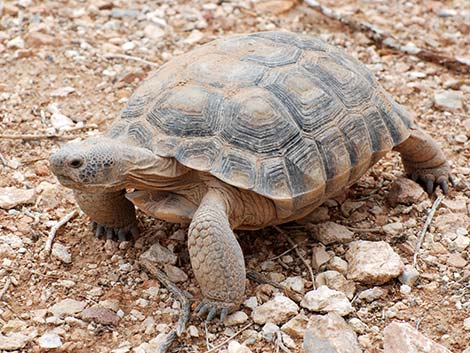 |
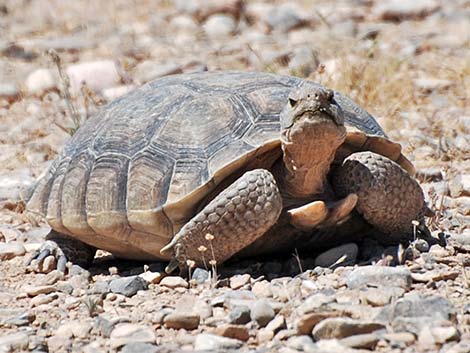
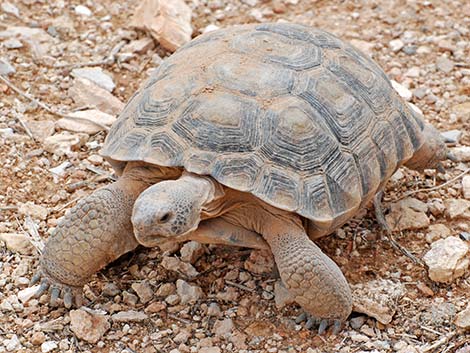
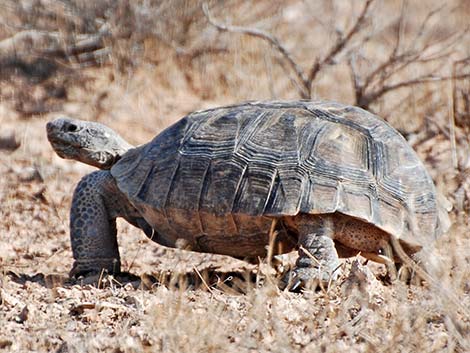
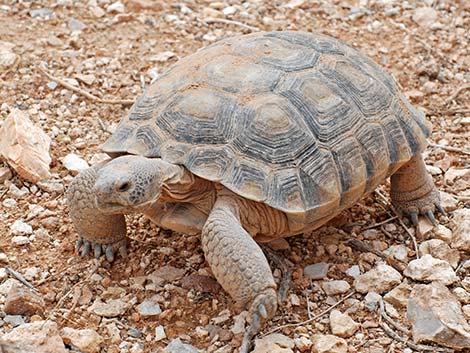
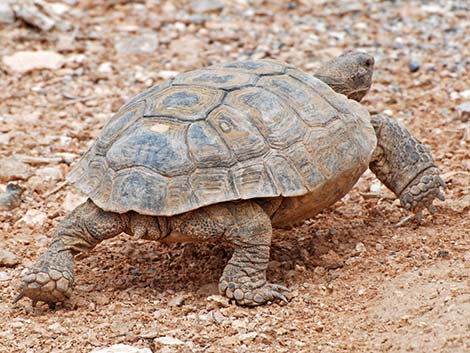
General Description: A turtle in the Mojave Desert with a moderately domed, brownish shell. This is the only "land turtle" in the desert around Las Vegas. Taxonomy: Tortoise Family (Testudinidae). Technical Description: A terrestrial "turtle." Carapace moderately domed, brownish; can exceed 14-inches long. Hind legs stumpy, round, and elephant-like. Front legs broadly flattened with leathery skin and large scales. Male with indented plastron; female with flat plastron. Diet: Primarily eats annual forbs and grasses that germinate during springtime after good winter rains. Also eat cactus and other low-growing plants. Drink standing water when available, through their nose. When food is unavailable, can stay in underground burrow for more than 6 months. |
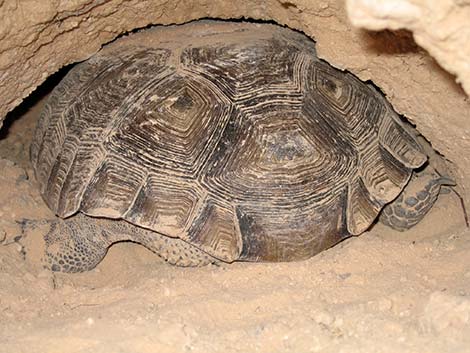 Tortoise inside burrow |
Habitat: Most common in Mojave Desert Scrub habitat type, especially desert scrub and wash habitats dominated by creosote bush. Found in valleys and on bajadas and hills below 4,500 ft elevation. Less common in the lower-elevation Creosote-Bursage Flat habitat type. An important habitat requirement is the presence of annual wildflowers and native grasses that are eaten during spring. Range: Southeastern California, southern Nevada, and southwestern Utah. In western Arizona and western Mexico, they have a different species of tortoise: Sonoran Desert Tortoise (Gopherus morafkai), which formerly was considered the same species as Mojave Desert Tortoise. Breeding: Mate in the spring, lay 1-15 eggs per clutch during spring through mid-summer, hatchlings emerge in the fall shortly before going into hibernation. Similar Species: This is the only species of tortoise in Nevada. The Sonoran Desert Tortoise occurs across the Colorado River in Arizona. |
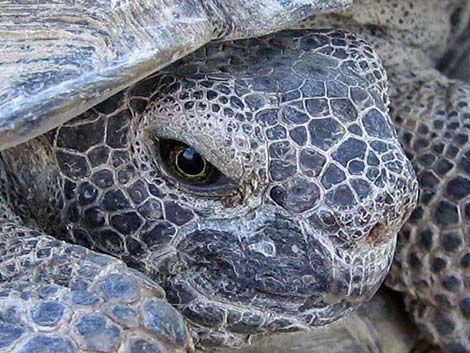
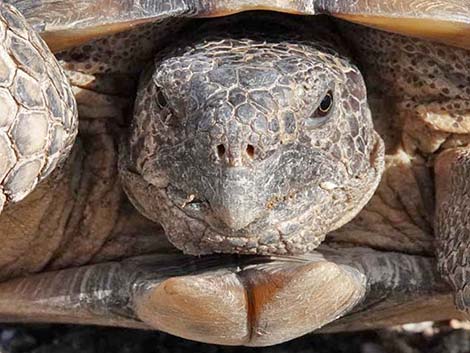 If you were a tasty flower or a juicy little forb, this might be the last face you ever see! |
Comments: Tortoises dig dome-shaped burrows, usually in the sides of washes or at the base of shrubs. If you look into burrows to try to find them, expect to also see creatures such as rattlesnakes that use the burrows. Tortoises can live longer than 50 years. Special Remarks: Tortoises west and north of the Colorado River are listed and protected as Federally Threatened under the Endangered Species Act; individuals may not be taken from the wild. Pet tortoises can be obtained from the Desert Tortoise Program. |
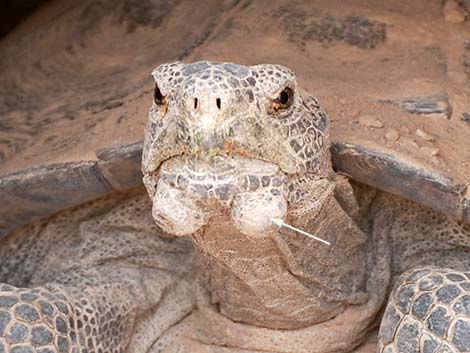 |
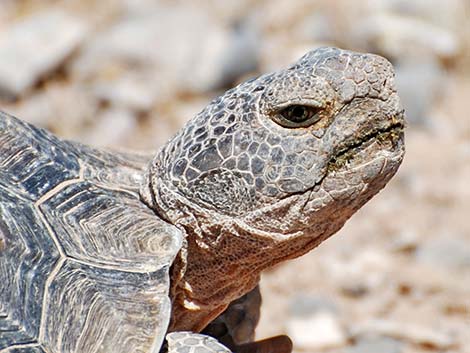
Desert Tortoise males have chin glands that become enlarged (like this) during the breeding season. This is a good way to determine gender in tortoises without picking them up to feel the plastron. |
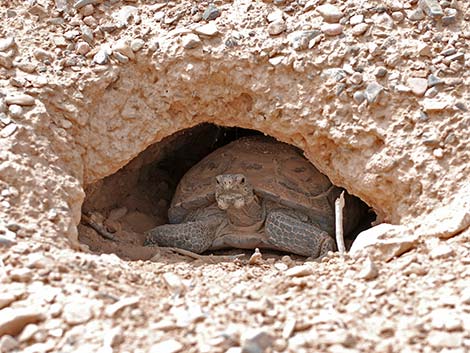 |
Typical tortoise burrow: notice the dome-shaped roof (inward sloping walls), flat floor, and straight tunnel. Compare this shape with the shape of Kit Fox burrows, which have vertical sides and a tunnel that usually curves to the side. We can tell this big buck is a male from the chin glands without pulling him out of his burrow. |
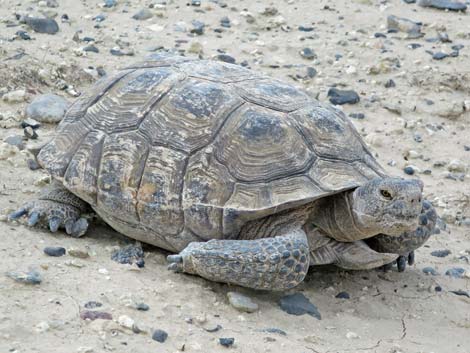 Tortoise at Tule Springs National Monument |
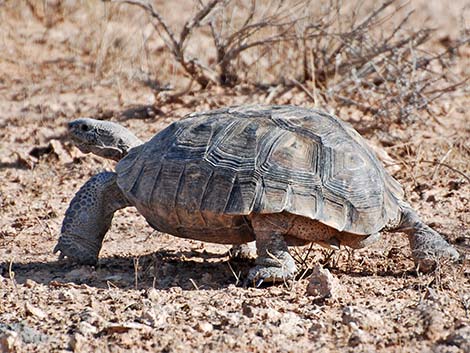 Desert tortoise in the open desert |
 |
 |
 |
 |
 |
 |
 |
 |
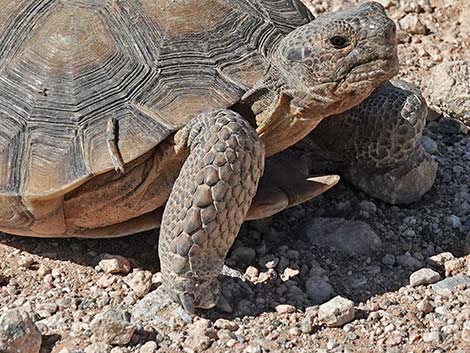 Desert Tortoises have spade-like front foot |
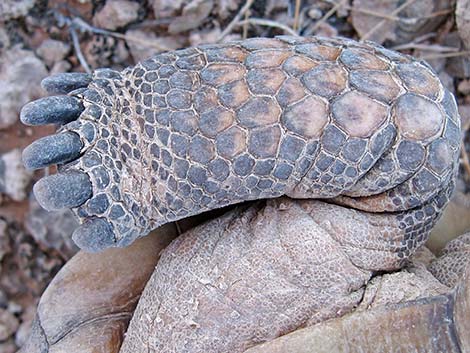 Desert Tortoises have spade-like front foot |
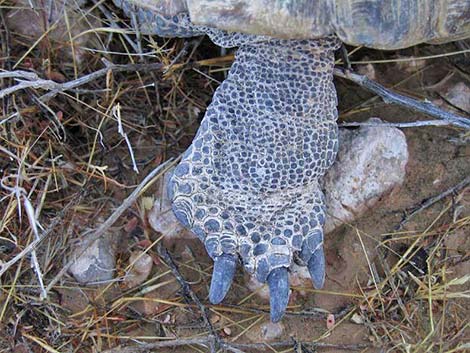 Desert Tortoises have elephant-like (elephantine) hind foot |
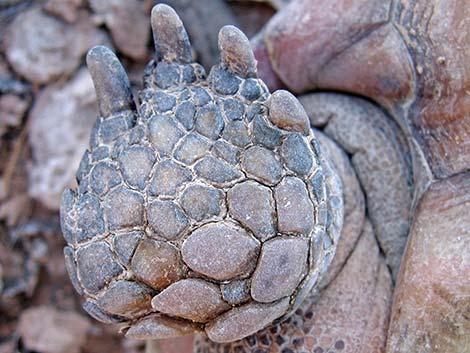 Desert Tortoises have elephant-like (elephantine) hind foot |
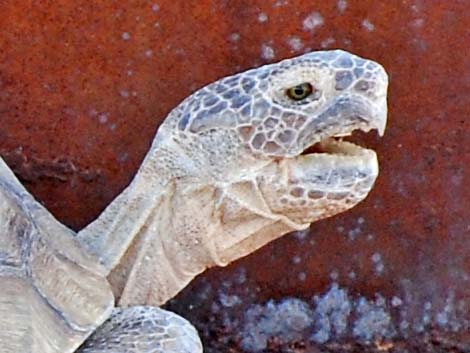 Desert Tortoises rarely bite, but they have a strong beak useful for tearing up plants for food |
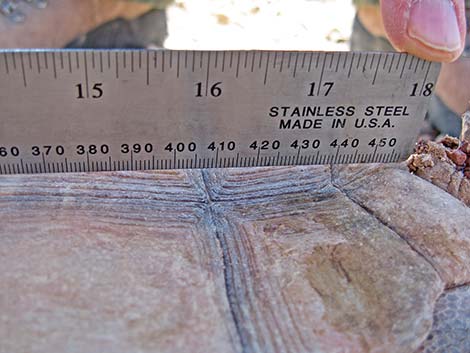 Desert Tortoise males have a concave plastron; females have a flat plastron. This is a male. |
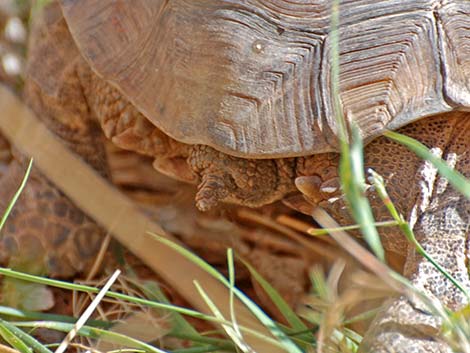 That is a little girl-tail |
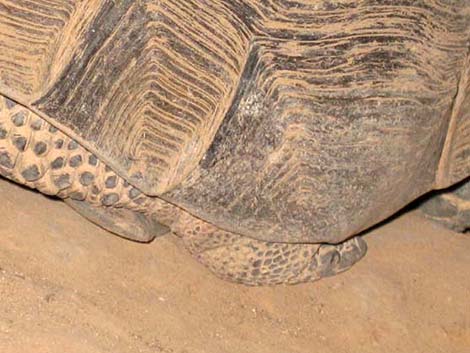 Desert Tortoise males have a long, fat tail |
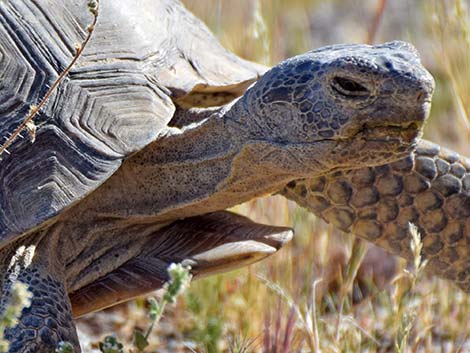 Female tortoises have a short, flat gular projection (below neck) |
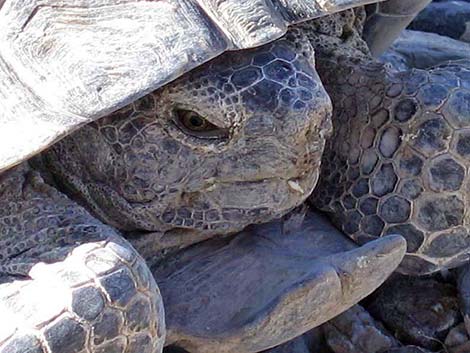 Male tortoises have a long, up-turned gular projection (below chin) |
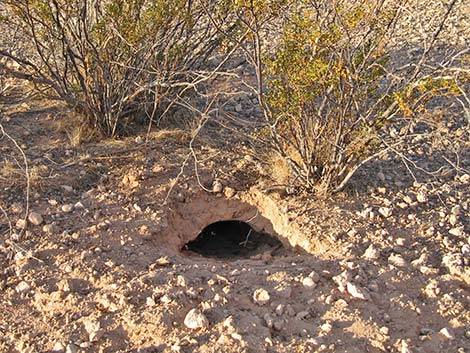 Tortoise burrows are dome-shaped above and flat below |
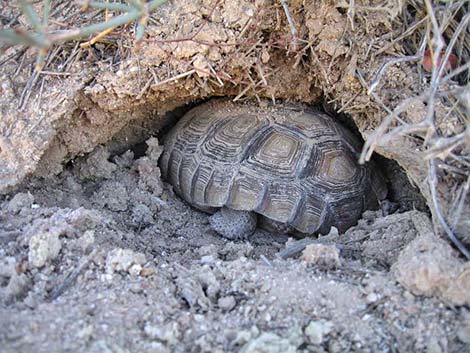 Tortoise burrows are dome-shaped above and flat below |
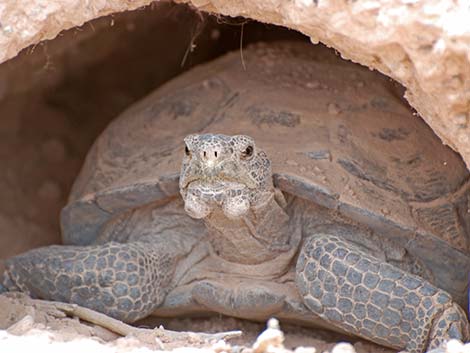 Desert Tortoise male in burrow |
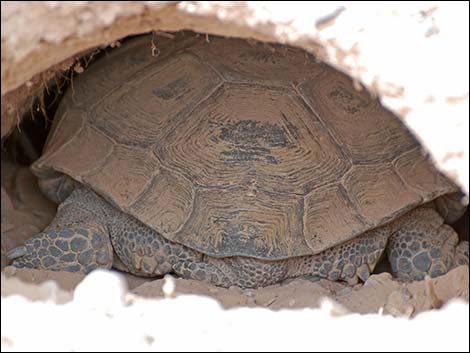 Desert Tortoise going down a burrow |
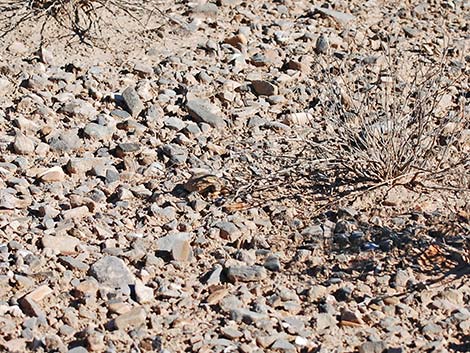 Desert Tortoise juvenile blends in with background |
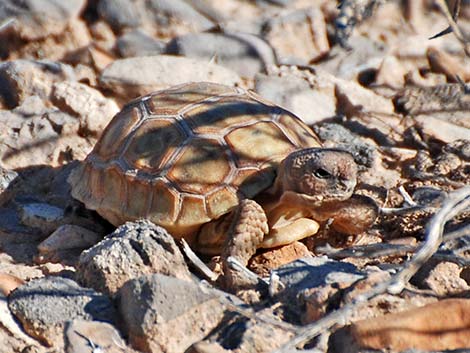 Desert Tortoise juvenile |
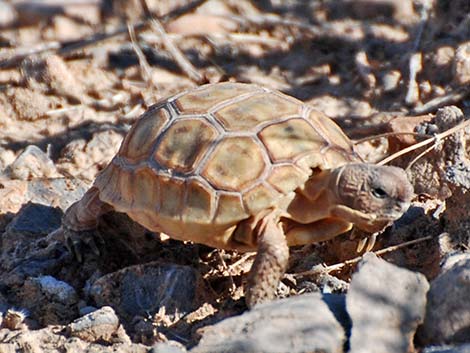 Desert Tortoise juvenile |
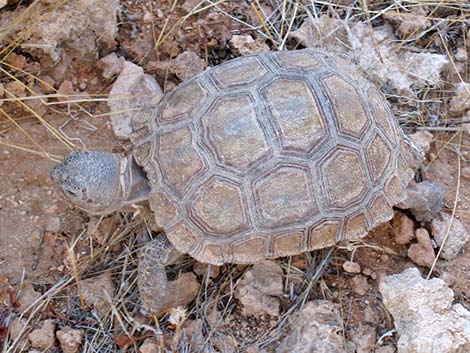 Desert Tortoise yearling about 2-inches long |
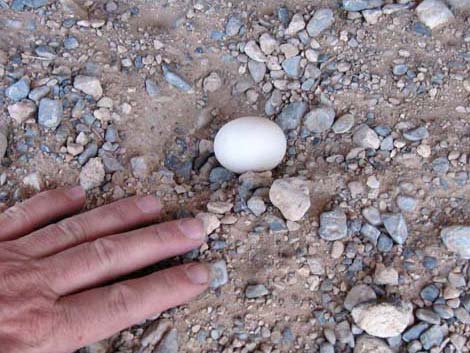 Desert Tortoise egg dug up by a predator |
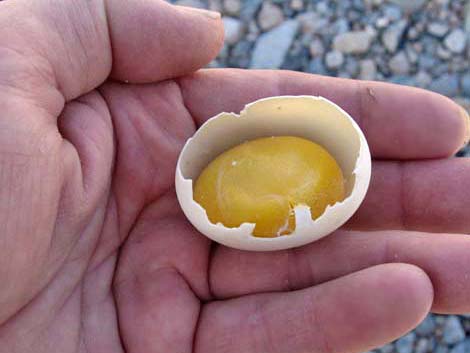 Desert Tortoise egg opened by a predator |
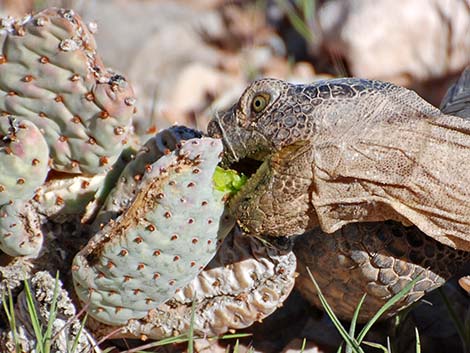 Desert tortoise sometimes eat cactus (more photos) |
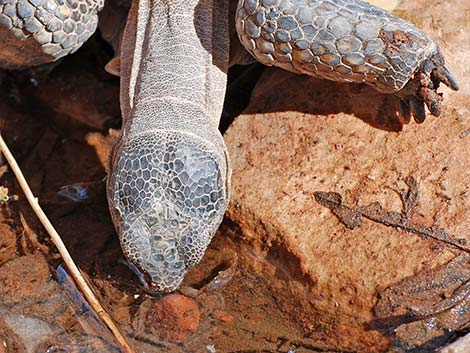 Desert tortoise drinking water from a spring (more photos) |
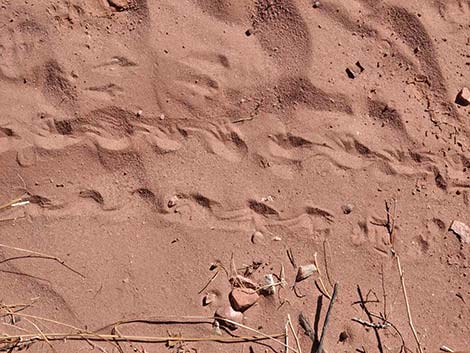 Desert Tortoise tracks in soft sand |
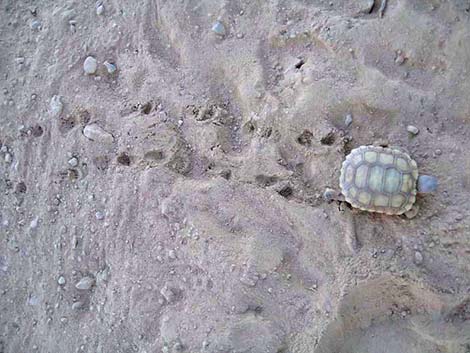 Desert Tortoise tracks in road dust |
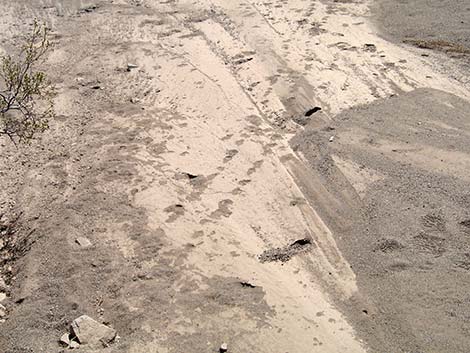 Tortoise tracks in dry mud |
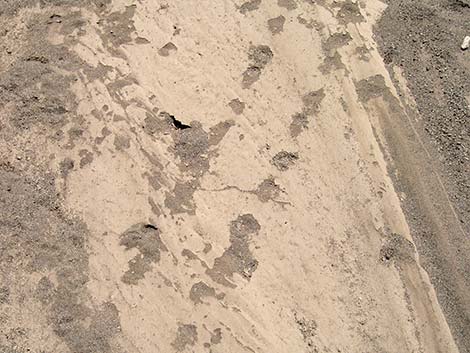 Tortoise tracks |
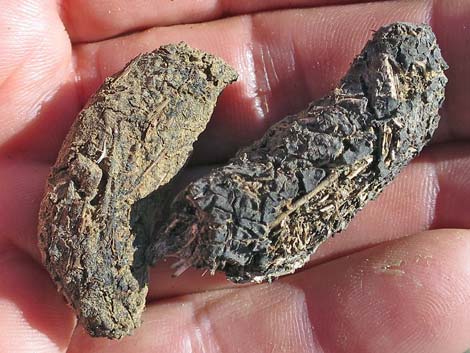 Desert Tortoise scat in southwest Gold Butte NM |
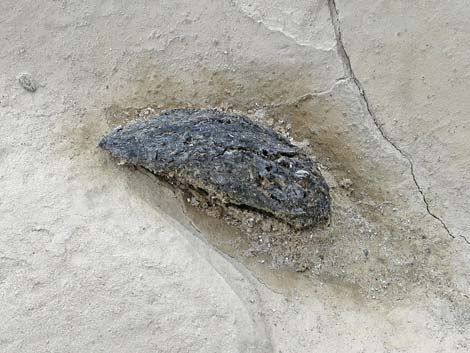 Tortoise scat at Tule Springs National Monument |
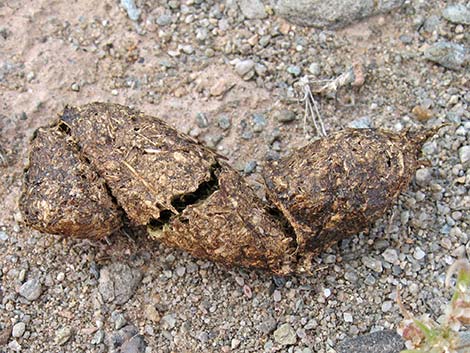 Tortoise scat |
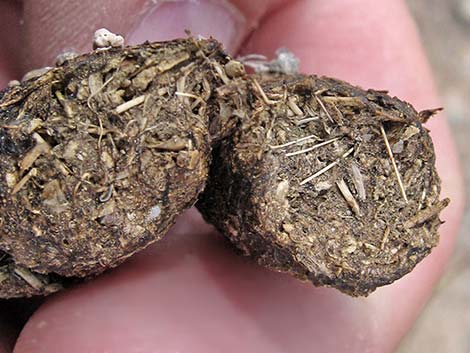 Tortoise scat |
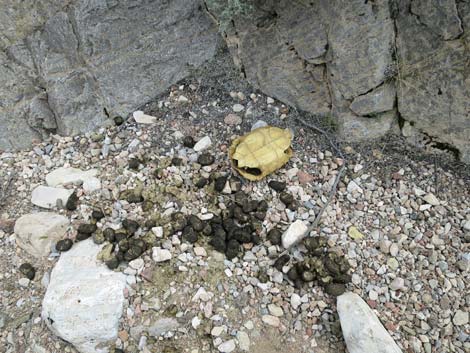 Desert Tortoise carcass with Feral Burro scat in Gold Butte NM |
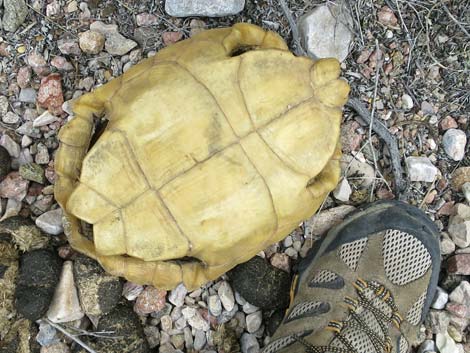 Desert Tortoise carcass with Feral Burro scat in Gold Butte NM |
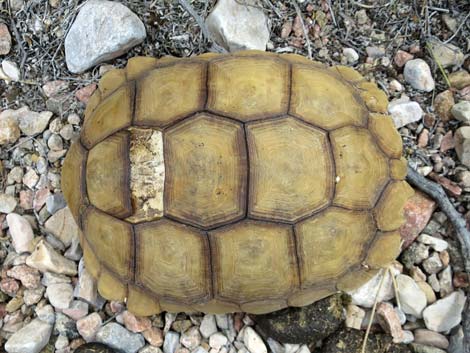 Desert Tortoise carcass with Feral Burro scat in Gold Butte NM |
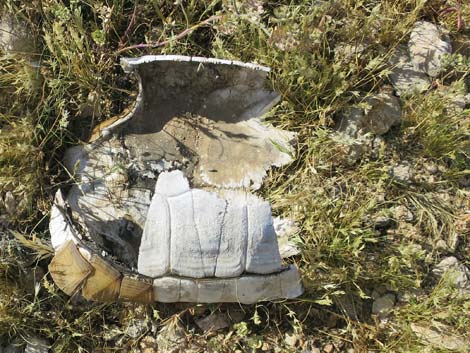 Desert tortoise run over on a lonely dirt road in Gold Butte NM |
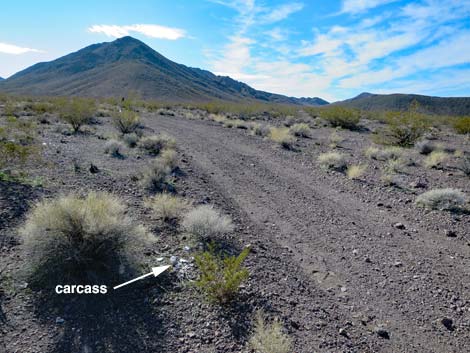 Desert tortoise run over on a lonely dirt road |
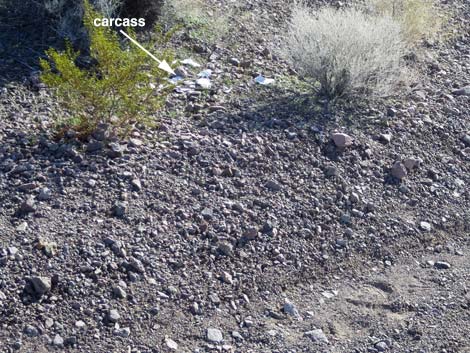 Desert tortoise run over on a lonely dirt road |
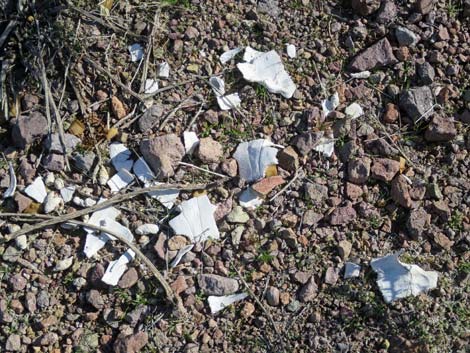 Desert tortoise bones and scutes after being run over on a dirt road |
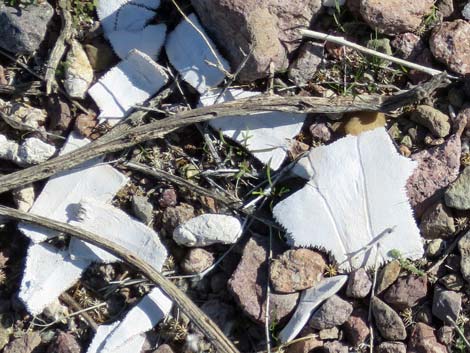 Desert tortoise bones after being run over on a lonely dirt road |
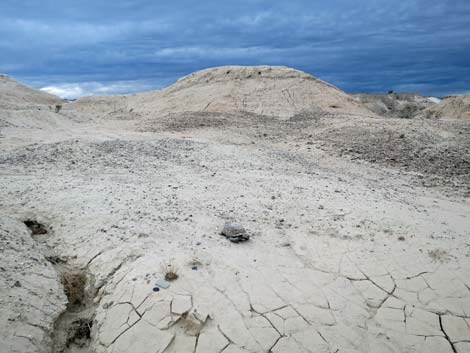 Tortoise at Tule Springs National Monument |
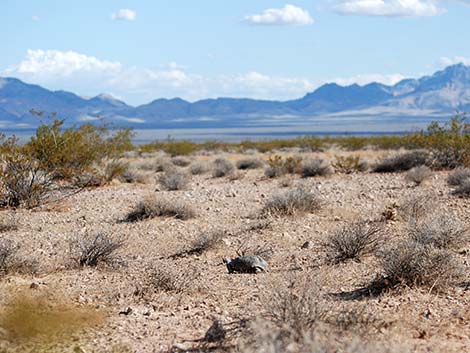 Tortoise in Creosote-Bursage Flat habitat |
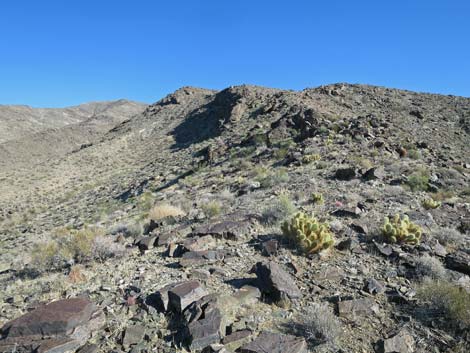 Desert Tortoise habitat in southwest Gold Butte NM |
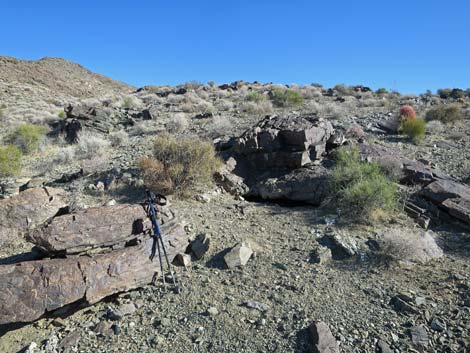 Desert Tortoise burrow in southwest Gold Butte NM |
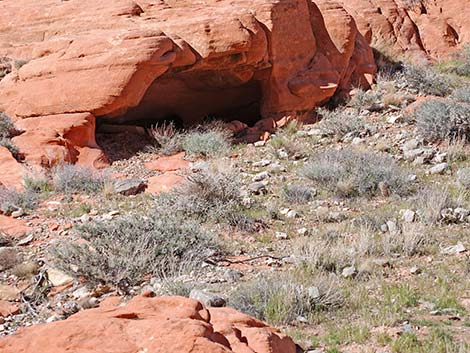 Tortoises are hard to find, even in the open. Can you see this one? |
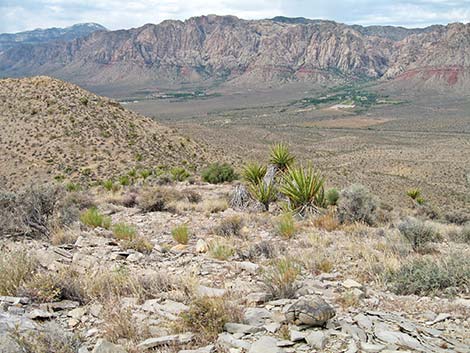 Desert Tortoise at Red Rock Canyon |
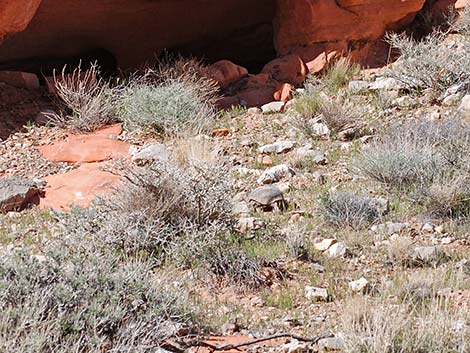
Tortoises Crossing a Dirt Roads
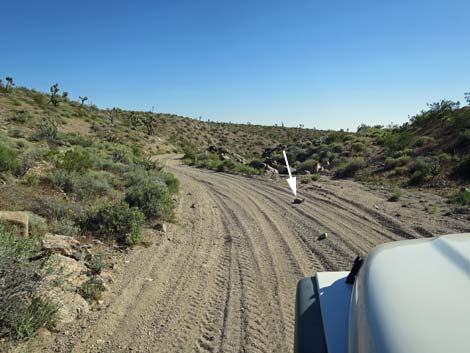 On a dirt road, tortoise looks like any other rock |
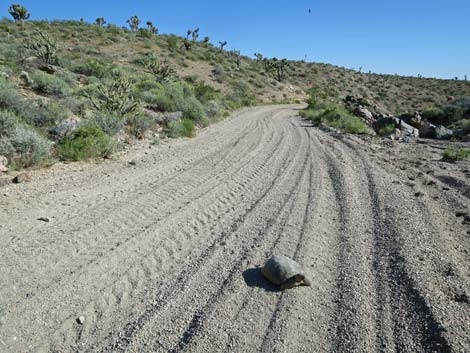 Desert tortoise on dirt road in Gold Butte National Monument Desert tortoise on dirt road in Gold Butte National Monument |
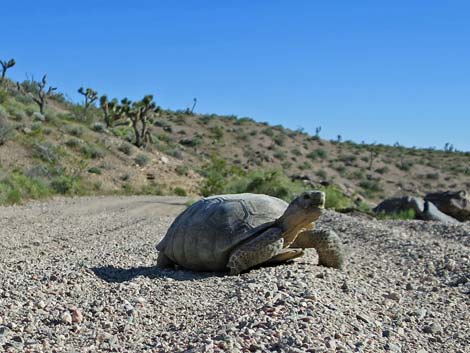 Desert tortoise on dirt road in Gold Butte National Monument |
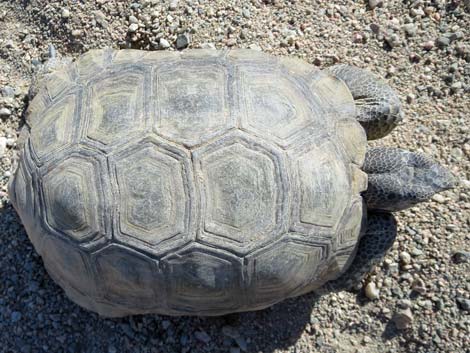 Desert tortoise on dirt road in Gold Butte National Monument |
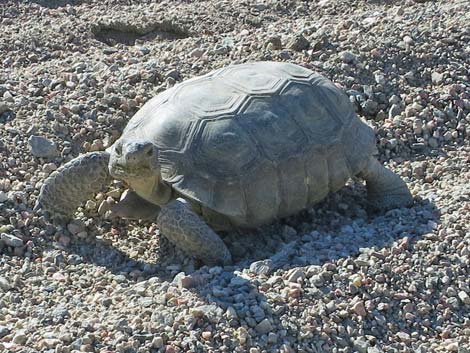 Desert tortoise on dirt road in Gold Butte National Monument |
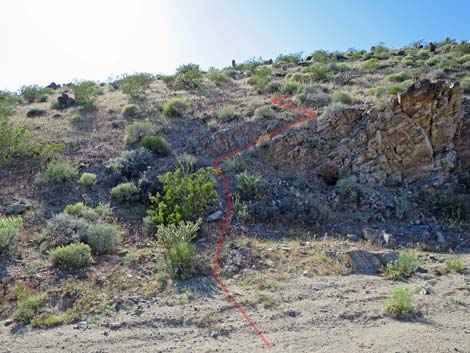 Desert tortoise crossed dirt road and climbed this cliff |
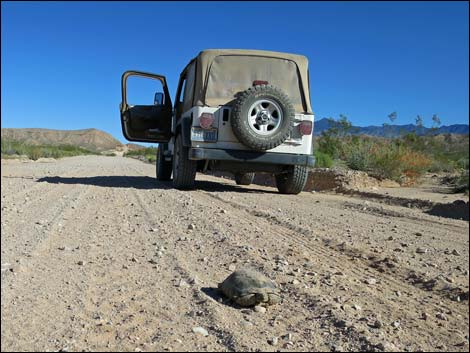 Desert Tortoise on Gold Butte Road - I couldn't stop in time |
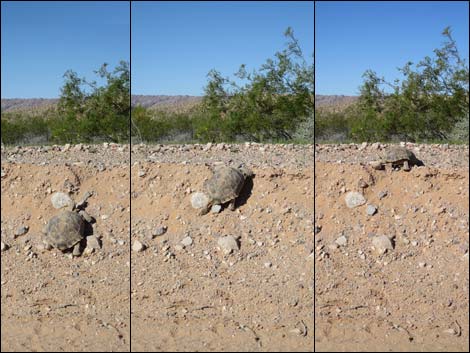 Yes, Desert Tortoise can climb the roadside berm |
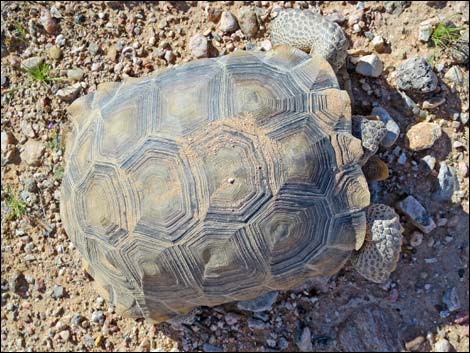 Desert Tortoise past the road |
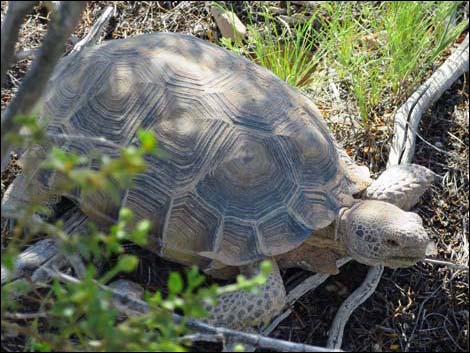 Desert Tortoise, resting in the shade after crossing the road |
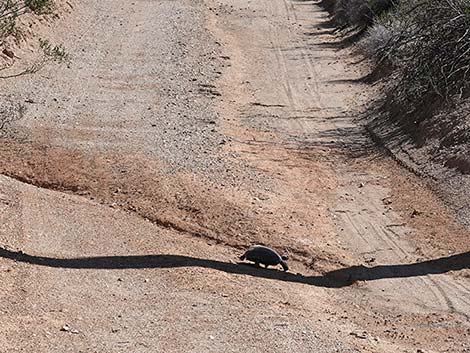 As they say, watch for rocks with sunlight under them |
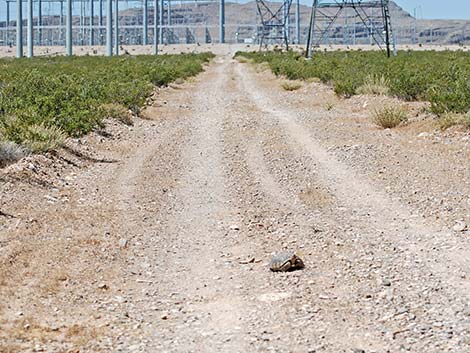 Watch for "rocks" on dirt roads! |
Note: All distances, elevations, and other facts are approximate.
 ; Last updated 231230
| Turtles Around Las Vegas | Wildlife Around Las Vegas | Glossary | Copyright, Conditions, Disclaimer | Home |