
Mammals Around Las Vegas, Wildlife Around Las Vegas
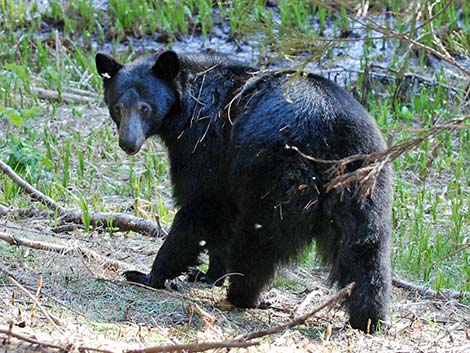 Black Bears: some actually are black |
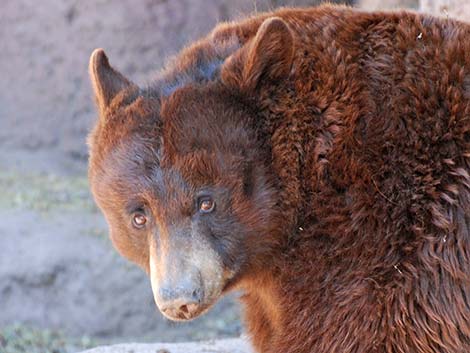
General Information: Black Bears (Ursus americanus) are the smallest North American bear with a head and body length of 5-6 feet and a height of 2-3 feet at the shoulder. Called black bears, these bears range in color from nearly white to red to jet black. The face is narrow, and they do not have a hump on the back between the shoulders. Taxonomy: Order: Carnivora; Family: Ursidae. |
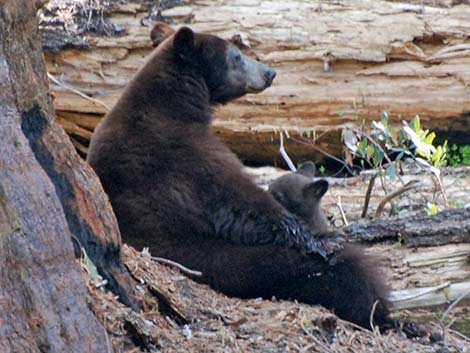 Black Bear female nursing cub |
Technical Description: Head and body to 6-ft long, height 3 ft at the shoulder, weight to 500 pounds. Color ranges from white to black, usually with a white spot on the chest. Face narrow. Front claws less than 2-inches, curved. Breeding: Breeds during summer, young born mid-winter Diet: Eats vegetation, bugs, mice, fish, deer, and anything else it can find or catch (for example, backpacker's food). |
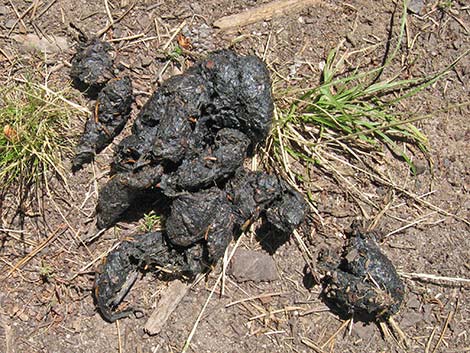
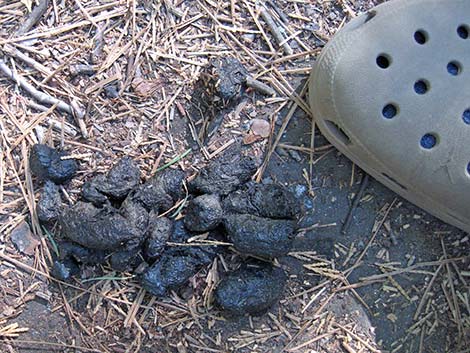
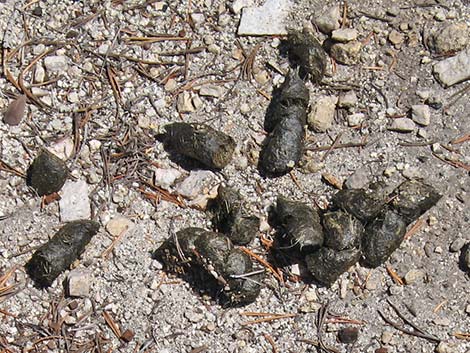 Black Bear scat |
Range: Black Bears occur throughout northern North America, and southward in the major mountain ranges (Cascade-Sierra Nevada, Rocky Mountains into Mexico, Appalachian Mountains); also in Florida and lower Mississippi River area. Comments: Bear scat happens in a variety of forms, but most often it is firm and broken into several elongate pieces. Bear scat can also look very much like human scat, although it can also look like a soft cow patty (bears eat a lot of grass). |
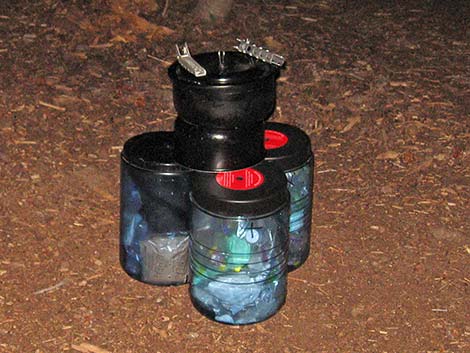 Backpacking "bear canisters" |
Campers and backpackers in "bear country" must safeguard their food from hungry bears. In some campgrounds, land managers provide food storage lockers that are big enough to hold several ice chests and boxes of food. For backpackers, "bear canisters" provide lightweight protection for food. Here, I put three bear canisters together, then put my pots on top. If a bear knocked over the pots, they would wake me up, and I could chase off the bear. Bear canisters are useful even when not hiking in bear country. Common Ravens, desert woodrats, deer mice, ground squirrels, and other creatures like backpacker food, so it is a good idea to protect it from all of them. |
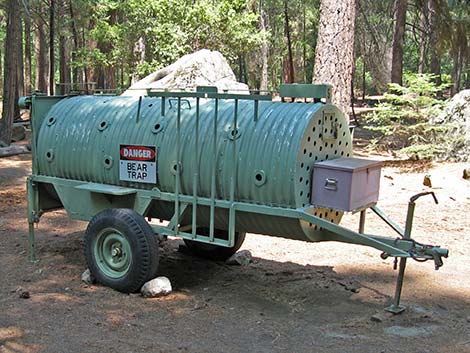 Bear trap (culvert trap) in Yosemite National Park, California |
Bears are always hungry. They are smart, resourceful, and good parents, and when they find easy food, they take all they can and teach their cubs. Easy food includes improperly stored human food and trash. If bears learn that humans are food sources, they become bold and can cause a lot of damage. As such, so called "problem bears" often are captured in bear traps and relocated to far away areas. Although this might seem like a fairly simple solution, the bears usually try to come home or die trying. Given that they die far from human eyes, we don't see it, and therefore we don't know and don't care. For people concerned about bears, properly storing food is the only way to keep them alive. |
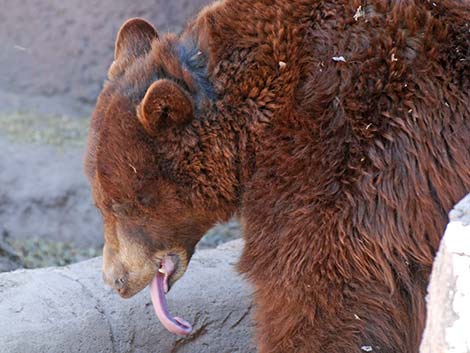
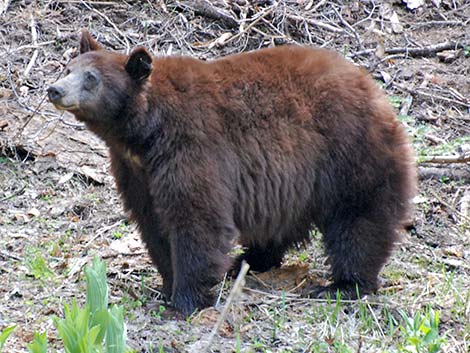 Some Black Bears are dark |
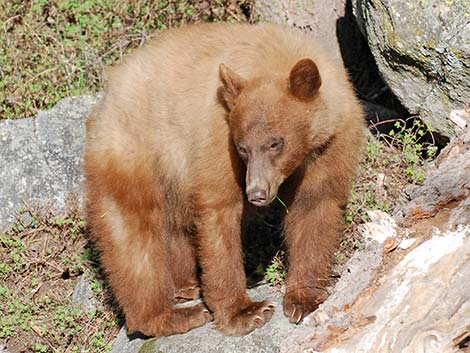 Some Black Bears are light |
 |
 |
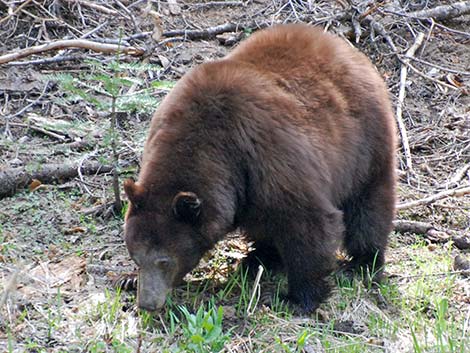 Black Bears foraging on herbs |
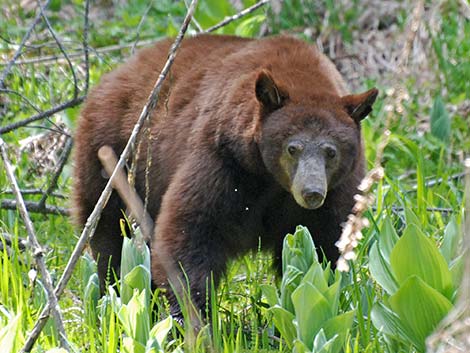 Black Bears foraging on herbs |
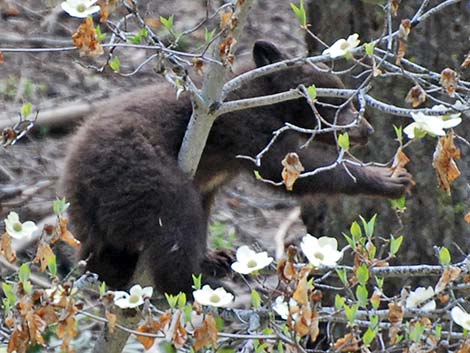 Bear cub in a tree eating dogwood flowers |
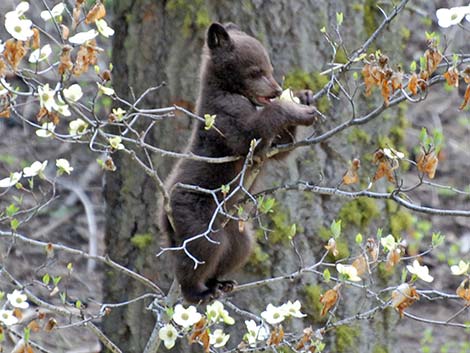 Bear cub in a tree eating dogwood flowers |
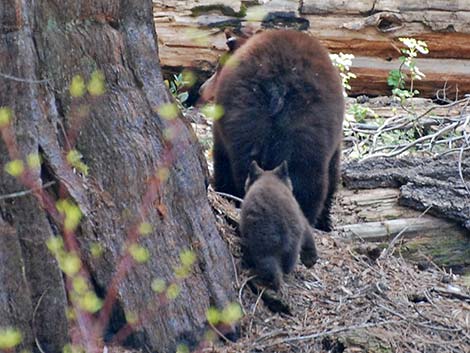 Mother bear and cub |
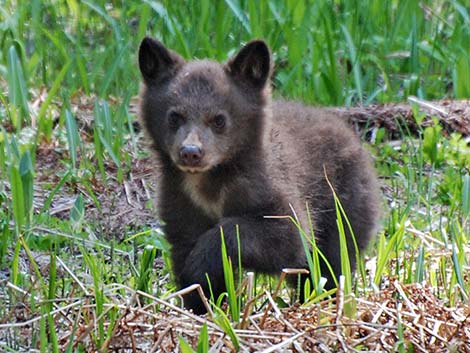 Young bear cub |
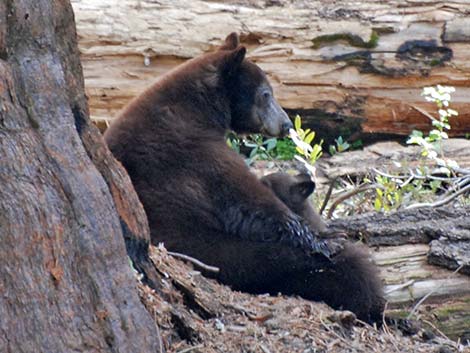 Mother bear and cub nursing |
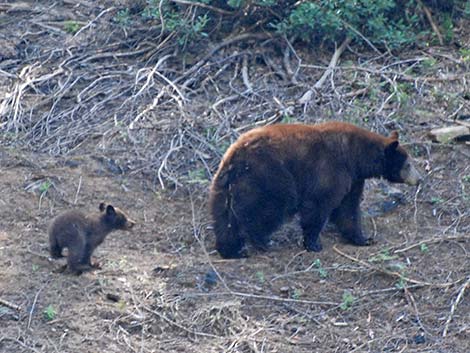 Mother bear and small cub |
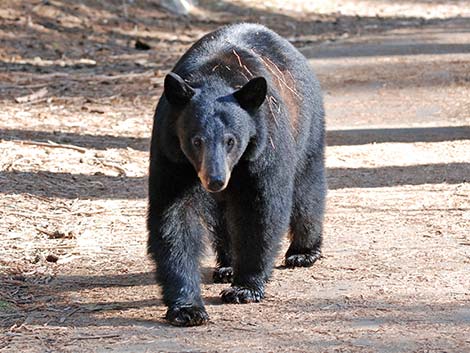 A large bear approaches me ... |
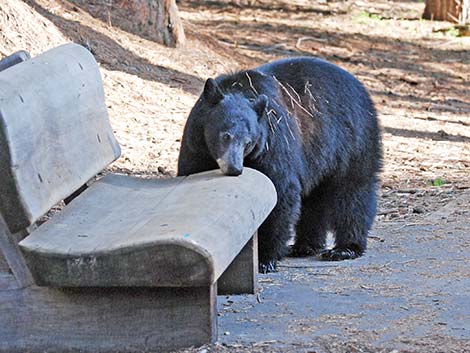 ... then inspects the bench where I was sitting |
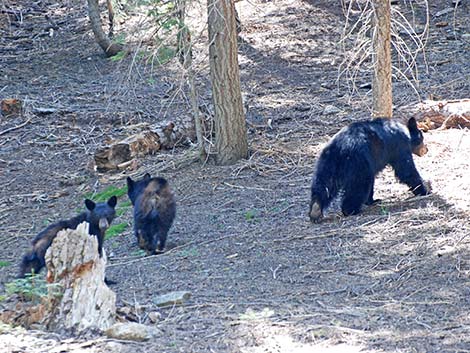 |
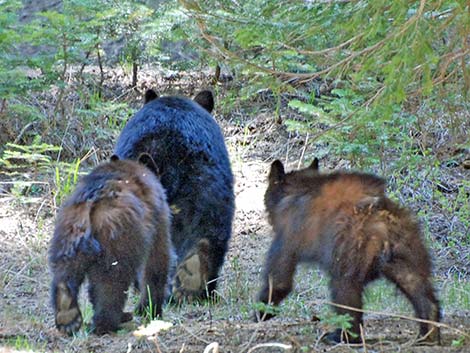 |
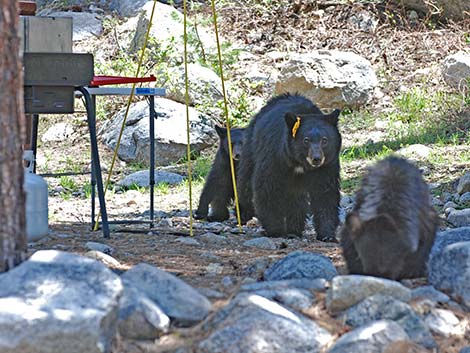 Problem bears in a campsite |
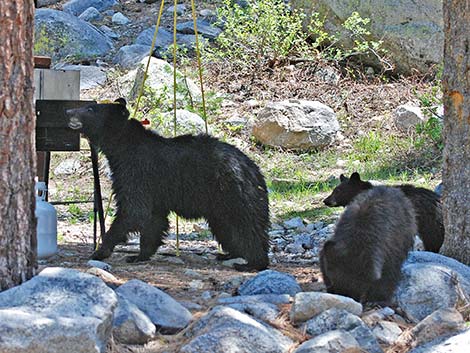 Problem bears in a campsite |
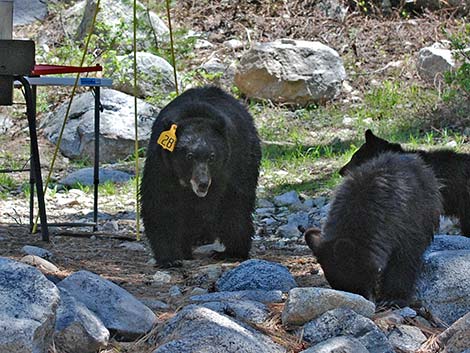 Problem bears in a campsite |
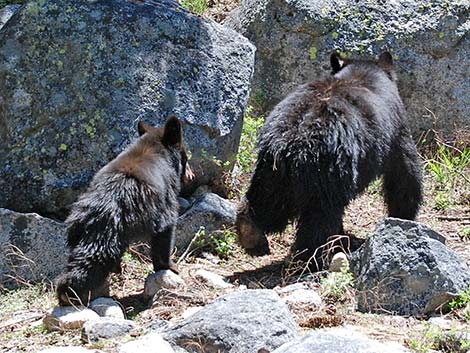 Loud noise scares problem bears out of the campsite |
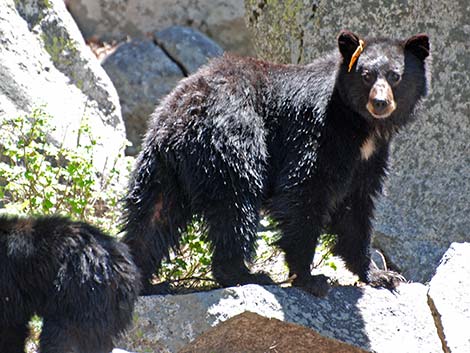 Mother bear stops to assess the situation |
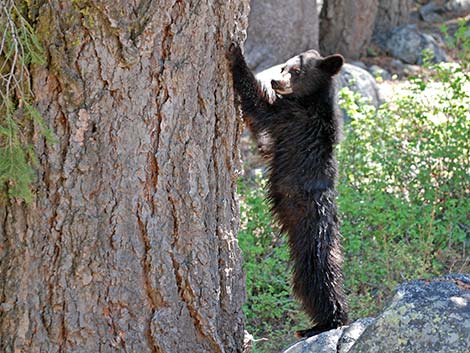 One cub thinks about climbing a tree |
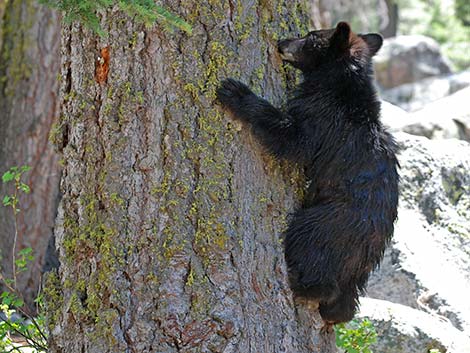 The second cub climbs a few feet up a tree |
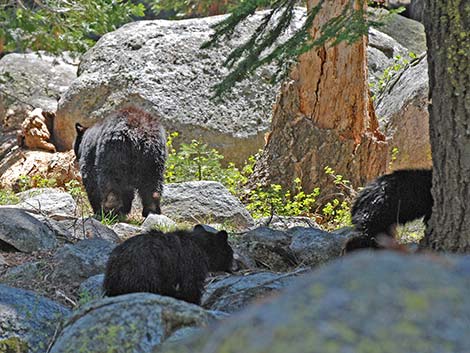 Mother bear considers heading for the hills |
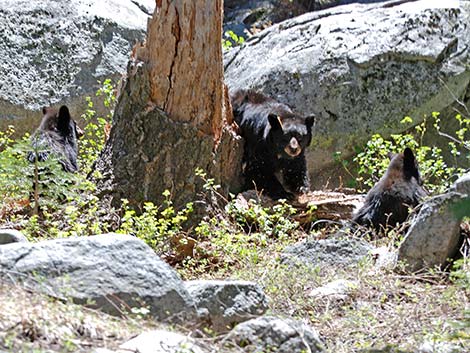 Instead momma bear turns and does a bluff charge to scare me away |
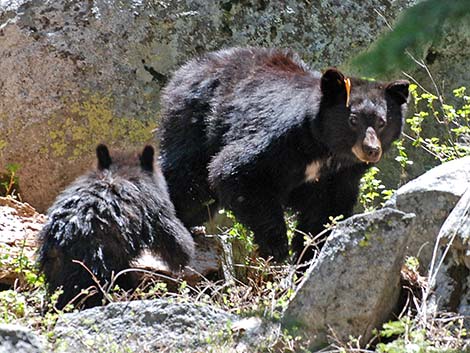 Momma bear stops her charge when I don't move |
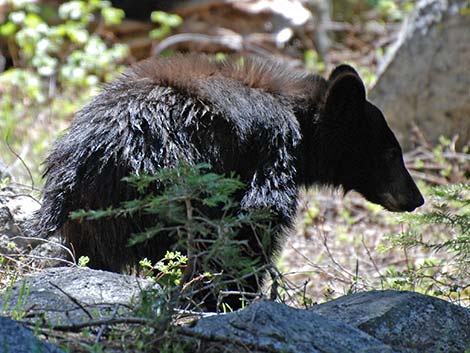 Proof: bears really do "do it" in the woods! |
Bear scat, typical in several segments |
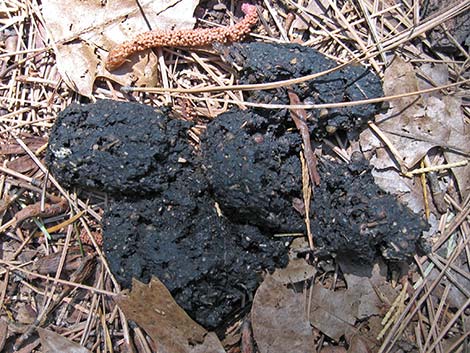 Bear scat, typical squishy |
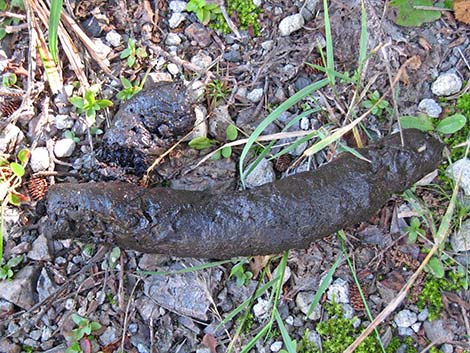 Bear scat, unusual one long piece |
 |
 |
 ; Last updated 240302
| Mammals Around Las Vegas | Wildlife Around Las Vegas | Glossary | Copyright, Conditions, Disclaimer | Home |