
Lizards Around Las Vegas, Wildlife Around Las Vegas
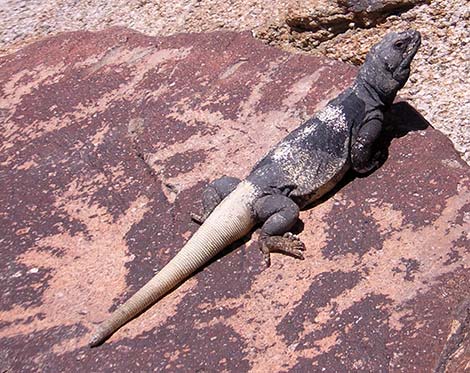 Common Chuckwalla: adult, hot, sunning on petroglyphs |
General Description: Common Chuckwallas (Sauromalus ater), are large, heavy bodied lizards. The body color and tail color can be all black, black and white banded, or all white, and chuckwallas can change from dark to light depending on their body temperature (darken when cold to absorb more heat). There can also be some rust color. Chuckwallas are often confused with Banded Gila Monsters, but chucks never have big patches of bright orange. Taxonomy: Iguana Family (Iguanidae). Formerly Sauromalus obesus. Technical Description: A large (total length 16 to 22 inches), heavy bodied lizard with loose folds of skin around the head and neck. In males, the body color generally is blackish with rust or reddish while the tail is unmarked and light-colored. The females and young are blackish with light cross-bands on the body and tail. Diet: Primarily eats vegetation, especially leaves, flowers, and fruit. Young may eat insects and insect larvae. |
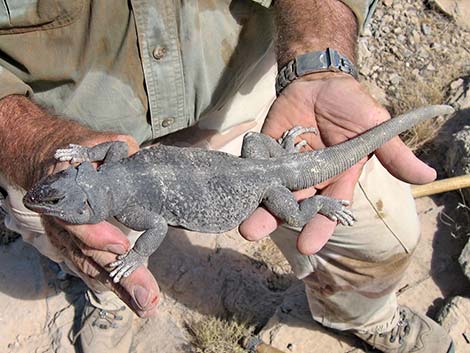 Common Chuckwalla: adult male (cold; head broad, tail not banded) |
Habitat: Rocky hillsides in the Mojave Desert Scrub habitat type. Found in Blackbrush, salt desert scrub, and Mesquite/Catclaw habitats. Typically found on rocky flats, rocky slopes, and boulder outcrops. Requires shady, well-drained soil for nests. Range: The species occurs throughout the southwestern deserts from southern Nevada and southern Utah, southward into northwestern Mexico. This subspecies occurs in southeastern California, southern Nevada, southeastern Utah, and western Arizona. In southern Nevada, this species occurs on virtually all undisturbed rocky hillsides up to about 6,100 ft in elevation. Breeding: |
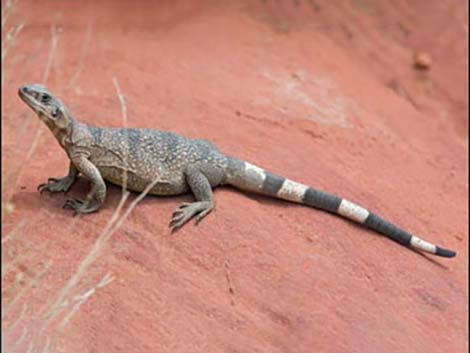 Common Chuckwalla: adult female (lighter color, banded tail) |
Similar Species: Chuckwallas often are misidentified as Gila Monsters, the only other species of large, heavy-bodied lizard in southern Nevada. However, these two species can be separated by the presence of large, black-and-orange, bead-like scales on the Gila Monster. Comments: To escape predators, chucks run into a deep crack, gulp air to inflate their body, and wedge themselves into the crack. They may use their stout tail to whip the hand of an approaching predator. These lizards were used as food by native peoples. Chuckwalla eat plant matter and make scat that is full of plant fibers. Chuckwalla scat can be seen around their favorite basking rocks, so when you see chuck scat, look in the nearby cracks to see who is about. |
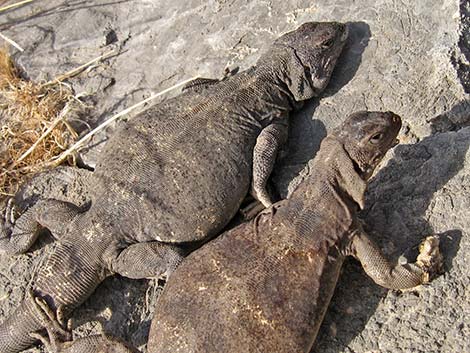 Cold, adult male (L) and adult female (R) |
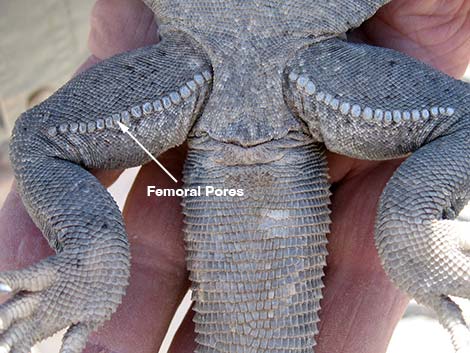 Adult male: large femoral pores; base of tail swollen |
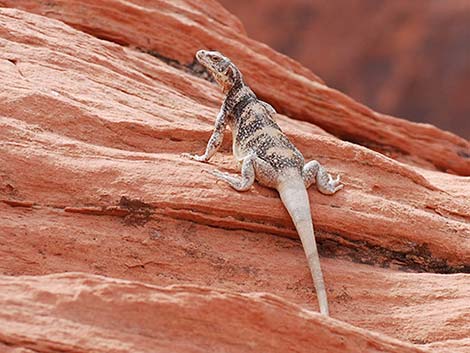 Adult female |
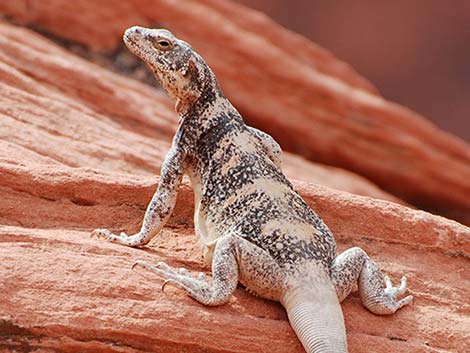 Hot, adult female |
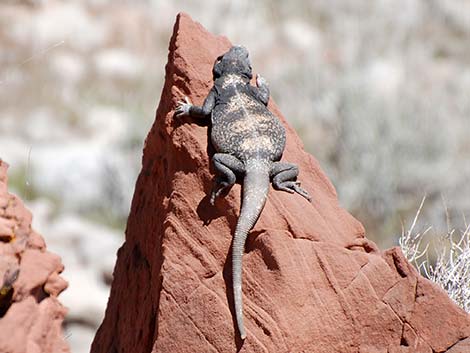 Cool, adult female |
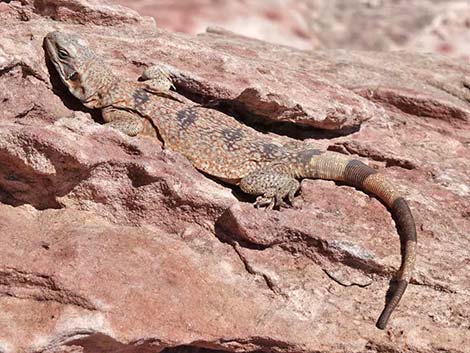 Cool, adult female |
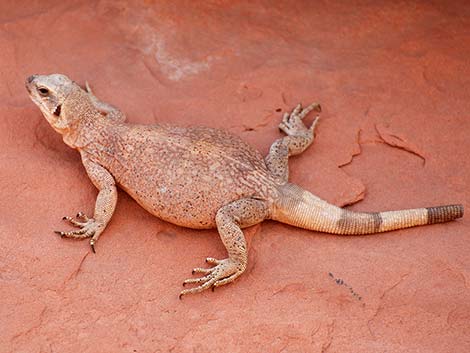 Juvenile |
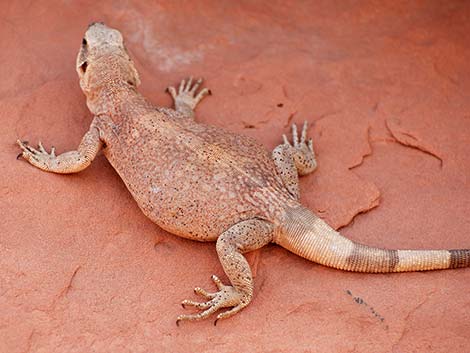 Juvenile |
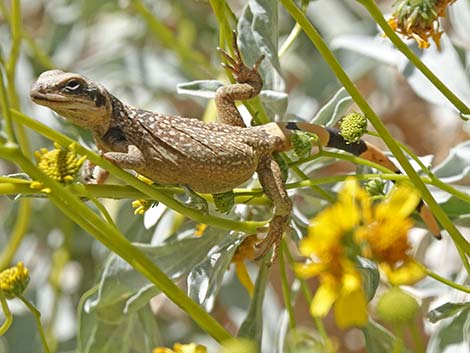 Juvenile |
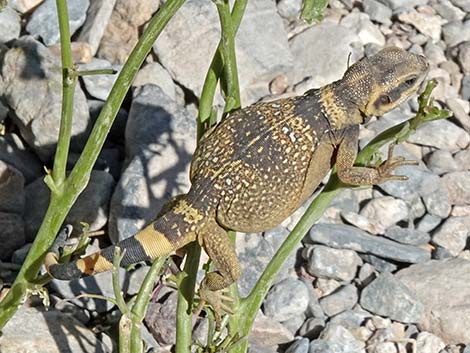 Juvenile |
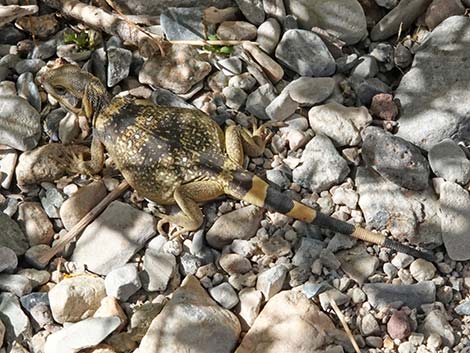 Juvenile |
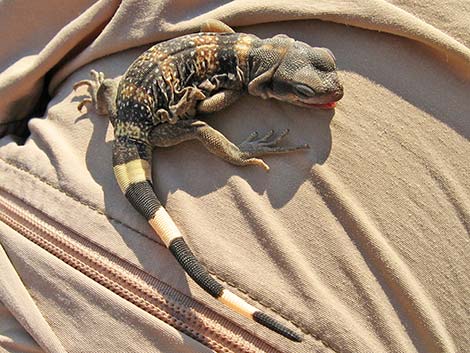 Juvenile (not much more than a hatchling) |
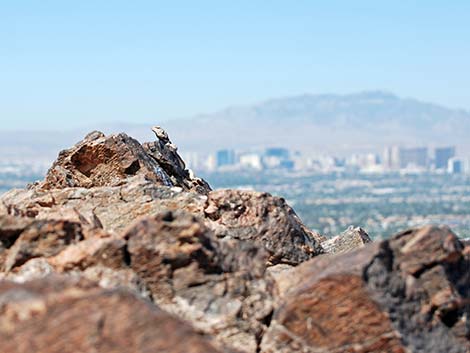 Chuckwalla in habitat above Las Vegas |
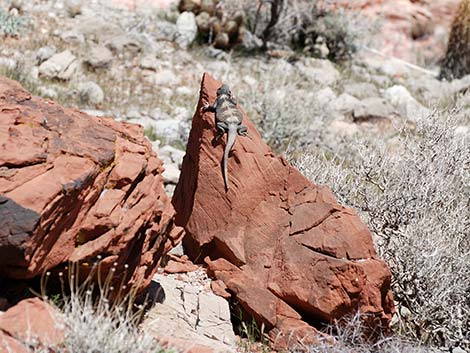 Chuckwalla in habitat at Red Rock Canyon NCA |
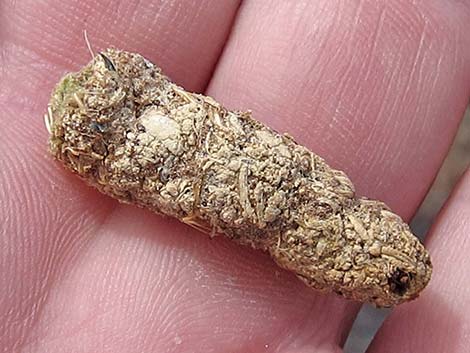 Dried Chuckwalla scat |
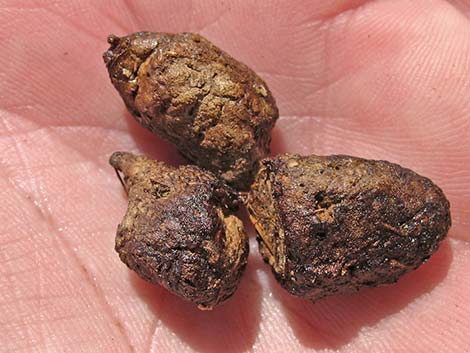 Dried Chuckwalla scat |
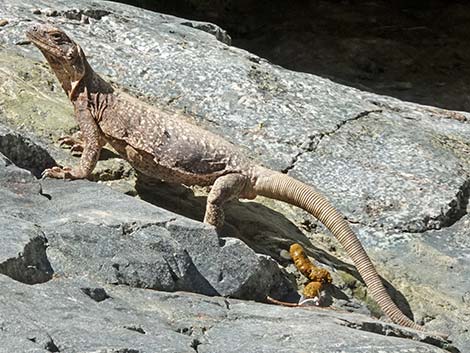 Producing fresh Chuckwalla scat |
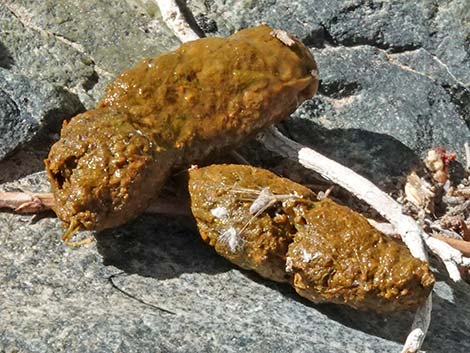 Fresh Chuckwalla scat |
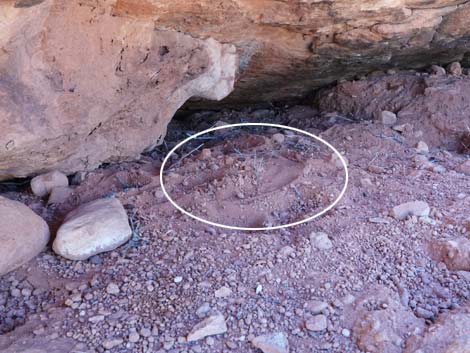 Common Chuckwalla belly marks in the sand |
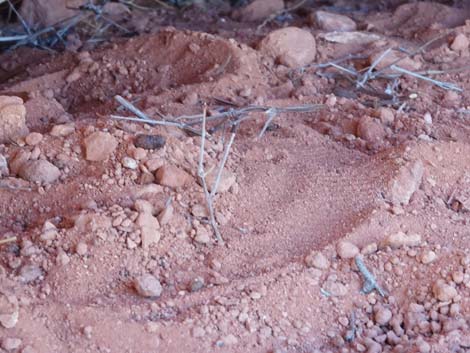 Common Chuckwalla belly marks in the sand |
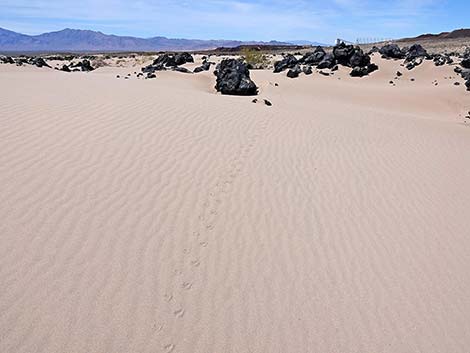 Common Chuckwalla track in sand |
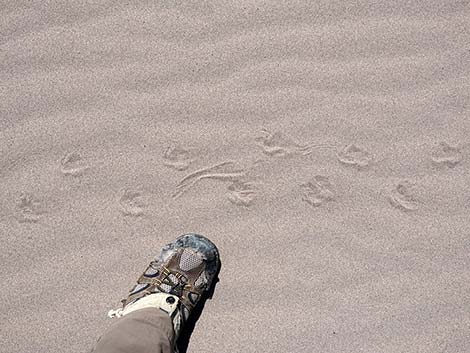 Common Chuckwalla track in sand |
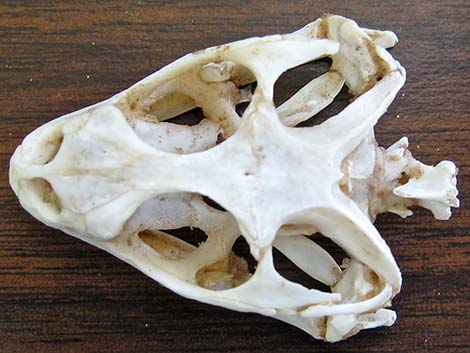 Chuckwalla skull, dorsal view. The head is very triangular. |
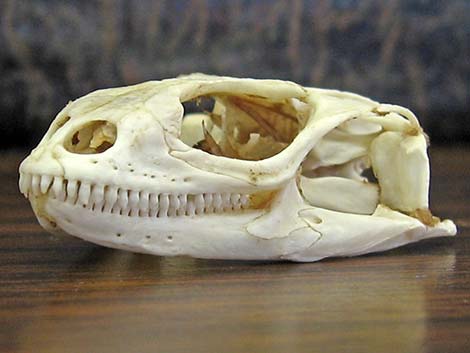 Chuckwalla skull, lateral view. The fearsome teeth only shred plants. |
Note: All distances, elevations, and other facts are approximate.
 ; Last updated 231212
| Lizards Around Las Vegas | Wildlife Around Las Vegas | Glossary | Copyright, Conditions, Disclaimer | Home |