
Tiger Whiptail (Aspidoscelis tigris)
Lizards Around Las Vegas, Wildlife Around Las Vegas
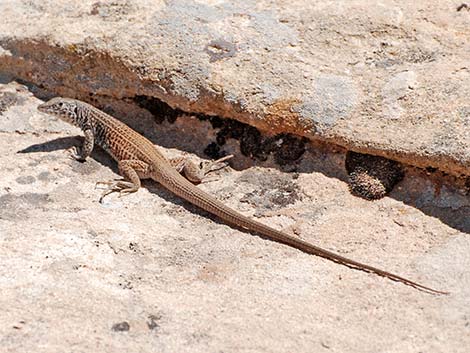 |
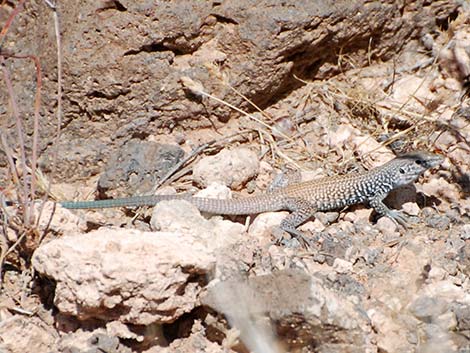
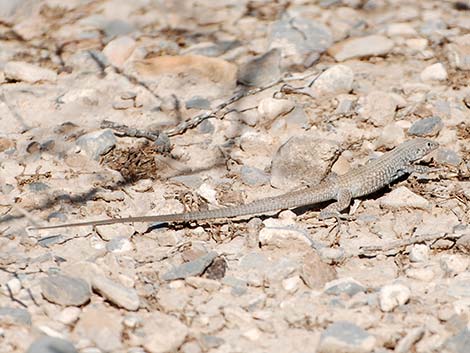
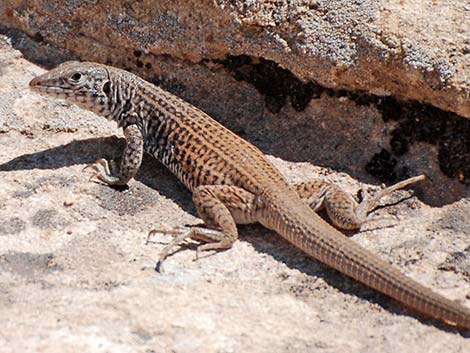
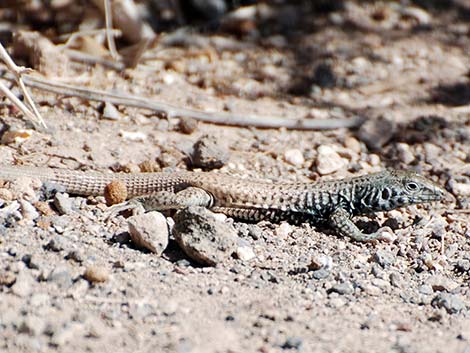
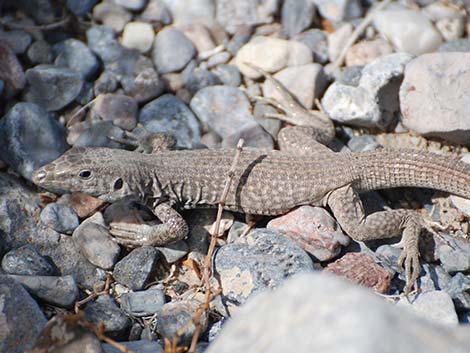
General Description: Great Basin Whiptails (Aspidoscelis tigris tigris) are active, slim-bodied, 4-inch lizards with a 9-inch tail. Scales smooth. The back is dark with light stripes, and the sides are light with dark bars. Active; almost never stops moving. Taxonomy: Whiptail Lizard Family (Teiidae). Formerly Western Whiptail. Technical Description: Body size to 4 in.; tail length to 9 in. Dorsal color blue-black with 4 tan stripes; sides tan with numerous blue-black bars. Snout pointed. Ear openings large. Dorsal scales small and granular; ventral scales large and rectangular arranged in 8 rows lengthwise. Dorsal stripes extend from the back of the head to the tail; most prominent in juveniles, fading posteriorly in adults. Flick tongue actively. |
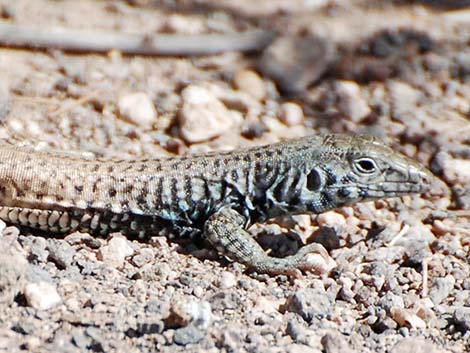 |
-- Great Basin Whiptail: Tan dorsal stripes tend to fade with age. Vertical dark bars on the sides. -- Painted Desert Whiptail: Stripes yellow. Diet: Forage actively on the ground during the day and eat anything they can catch, including flying insects, beetles, scorpions, and other lizards. Sometimes seen digging in loose soil for food. Habitat: Widely distributed from the lower desert to the lower forest zones (Lower Sonoran, Upper Sonoran, Pinyon-Juniper Woodland life zones) in areas with limited to moderate amounts of vegetation. These lizards forage in and around shrubs, and use open areas to run and escape predators. |
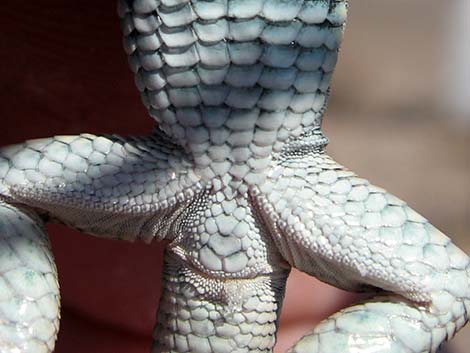 Belly scales are large and rectangular |
Range: This species occurs throughout the western U.S. from California, eastern Oregon, and southern Idaho south to west Texas and northern Mexico. The (Great Basin) Western Whiptail occurs throughout Nevada, southeastern California, and western Arizona. The (Painted Desert) Western Whiptail occurs across southern Utah and northern Arizona. Breeding: Mate during spring; lay 1-4 eggs in early summer; hatch in late summer. Similar Species: None in southern Nevada. |
 |
 |
 |
 |
 |
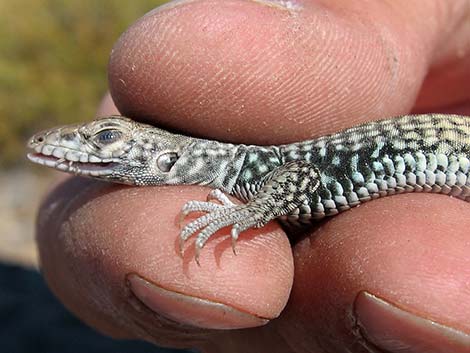 |
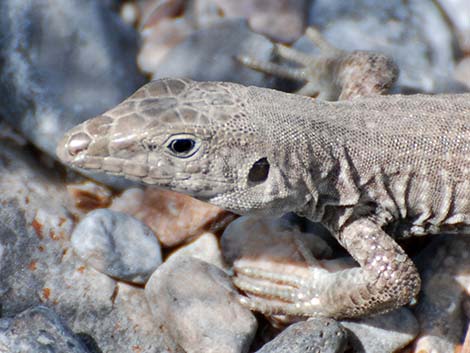 Western Whiptail |
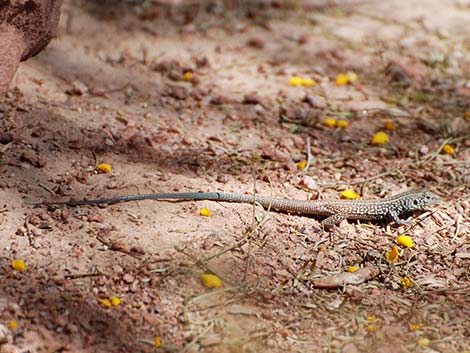 Young Western Whiptail with blue tail |
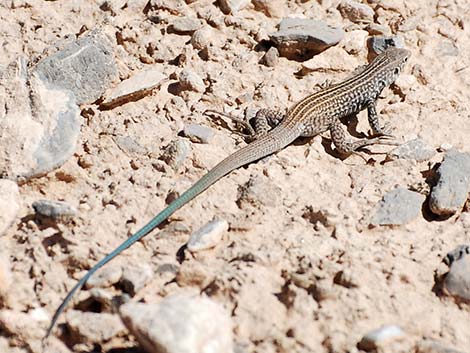 Young Western Whiptail with blue tail |
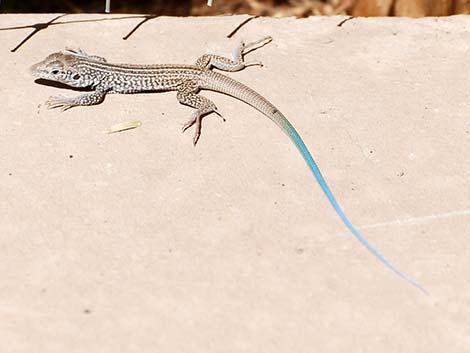 Young Western Whiptail with blue tail |
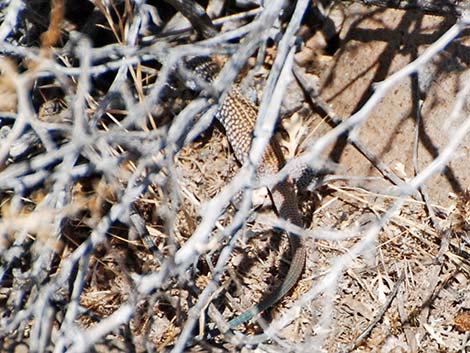 Young Western Whiptail with blue tail |
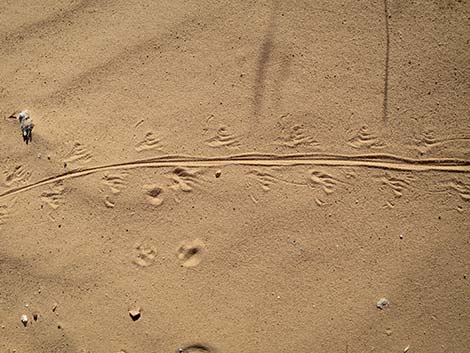 Western Whiptail tracks in soft sand |
Note: All distances, elevations, and other facts are approximate.
 ; Last updated 231212
| Lizards Around Las Vegas | Wildlife Around Las Vegas | Glossary | Copyright, Conditions, Disclaimer | Home |