
Birds Around Las Vegas, Wildlife Around Las Vegas
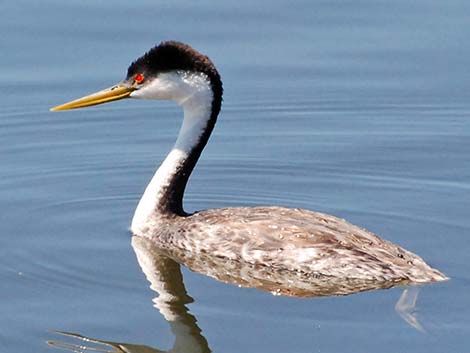 Western Grebe: eye surrounded by black feathers |
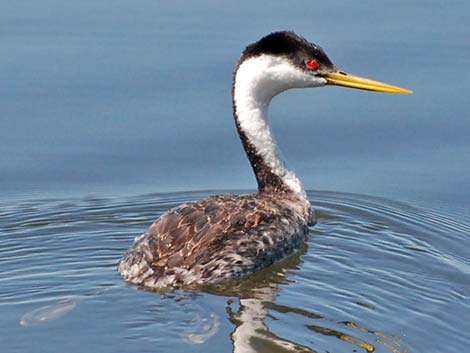
General Description: Western Grebes (Aechmophorus occidentalis) are sexually monomorphic diving birds with long, swan-like necks and a striking black-and-white neck pattern. In breeding plumage, the top of the head and back of the neck are black, while the throat and front of the neck are white. In winter plumage, the pattern is the same, but the colors are dull. The long bill is yellow-green. An important characteristic to note is that the red eye is surrounded by black feathers. In a similar species, Clark's Grebe, the eye is surrounded by white feathers. Look carefully, however, as a young Western Grebe might have dull feathers below the eye, leading one to suspect that it might be the other species. The bill in Clark's Grebe is more orange. |
 |
Taxonomy: Podicipediformes, Podicipedidae Favored Habitat: Large bodies of water. Where to Find: Look for this species in neighborhood ponds, parks (e.g., Lorenzi Park and Sunset Park), the Henderson Bird Viewing Preserve, Boulder Beach Marina at Lake Mead NRA, and in the Pahranagat Valley. Western Grebes prefer large bodies of water. Comments: Grebes eat fish, crustaceans, and other tasty water bugs. |
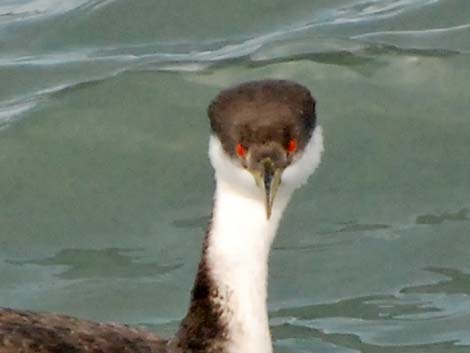 |
If you were a tasty fish or big water bug, this might be the last face you'd ever see! |
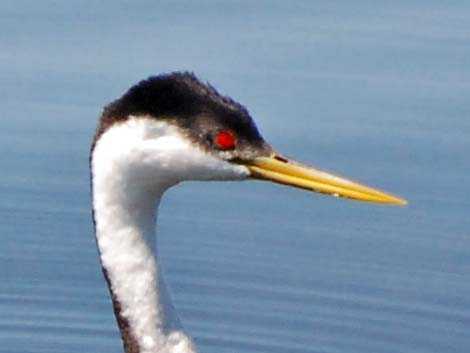 In Western Grebes, the eye is surrounded by black feathers |
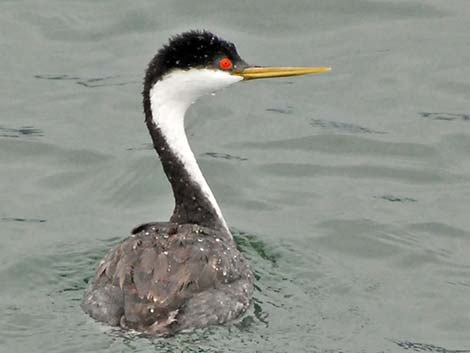 Striking black-and-white pattern on long, swan-like neck |
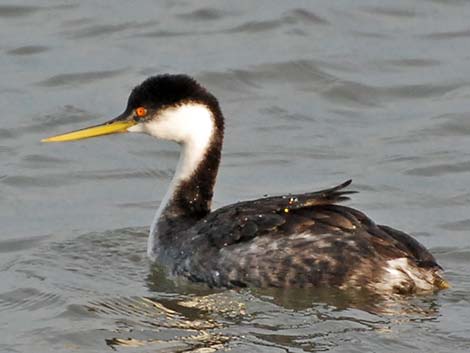 In Western Grebes, the bill is yellowish (not orange) |
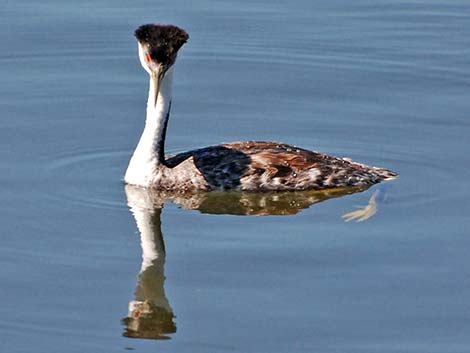 Wild hairdo on this excited Western Grebe |
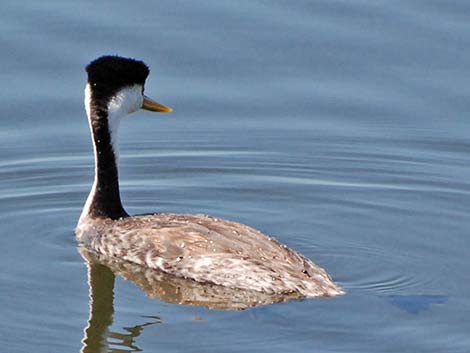 The top of the head and back of the neck are black |
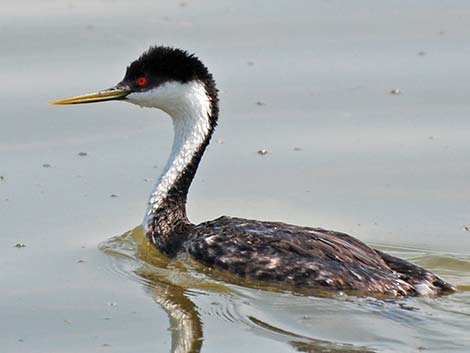 Western Grebe with reflection |
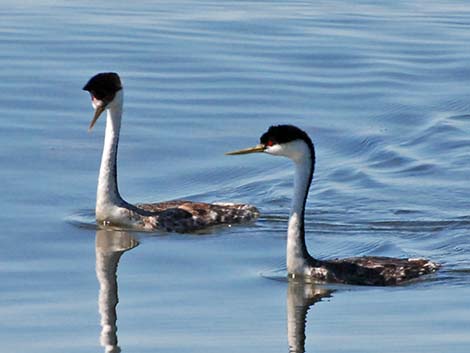 Western Grebes pair up and defend territory during the nesting season, but ... |
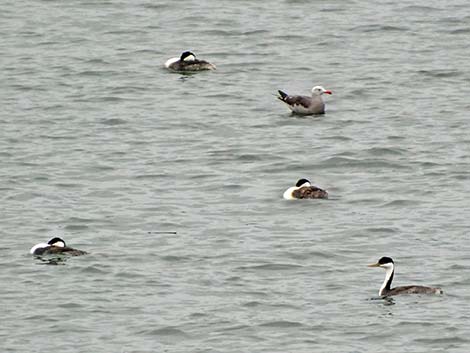 ... they are quite gregarious during winter when they can be found floating in large rafts. |
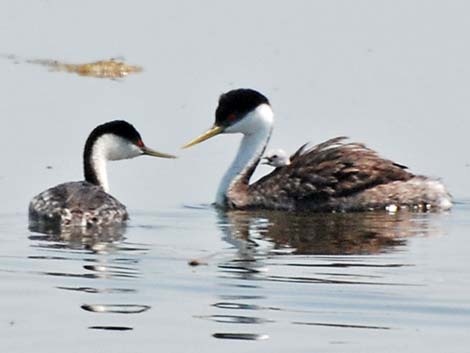 Mom, Dad, and a hungry kid |
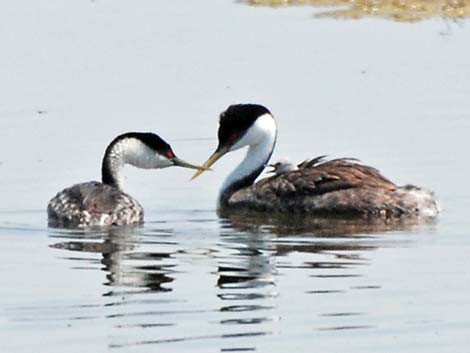 Mom, Dad, and a hungry kid |
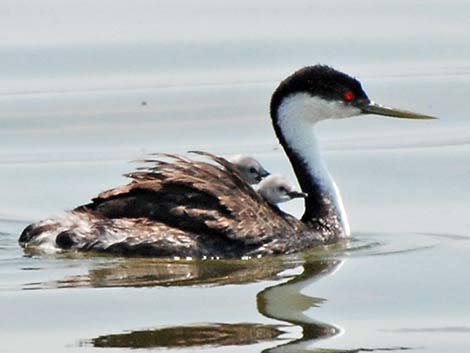 Parent and two kids |
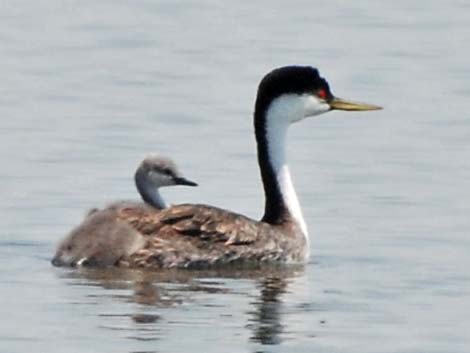 Parent with growing-up kid |
 ; Last updated 240105
| Grebes | Birds Around Las Vegas | Wildlife Around Las Vegas | Glossary | Copyright, Conditions, Disclaimer | Home |