
Amphibians Around Las Vegas, Wildlife Around Las Vegas
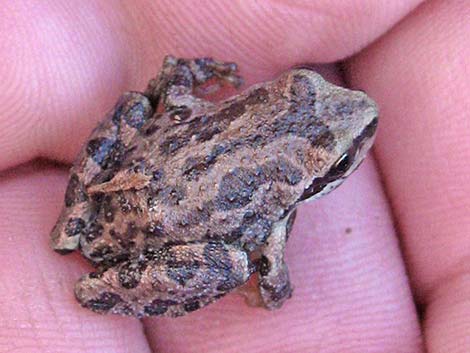
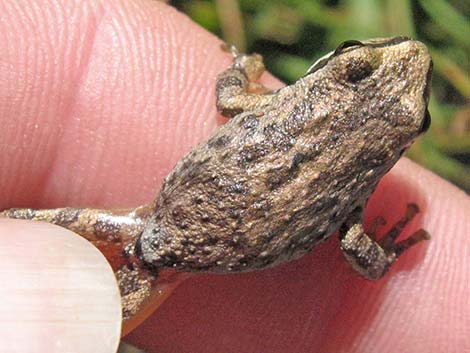
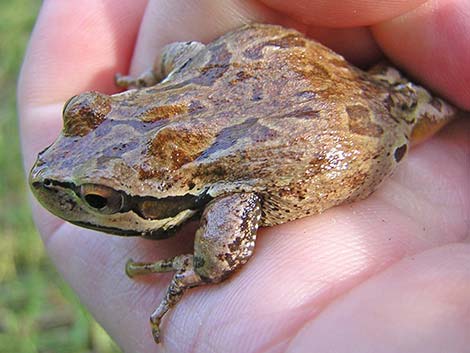 Typical adult, dark color morph |
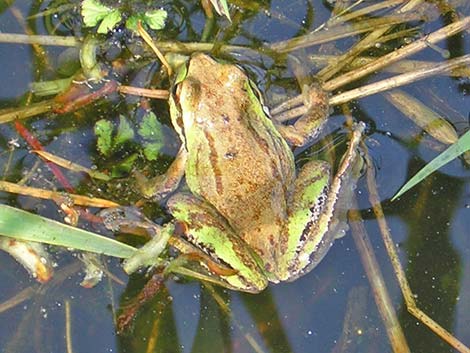
General Description: Northern Pacific Treefrog (Pseudacris regilla) are small frogs with suction cups on the toes and a dark line through the eye (facial mask) that ends at about the shoulder. These frogs come in green and brown, and can change color, but the eyeline remains consistent. Taxonomy: Order Frogs and Toads (Anura); Family Treefrogs (Hylidae). Formerly Pacific Treefrog (Hyla regilla), then Pacific Treefrog (Pseudacris regilla), and Northern Pacific Treefrog (Pseudacris regilla) after the Baja California Treefrog (Pseudacris hypochondriaca) was split off. Much scientific work remains to be done to sort out the taxonomy of these little frogs, but the recent taxonomic work has been rejected, and the three species are now reunited as a single species pending further study. Technical Description: Body size small (1 to 1-1/2 inches). Toe tips with expanded toepads. Face with dark stripe through the eye. Dorsal coloration in two phases: all green or brown with darker blotches, but they can change from green to dark phases. In dark individuals, often a dark triangular or Y-shaped mark on the top of the head. Ventral surface cream. Hind legs with yellow. In males, throat gray. |
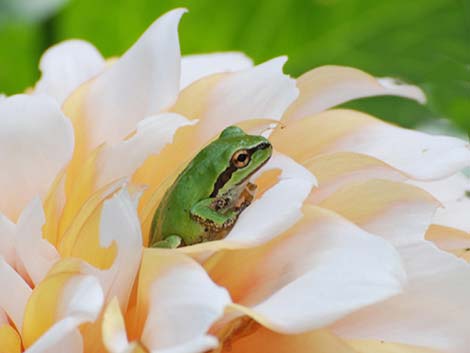 Typical adult, green color morph |
Diet: Mostly flying insects. Habitat: Wet areas, including streams, ponds, and marshes. Usually found near the ground, in and around emergent vegetation. Range: British Columbia to southern California, from the Pacific coast east to near the east edge of Nevada. Breeding: Breeds winter to mid-summer, depending on location. Similar Species: Comments: |
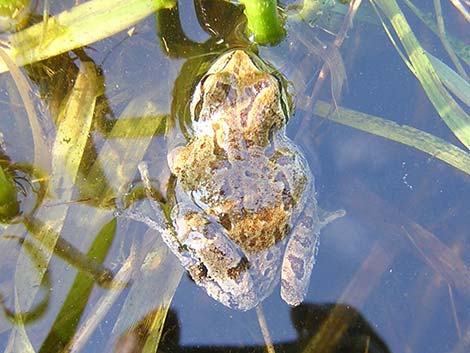
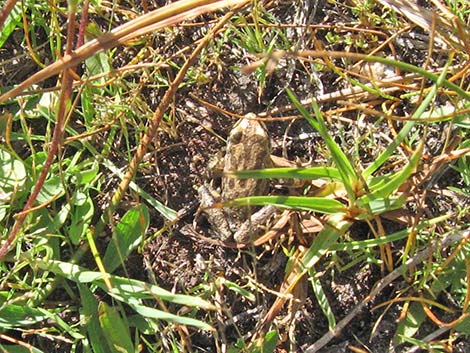 Northern Pacific Treefrog in marshy habitat |
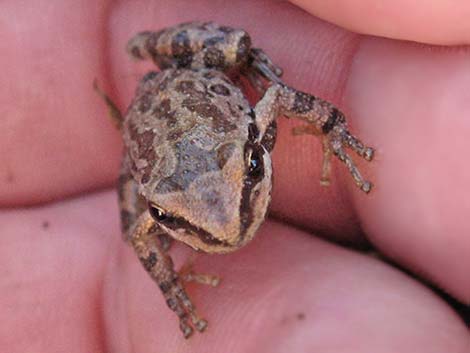 Northern Pacific Treefrog; dark morph |
 |
 |
 |
 |
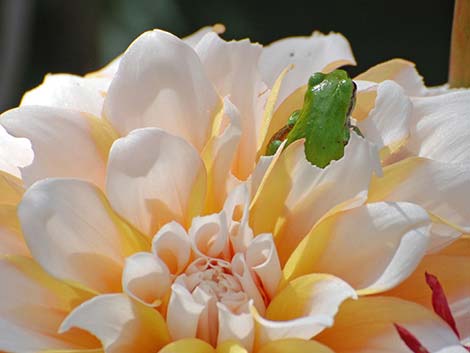 Hopeful monster hides in a flower waiting to ambush pollinators |
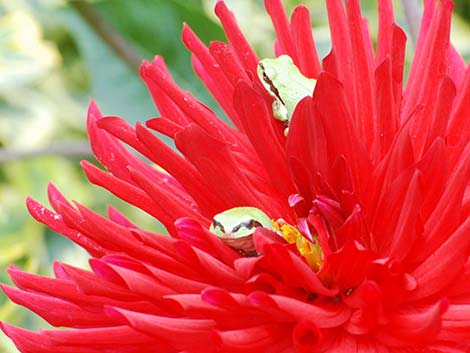 Hopeful monsters hiding in a flower waiting to ambush pollinators |
Note: All distances, elevations, and other facts are approximate.
 ; Last updated 240314
| Amphibians | Wildlife | Glossary | Copyright, Conditions, Disclaimer | Home |