
Southern Nevada Wilderness Areas
 |
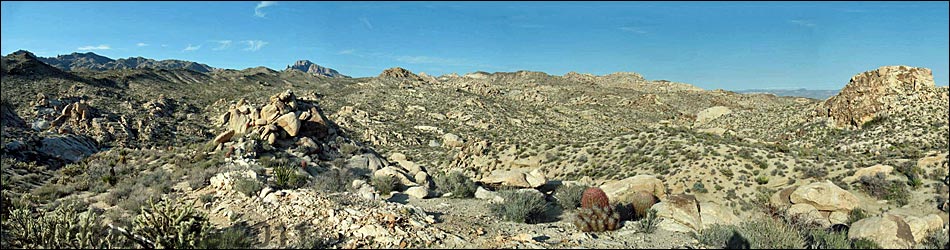
Overview Bridge Canyon is a small (7,761 acres) wilderness area located in the rugged Newberry Mountains. Granite outcrops, huge boulders, and narrow canyons dominate the landscape; elevations rise to 5,600 feet. Springs and seeps provide water to wildlife in the area. The Bridge Canyon Wilderness Area is separated from the Spirit Mountain Wilderness Area by a dirt road, which in turn, is separated from the Nellis Wash Wilderness Area by another dirt road. Combined, these three wilderness areas span a large area: nearly 58,000 acres. Link to Wilderness Area map. |
 |
If you hike in wilderness areas, help protect them by learning about and reporting noxious and invasive weeds. Location This wilderness area is located about 75 air-miles south of Las Vegas, about 7 miles west of Laughlin. |
 |
Boundaries The western boundary is coincident with the boundary of Lake Mead National Recreation Area, the northern and eastern boundaries follow Christmas Tree Pass Road, and the southern boundary follows Highway 163 and the boundary of Lake Mead National Recreation Area. |
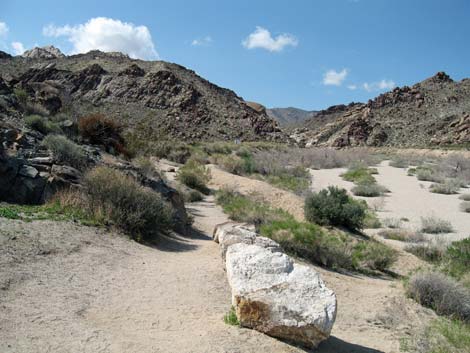 |
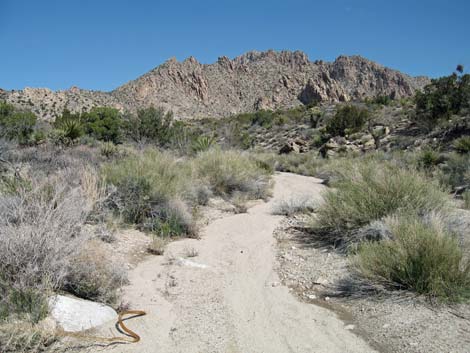
Access Access is from Christmas Tree Pass Road and from Highway 163. Christmas Tree Pass Road is a graded dirt road that runs east from Highway 95 to Christmas Tree Pass, then runs south to Highway 163. To the east of Christmas Tree Pass, the road is steep and narrow for several miles, possibly requiring a 4WD vehicle when the road is wet. To access the wilderness area from Highway 95, turn east on Christmas Tree Pass Road. The turnoff is 2.3 miles south from Cal-Nev-Ari and 5.0 miles north of Highway 163. There is a small road sign for the turnoff; there is also a fairly large, covered information sign on the east side of the highway that you can see from a long ways off. To access the wilderness area from Highway 163, turn north onto Christmas Tree Pass Road. The turnoff is about 12.9 miles east of Highway 95 and about 6.7 miles west of Colorado River bridge in Laughlin. There is a small road sign for the turnoff. |
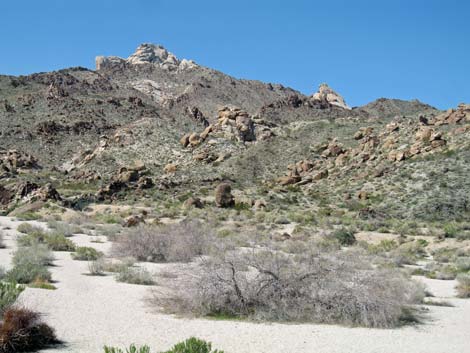 |
Terrain The area is located in the Newberry Mountains, which rise to an elevation of 5,600 feet. Rugged granite ridges, boulder outcrops, and narrow canyons are found throughout of the area. Springs and seeps offer water to wildlife in the area. |
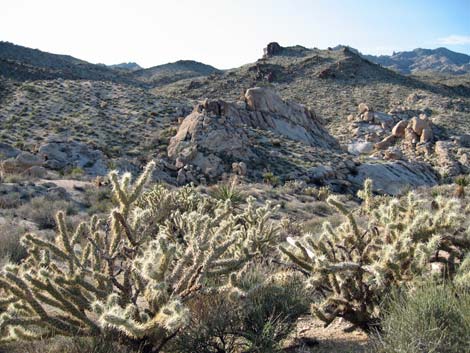 |
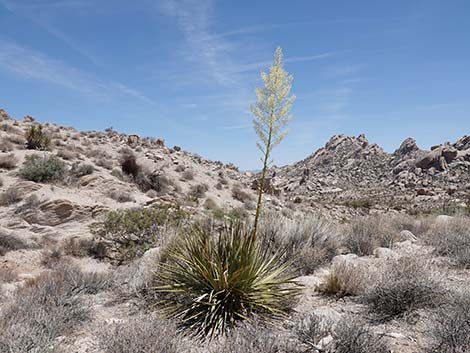
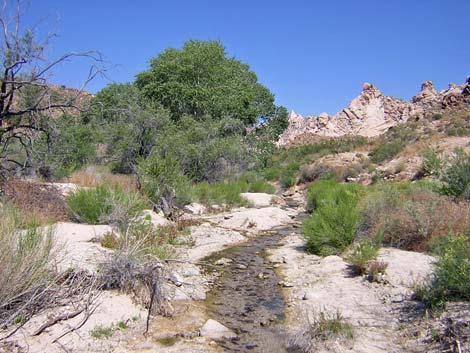
Habitat Type At higher elevations, the habitat type is Pinyon-Juniper Woodland with blackbrush, with species such as juniper and blackbrush dominating the landscape, and a few pinyon pine scattered about. Other common species here include yucca, shrub live oak, and catclaw acacia. At lower elevations, the habitat type is Mojave Desert Scrub, with species such as creosote bush, yucca, desert shrubs, and grasses dominating the landscape. In the canyons and washes, the flora is more diverse. Common species include desert willow, rabbitbrush, bitterbrush, and even grapevines. There are stands of cottonwood trees in Grapevine and Sacatone canyons. The Newberry Mountains provide habitat for one of the northernmost populations of desert smoketree. |
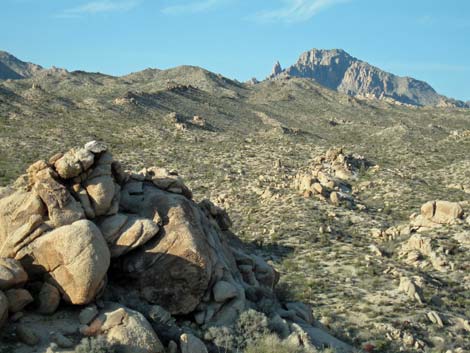 |
Wildlife Mammals include bighorn sheep, bobcats, and coyotes. Reptiles include side-blotched lizards, gila monsters, banded geckos, collared lizards, chuckwallas, and rattlesnakes. Birds include Phainopepla, Woodhouse's Scrub-Jay, and Red-tailed Hawk. Relict leopard frogs may occur here. |
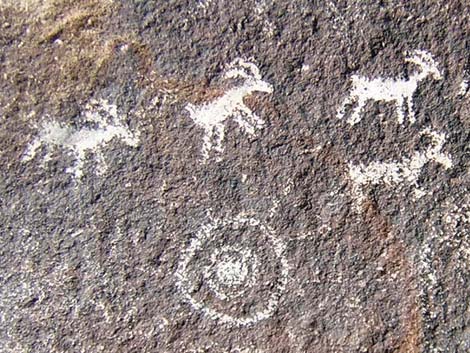 |
Archaeology There are numerous archeological sites in the area, including an amazing display of rock art at the mouth of Grapevine Canyon. This must-see place is only 1.8 miles from the pavement and only a five-minute walk from the Grapevine Canyon parking area. Geology The area contains huge granite boulders, outcrops, and caves. |
Note: All distances, elevations, and other facts are approximate.
 ; Last updated 240331
| Wilderness Areas | Hiking | Guide Services | Glossary | Copyright, Conditions, Disclaimer | Home |