
Yuccas Around Las Vegas, Vegetation Around Las Vegas
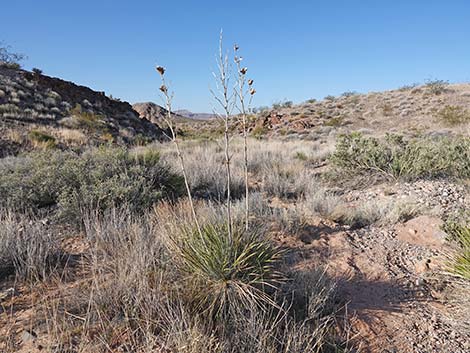 |
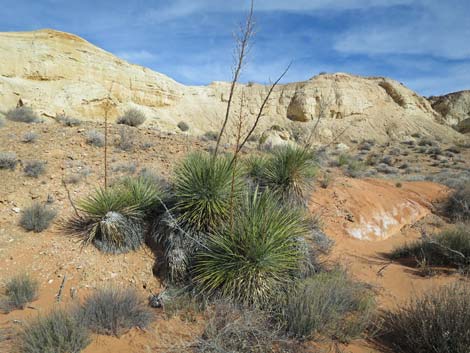
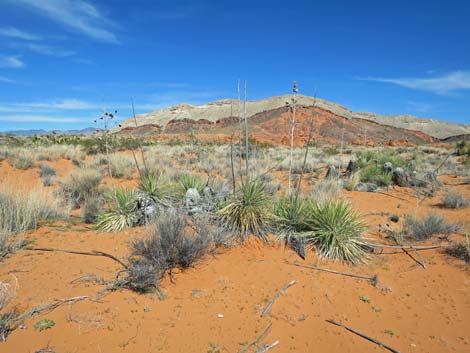
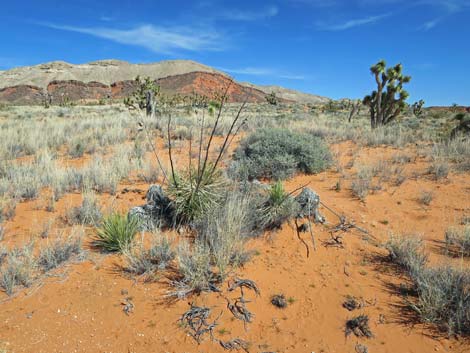
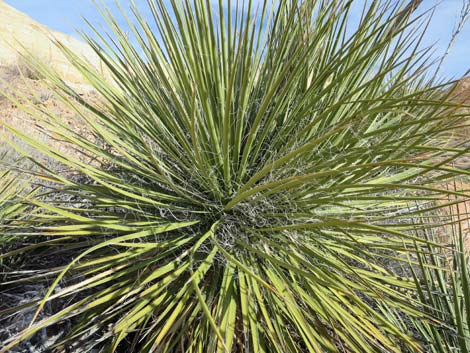
General: Utah Yucca (Yucca elata var. utahensis) is a locally common (not found everywhere, but where found it can be quite common) species of the northeastern Mojave Desert in the Upper Sonoran (Mojave Desert Scrub) life zone. Utah Yuccas occur in sandy areas where the sand is derived from sandstone. Around Las Vegas, look for this species in northern portions of Valley of Fire State Park and out in the wild and rugged Gold Butte Region. Family: Agave (Agavaceae). Other names: Yucca utahensis, Utah soaptree. Plant Form: Upright shrub with a trunk. |
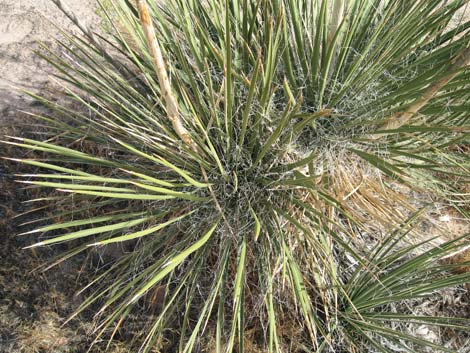 |
Height: Trunks to 3 ft, flowering stalk adds about 5 ft. Trunk: To about 3 ft, sometimes absent. Leaves: Very long daggers with a sharp tip; dull gray-green color. Flowers: Blooms in the spring. Inflorescence upright panicle on stalk 3 to 5-ft high. Flowers large, white. |
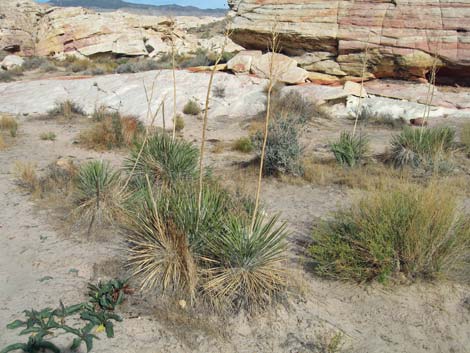 |
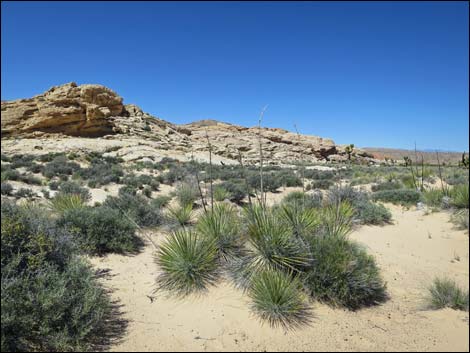
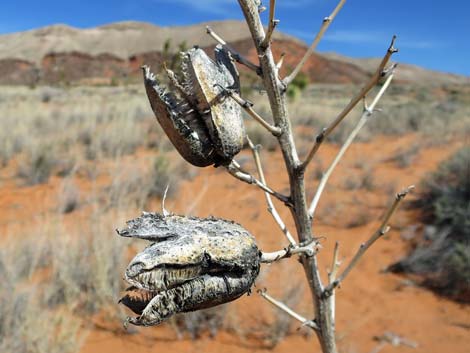
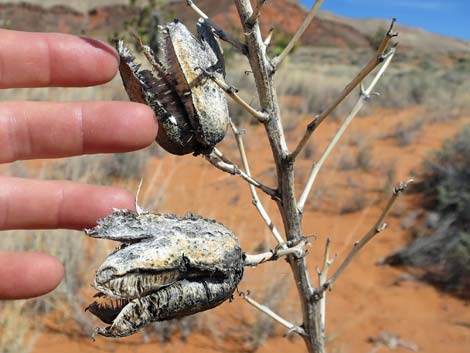
Seeds: Habitat: Sandy areas where the sand is derived from sandstone Elevation: Comments: Utah Yuccas tend to grow in clumps in sandy areas where the sand is derived from the weathering of sandstone outcrops. |
 |
 |
 |
 |
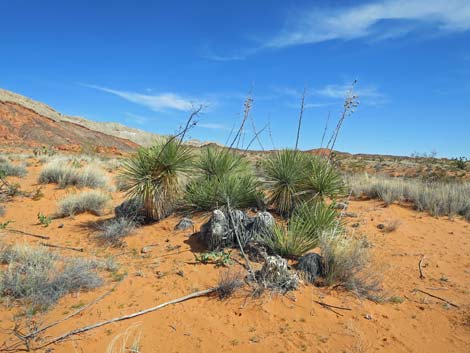 Utah Yucca in the red sands of Gold Butte |
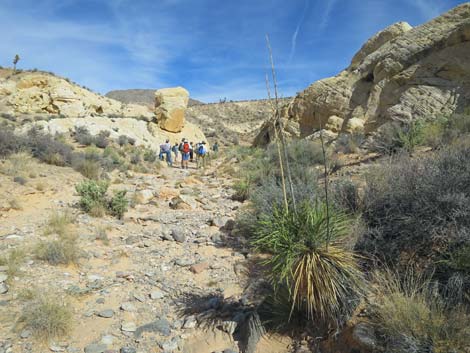 Utah Yucca in Gold Butte |
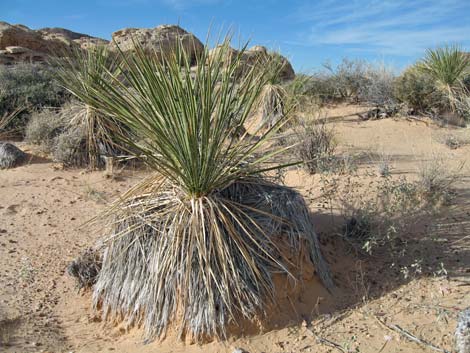 Utah Yucca tend to have a short trunk |
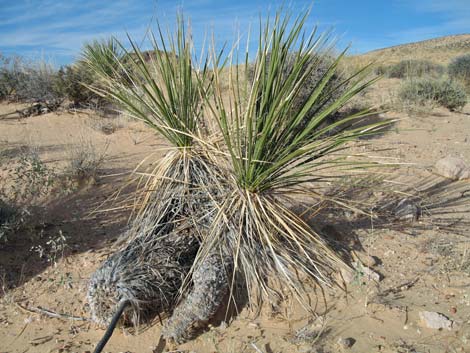 Utah Yucca showing stalks |
The leaves are narrow, flexible, and 8 to 28-inches long |
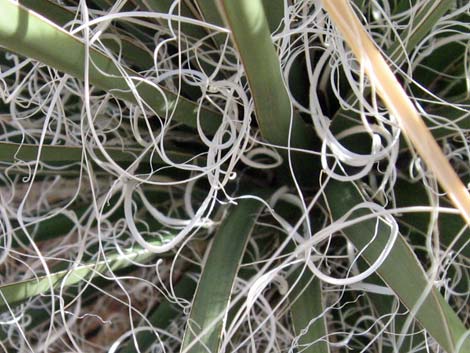
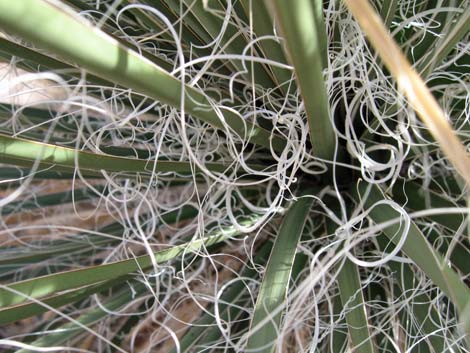 Curling, white strings on the leaf edges |
 |
 |
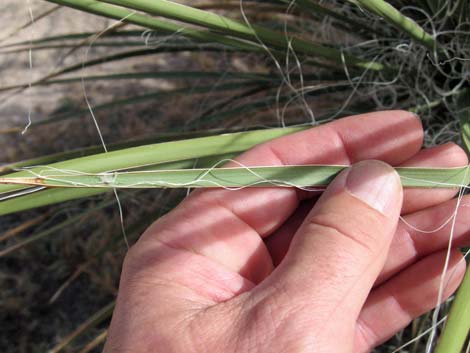 Leaves narrow and flexible |
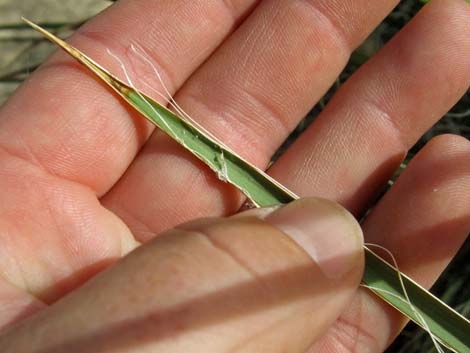 Leaves taper to a short spine |
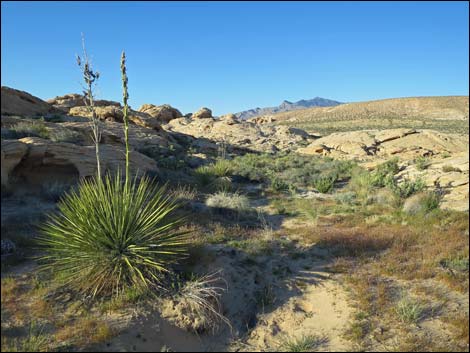 Utah Yucca with fresh flowering stalks |
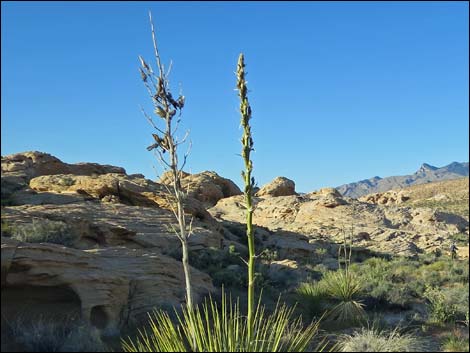 Fresh flowering stalks |
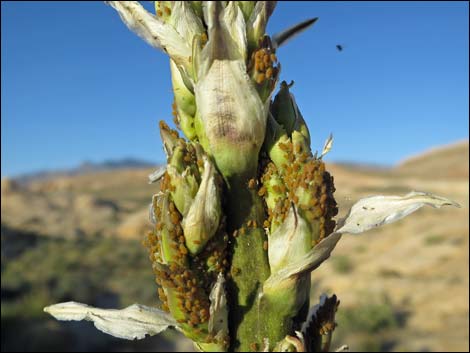 Aphids on fresh flowering stalks |
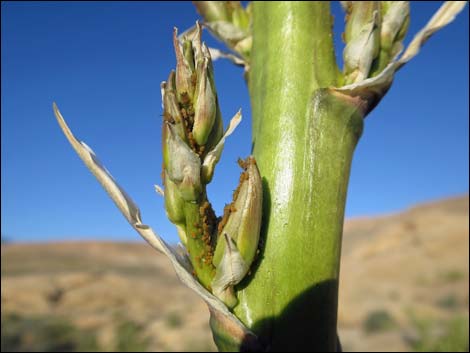 Aphids on fresh flowering stalks |
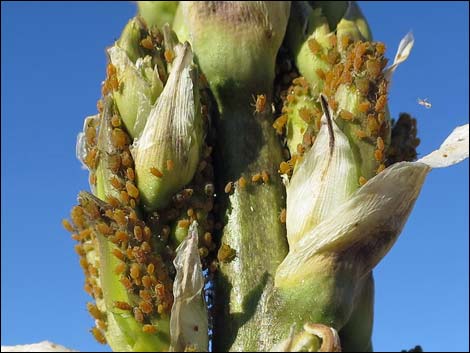 Aphids on fresh flowering stalks |
 More to come ... |
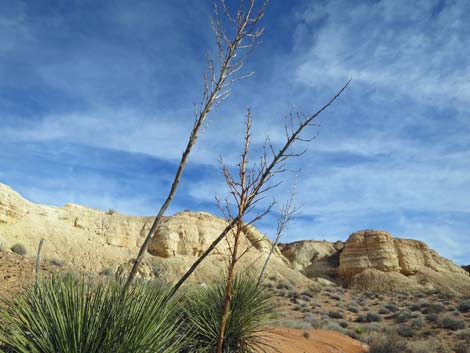 Old flowering stalks |
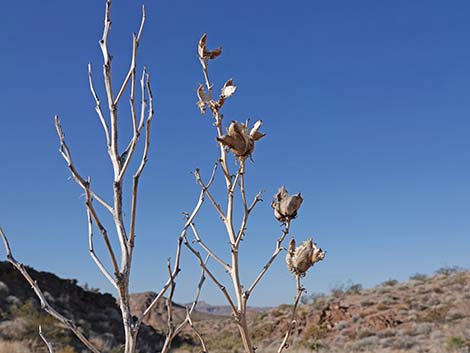 Old flowering stalks |
 |
 |
Note: All distances, elevations, and other facts are approximate. Names generally follow the USDA database.
 ; Last updated 220721
| All Yuccas | Plant Species Index | Glossary | Copyright, Conditions, Disclaimer | Home |