
Yuccas Around Las Vegas, Vegetation Around Las Vegas
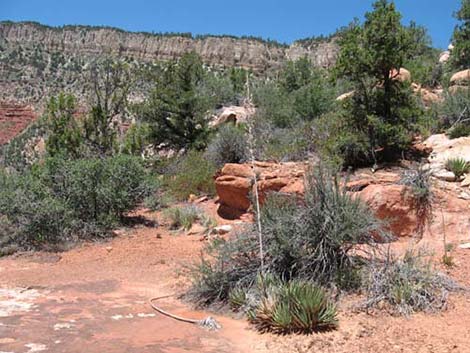 |
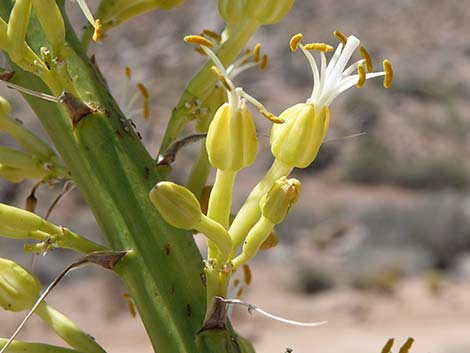
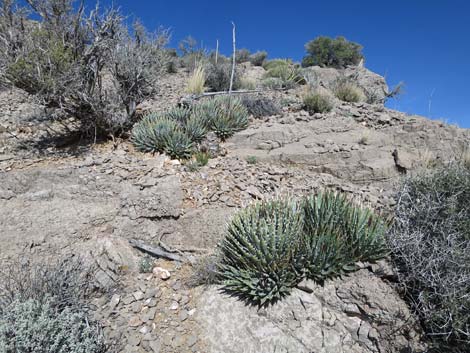
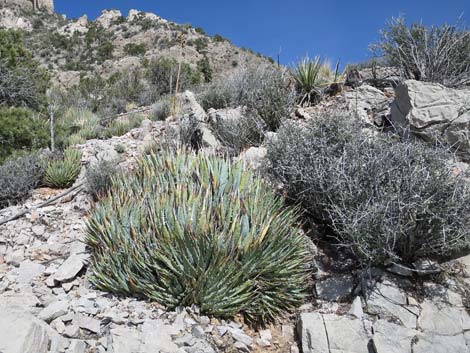
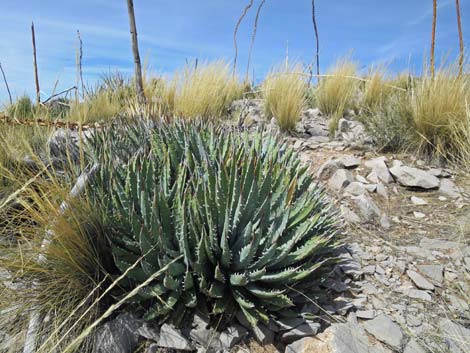
Utah Agave (Agave utahensis var. utahensis) is a succulent perennial with short, stout, upright, blue-green leaves that arise from a basal rosette and are well guarded on the edges and tips with spines. In the spring, some plants in a population send up a tall flower stalk that bears many yellow flowers. After a plant blooms, it dies. Utah Agave is identified primarily by the short apical spine, the short marginal spines, and the gray to brown color of the apical spine. Compare with other varieties of Utah Agave. Utah Agave is a locally common species of rocky areas in the Mojave Desert in the Upper Sonoran (Mojave Desert Scrub and Pinyon-Juniper Woodland) life zone. This variety occurs in an isolated spot in the southern Spring Mountains, and in the Gold Butte region and eastward into southwestern Utah and northwestern Arizona. Family: Agave (Agavaceae). Other Names: century plant. |
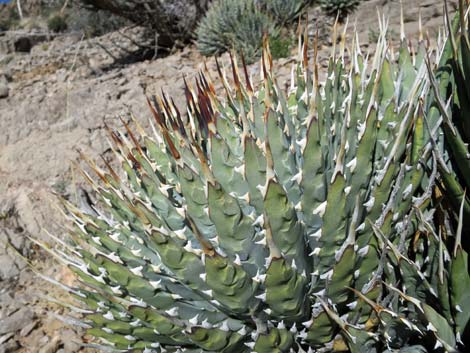 Short marginal and apical spines |
Plant Form: basal rosette with tall flowering stalk. Height: Basal leaves to about knee-high, but flowering stalk 6-12 feet. Trunk: none. Leaves: Long daggers with spines along the edges and a sharp tip. Flowers: Blooms in the spring or early summer. Inflorescence a spike. Flowers large, yellowish, and waxy. |
 |
Seeds: Elevation: About 3,000 to 6,000 ft. Distribution: Southern Nevada, southwestern Utah, and northwestern Arizona. Comments: Judging from the number of agave roasting pits around the desert, these must have been more common at one time. |
 |
 |
 |
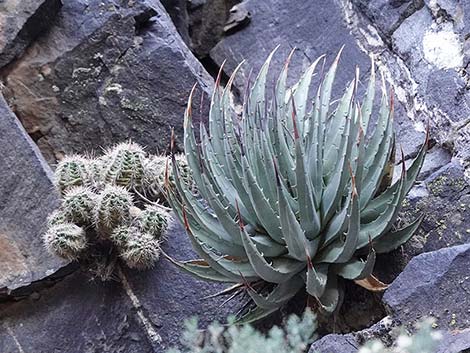 |
Agave with short spines |
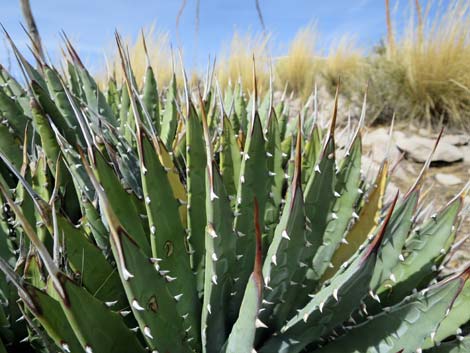 Agave with short spines |
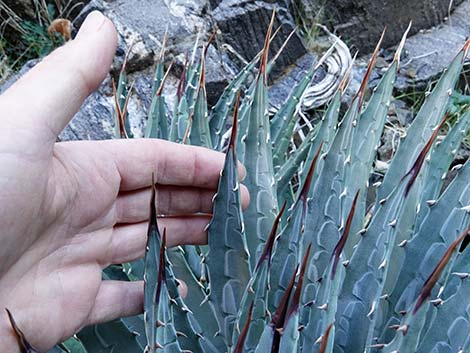 Short apical spine, the short marginal spines |
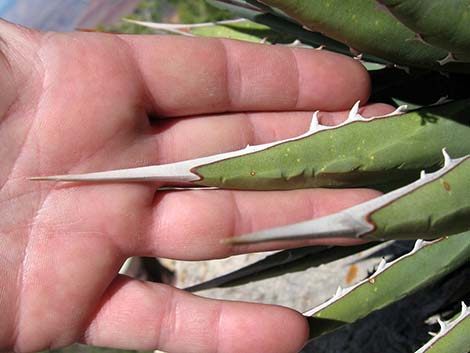 Short apical spine, the short marginal spines |
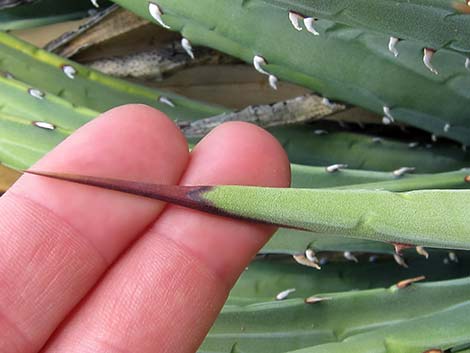 Short apical spine, the short marginal spines |
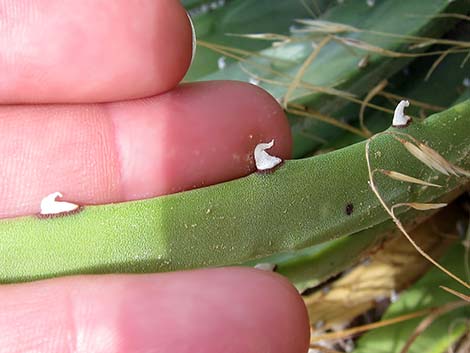 Short marginal spines |
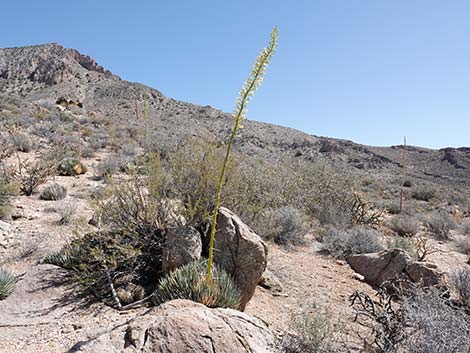 Agave with flower stalk |
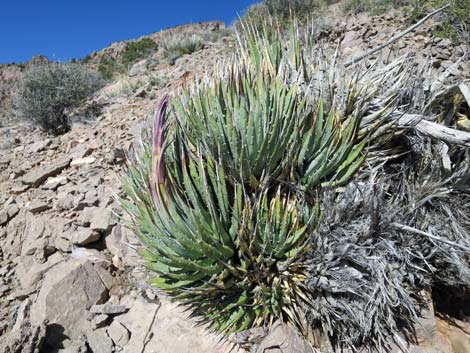 Flowering stalk just starting to emerge |
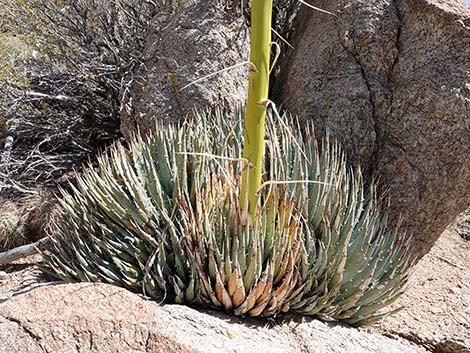 Flowering stalk arises from one of several clumped agave plants |
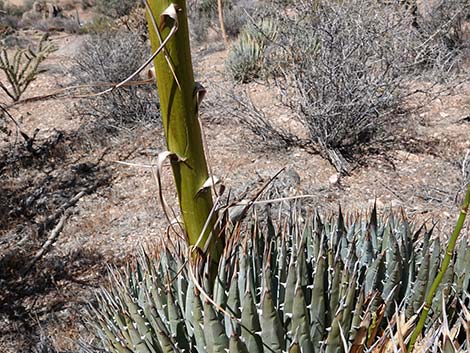 Flowering stalk arises from one of several clumped agave plants |
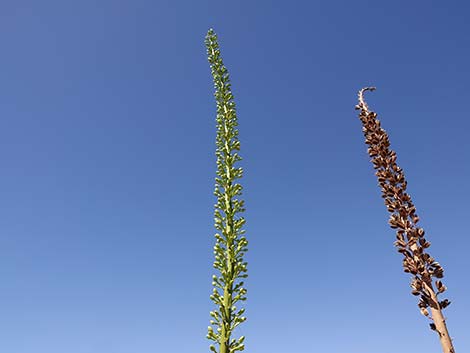 Fresh (green) and dried (brown) flower stalks |
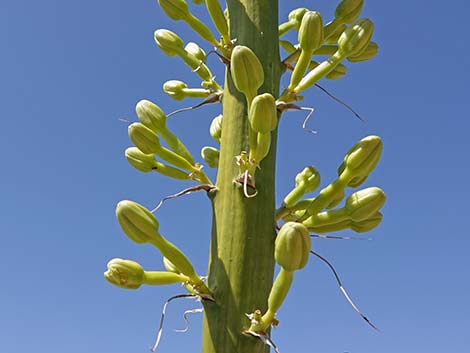 Flower buds on fresh flower stalk |
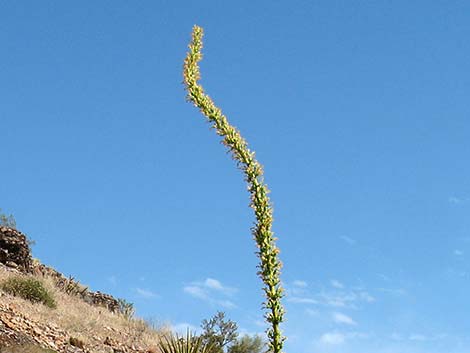 Open flowers on flowering stalk |
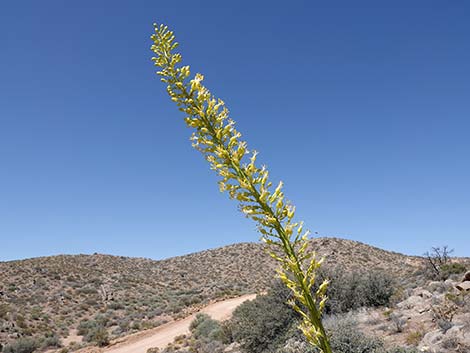 Open flowers on flowering stalk |
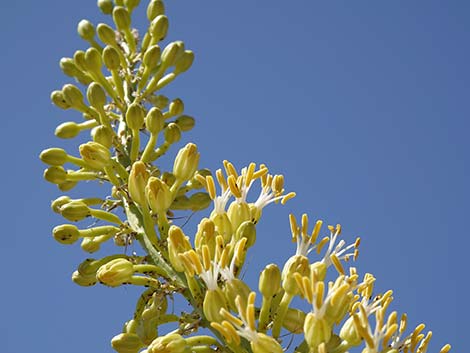 Flower buds and open flowers |
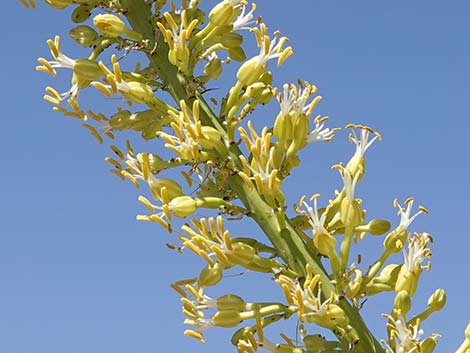 Open flowers |
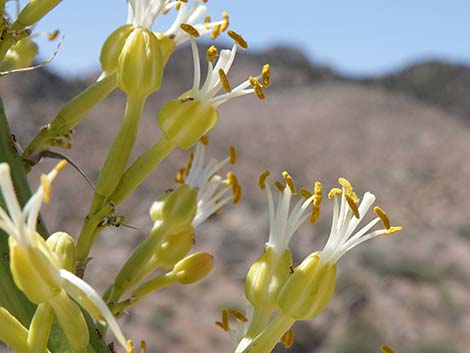 Utah Agave flowers |
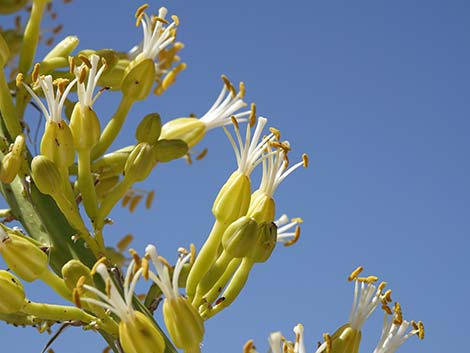 Utah Agave flowers |
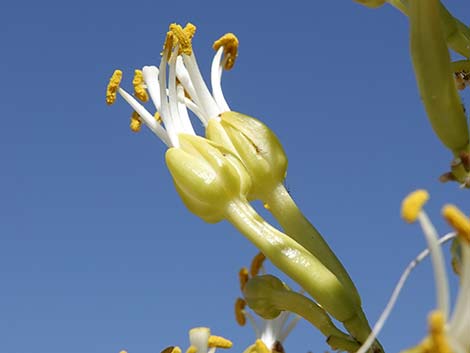 Utah Agave flowers |
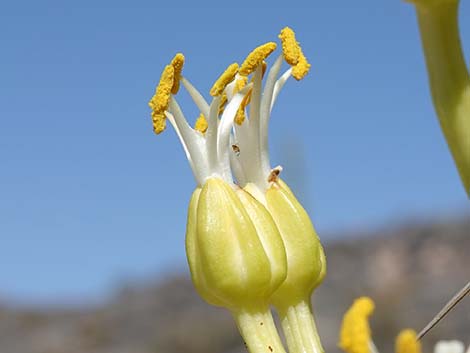 Utah Agave flowers |
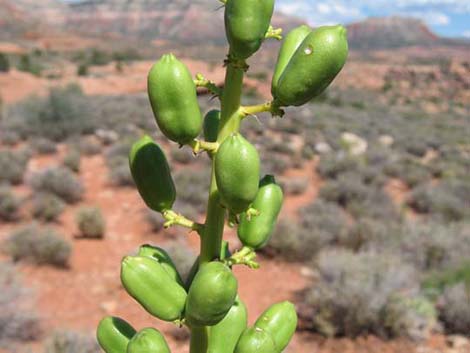 Developing seed pods |
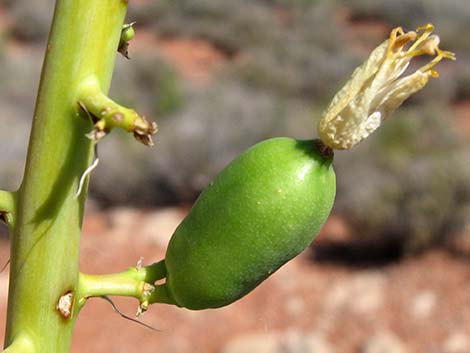 Spent flower and developing seed pods |
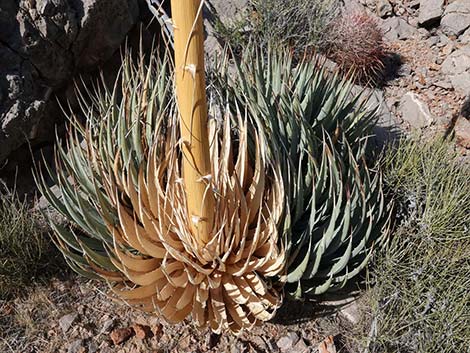 After flowering, the clump that flowered dies |
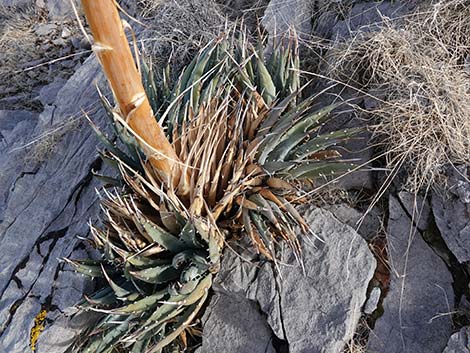 After flowering, the clump that flowered dies |
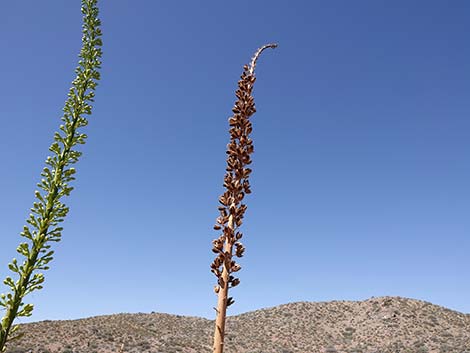 Fresh (green) and dried (brown) flower stalks |
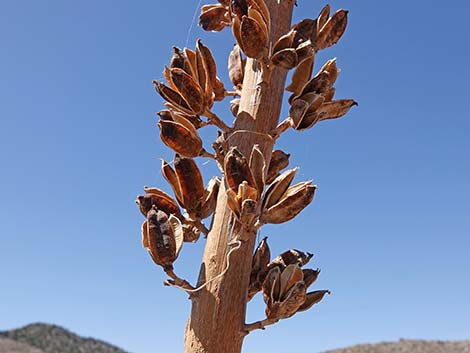 Dried flower stalk |
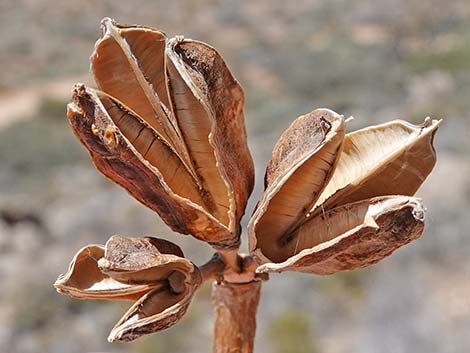 Dried, open seed pods |
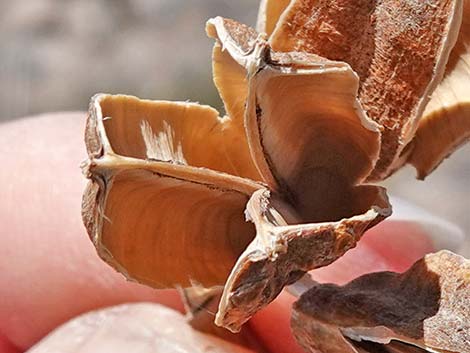 Dried, open seed pod; note three chambers |
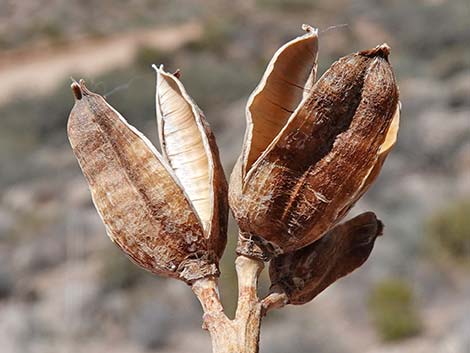 Dried, open seed pods |
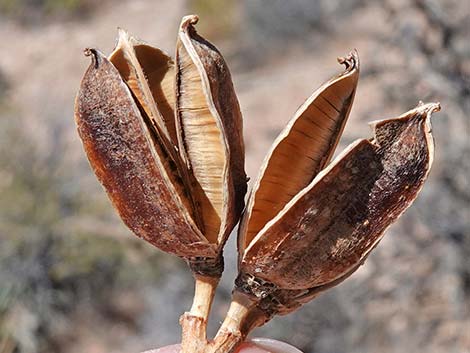 Dried, open seed pods |
Note: All distances, elevations, and other facts are approximate. Names generally follow the USDA database.
 ; Last updated 220718
| All Agave | Plant Species Index | Glossary | Copyright, Conditions, Disclaimer | Home |