
Shrubs Around Las Vegas, Vegetation Around Las Vegas
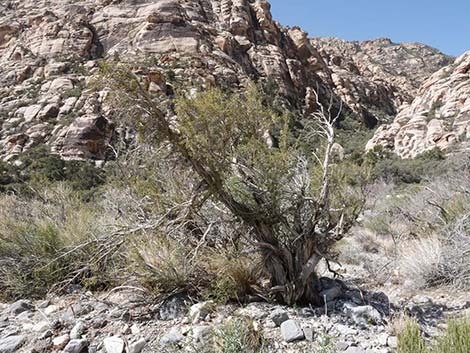 |
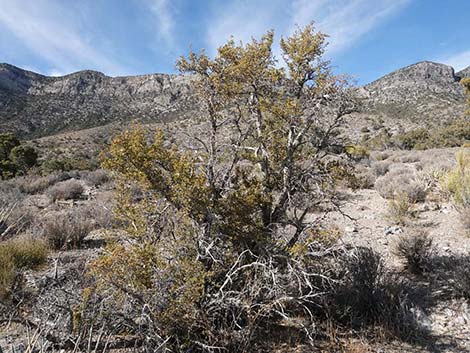
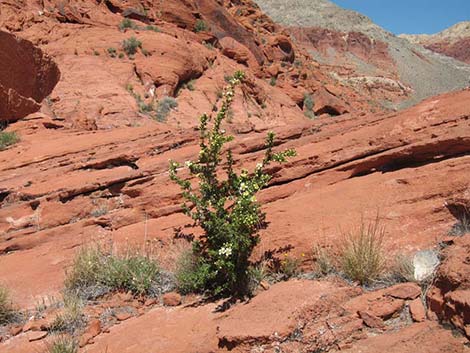
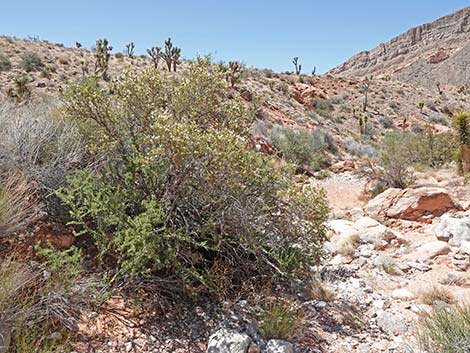
General: Stansbury Cliffrose (Purshia stansburiana) is a stout, upright shrub or subtree growing to head-high or higher. The plant produces many white, wildrose-type flowers in the spring, and each flower produces five seeds, each with a feathery plume attached. Cliffrose is a common component of vegetation communities on upper bajadas, ridges, and dry slopes in the Upper Sonoran (Mojave Desert Scrub and Pinyon-Juniper Woodland) and Transition (Yellow Pine Forest) life zones, from just below the Pinyon-Juniper Woodland upward to the lower Yellow Pine Forest. Around Las Vegas, look for Cliffrose at higher elevations in places such as the top of the Red Rocks Scenic Loop, the Sheep Range in the Desert National Wildlife Range, and up on Mt. Charleston. Family: Rose (Rosaceae). Other Names: Cliffrose; Cowania mexicana, Purshia mexicana var. stansburiana |
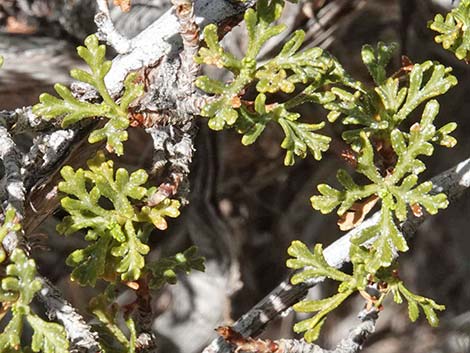 Leaves and gray bark on stems |
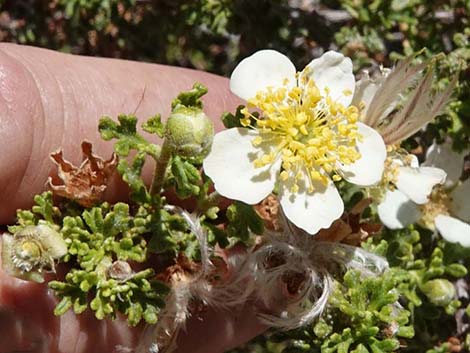
Plant Form: Stout, upright shrub or subtree with thick stems and shaggy bark. Height: 5-9 ft. Bark: Brown, shaggy. Stems: thick near the base, many branching, upright. Leaves: Small, pinnately compound (5–9 lobes), edges rolled under, alternate, deciduous, dotted with glands. Leaves clustered on short lateral branches. Flowers: Blooms late spring to early summer, and then again in the fall (as late as late November) if conditions permit. Flowers typical wildrose type, solitary on branch tips, but produces enough flowers to cover parts of the shrub. Petals 5, creamy white, to about 1/3 inch long. Many stamens with yellow pollen; sometime making the entire flower appear yellow. |
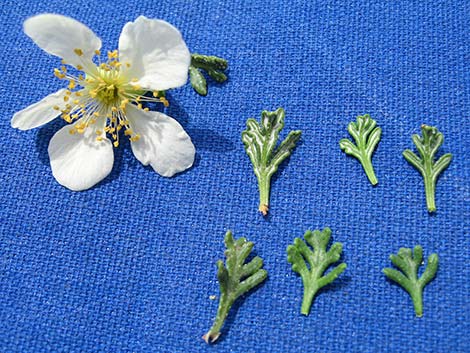 |
Seeds: Oblong with a long, feathery plume; usually five plumed seeds per flower. Habitat: Dry, well-drained sandy, gravelly, and rocky soils on upper bajadas, moderate slopes in the lower mountains, and rocky ridges. Elevation: 3,500–8,000 ft Distribution: California to Colorado and south into northern Mexico. Comments: Cliffrose has undergone a number of name changes in recent years, making the taxonomy somewhat confusing. Cliffrose (Purshia stansburiana), Desert Bitterbrush (Purshia glandulosa), and and Bitterbrush (Purshia tridentata) occur in the same habitats, flower at the same time, have similar flowers and leaves, and hybridize. |
 |
 |
 |
|
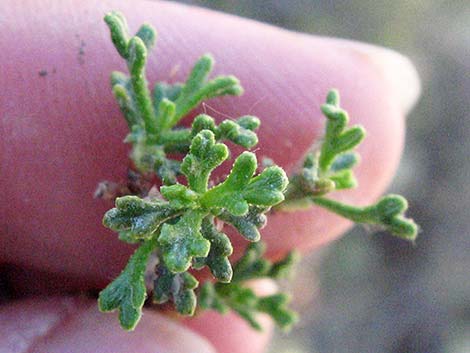 Leaves |
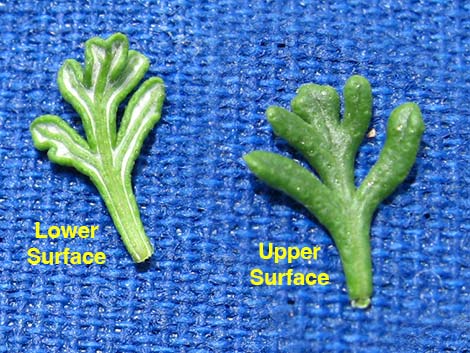 Upper and lower leaf surfaces |
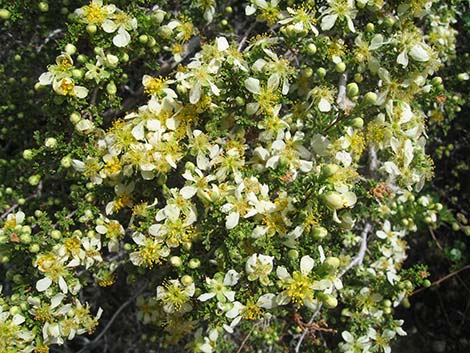 White to creamy-white flowers can cover the shrub |
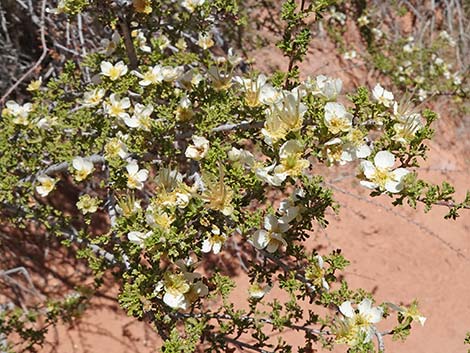 White to creamy-white flowers |
 |
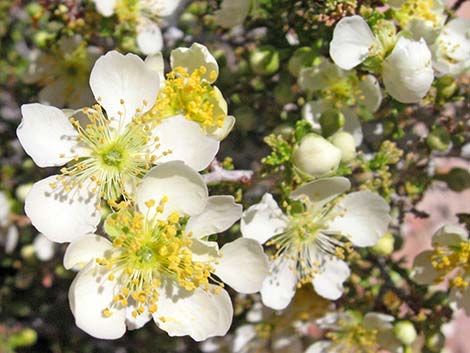 |
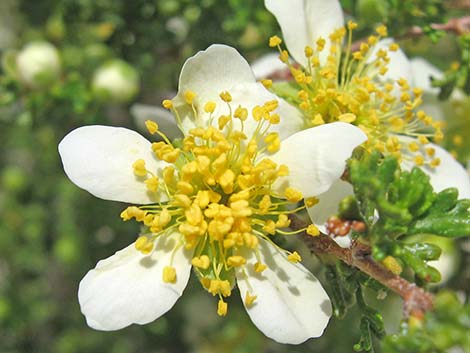 Typical wildrose-type flower with five petals and many stamens |
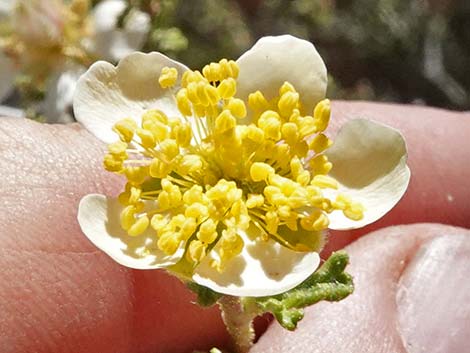 Typical wildrose-type flower with five petals and many stamens |
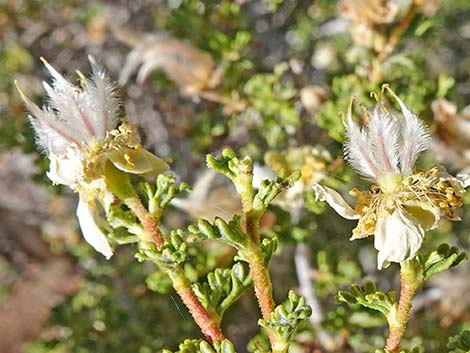 Feathery seed plumes beginning to grow |
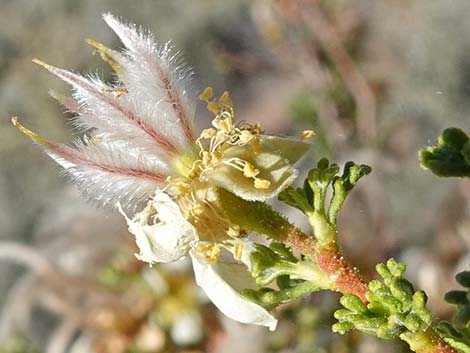 Feathery seed plumes beginning to grow |
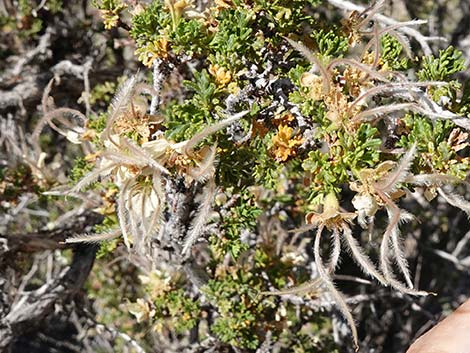 Feathery seed plumes, usually 5 plumed seeds per flower |
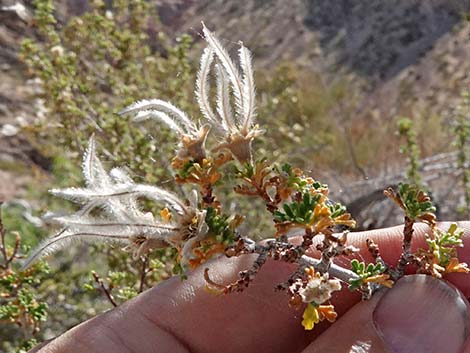 Feathery seed plumes, usually 5 plumed seeds per flower |
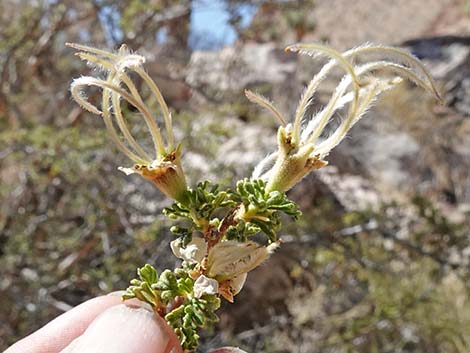 Feathery seed plumes, usually 5 plumed seeds per flower |
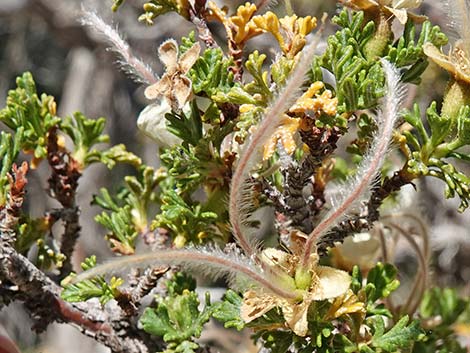 This flower only produced three plumed seeds |
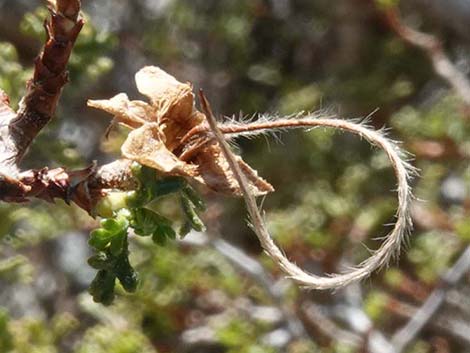 Spent flower with one seed that did not detach properly |
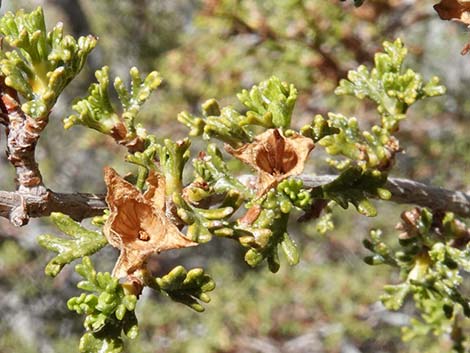 Spent flowers |
Note: All distances, elevations, and other facts are approximate. Names generally follow the USDA database.
 ; Last updated 220811
| All Shrubs | Plant Species Index | Glossary | Copyright, Conditions, Disclaimer | Home |