
Shrubs Around Las Vegas, Vegetation Around Las Vegas
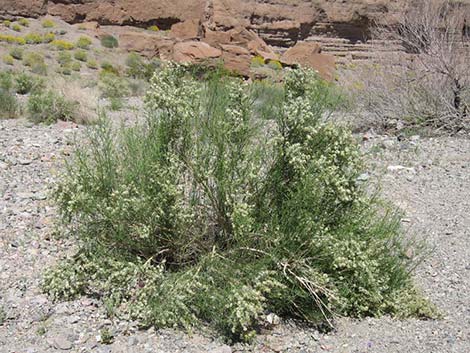 |
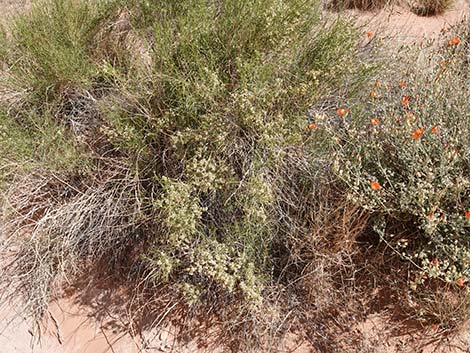
General: Burrobrush (Hymenoclea salsola), commonly called Cheesebush or Cheeseweed, is an upright, spreading shrub with many thin stems that bend down to the ground and narrow, threadlike leaves. The common name, Cheesebush, comes from the pungent odor of the crushed leaves. The common name, Burrobrush, comes from the thought that burros like to eat this plant. Burrobrush is a common component of shrub communities in disturbed areas such as along washes and roads on desert flats, bajadas, and lower montane slopes in the Upper Sonoran (Mojave Desert Scrub and Pinyon-Juniper Woodland) life zone. Family: Sunflower (Asteraceae). Other Names: Cheeseweed, cheesebush, white burrobush, Ambrosia salsola. |
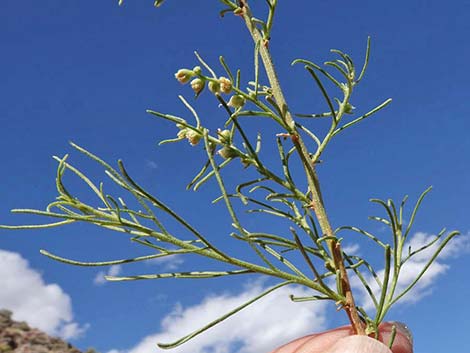 |
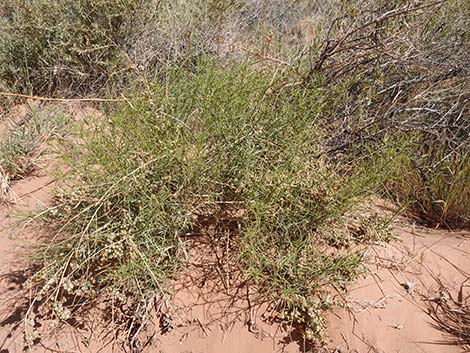
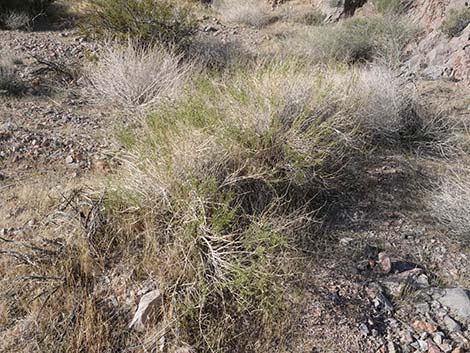
Plant Form: Upright shrub or spreading with thin twigs. Height: Usually knee to thigh-high; to 6-feet tall. Bark: Green, aging to tan. Stems: Thin, upright, arising from a single base, branched throughout, often arching out and bending down to the ground. Leaves: Leaves generally alternate, entire, threadlike (filiform), dark green, sometimes with three to five threadlike lobes. Pungent odor when crushed. |
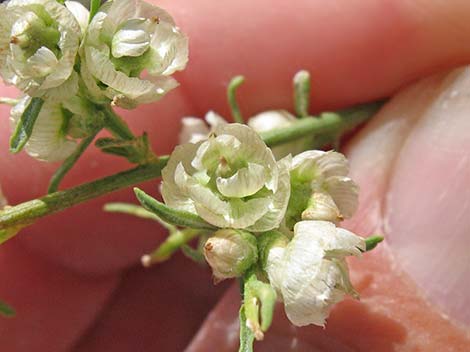 Female flower with developing fruit |
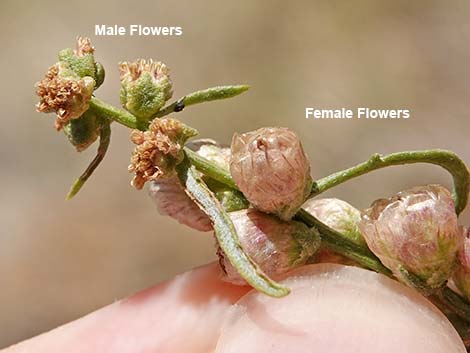
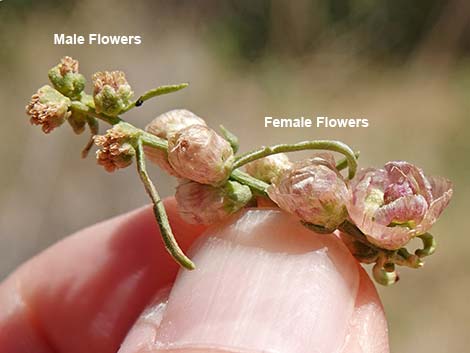
Flowers: In separate staminate and pistillate heads. Staminate heads: many, in spiked clusters. Pistillate heads: individual flowers, beaked; fruit winged. Seeds: Enclosed in winged bur. Habitat: Dry, well-drained sandy, gravelly, and rocky soils on desert flats, washes, bajadas, and moderate slopes in the lower mountains. Elevation: To about 6,000 feet. Distribution: California to southwestern Utah and Arizona, south into northwestern Mexico. Comments: |
 |
 |
 |
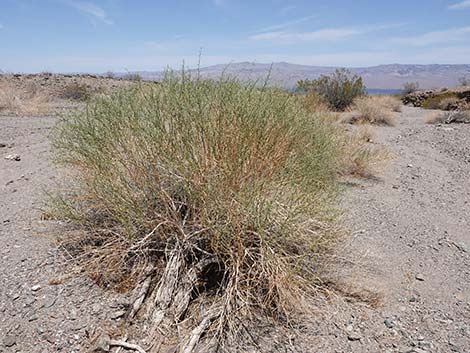 |
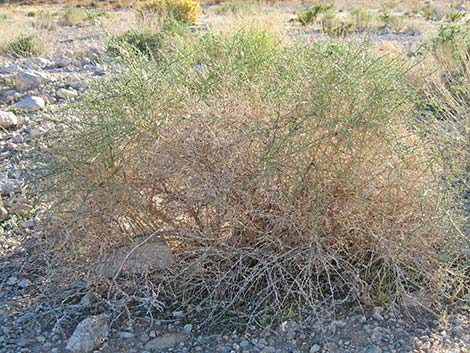 Cheesebush: a tangle of interlocking stems |
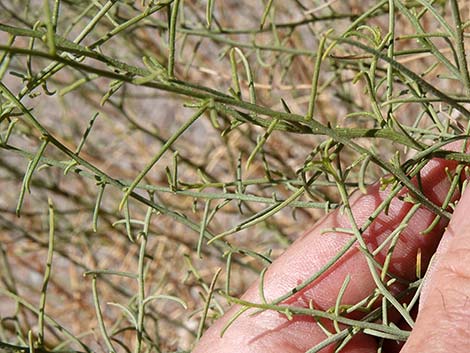 Cheesebush: a tangle of interlocking green stems and threadlike leaves |
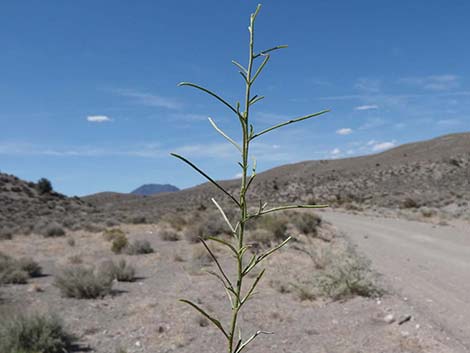 Long, threadlike leaves |
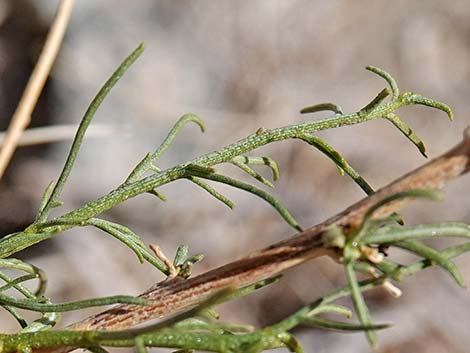 Long, threadlike leaves |
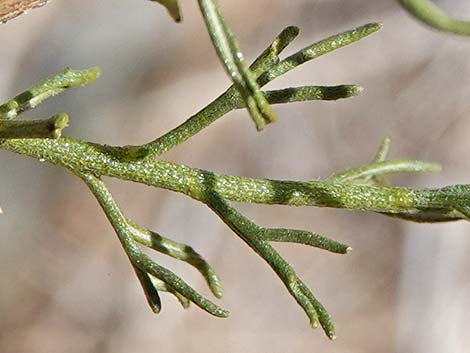 Threadlike leaves sometimes with 3-5 lobes |
Long, narrow leaves and flower buds |
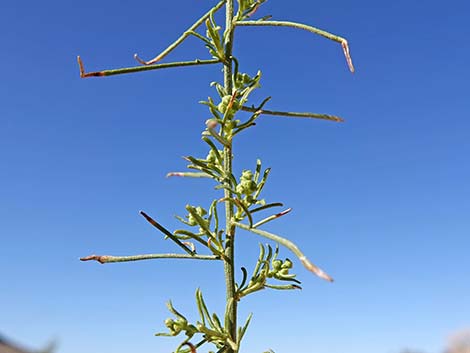 Long, narrow leaves and flower buds |
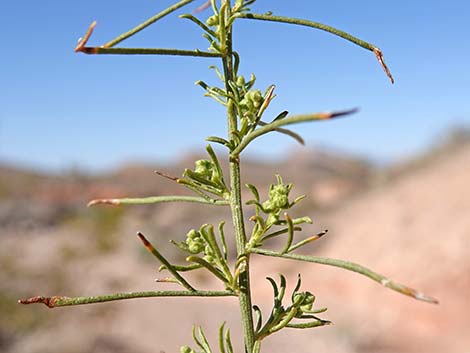 Long, narrow leaves and flower buds |
 |
 |
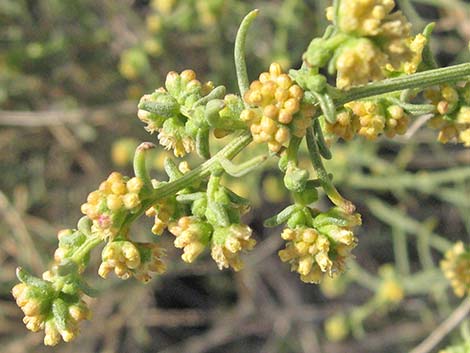 Male flower buds |
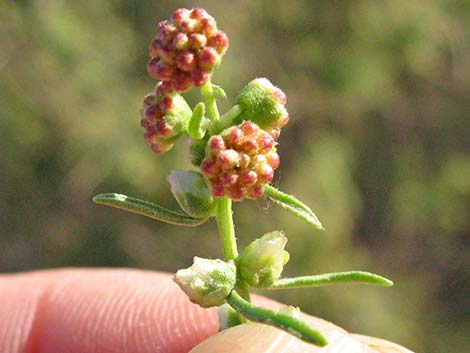 Male flower buds |
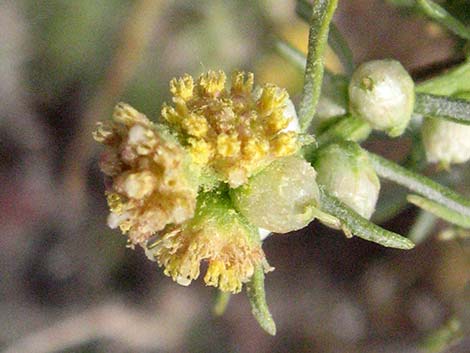 Male flowers with yellow stamens and female flowers at right |
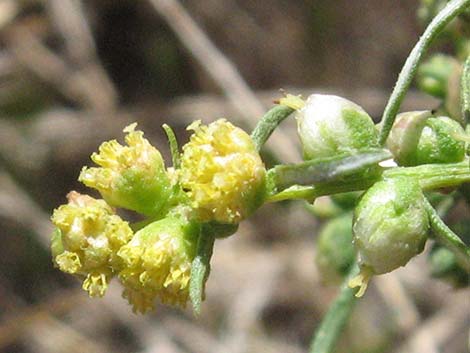 Male flowers with yellow stamens and female flowers at right |
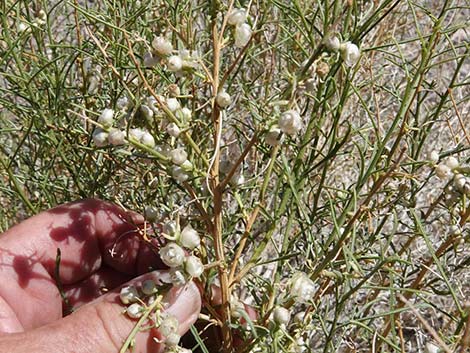 Female flowers |
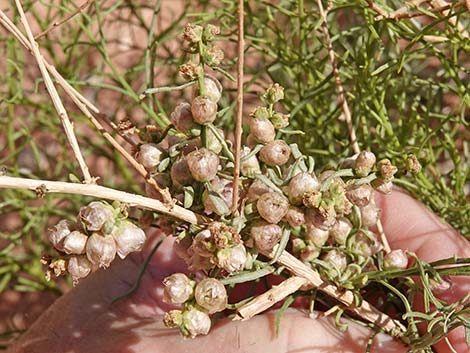 Female flowers |
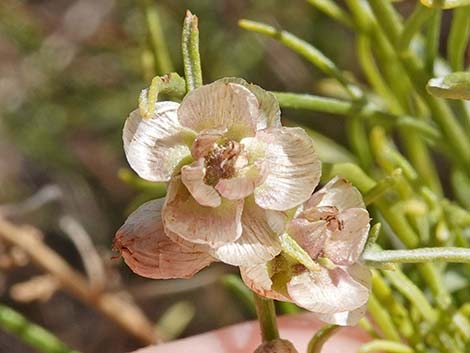 Female flowers |
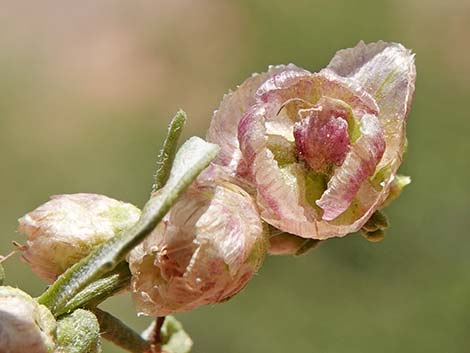 Female flowers |
Female flower with developing fruit |
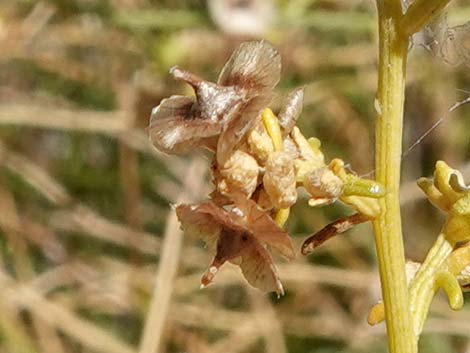 Two fully developed fruits |
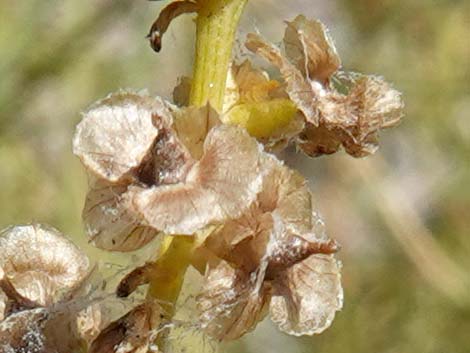 Ripe fruits |
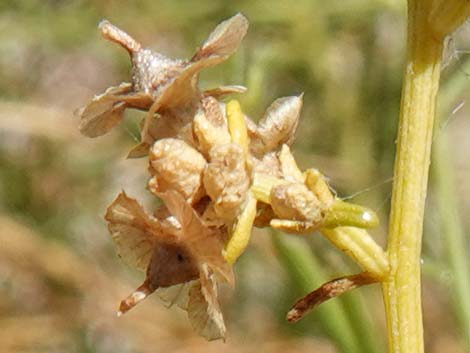 Ripe fruits |
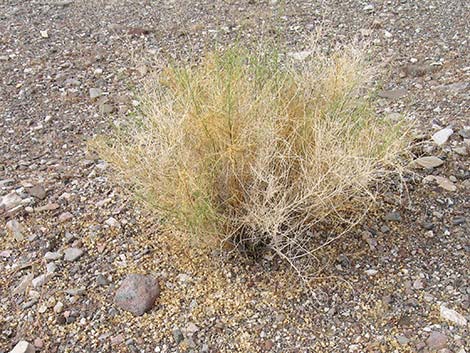 Cheeseweed seeds on the ground |
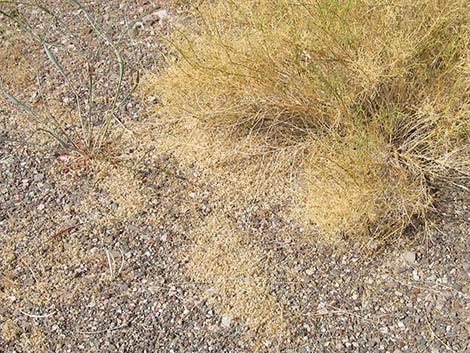 Cheeseweed seeds on the ground |
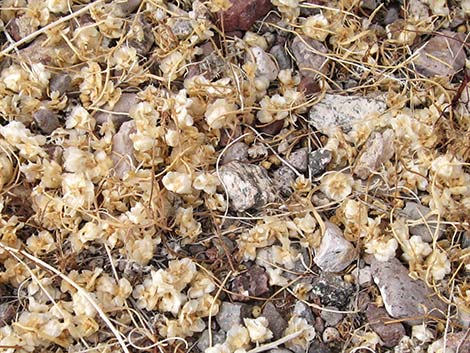 Spent Cheeseweed flowers on the ground |
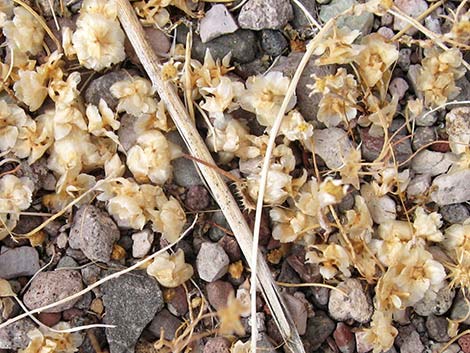 Spent Cheeseweed flowers on the ground |
Note: All distances, elevations, and other facts are approximate. Names generally follow the USDA database.
 ; Last updated 220813
| All Shrubs | Plant Species Index | Glossary | Copyright, Conditions, Disclaimer | Home |