
Shrubs Around Las Vegas, Vegetation Around Las Vegas
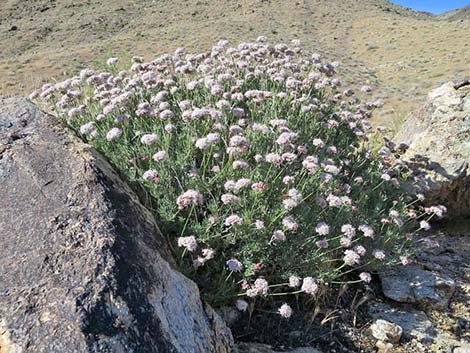 Eastern Mojave Buckwheat in flower |
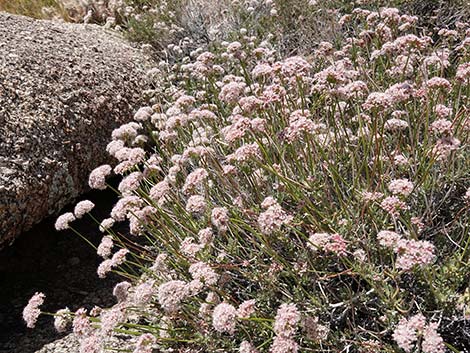
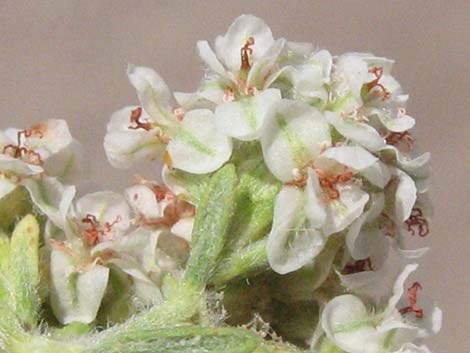
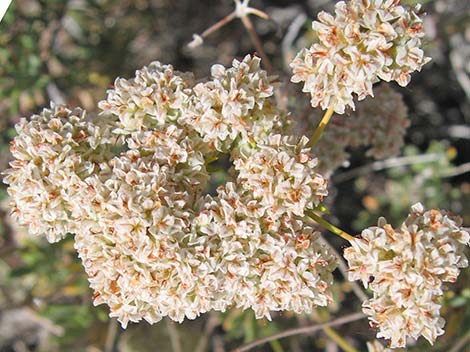
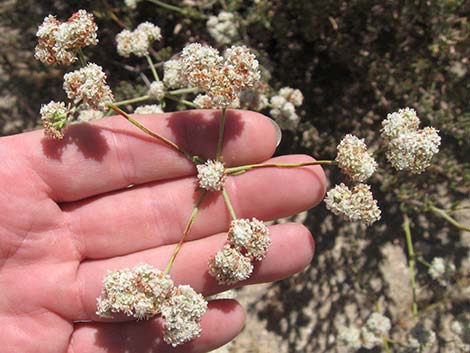
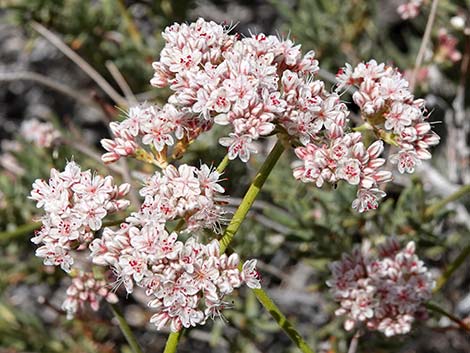
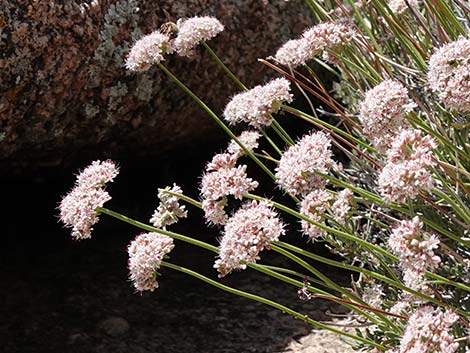
General: Eastern Mojave Buckwheat (Eriogonum fasciculatum var polifolium), a variety of California Buckwheat (Eriogonum fasciculatum), is an evergreen, low-growing shrub with upright leafy stems and flower stalks that stand above the leafy parts of the plant. The flower stalks are branched (umbel-like) with tiny white to pink flowers that form clusters on the ends of the branched stalks. Flower stalks often persist after the flowers are gone. Eastern Mojave Buckwheat is a common component of vegetation communities along washes, upper bajadas, and rocky areas in the Upper Sonoran (Mojave Desert Scrub and Pinyon-Juniper Woodland) life zone. Family: Buckwheat (Polygonaceae). Other Names: California Buckwheat, Wild Buckwheat, Flat-topped buckwheat |
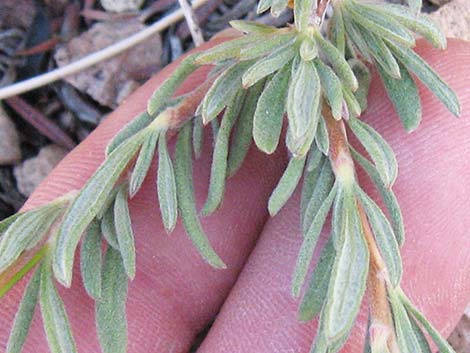 |
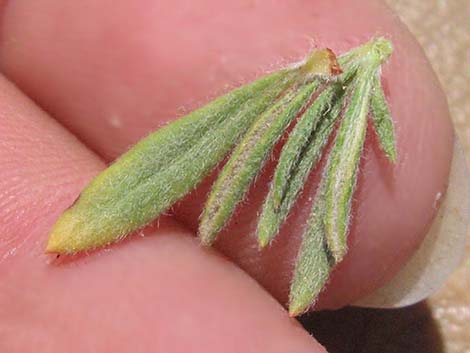
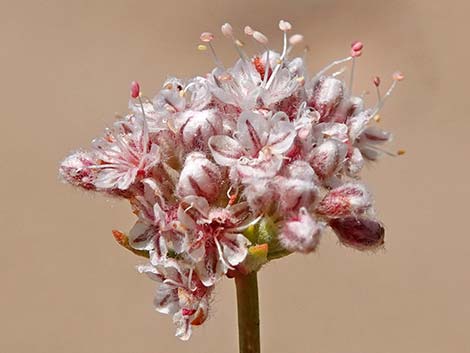
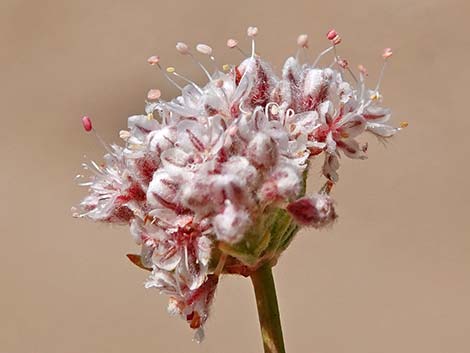
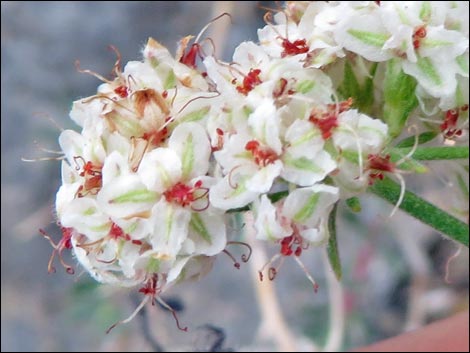
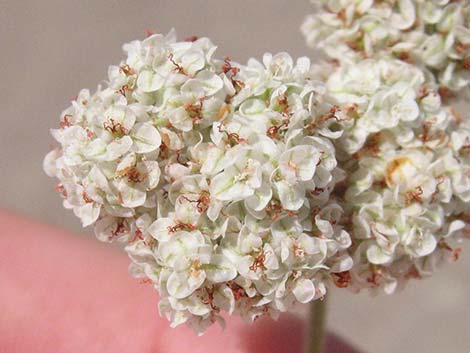
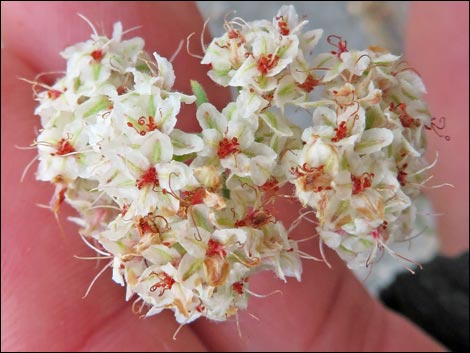
Plant Form: Upright, low-and-spreading evergreen shrub with flower stalks and flowerheads that stand above the leafy parts of the plant. Height: Usually 2-3 feet tall; 5-feet across. Bark: Dark, hairy. Stems: Upright, thin, hairy; with many small leaves. Leaves: Small (to 3/4 inch), long and narrow to slightly oval, numerous, evergreen, dark green or gray-green; edges not usually rolled under; hairy above, whitish (tomentose) below. Flowers: Blooms in the spring, and then again in the fall (as late as late November) if conditions permit. Inflorescence: Flower stalks usually branched; flowers clustered into heads or umbel-like. Flowers: tiny, numerous, white to pinkish; aging to red. Seeds: Achene (like a tiny sunflower seed) about 2 mm long. |
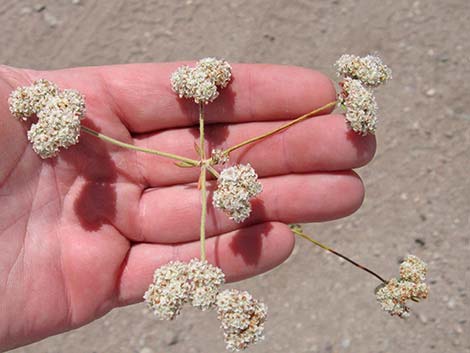 |
Habitat: Dry, well-drained sandy, gravelly, and rocky soils on upper bajadas, canyons, and moderate slopes in the lower mountains. Elevation: 3,000 to about 7,500 feet Distribution: Eastern California to Utah, south into northwestern Mexico. Comments: The buckwheats are a very diverse family with some 50 genera and 1,100 species ranging from trees to annual forbs. Several species occur around Las Vegas. Fortunately, some of these species, including Eastern Mojave Buckwheat, are easy to recognize (at least to genus). There are four varieties of California Buckwheat (Eriogonum fasciculatum). Around Las Vegas, we have Eriogonum fasciculatum var polifolium (Eastern Mojave Buckwheat), recognized by the open, umbel-like inflorescence). |
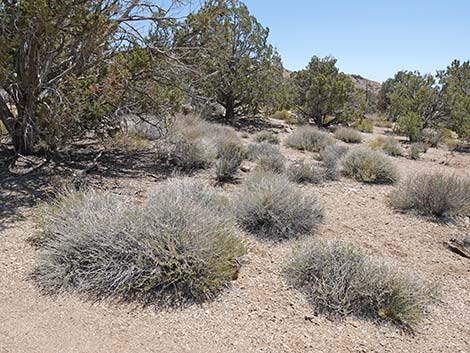 Eastern Mojave Buckwheat (most of the shrubs) |
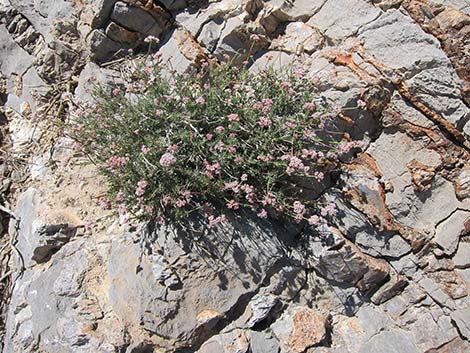 Eastern Mojave Buckwheat in flower |
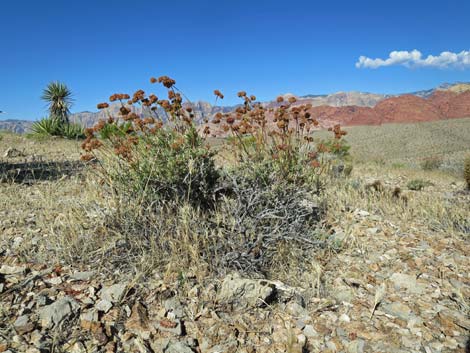 Eastern Mojave Buckwheat with spent flowers |
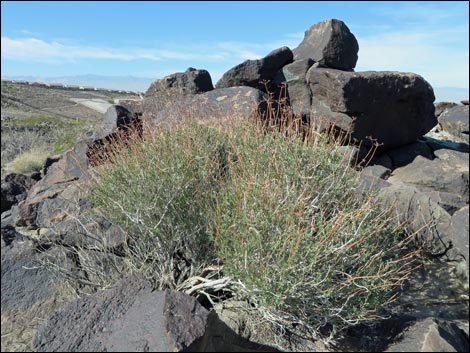 Eastern Mojave Buckwheat after the seeds scatter |
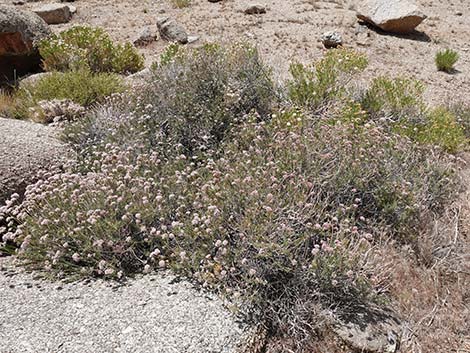 |
 |
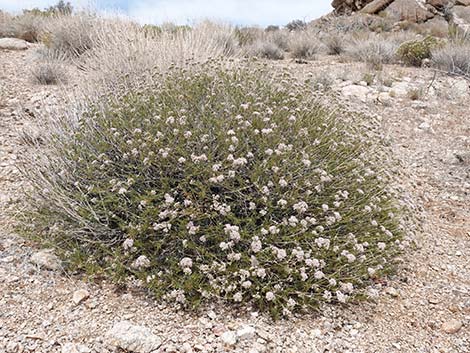 Eastern Mojave Buckwheat often forms a hemispherical plant |
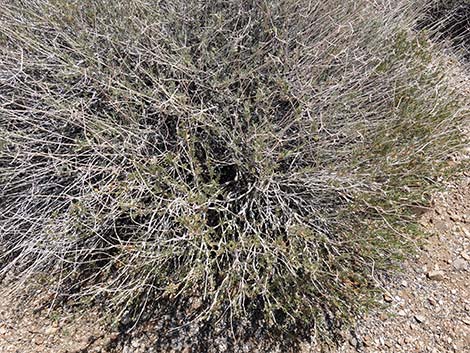 Eastern Mojave Buckwheat: stems seem to radiate from a central point |
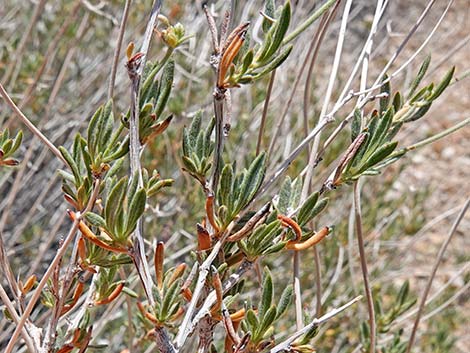 Eastern Mojave Buckwheat: narrow, linear leaves |
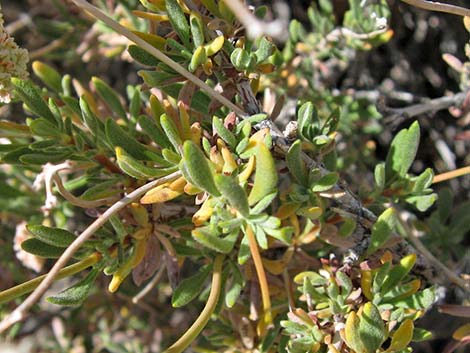 Eastern Mojave Buckwheat: leaves grow in bunches |
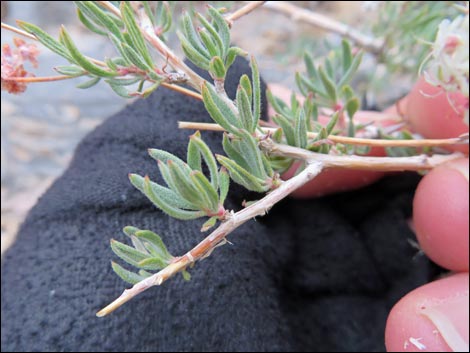 Eastern Mojave Buckwheat: leaves grow in bunches |
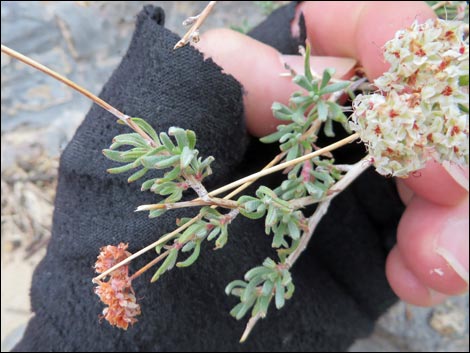 Eastern Mojave Buckwheat: leaves grow in bunches |
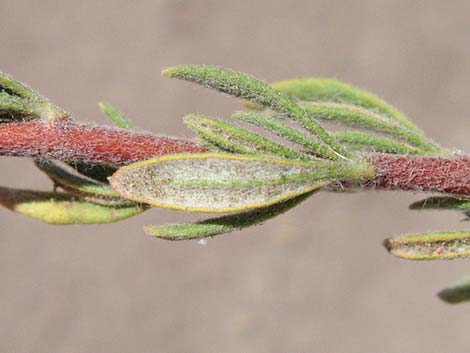 |
 |
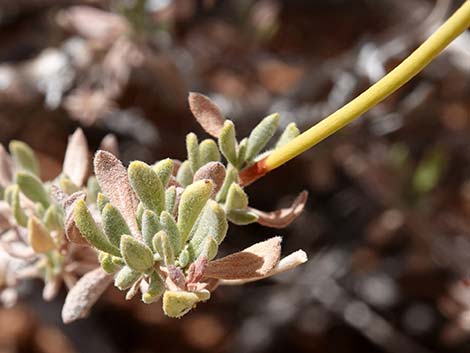 Flowering stalks emerge as an extension of terminal twigs |
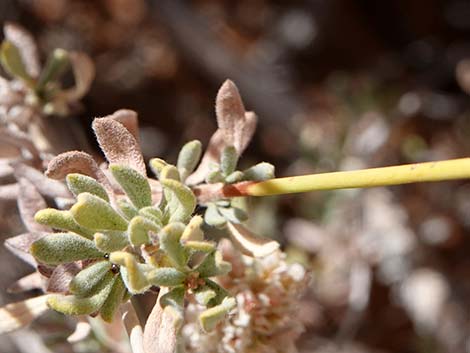 Flowering stalks emerge as an extension of terminal twigs |
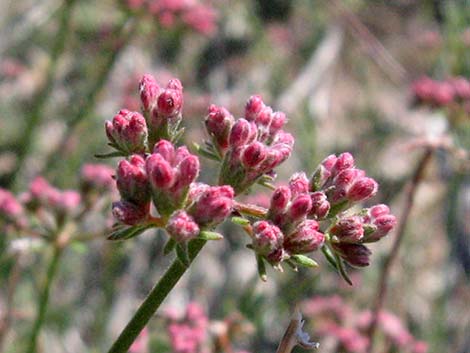 Flower buds |
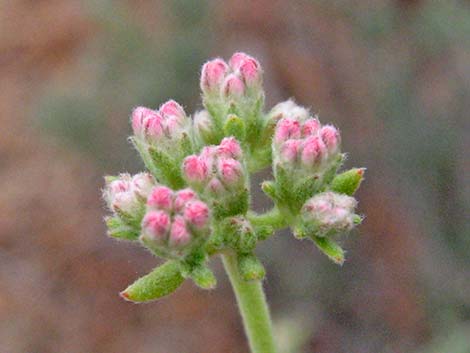 Flower buds |
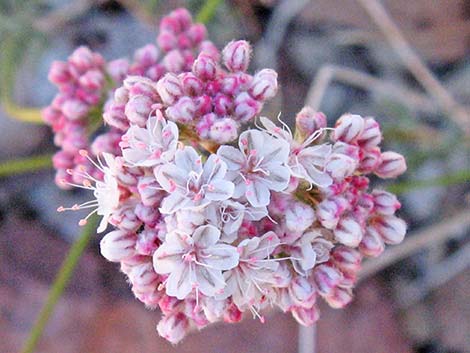 Buds and fresh flowers |
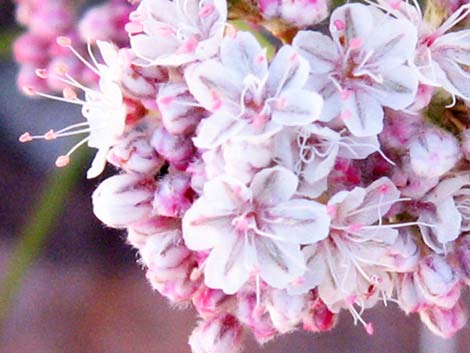 Fresh flowers |
 |
 |
 |
 |
 |
 |
 |
 |
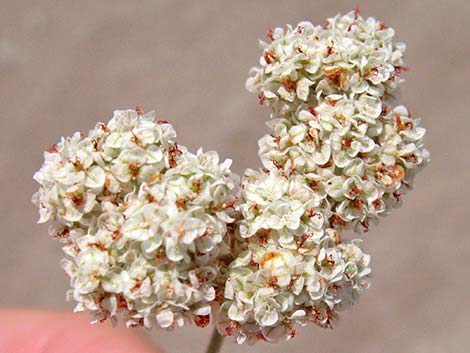 Top of flower cluster |
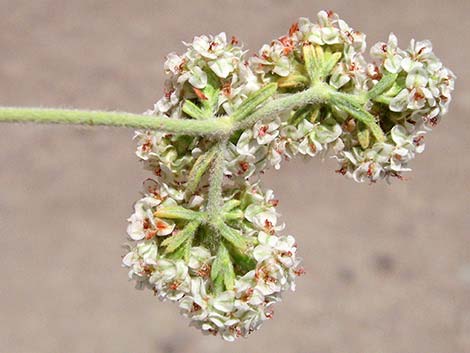 Bottom of flower cluster |
 |
 |
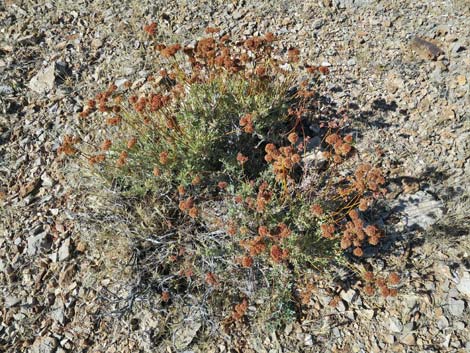 Eastern Mojave Buckwheat with spent flowers |
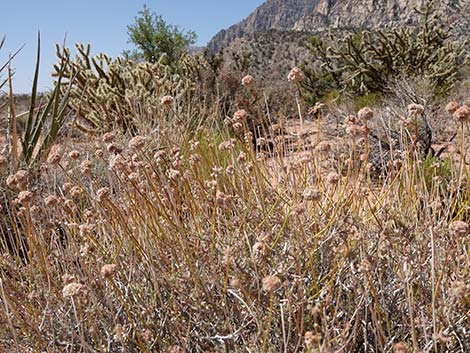 Eastern Mojave Buckwheat with spent flowers |
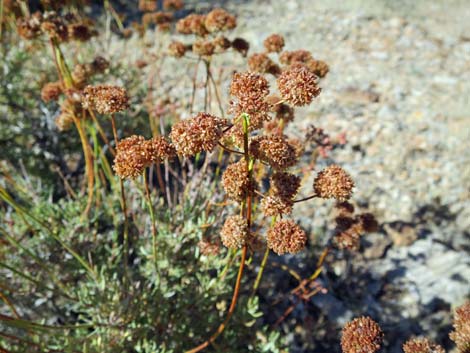 Eastern Mojave Buckwheat with spent flowers |
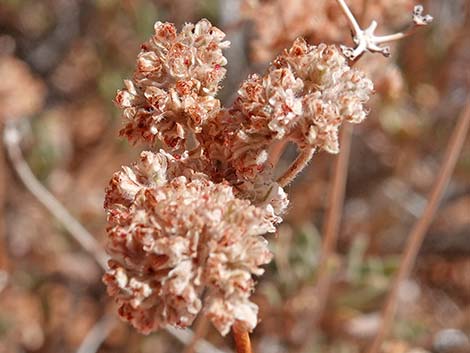 Eastern Mojave Buckwheat spent flowers |
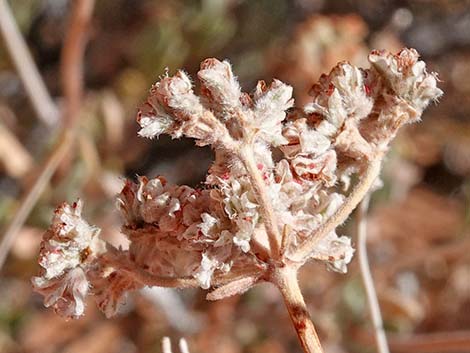 Eastern Mojave Buckwheat spent flowers |
 More to come ... |
Note: All distances, elevations, and other facts are approximate. Names generally follow the USDA database.
 ; Last updated 230909
| All Shrubs | Plant Species Index | Glossary | Copyright, Conditions, Disclaimer | Home |