
Shrubs Around Las Vegas, Vegetation Around Las Vegas
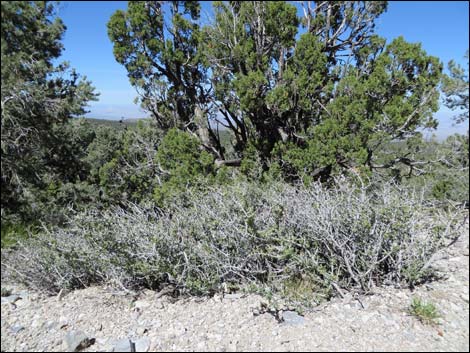 |
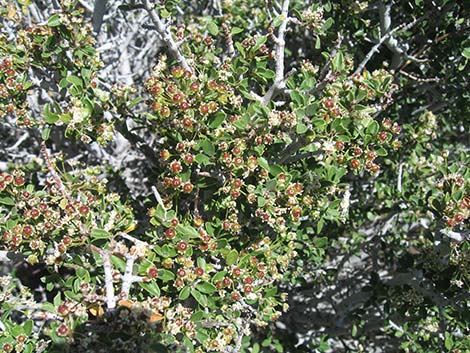
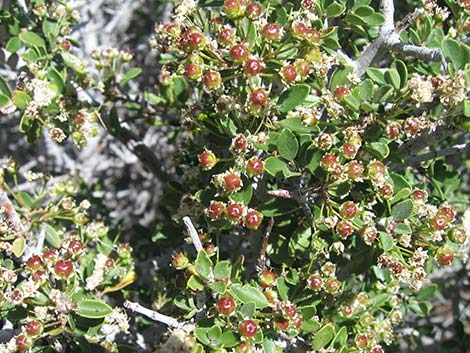
General: Mojave Ceanothus (Ceanothus pauciflorus) is an upright, spreading shrub that grows to about chest high and has small, oval, evergreen leaves. During spring, the shrub is covered with small, white, fragrent flowers. Mojave Ceanothus locally common component of vegetation communities on well-drained sandy, gravelly, and rocky soils along washes, on bajadas, and on moderate slopes into the lower mountains in the Upper Sonoran (Mojave Desert Scrub and Pinyon-Juniper Woodland) life zone. Family: Buckthorn (Rhamnaceae). Other Names: Cup-leaf Ceanothus. Formerly Ceanothus greggii var vestitus. |
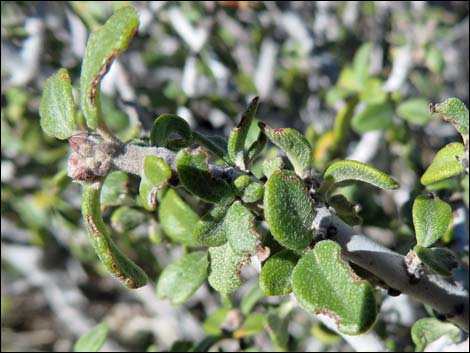 |
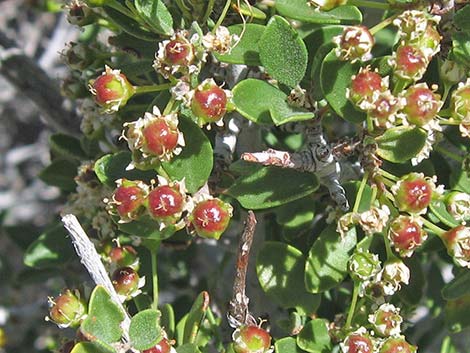
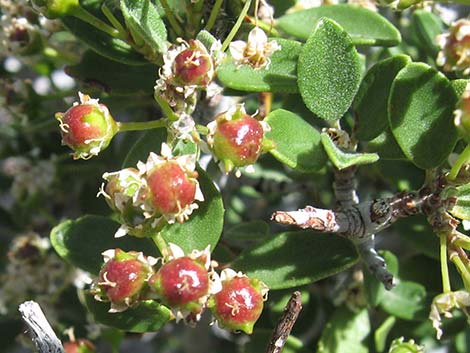
Plant Form: Upright, spreading shrub. Height: To about 5 feet. Bark: White. Stems: Many branches. Leaves: Simple, opposite, evergreen, 1-ribbed from base. Blade 1/4 inch (to 1/2 inch); oval, entire to slightly toothed, upper surface gray-green. Blade not flat, somewhat cupped. |
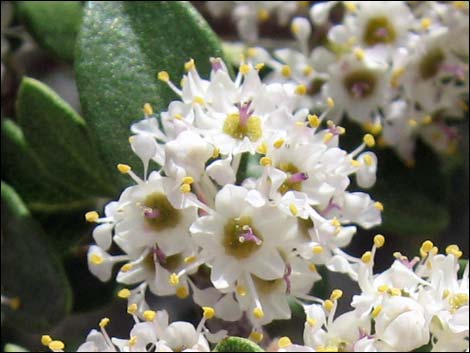 |
Flowers: Blooms late spring to early summer. Inflorescence: raceme-like, less than 1-inch long. Flowers: white. Seeds: Fruit: capsule. Habitat: Dry, well-drained sandy, gravelly, and rocky soils on upper bajadas and moderate slopes in the lower mountains. Elevation: To about 7,500 feet. Distribution: California to Utah and Arizona. |
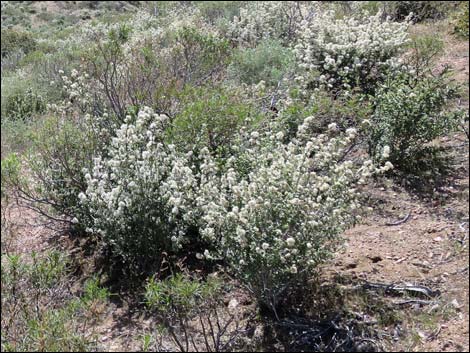 Ceanothus blooming in the Virgin Mountains |
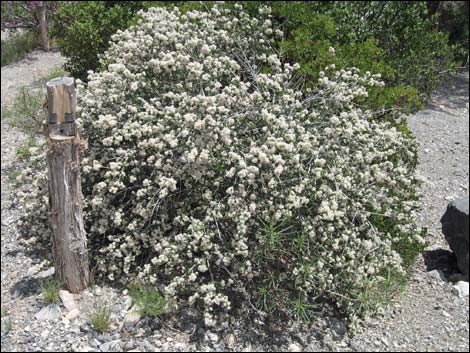 Ceanothus blooming at Red Rock Canyon NCA |
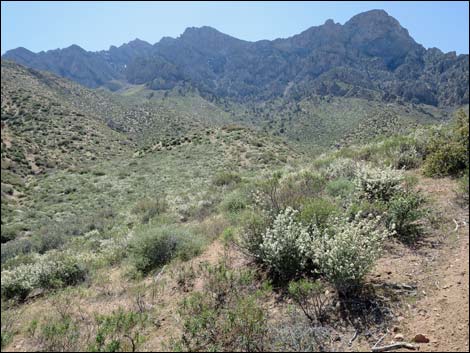 Hillsides of blooming Ceanothus in the Virgin Mountains |
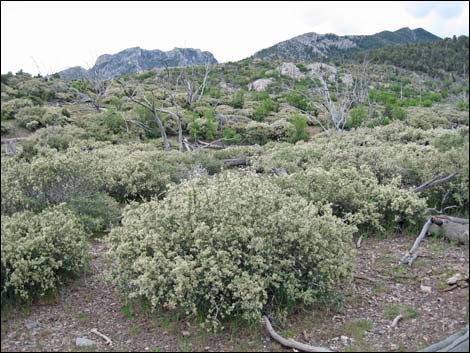 Ceanothus blooming near Cold Creek (Spring Mts NRA) |
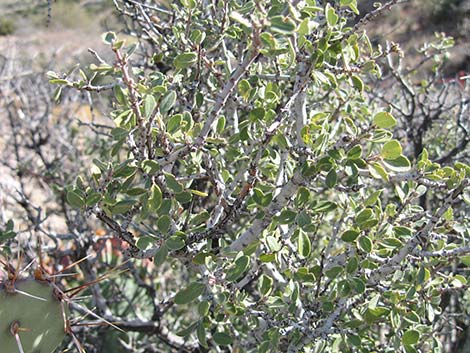 |
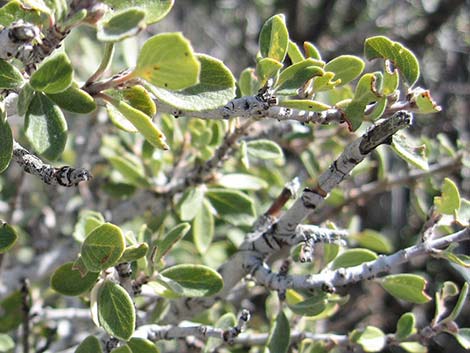 |
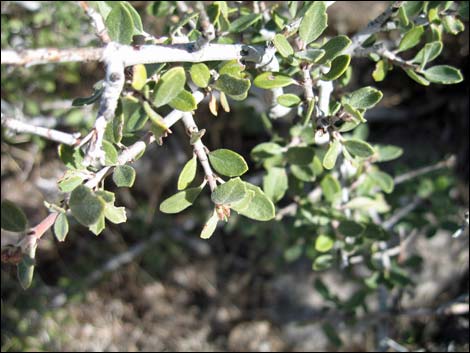 |
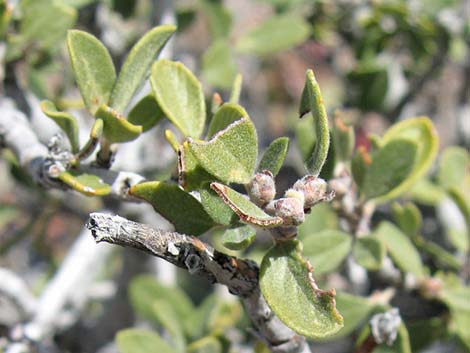 |
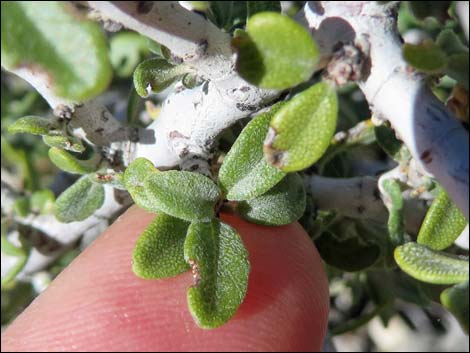 Most leaves are entire ... |
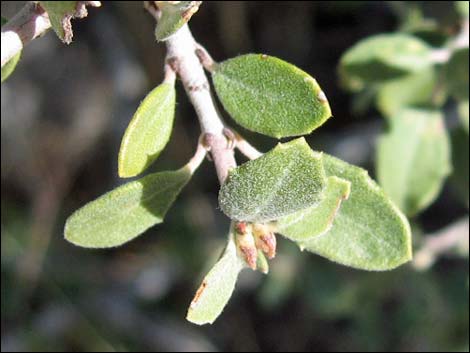 ... but some are toothed |
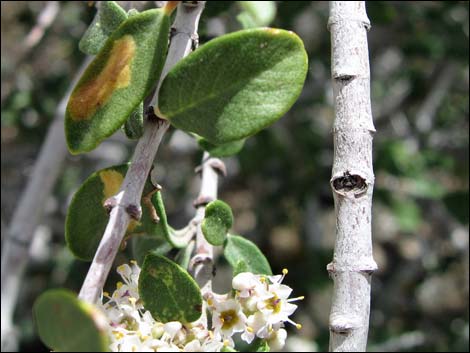 Leaves and stems |
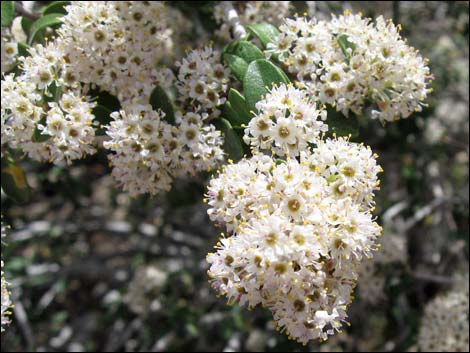 Ceanothus blooms |
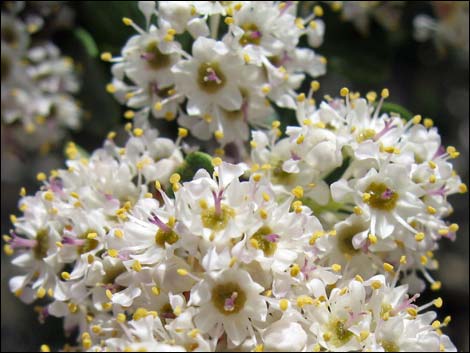 |
|
 |
 |
 |
 |
Note: All distances, elevations, and other facts are approximate. Names generally follow the USDA database.
 ; Last updated 220101
| All Shrubs | Plant Species Index | Glossary | Copyright, Conditions, Disclaimer | Home |