
Shrubs Around Las Vegas, Vegetation Around Las Vegas
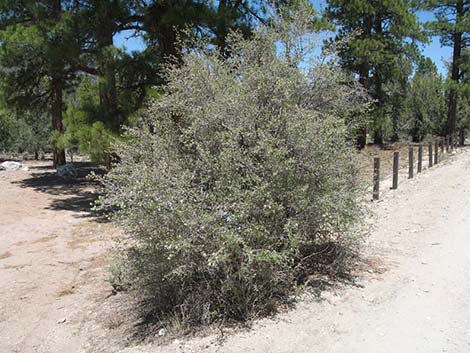 |
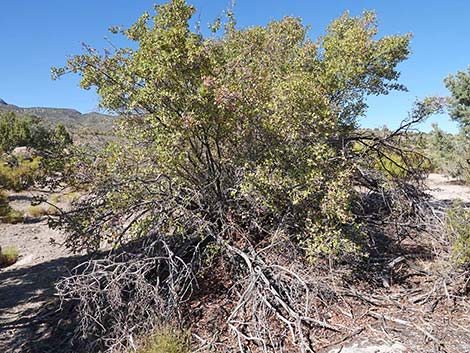
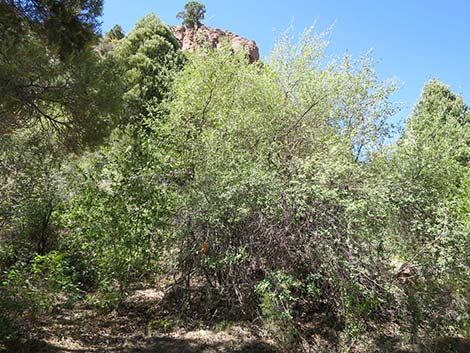
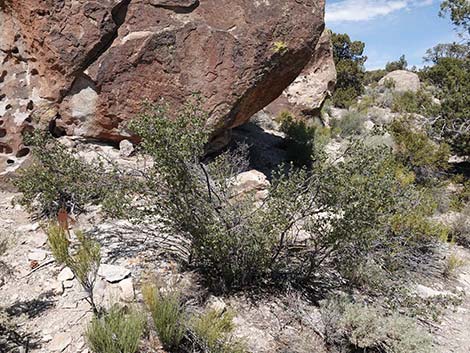
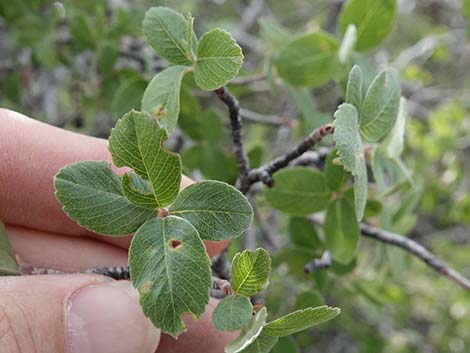
General: Utah Serviceberry (Amelanchier utahensis) is an upright shrub most easily recognized by the leaves, which are oval, usually less than 1-inch long. The edge of the leaf near the stem is entire, while the edge near the tip is serrate. The flowers have five white petals and many yellow stamens (typical wildrose flower), and the fruit is a small, blue-black berry. Utah Serviceberry is an uncommon component of montane vegetation communities on well-drained sandy, gravelly, and rocky soils in canyons and on slopes into the higher mountains in the Upper Sonoran (Mojave Desert Scrub and Pinyon-Juniper Woodland), Transition (Yellow Pine Forest), Canadian (Pine-Fir Forest), and Hudsonian (Bristlecone Forest) life zones. Family: Rose (Rosaceae). Other Names: Amelanchier utahensis var. covillei, Amelanchier pallida. |
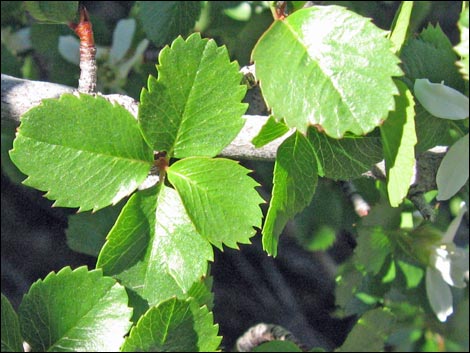 Oval leaves with serrate ends |
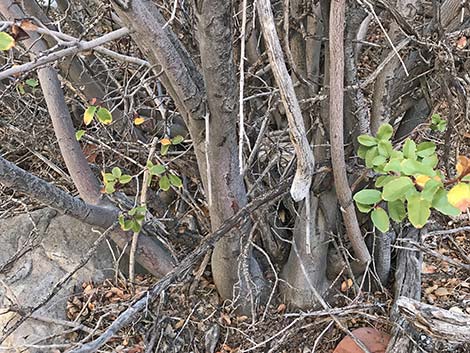
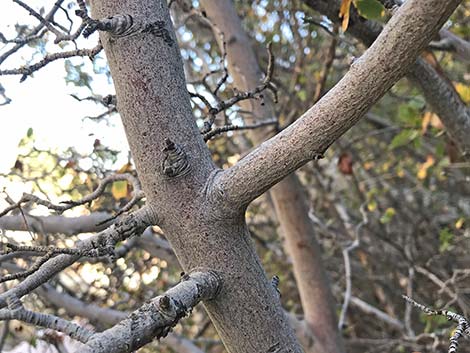
Plant Form: Upright shrub. Height: Usually 3 to 5 feet (to about 15 feet). Bark: Gray to reddish-brown, rosy-red during winter. Stems: Many branches, twigs short. Leaves: Blade usually less than 1-inch long (to about 1-3/4 inches), oval, edge entire near the stem, serrate towards the tip. Flowers: Blooms late spring. Inflorescence: raceme about 1-1/2 inches long with up to 8 flowers. Flowers: petals to about 1/2-inch long, white. |
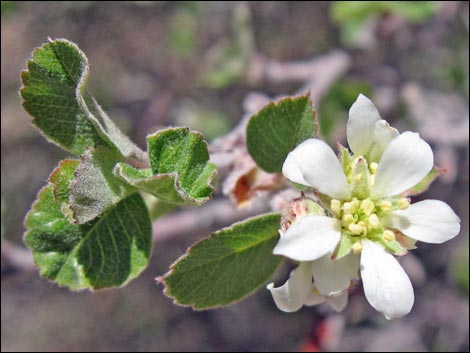 Utah Serviceberry flower |
Seeds: Fruit: Small, blue-black pome (like an apple); looks like a berry. Habitat: Dry, well-drained sandy, gravelly, and rocky soils on upper bajadas and moderate slopes in the lower mountains. Elevation: About 700 to over 11,000 feet. Distribution: California north to Oregon and Montana, east to Texas, and south into Baja California. Comments: |
 |
 |
|
 |
 |
 |
 |
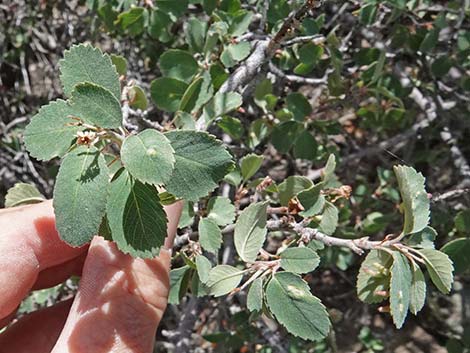 |
Oval leaves with serrate ends |
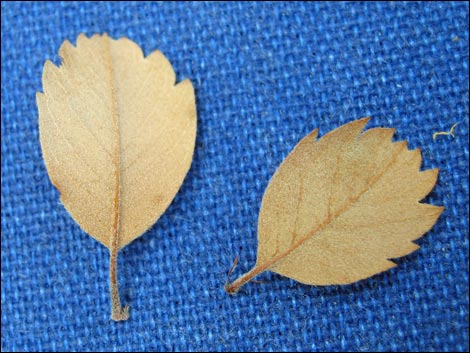 Dried leaves (lower [left] and upper [right] surfaces) |
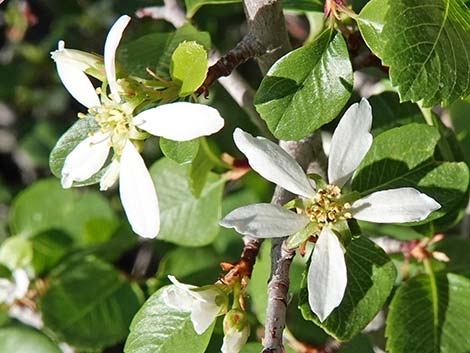 Fresh flowers |
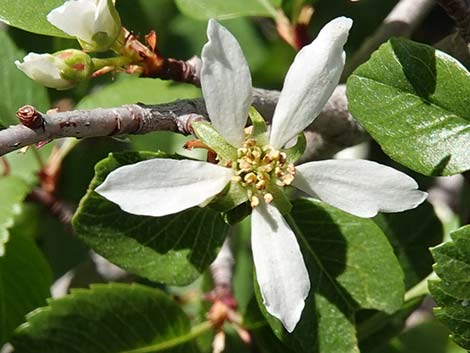 Fresh flowers |
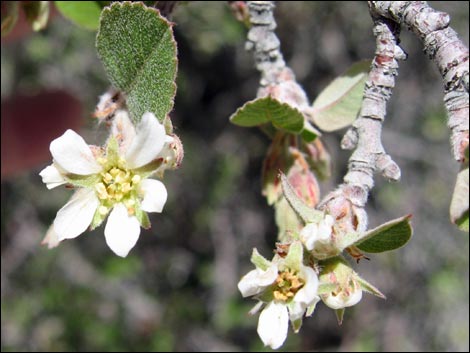 Utah Serviceberry flowers wilting |
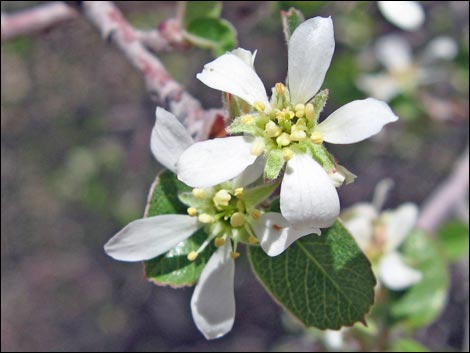 Utah Serviceberry flowers wilting |
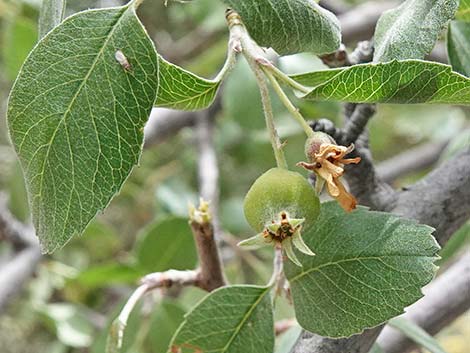 Utah Serviceberry berries |
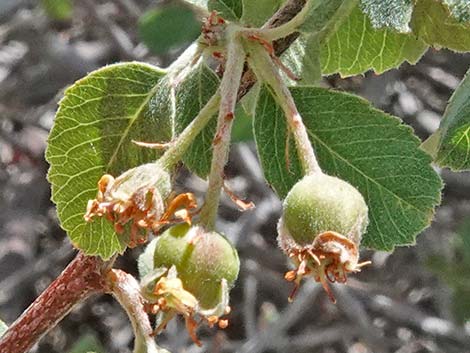 Utah Serviceberry berries |
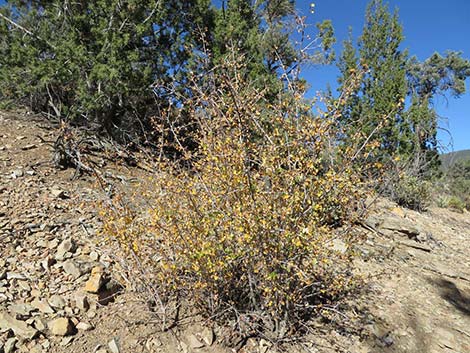 Fall colors |
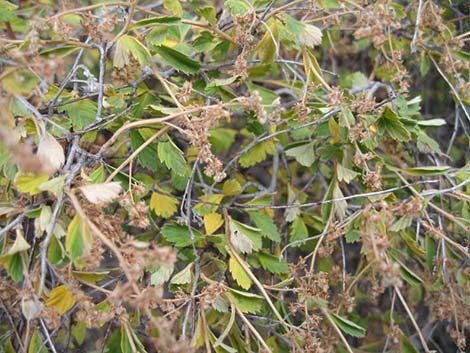 Fall colors |
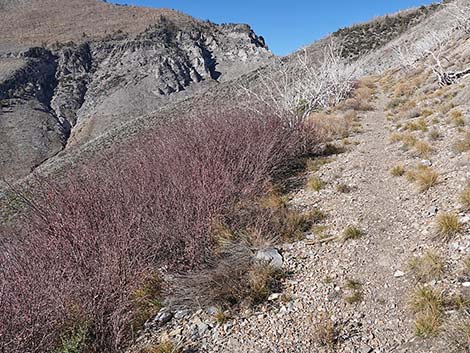 During winter, the naked stems appear red |
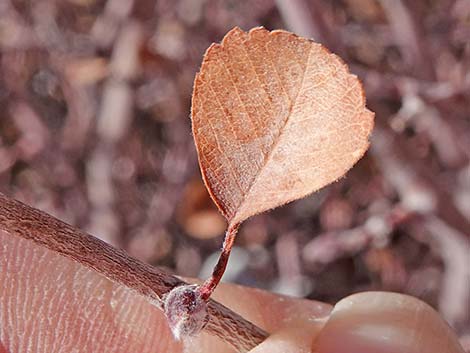 One of a few winter leaves |
Note: All distances, elevations, and other facts are approximate. Names generally follow the USDA database.
 ; Last updated 220115
| All Shrubs | Plant Species Index | Glossary | Copyright, Conditions, Disclaimer | Home |