
Non-Vascular Plants, Vegetation Around Las Vegas
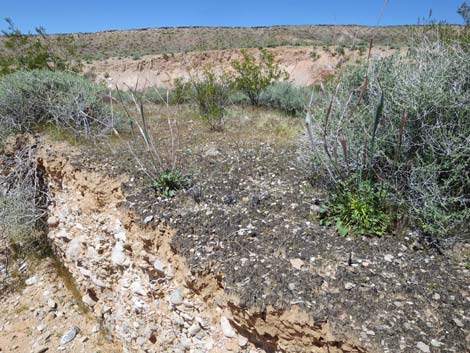 Thick biological soil crusts on soils in sandstone depressions |
Biological soil crusts, also called cryptogamic crusts or cryptobiotic crusts, are complex associations of cyanobacteria, green and brown algae, lichens, mosses, microfungi, bacteria, and other kinds of organisms that grow in and on the soil in the open spaces between plants. These microorganisms colonize barren, open areas where nothing else can grow. The cyanobacteria and microfungi weave a network of filaments through the top few inches of soil. The filaments exude a mucilaginous sheath that binds loose sand and soil particles together, thereby stabilizing and protecting the soil surface from wind and water erosion, which helps to reduce blowing dust. The fungal filaments and mucilaginous sheaths also promote water infiltration and moisture retention in the soils. When it rains in the desert, we often see water quickly running off in flashfloods, but well crusted areas hold more of the water than un-crusted areas. In addition to stabilizing the soil, the microbial community is important in the development of desert vegetation communities. As the microbes grow and die over time, they add organic matter to the soil, which provides nutrients for desert plants and promotes moisture retention. |
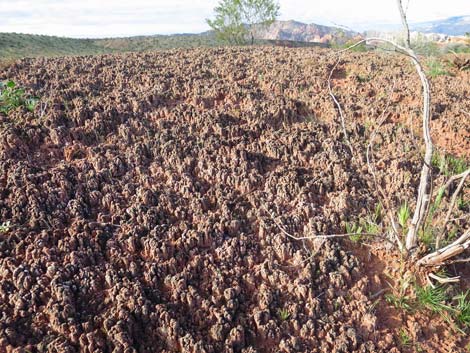 1-inch high: nothing has stepped here in 400 years |
The cyanobacteria also convert atmospheric nitrogen to a form that plants can use. The addition of nitrogen is important in desert ecosystems because nitrogen levels typically are low and often restrict the growth of plants. These well-crusted soils also act as a barrier to weeds, especially to the invasive grass species that carry fire across desert landscapes. Over time, the bacterial community grows and produces a roughened soil surface with little humps and peaks. These raised sites provide places where bits of lichens and mosses can grow. The peaks grow at a rate of about 1/4-inch per 100 years, so after a few centuries, the little peaks can grow to over 1-inch high. Some years ago in southeastern Utah, I found an old fire ring with bits of charcoal and 1-1/4-inch-high crypto peaks inside the fire ring; Park Rangers estimated that the fire ring had not been used in at least 500 years! |
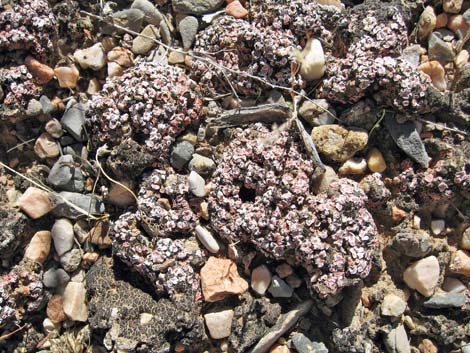 Biological soil crust "in bloom" |
Because of their importance in stabilizing the soil, infiltration of water, and in aiding the growth of plants, we should avoid walking on or otherwise damaging (biking, driving, pitching tents) biological soil crusts. Mature crusts can be recognized as being darker and rougher than the surrounding bare soil, so when we see biological crusts, we should stay on trails, walk in washes, walk on bare rock, or just walk around patches of biocrust to the extent that we can. If a group of hikers must walk across crusted surfaces, they should spread apart and walk different paths so as not to walk in the same line and create a rut where wind and water erosion can further damage the biological community. Different types of soil (parent materials), substrates, and sun angles (aspects) produce different mixes of organisms, therefore different appearances. For example, crusts growing on gravel desert flats look very different from crusts growing on gypsum outcrops. Our slogan is: Don't Bust the Crust! |
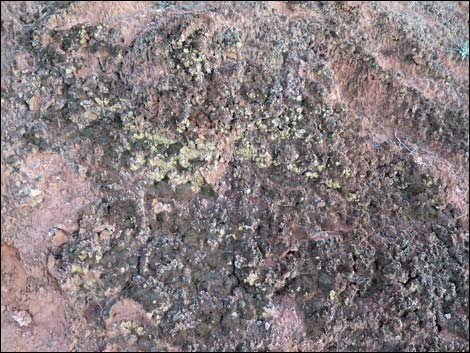 Biological soil crusts on gypsum soil |
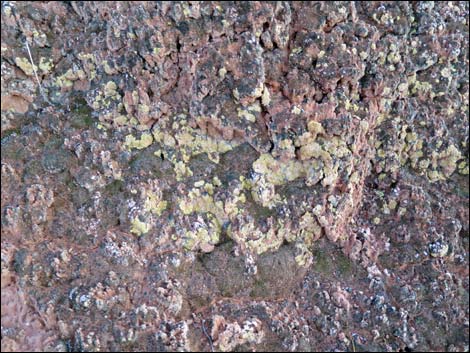 Biological soil crusts on gypsum soil |
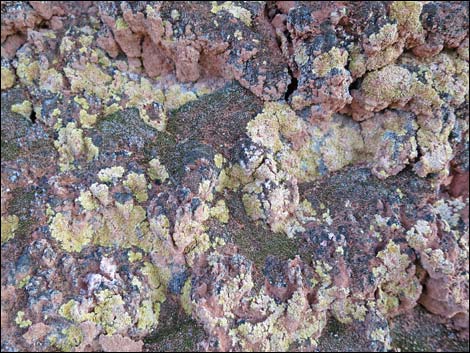 Biological soil crusts on gypsum soil |
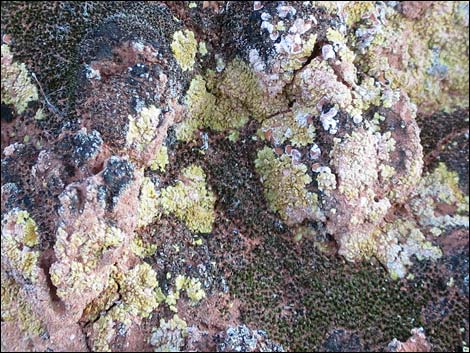 Biological soil crusts on gypsum soil |
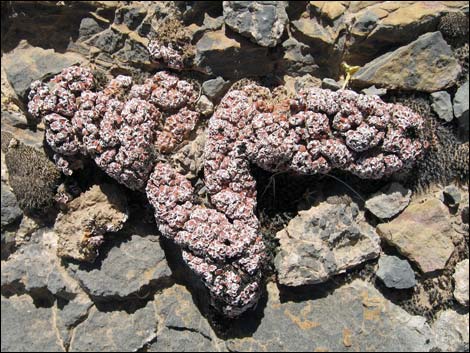 Biological soil crust "in bloom" |
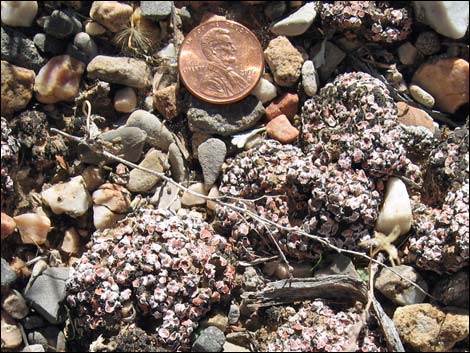 Biological soil crust "in bloom" |
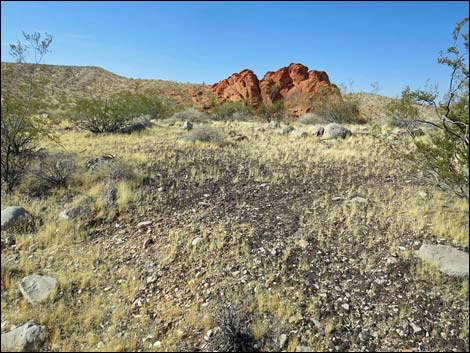 Remarkable covering of Biological Soil Crust |
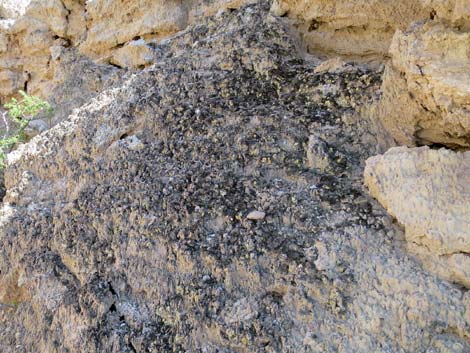 Biological Soil Crust on shady, north-facing mud slope |
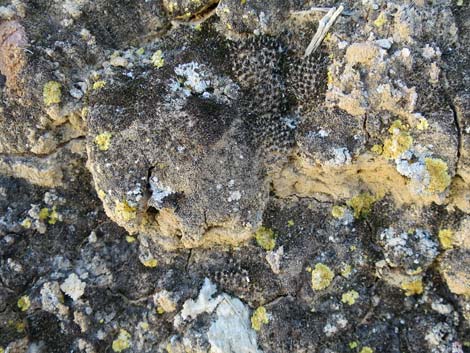 Biological Soil Crust on shady, north-facing mud slope |
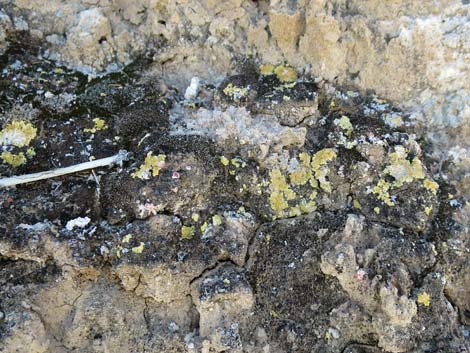 Biological Soil Crust on shady, north-facing mud slope |
Heavy Biological Soil Crust on desert flats soils |
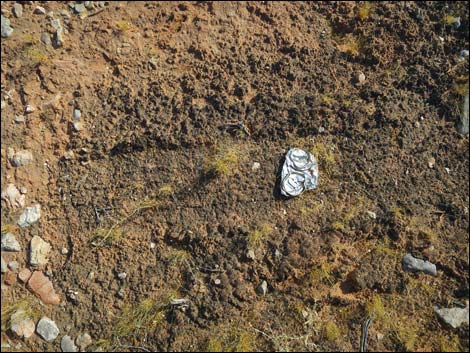 Tire tracks and aluminum cans last a long time on Biological Soil Crusts |
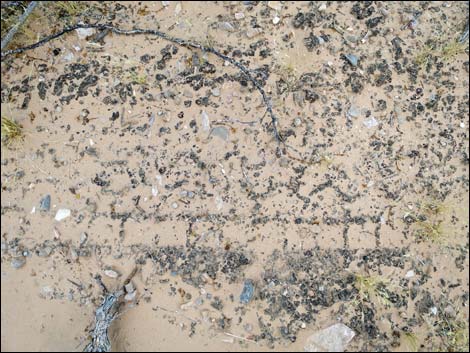 Tire-track damaged crypto soil |
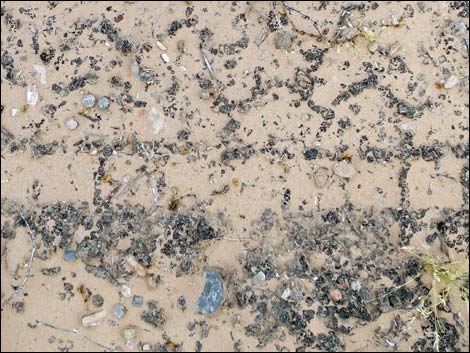 Tire track zoom: the crust died except for groves in the tread |
Note: All distances, elevations, and other facts are approximate. Names generally follow the USDA database.
 ; Last updated 220112
| All Non-Vascular | Plant Species Index | Glossary | Copyright, Conditions, Disclaimer | Home |