
Perennial Forbs Around Las Vegas, Vegetation Around Las Vegas
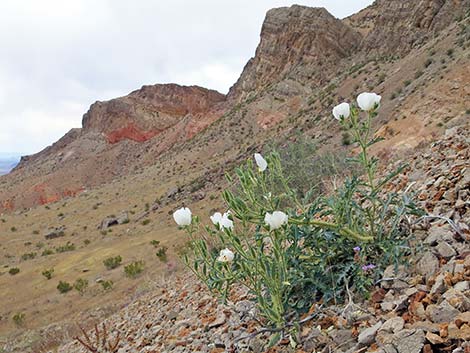 |
General: Mojave Pricklypoppy (Argemone corymbosa) is a perennial forb with very large (to 5 inches across), flat flowers. The petals are white and about 2 inches long, and the center is broad and bright yellow, with 100–120 stamens. The leaves are covered with prickles, but the upper surfaces are less prickly than the lower surfaces. The fruit is about 25–30 mm long, and the seeds are 1–1.5 mm long. The sap is orange. Mojave Pricklypoppy is a rare component of vegetation communities in dry, well-drained sandy and gravelly areas on desert flats, bajadas, and moderate slopes in the lower mountains in the Upper Sonoran (Mojave Desert Scrub and Pinyon-Juniper Woodland) life zone. Family: Poppy (Papaveraceae). Other Names: Desert Pricklypoppy, Prickly Poppy, Prickly-poppy. |
||||||||||||||
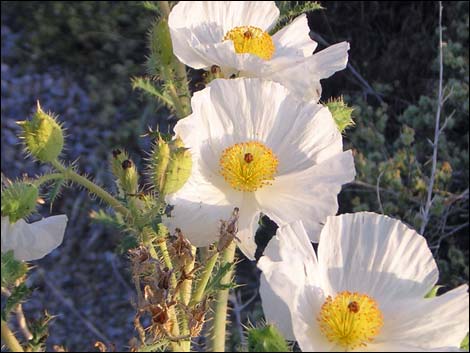 |
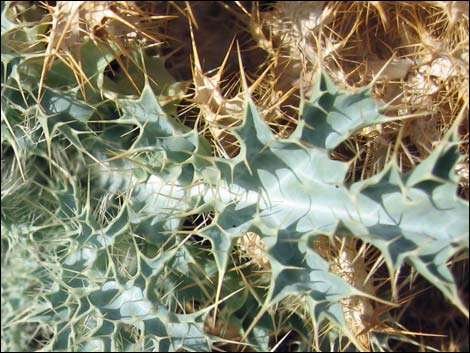
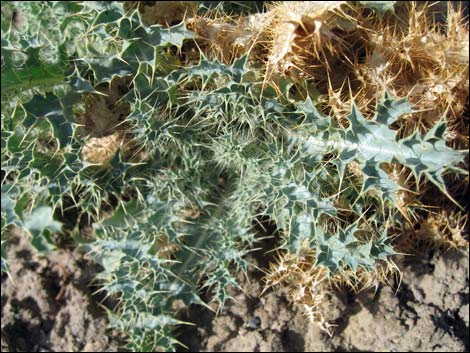
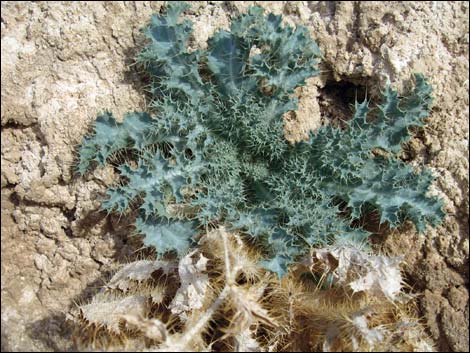
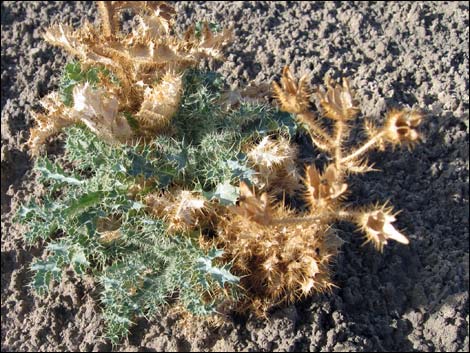
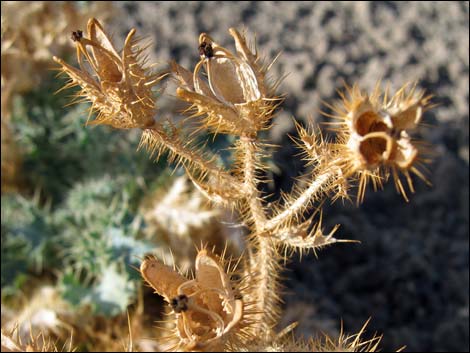
Plant Form: Basal leaves and an upright flowering stalk. Height: Flowing stalk to about 2-1/2 feet. Stems: Single, with leaves. Leaves: Dissected, crinkly, and covered with spines. Leaf less prickly on the upper surface than on the lower surface. Flowers: Blooms late spring and early summer. Inflorescence: solitary flowers at the tips of branches. Flowers: sepals prickly; petals 4, white, crinkled, to 1-1/2 inches long; stamens many (100–120), yellow, short. Seeds: Fruit: spine-covered capsule, 25–30 mm in length. Seeds: small, black. |
||||||||||||||
 |
Habitat: Dry, well-drained sandy, gravelly, and rocky soils on upper bajadas and moderate slopes in the lower mountains. Elevation: About 1,000 to 3,500 feet. Distribution: Mojave Desert (Southern California, southern Nevada, western Arizona). Comments: The common name comes from the stout spines on the stems, leaves, and seed pods. Along roadsides, the large, white flowers often look like squares of toilet paper blowing in the wind. |
||||||||||||||
 |
Characteristics Distilled from Flora of North America
|
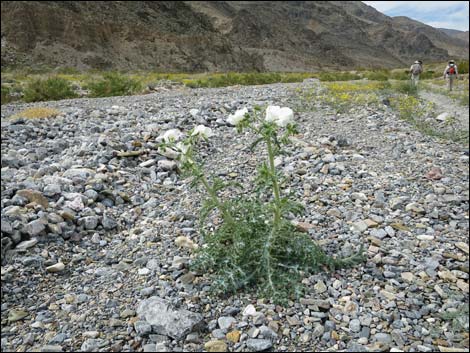 Mojave Pricklypoppy |
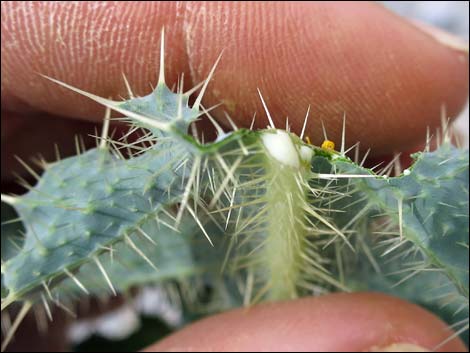
Sap is pale |
 |
 |
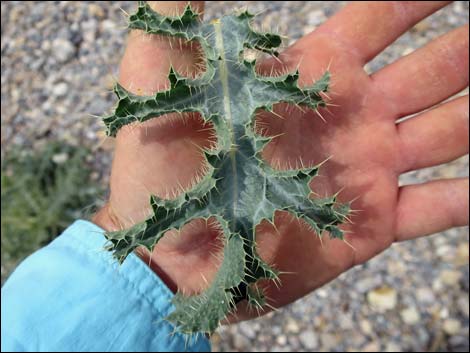 Dorsal leaf surface: few prickles |
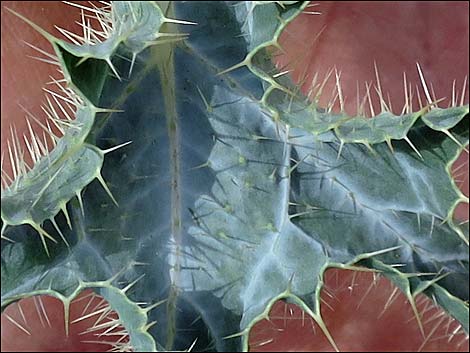 Dorsal leaf surface: few prickles |
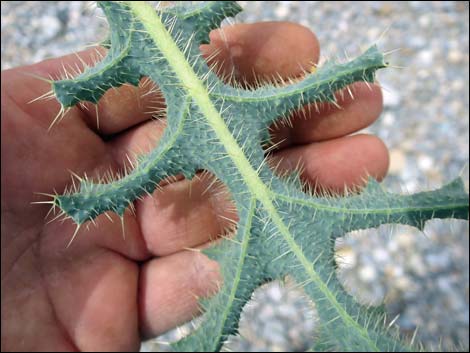 Ventral leaf surface: many prickles |
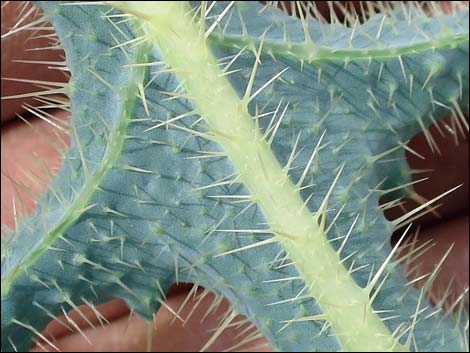 Ventral leaf surface: many prickles |
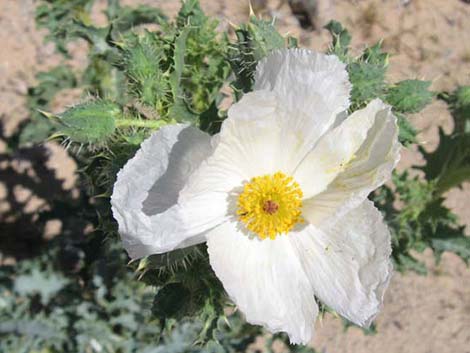 White petals and 100–120 stamens |
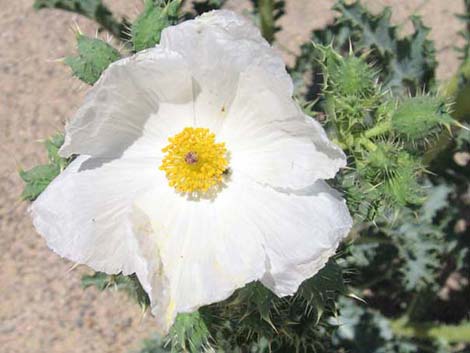 White petals and 100–120 stamens |
 |
 |
Note: All distances, elevations, and other facts are approximate. Names generally follow the USDA database.
 ; Last updated 220812
| All Perennial Forbs | Plant Species Index | Glossary | Copyright, Conditions, Disclaimer | Home |