
Annual Forbs Around Las Vegas, Vegetation Around Las Vegas
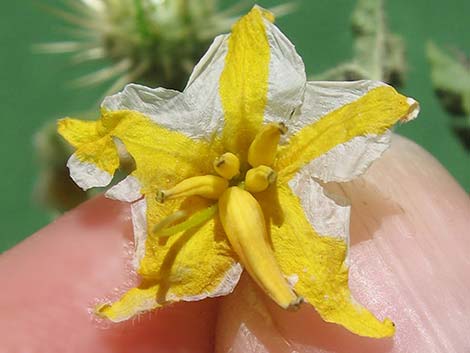 |
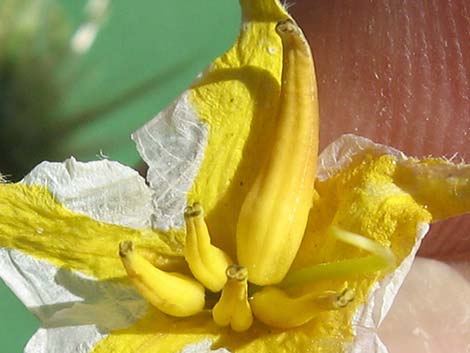
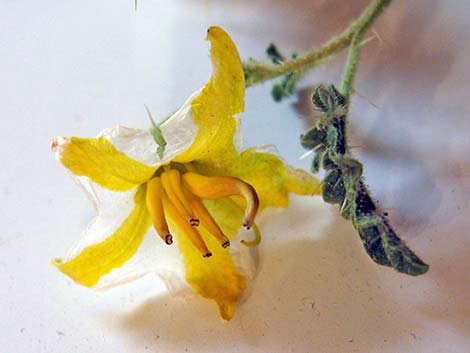
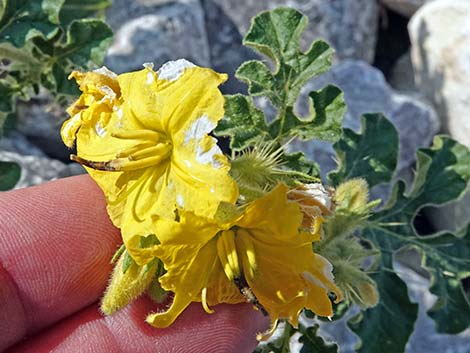
General: Buffalobur Nightshade (Solanum rostratum) is a nasty, spiny weed that does not belong in the Mojave Desert. It is recognized by the yellow, or yellow and white, flowers that have fused petals and the deeply lobed leaves, In addition there are five stamens, but four are short and straight, and one is long and curved. Buffalobur Nightshade is a common weed in the Midwestern US and in coastal and central valleys of California; it is not expected in the Mojave Desert. Keep an eye out for this species and eradicate it if you can. This species is listed as a Noxious Weed in Washington, Oregon, and Idaho, but not in Nevada. Link to Weeds Around Las Vegas. Family: Nightshade (Solanaceae). Other Names: Androcera rostrata, Solanum cornutum, Colorado bur, Kansas thistle, Mexican thistle, Texas thistle, buffalobur. |
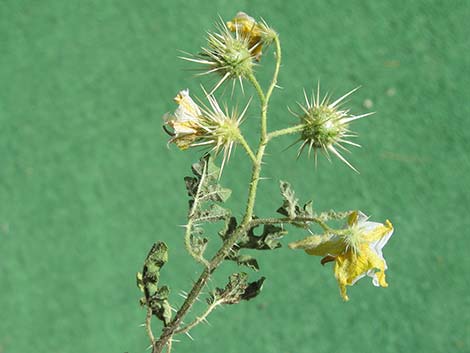 |
Plant Form: Upright annual. Height: Grows to about 2-feet high. Stems: Green, covered in long spines. Leaves: 5-15 cm; simple, petioled; deeply lobed (more than half-way to the midrib). Flowers: Blooms spring to fall. Inflorescence raceme-like. Flowers yellow (or yellow and white), about 1-inch across. Anthers: 5 yellow, 4 short and straight, 1 long and curved, open at the tip. Style curved. Calyx encloses fruit, spiny. |
 |
Seeds: Fruit: berry-like capsule. Seeds small, black. Habitat: Widespread in the west, but not the deserts. Prefers sandy soils, but grows on many soil types in disturbed areas and prairies. Drought tolerant. Elevation: To about 1,500 feet, but found at 4,000 feet near Searchlight, Nevada. Distribution: Across the US and south into Mexico. Native to the Great Plains region. Comments: |
 |
 |
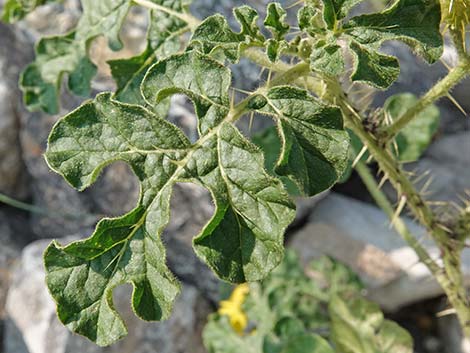 Leaves deeply lobed |
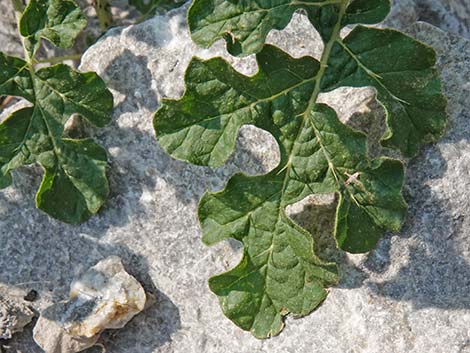 Leaves deeply lobed |
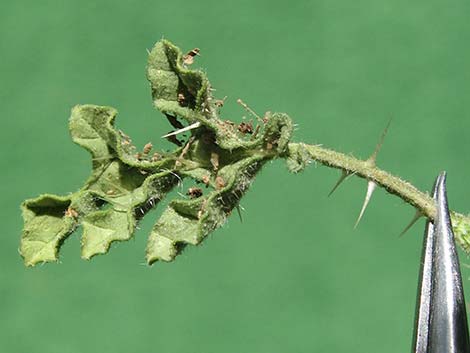 Leaves deeply lobed, petiole with spines and aphids |
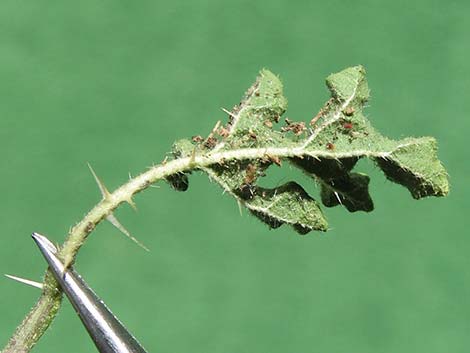 Back of leaf with spines and aphids |
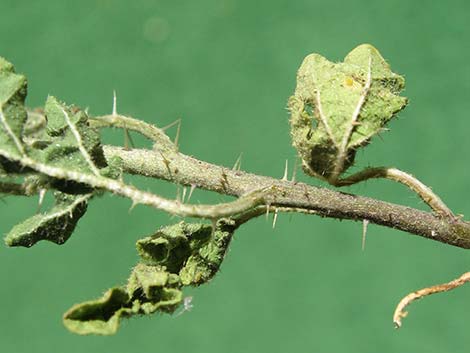 Stems green with spines |
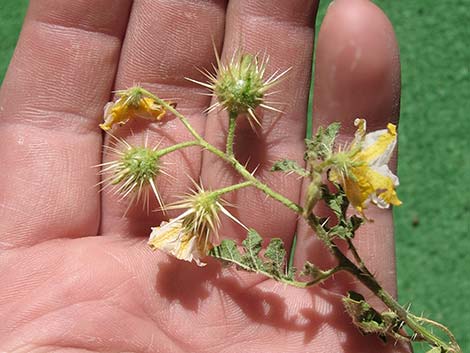 This specimen was removed from a garden near Searchlight, Nevada |
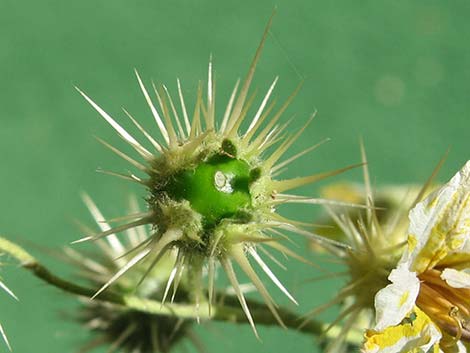 Spiny calyx enclosing green, berry-like fruit |
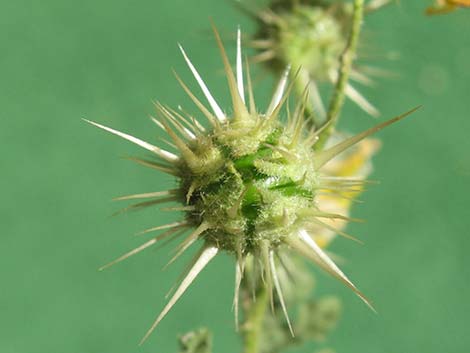 Spiny calyx enclosing green, berry-like fruit |
Note: All distances, elevations, and other facts are approximate. Names generally follow the USDA database.
 ; Last updated 211224
| All Annual Forbs | Plant Species Index | Glossary | Copyright, Conditions, Disclaimer | Home |