
Evergreen Trees (Conifers), Vegetation Around Las Vegas
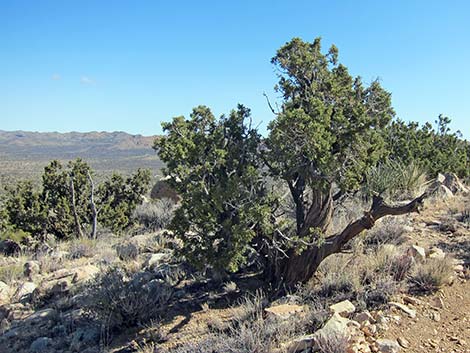 |
General: California Juniper (Juniperus californica) is a coniferous (cone-bearing) tree with tiny, scale-like leaves. The cones are round berries about 1/2-inch in diameter. This species is most easily recognized by the multiple trunks that all emerge from ground level. In southern Nevada, California Juniper is common in the Newberry and South McCullough mountains, and it can be found on rocky ridges in the Virgin Mountains. In the Newberry and South McCullough mountains, it is a common component of the montane vegetation in the Upper Sonoran (Pinyon-Juniper Woodland) life zone. This is the dominant species of juniper in southern California. Look for California Juniper at Christmas Tree Pass and points south and west into southern California. Family: Cypress (Cupressaceae). |
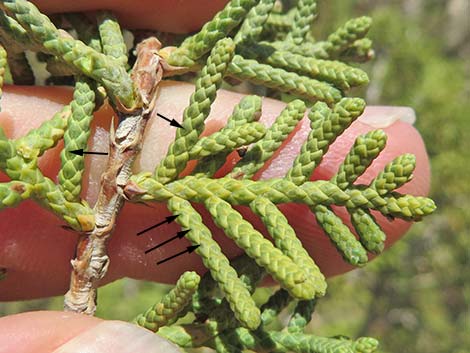 Arrows point to pits on leaf scales |
Plant Form: Large rounded shrub to subtree. Height: 10 to 30(40) feet. Trunk: Conspicuously fluted or ridged; branching underground; multiple trunks emerge from the ground. Bark: Reddish-brown, aging to gray. Branches: Branchlets 3-dimensional (not flattened). Needles: Scale-like, pitted on the back (gland), denticulate at the margins, pointed. Scales in whorls of 3, 6-ranked. Cones: Berry, bluish aging to reddish-brown; 1/4 to 1/2 inch diameter, sweet (not resinous), dull reddish brown; 1-3 seeds. |
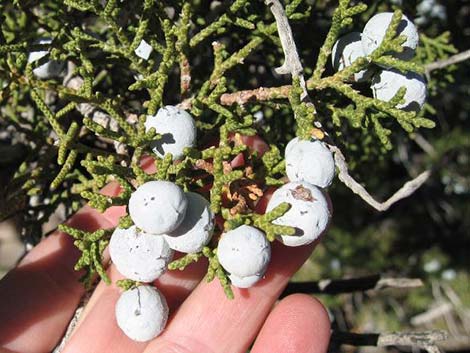 Green and reddish-brown cones |
Seeds: 1 to 3 per cone, to 1/4-inch long, pointed, angled, brown. Habitat: Dry flats and slopes. Elevation: Near sea level to 5,000 feet. Distribution: California to southern Nevada and northwestern Arizona, south into Baja California. Comments: California Juniper are mostly found to the south of Las Vegas in the mountains of southern California. In Nevada, this species can be found in the mountains around Searchlight and Laughlin (McCullough and Newberry Mountains). |
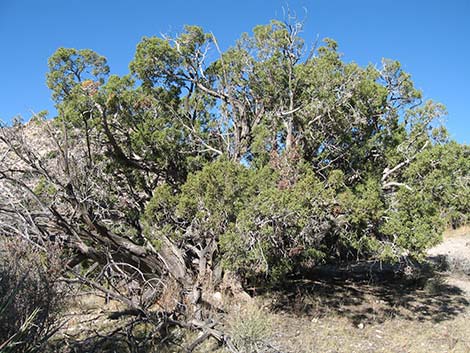 Ancient California Juniper |
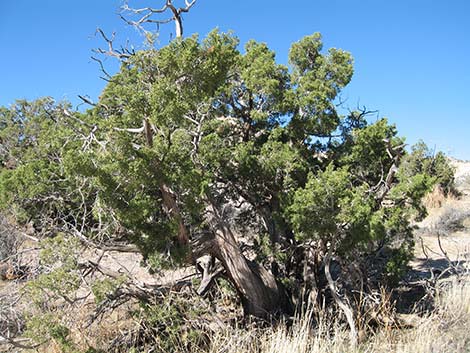 Ancient California Juniper |
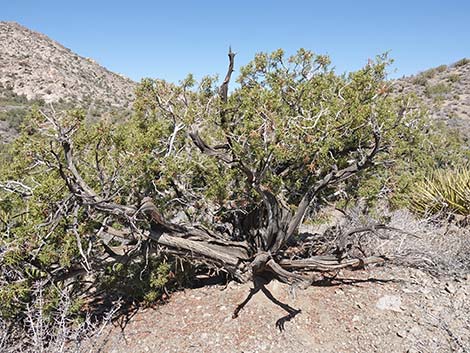 Ancient California Juniper |
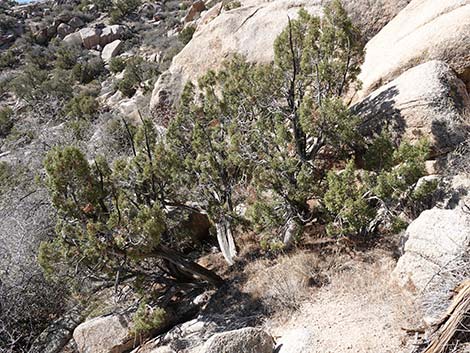 Ancient California Juniper |
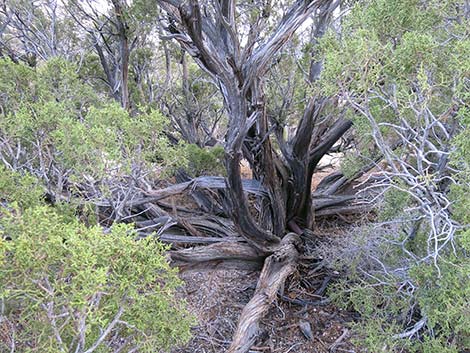 California Juniper trunk branches from the base |
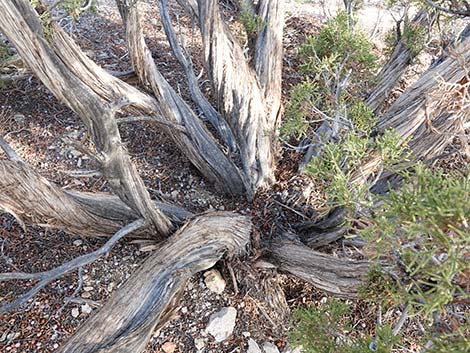 California Juniper trunk branches from the base |
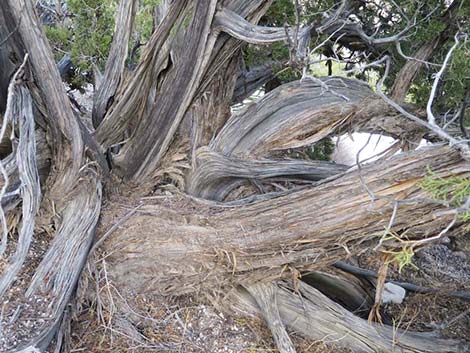 California Juniper with thick, shaggy, and shredding bark |
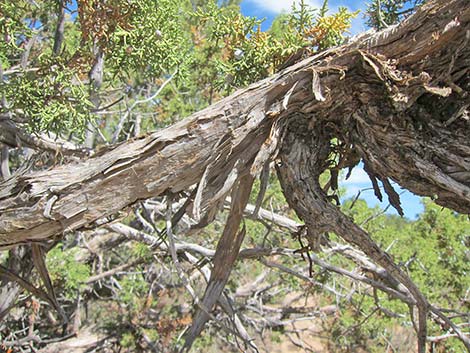 California Juniper with thick, shaggy, and shredding bark |
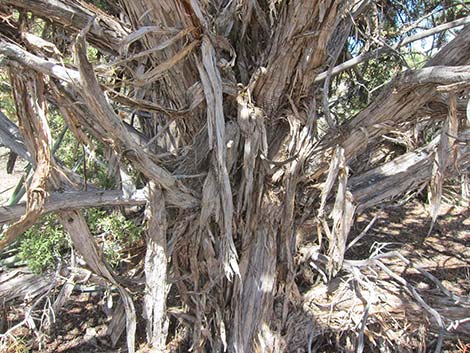 California Juniper with thick, shaggy, and shredding bark |
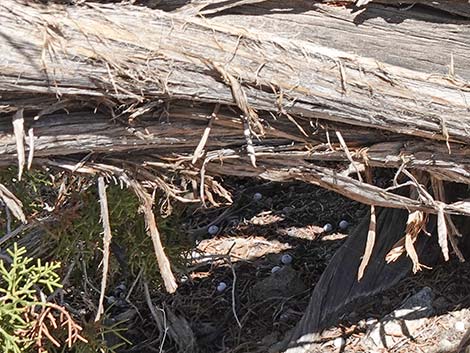 California Juniper with thick, shaggy, and shredding bark |
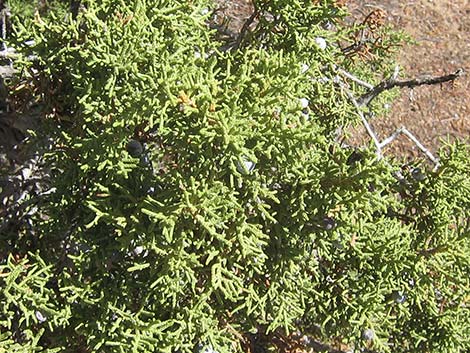 California Juniper with dense, 3-dimensional foliage |
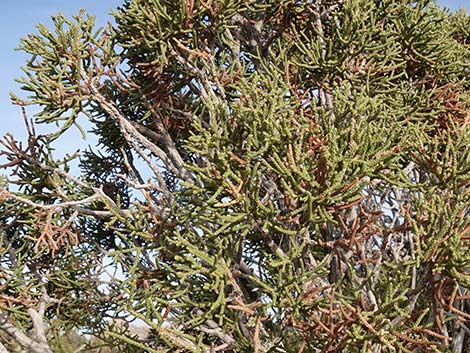 California Juniper with dense, 3-dimensional foliage |
Arrows point to dimples (glands) on scales |
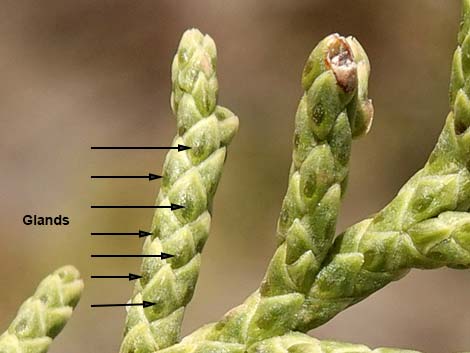 Leaf scales with glands |
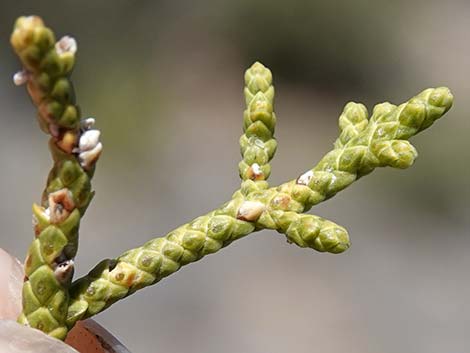 Leaf scales with glands |
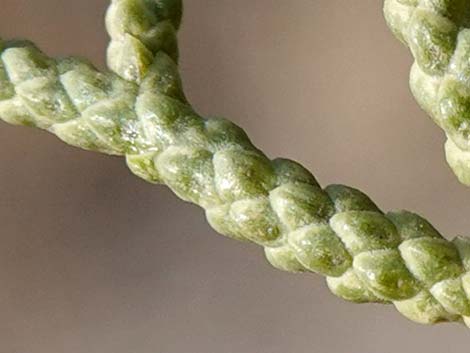 Leaf scales with glands |
Cones |
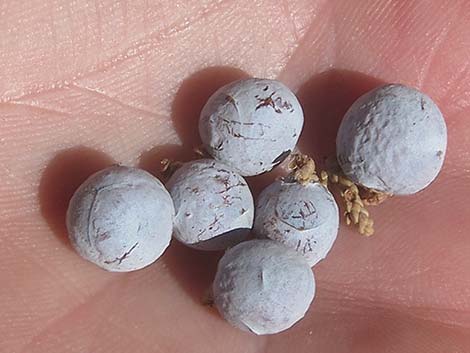 Cones in the hand |
Note: All distances, elevations, and other facts are approximate.
 ; Last updated 220813
| All Conifers | Plant Species Index | Glossary | Copyright, Conditions, Disclaimer | Home |