
Cactus Around Las Vegas, Vegetation Around Las Vegas
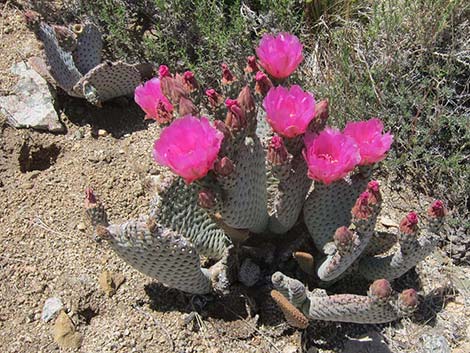 Beavertail Pricklypear Cactus with flat pads and flowers |
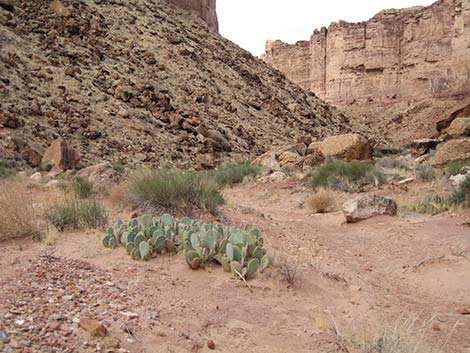
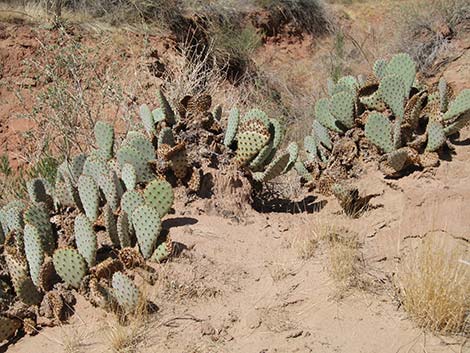
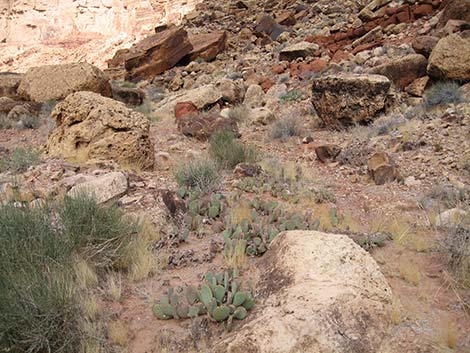
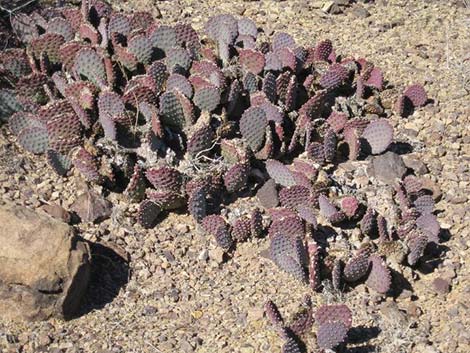
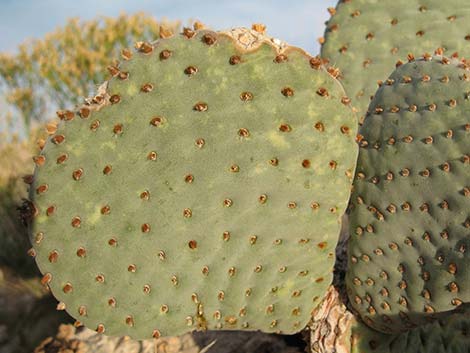
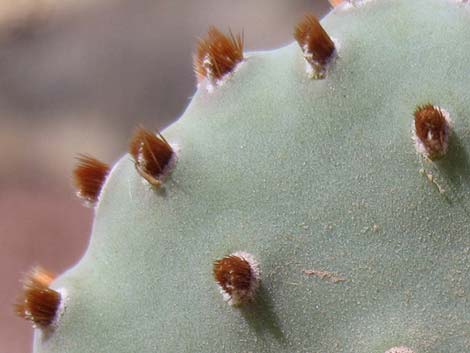
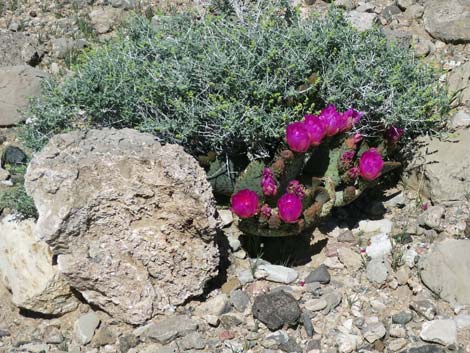
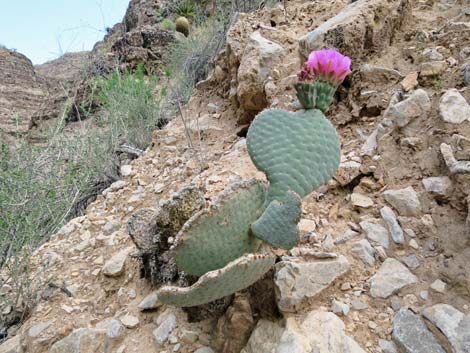
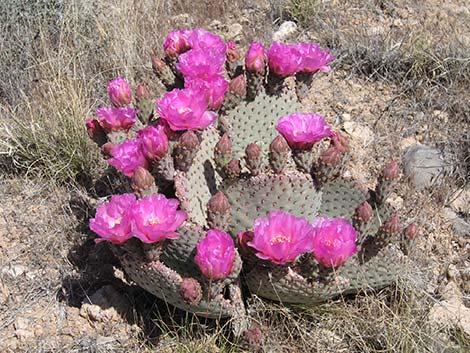
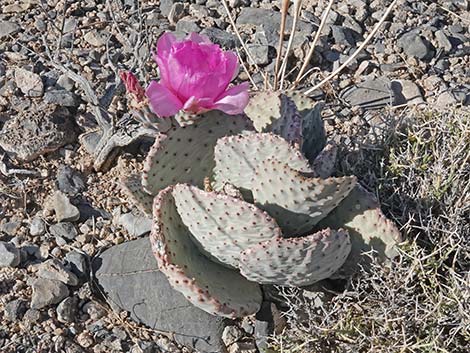
General: Beavertail Pricklypear (Opuntia basilaris) is cactus with pad-type stem segments that tends to grow in clumps close to the ground. Large spines (central and radial spines) are absent, but the pads and fruits are well-defended by tiny glochids (short, hair-like spines) that are hard to see on some varieties and even harder to remove from your hands. Beavertail Pricklypear often is a common component of vegetation communities on well-drained sandy, gravelly, and rocky soils on desert flats, upper bajadas, and moderate slopes into the lower mountains in the Lower Sonoran (Creosote-Bursage Flats) and Upper Sonoran (Mojave Desert Scrub and Pinyon-Juniper Woodland) life zones. Family: Cactus (Cactaceae). Other Names: Beavertail cactus. |
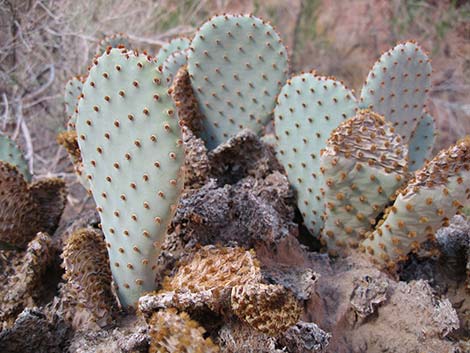
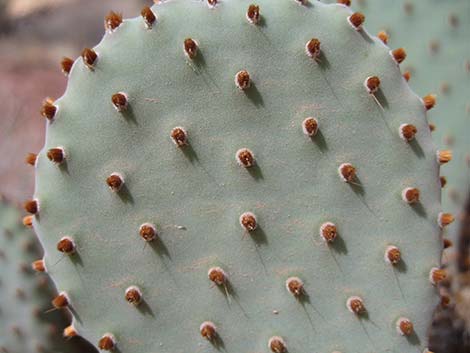 Pads have glochid spines, but no long spines |
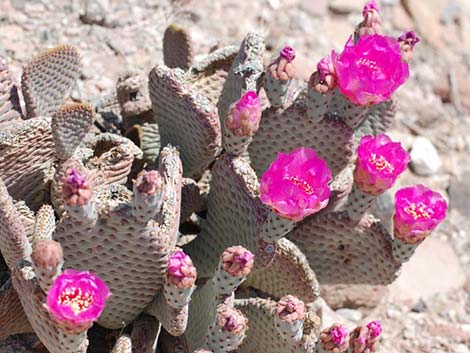
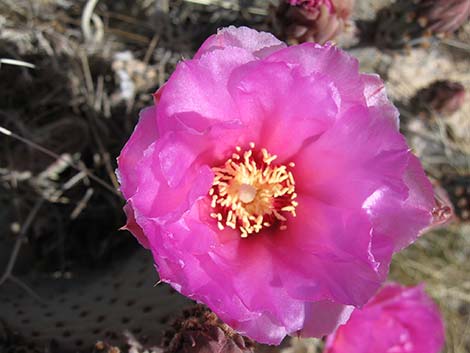
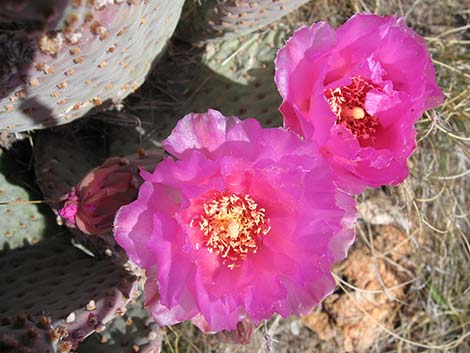
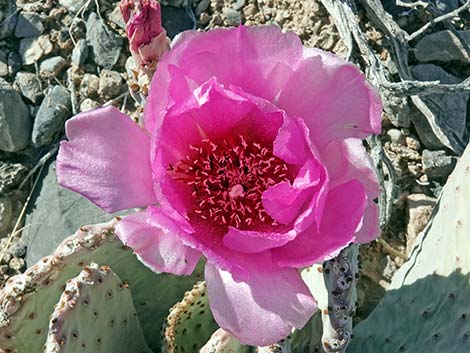
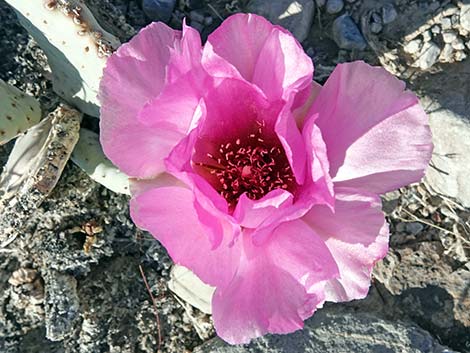
Plant Form: Low-growing, clumped shrub with pancake-like stem segments. Height: To about 16 inches. Trunk: None. Stems: Divided into segments (pads); each pad broad and thin (pancake shaped). Stem Surface: Pads generally smooth, adorned with glochids at each ariole. Spines: Central: none. Radial: none. Glochids: Present. Flowers: Blooms during early summer. Inflorescence: solitary flowers. Flowers: petals numerous, large, pink-magenta; stamens numerous, yellow. |
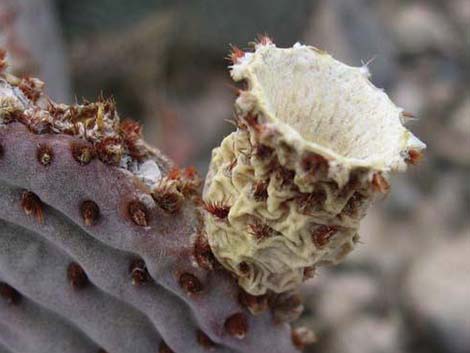 Fruit is a dry capsule with glochids |
Fruit: 3/4 to 1-1/2 inches long, green; becoming dry and tan; well defended by glochids on about 25 to 75 areoles per fruit. Seeds: Dark brown, round, many. Habitat: Dry, well-drained sandy, gravelly, and rocky soils on upper bajadas and moderate slopes in the lower mountains. Distribution: California deserts to Utah, and south through Arizona and into Mexico. Elevation: Near sea level to over 7,000 feet. Comments: |
 |
 |
 |
 |
 |
 |
 |
|
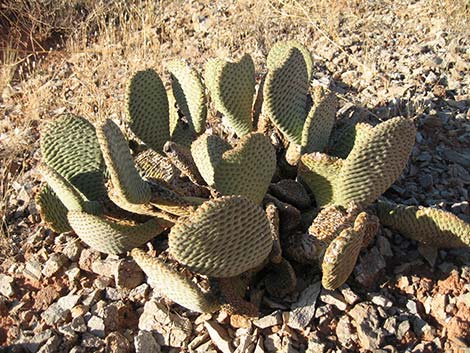 During winter and when dry, Beavertail pads get crinkly |
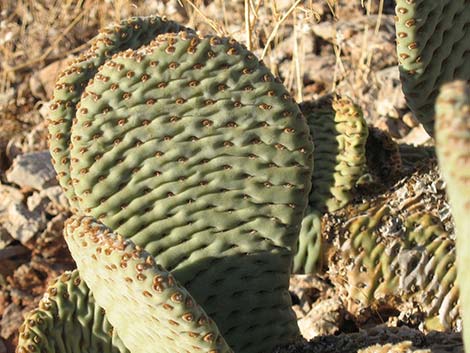 During winter and when dry, Beavertail pads get crinkly |
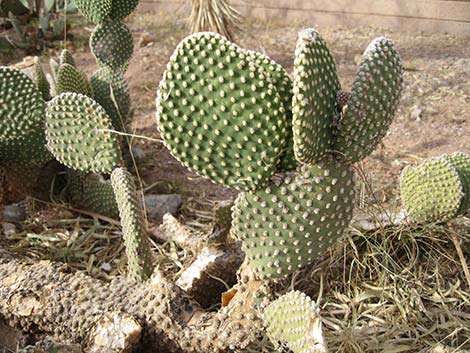 A variety of Beavertail Cactus with prominent glochids |
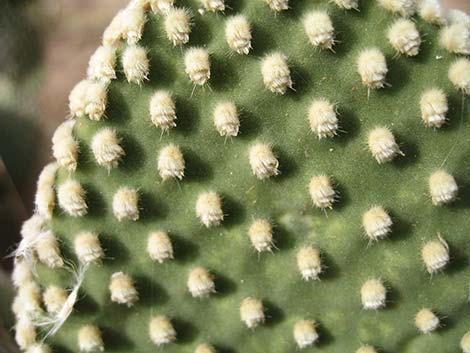 A variety of Beavertail Cactus with prominent glochids |
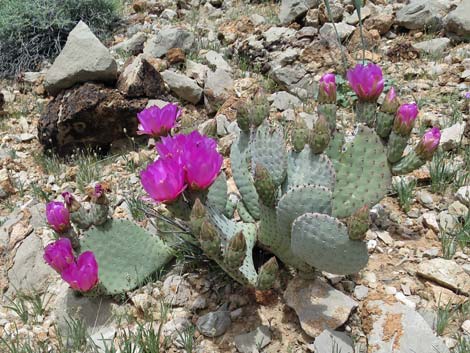
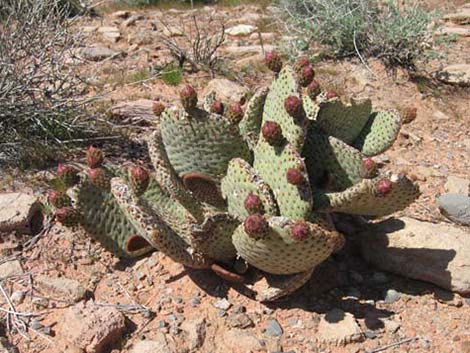 Beavertail Cactus with flower buds |
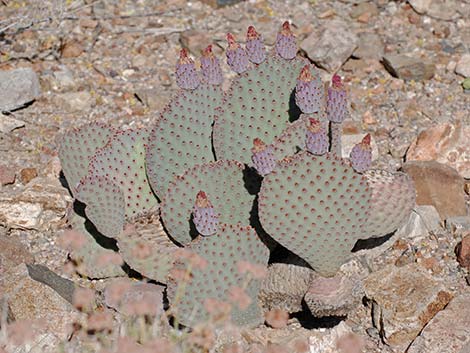 Beavertail Cactus with flower buds |
 |
 |
 |
 |
 |
 |
 |
 |
 |
 |
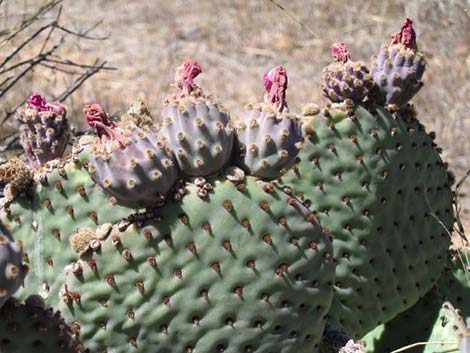 Developing fruits |
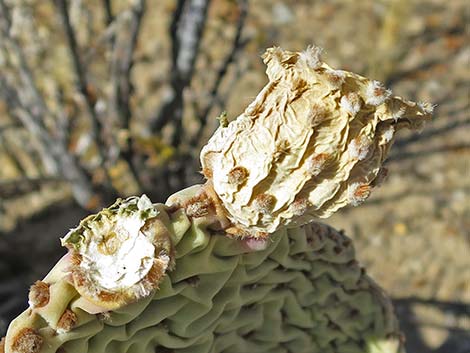 Ripe, dried fruit |
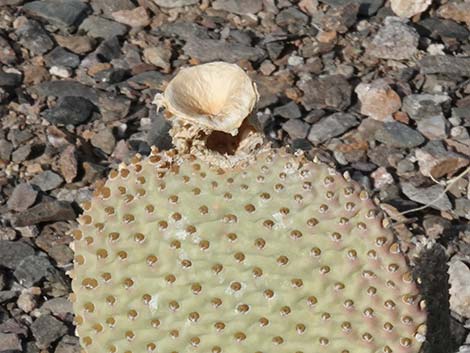 Ripe, dried fruit |
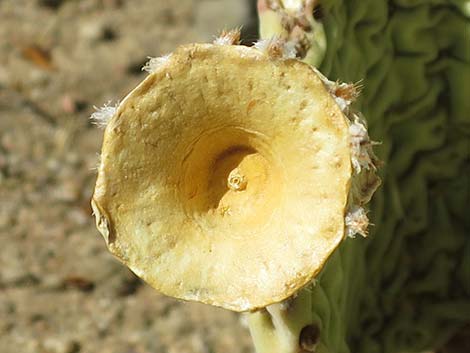 Ripe, dried fruit |
Note: All distances, elevations, and other facts are approximate. Names generally follow the USDA database.
 ; Last updated 211218
| All Cactus | Plant Species Index | Glossary | Copyright, Conditions, Disclaimer | Home |