
Birding Around Las Vegas, Urban Las Vegas Valley
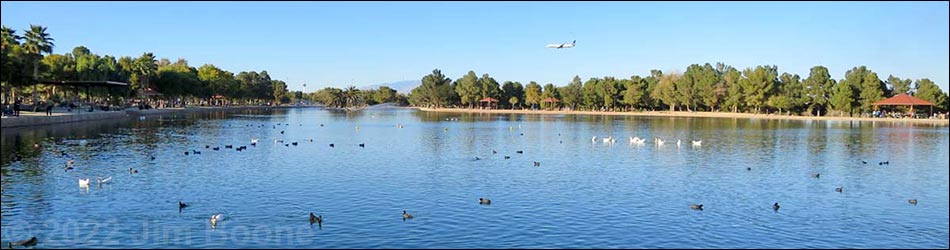
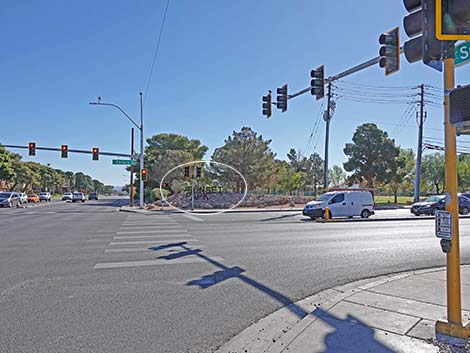 Sunset Park Sign at Sunset and Eastern (view E) |
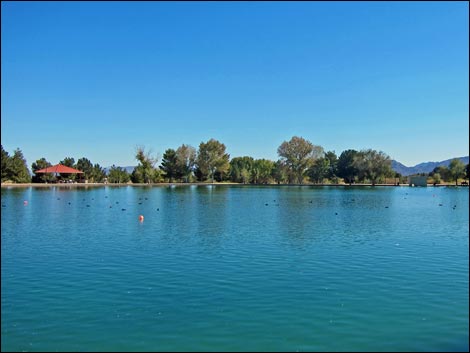
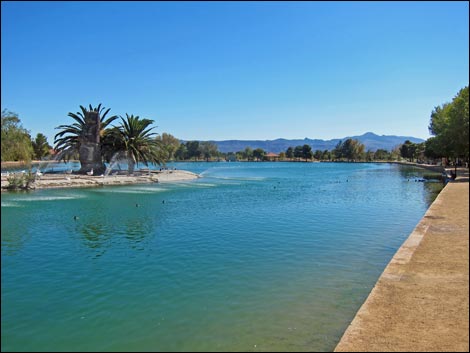
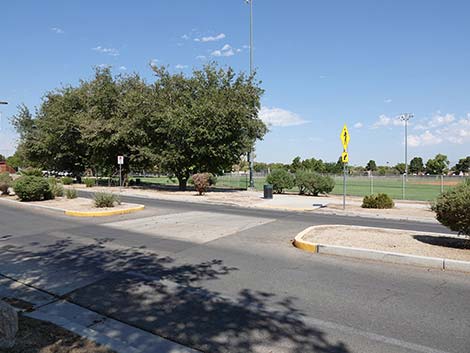
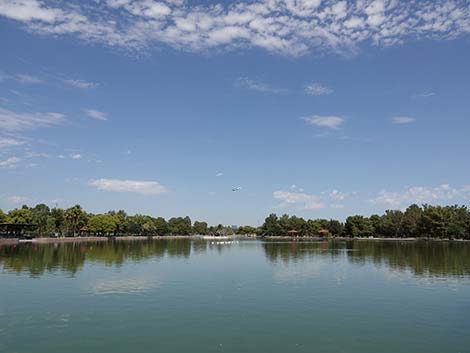
Description Sunset Park is a large, noisy, traditional urban park in the heart of the city. The developed northern portion of the park has ball fields, playgrounds, a fishing pond, lawns, big old trees, and lots of other vegetation. In the undeveloped southern portion, the park protects a remnant of the mesquite-dune system that once covered much of the Las Vegas Valley. This area preserves some nice honey mesquite and saltbush thickets and other native vegetation. Despite the urban feeling, this mix of habitats (water, trees, thickets, and dunes) creates a diverse urban oasis that attracts birds and people from all around. For the pond, winter is the best time to visit when wintering waterfowl can be abundant. Desert species can be found throughout the year, especially in less developed areas. Homeless people use the park, but I've never had any interaction other than a pleasant "good day." Even so, some people might feel more comfortable in the less developed areas when birding with a friend. |
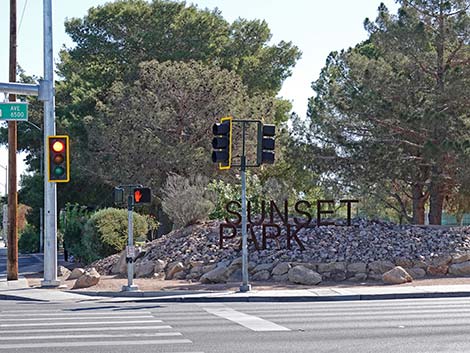 Sunset Park Sign at Sunset and Eastern (view E) |
Location Sunset Park is located in the south-central part of Las Vegas at the intersection of E. Sunset Road and S. Eastern Avenue, just off the southeastern corner of the Reid International Airport runway. Link to Area Map or Site Map. or download Clark County PDF map. From downtown, drive south on Highway I-15 to Highway I-215 East (follow signs to the airport). Follow Highway I-215 east to the airport turnoff, turn towards the airport, but just before entering the airport tunnel (goes under the runways), exit the highway onto Sunset Road. Turn left onto Sunset and drive east for about 1 mile to Eastern Avenue. The park is across the intersection to the right. |
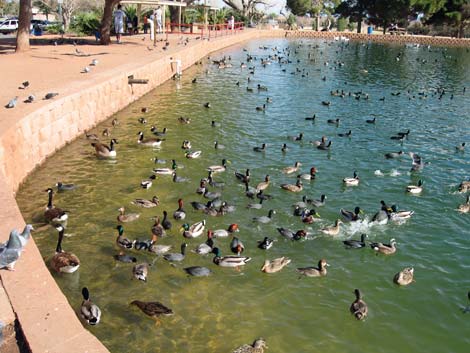 During winter, an amazing mix of waterfowl species |
Either continue east on Sunset and turn right at the first traffic light (into the north side of the park), or turn right onto Eastern and then turn left at either of the two roads into the park. The first left connects with Sunset Blvd entrance, and the second left leads to the southern dune fields and south side of the pond. Alternatively, drive south on Highway 93 to Sunset Road. Exit the highway, turn right onto Sunset, and drive west to Eastern Avenue. The park is on the left. Parking lots are located on the north, west, and south sides of the park. Birders probably would prefer to park in the western or southern (Table 1, Site 0451) parking lots, both of which are accessible from Eastern Avenue. Restrooms are located just north, northwest, and southwest of the pond, with a few others scattered around the park. |
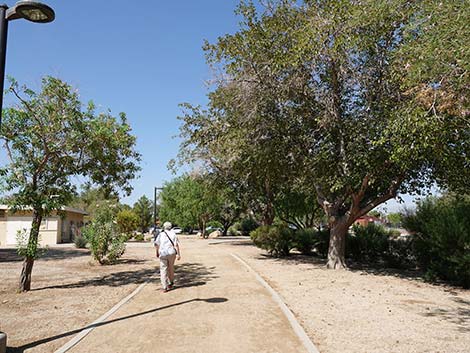
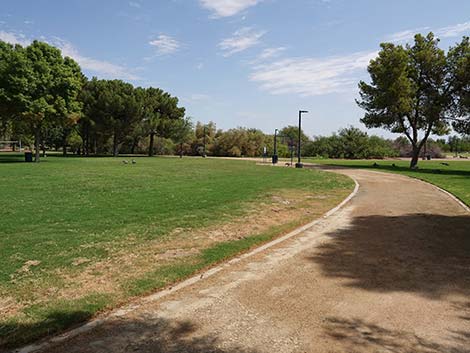
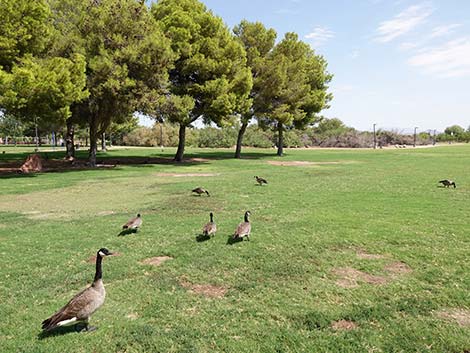
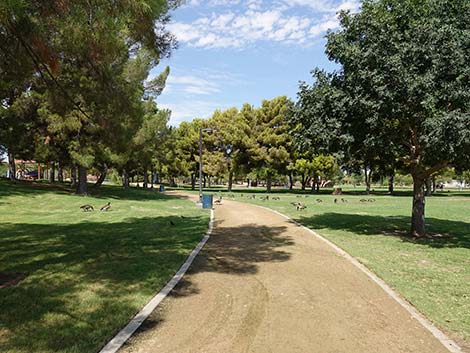 Trees and geese along the walking path |
Hours Always open, but the birding should be consider sunrise to sunset. Fees None. |
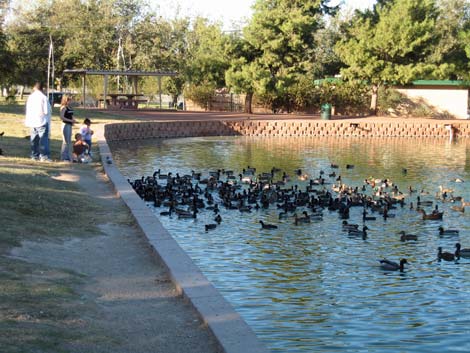 Kids with popcorn really bring in the winter ducks! |
Specialties This is a good place to find resident desert passerine species and migrants, as well as waterfowl during winter. Check the mesquite thickets for desert species such as Greater Roadrunner, Phainopepla, Verdin, and Black-tailed Gnatcatcher; check the trees for warblers, orioles, and tanagers; check the sand dunes for desert species; and check the pond for duck, grebes, cormorants, American White Pelicans, and herons, including breeding Black-crowned Night-Heron. Keep an eye out for other creatures too, species such as Round-tailed Ground Squirrel and White-tailed Antelope Squirrel. Surprising for an urban park, this place brings in all kinds of unexpected species, for example, a male Long-tailed Duck showed up, as did five American White Pelicans and a Magnificent Frigatebird. Be sure to look through the blackbirds! |
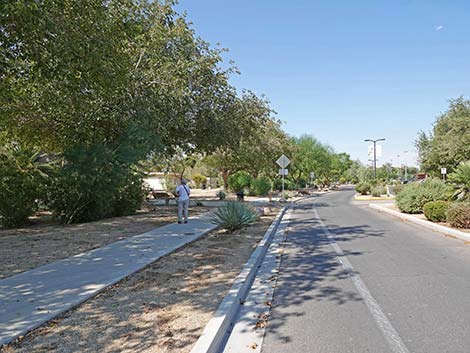 Large trees in the center of the park (view east) |
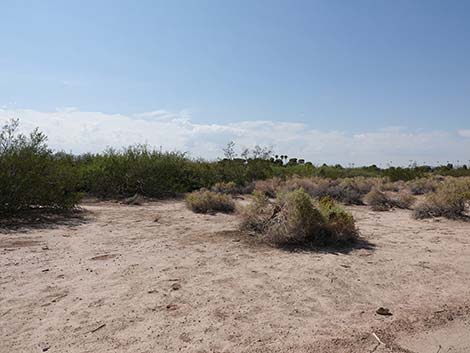
Prior to settlement, much of the Las Vegas Valley was covered by sand dunes mixed with Honey Mesquite thickets. The south end of the park protects a few acres of this now-rare habitat. Check the dunes for desert species. Nice walking and biking trails run through this area, giving good access for birdwatchers. |
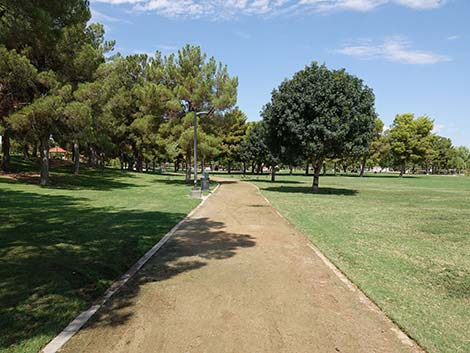
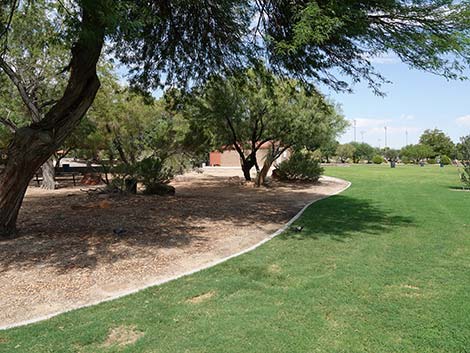
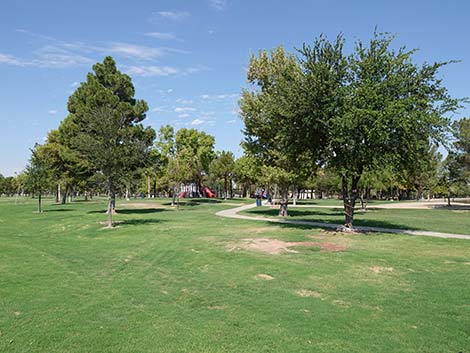 Trees and grass |
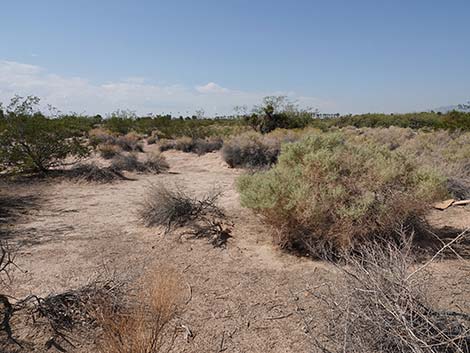 Sand and shrubs at south end of the park (view S) |
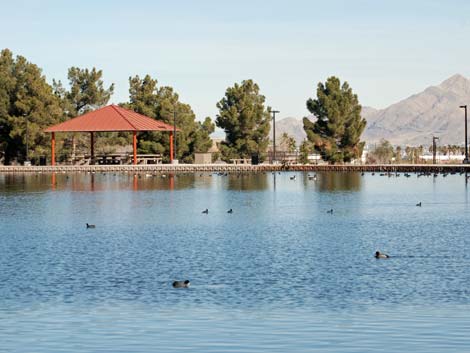 Ducks and geese at Sunset Park |
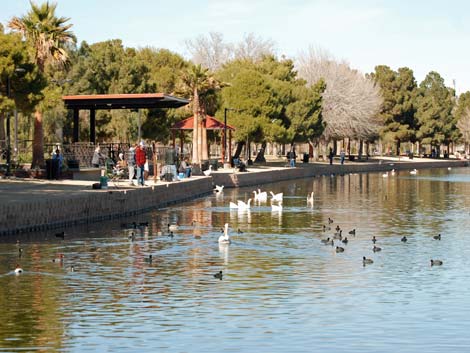 Ducks and geese at Sunset Park |
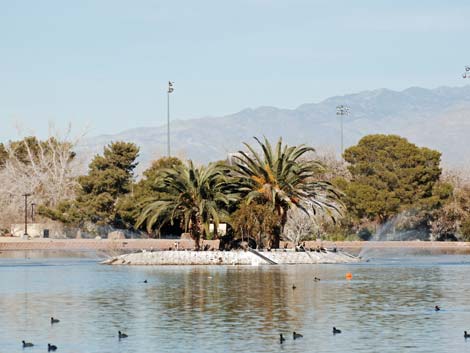 Ducks and geese at Sunset Park |
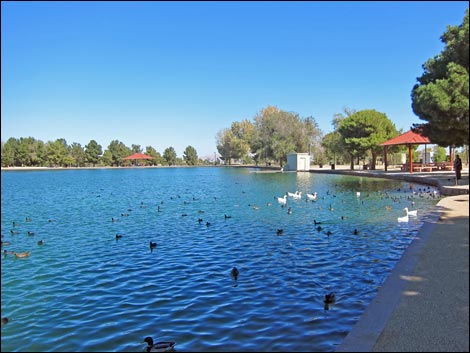 Lots of ducks and coots Lots of ducks and coots |
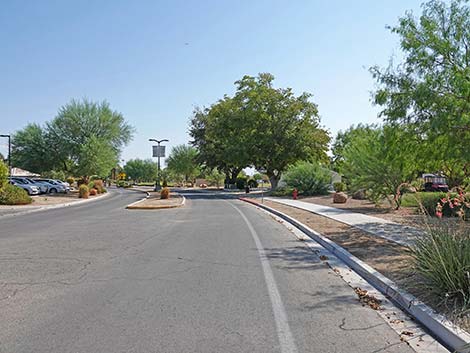
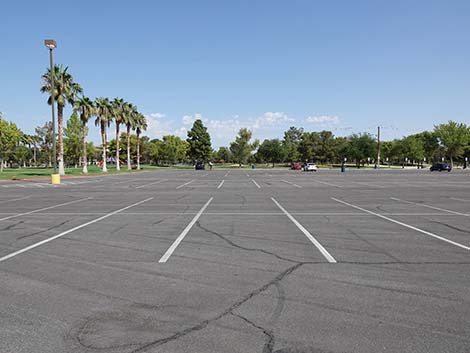 Lots of parking at the south end (view N) |
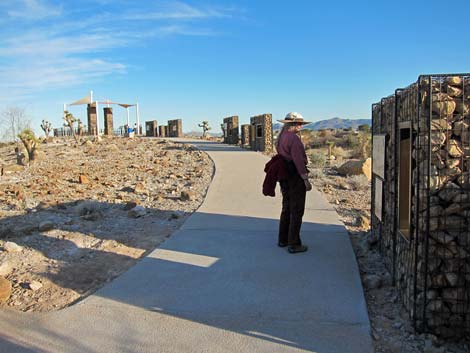 The southern mesquite-dunes area trail |
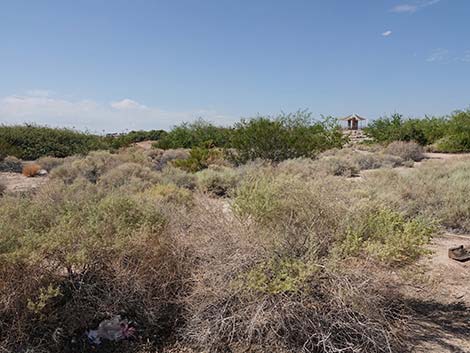 |
 |
 |
 |
 |
 |
 |
 |
 |
 |
 |
 |
 |
 |
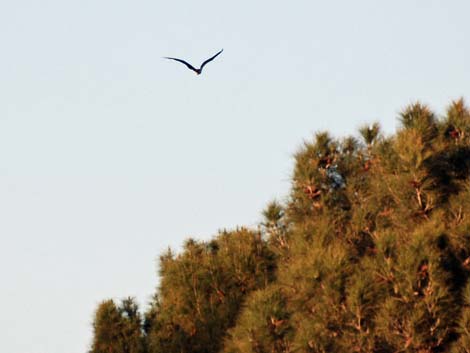 Magnificent Frigatebird departs Sunset Park eastward |
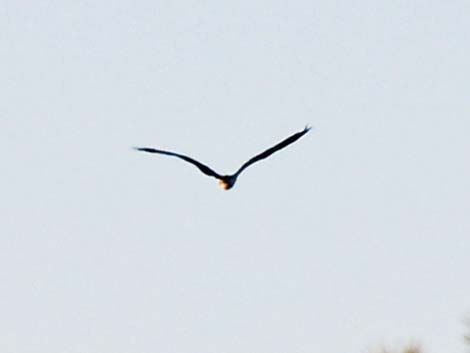 Magnificent Frigatebird departs Sunset Park eastward |
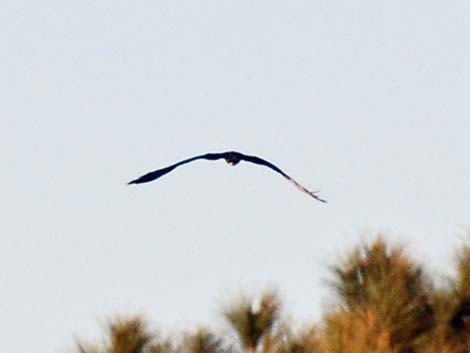 Magnificent Frigatebird departs Sunset Park eastward |
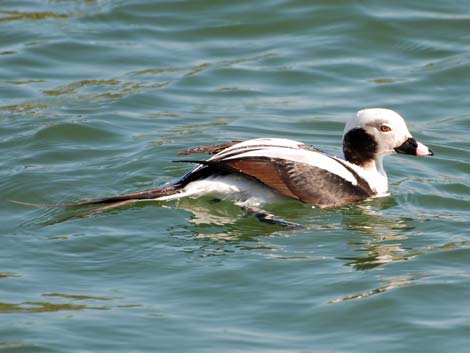 Male Long-tailed Duck |
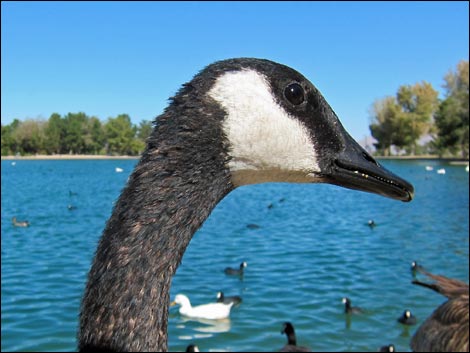 Many species become accustomed to the presence of humans |
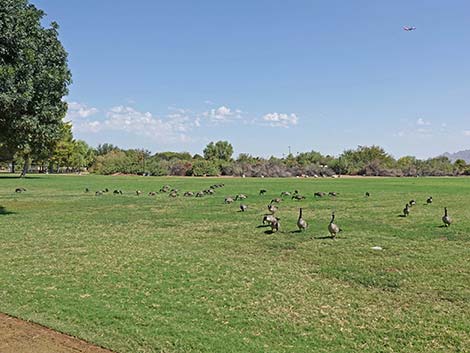 Lots of Canada Geese |
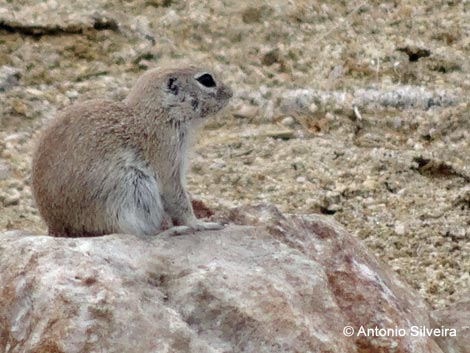 Round-tailed Ground Squirrel |
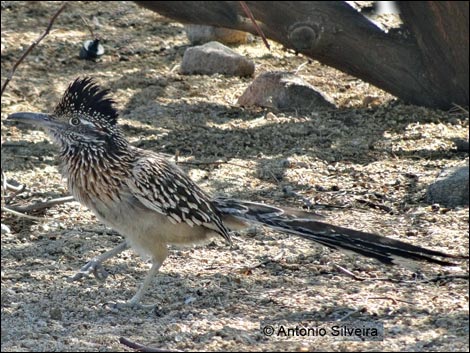 Greater Roadrunner |
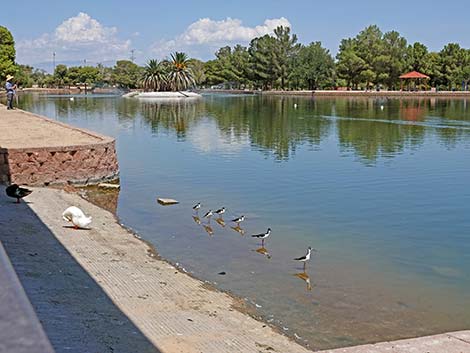 Expect the unexpected: Black-necked Stilts |
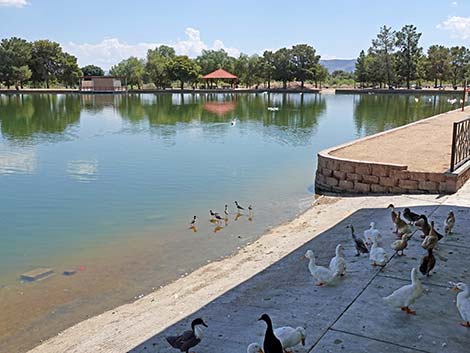 Expect the unexpected: Black-necked Stilts |
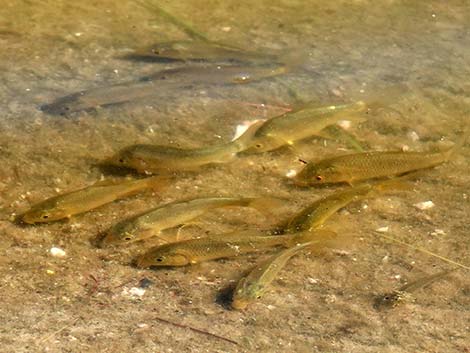 Carp minnows foraging in the shallows |
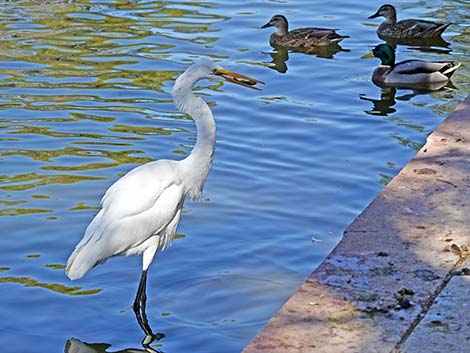 Up close and personal: Great Egret eating a camp minnow |
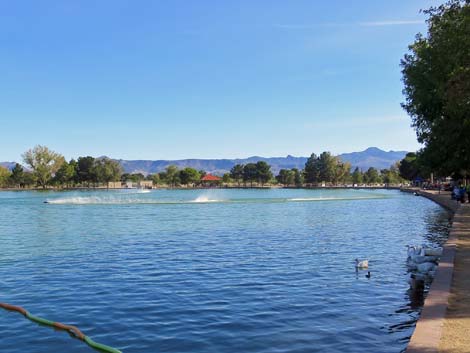 Birding hazard: model jet boats |
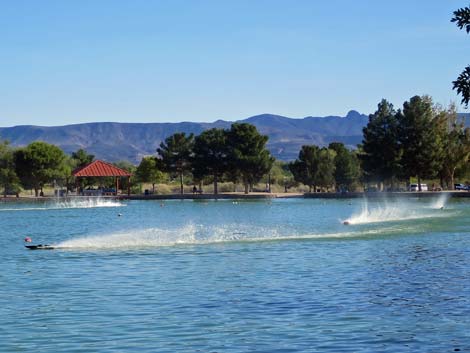 Birding hazard: model jet boats |
Table 1. Highway Coordinates (NAD27; UTM Zone 11S). Download Highway GPS Waypoints (*.gpx) file.
| Site # | Location | Latitude (°N) | Longitude (°W) | UTM Easting | UTM Northing | Elevation (feet) | Verified |
|---|---|---|---|---|---|---|---|
| 0451 | Sunset Park | 36.0638 | 115.1127 | 669974 | 3992474 | 2,020 | Yes |
Happy birding! All distances, elevations, and other facts are approximate.
 ; Last updated 240323
| Birding Around Las Vegas | Southern Nevada Birds | Guide Service | Copyright, Conditions, Disclaimer | Home |